Martin Bright

Playing the hard man

Easter/Pesach is always a good time to be at the Jewish Chronicle with all the combined holidays. This year it is all the more congenial now the Pope has been so kind as to absolve the Jews of blame for the death of Christ. A time for reflection, perhaps, and a reassessment of history. I am still mulling over the peace process simulation I took part in earlier this month, playing the role of Jibril Rajoub, the PLO enforcer. You can read my account the event here. My "Palestinian" delegation was led by Saeb Erekat as played by Jonathan Freedland, who also wrote about his experience. We took away different things from the simulation, but we both agreed that the very structure of the negotiations led personal ego and the desire to "win" to dominate proceedings.

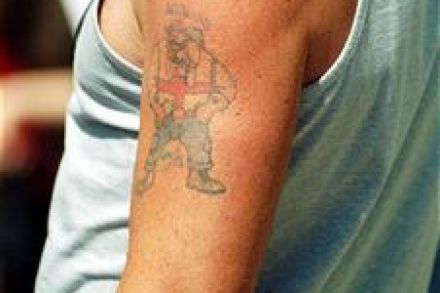
Do far right extremists operate as lone wolves or a pack?

Some political organisations chase the news agenda, others just plough their own furrow driven by the overriding morality of their cause. The work of Gerry Gable and his anti-fascist organisation Searchlight has never been fashionable, but his tireless monitoring and exposure of the extreme-right has acted as an important check on violent racism over four decades. His latest report, “Lone Wolves: Myth or Reality?”, was commissioned by John Denham when he was Communities Secretaries and it is an extraordinarily detailed examination of the history of right-wing extremist violence.

A nudge towards genuine social mobility

I have always thought “nudge” theory was an absurd excuse for a political ideology: just another way of arguing against state intervention. But Nick Clegg has almost forced me to eat my words with his comments about free internships. The Deputy Prime Minister has probably done more in one speech to improve the conditions of young, unpaid interns than any central government diktat. It is, after all, already illegal not to pay the minimum wage.   This furore has sent a chill through the political and media classes which are both awash with privileged and/or exploited young people who can afford to work for nothing.

Why the Single Work Programme is not the Big Society

So finally the media is waking up to the reality of the government’s new welfare to work scheme. The Single Work Programme (SWP), it turns out, is a top-down contractual model dreamed up in Whitehall and imposed with no consultation with any of the people who will be providing or receiving the services. It is designed to replace the plethora of little-understood New Labour work creation schemes and aims to simplify the process. Payment by results means that the companies who have won the contracts will only be paid once they have proved they can find people sustainable jobs. Patrick Butler’s Cuts Blog in the Guardian has a brilliant dissection of the SWP and asks whether the Big Society is getting its fair share of the work from the new contracts.

Why criticism is good for the Arts Council

Today we will hear our fate. As the head of one of hundreds of organisations waiting to hear whether we receive Arts Council funding, I have to admit these are nervous moments. My small organisation, New Deal of the Mind, was set up two years ago to help young unemployed people find jobs in the arts and the creative industries. We happen to think this is worth a small amount of government funding. My attitude to the Arts Council will hugely depend on whether or not it is enlightened enough to see the worth of what we do. And this, I’m afraid, is the Arts Council’s biggest problem.

Comrades, the politics of the streets is not always liberating

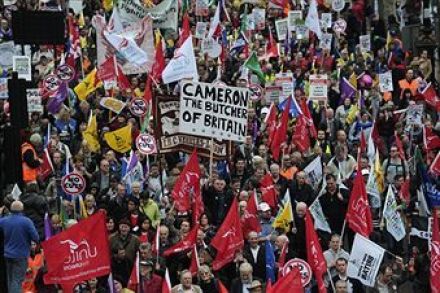
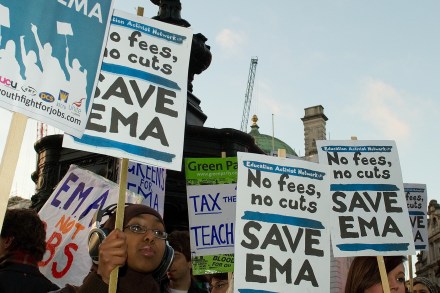
I am struck by the confusion of left-liberal opinion over the violence at the anti-cuts demonstration in London over the weekend. Poor Lucy Annson of UK Uncut on Newsnight last night was arguing gamely that she was an artist who just wanted to set up crèches and creative happenings in the occupied shops of tax avoiders. But, unfortunately she fell back on the old “Sinn Fein defence” when asked whether she condemned Saturday’s violence. “I reject the premise of the question,” she said, thus undermining her movement’s credibility in one ill-advised utterance.

Does the coalition know what it’s doing?

On the morning of the March for the Alternative, a friend alerted me to the brilliantly angry Andrew Lansley rap (chorus: “the NHS is not for sale you grey-haired manky tosser”). Admittedly not the most sophisticated political polemic, but as agit-pop goes, pretty effective. Andrew Lansley’s health reforms are fast become a deep embarrassment to the government. The Liberal Democrats hate them. The country is suspicious. Nobody quite understands how David Cameron took his eye so spectacularly off the ball on this one and now he is left with a policy nobody wants. I have always been mystified that the coalition decided to reform and cut at the same time.

The enemies of enterprise

David Cameron’s attack on the “enemies of enterprise”, his version of the “forces of conservatism” shows that he and those around him are still following the Blairite script, at least in terms of rhetoric. But the coalition still needs to decide what it means to be a “friend of enterprise”. There are many in the libertarian ranks of the Conservative Party who believe the state has no business interfering in such matters. The architects of the Big Society remain confused about whether it is possible to encourage a bottom-up approach with a top-down message, or, to put it another way, decentralisation by government diktat.

So Gaddafi is a psychotic murderer: don’t say you weren’t warned

It is nearly two decades since the murder of Ali Abuzeid, a Libyan dissident, who was cut down on the streets of London in the most brutal fashion. Having been identified as one of Colonel Gaddafi’s “stray dogs”, he was tracked down to his west London grocery, where he was living out his time in exile and assassinated. It was a particularly brutal murder: kebab skewers were thrust through Mr Abuzeid’s face.   I first wrote about the case in the Observer with my colleague Antony Barnett when Security Service files were leaked that showed how MI6 had been led a merry dance by a senior Libyan diplomat they had hoped to recruit. The diplomat involved, Khalifa Bazelya, was expelled shortly after the murder.

My Adventures in the Big Society

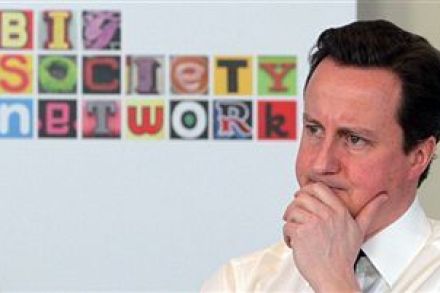
I was invited to Somerset House on the Strand yesterday as part of the Big Society Network to watch David Cameron take questions for the best part of an hour on his pet subject. My organisation, New Deal of the Mind, has been helping deliver two welfare-to-work contracts since last year and, along with most people in what I have learned to call “the third sector” I am prepared to give this idea the benefit of the doubt. There doesn’t seem to be anything particularly ideological about the Big Society, although Ed Miliband showed in his Independent on Sunday article at the weekend just how convenient a whipping boy this has become for Labour You can’t blame Ed Miliband for his cynicism.

Reasons for optimism in the Middle East

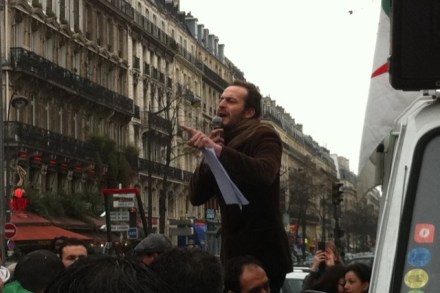
I began the week in Israel, where I watched Tzipi Livni make an extraordinary pitch for the premiership by representing herself as the candidate of moderation and peace. I ended it in Place de la Republique in Paris where secular Algerians had gathered to show solidarity with their countrymen demonstrating against "le pouvoir" in Algiers. Their slogan, "Laicité, Egalité, Liberté", is refreshing. Am I wrong to feel quietly optimistic on both fronts? As we reported in the Jewish Chronicle this week, Tzipi Livni also made a significant overture to the diaspora Jewish community by saying she welcomed a wider discussion about the future direction of Israel from outside the country itself.

Cameron’s speech should not be lightly dismissed

The all-too-predictable reaction to David Cameron’s speech on the importance of tackling the ideology of radical Islam has been depressing. Much of what he said in Munich should be entirely uncontroversial. For too long, Whitehall has been prepared to deal with the self-appointed gatekeepers of the Muslim community without asking serious questions about their political heritage or commitment to democratic values. The following passage in the speech marks a crucially important shift in British policy in this area: "Let's properly judge these organisations: Do they believe in universal human rights - including for women and people of other faiths? Do they believe in equality of all before the law?

A bad week for the Big Society?

We all know that journalists hunt in packs and now they are circling around the Big Society. Lord Wei’s decision to restrict his volunteering to two days a week and the announcement that Liverpool City Council has withdrawn from a “Big Society” pilot have been used to suggest that the idea is dead before it has been fully articulated. This would be a shame. The emergence of the Big Society has coincided with a revival of interest in the co-operative movement and mutualism. And thoughtful figures on the left, such as Jon Cruddas and Hazel Blears, have already begun to work on a Labour Party response.

Reasons for cheer – and concern – in Egypt

One of the most wonderful of many wonderful aspects of the anti-totalitarian uprisings in Tunisia and Egypt is that they have nailed the myth that Islamism represents the “authentic” voice of the Arab street. This was always a pernicious nonsense and the diversity of those demonstrating across the Maghreb and Egypt has been one of the most noticeable features of the revolt. This must be particularly galling for the Foreign Office, which has spent considerable resources in cultivating the Muslim Brotherhood and other revivalist groups across the Middle East. It is gratifying for those of us who warned against this orthodoxy that Islamist fellow-travellers such as Frances Guy, the UK’S blogging ambassador to Lebanon, have been proved so wrong.

What happens when journalists become the story?

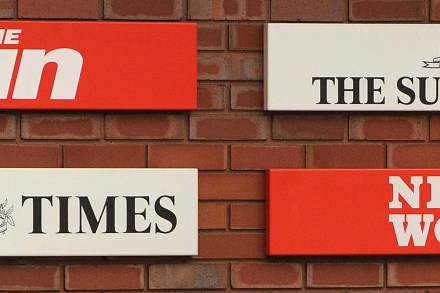
When spin doctors become the story or spokesmen need a spokesman, we know the game is up. So say Alastair Campbell and Andy Coulson, and they should know. So what happens when journalists become the story?   The re-opening of the investigation into News of the World phone-hacking case has sent a chill across Fleet Street. Collectively, journalists really had hoped this would go away. A prurient interest in the private lives of stars and public figures is nothing new. The pressures of a tabloid newsroom are immense, and it should come as no surprise that journalists looking for an edge were prepared to take such technological liberties. But no one could have predicted that this would snowball to quite this extent.

Does the coalition hate young people?

The real question raised by Suzanne Moore’s latest impassioned piece for The Guardian is whether the coalition government likes young people at all, or even gave them a thought when considering their cuts-reform double whammy.   Here’s the rub: “There are no jobs. The most beautifully manicured CV will not get you a minimum-wage job in a pub. Your brilliant degree is meaningless when what employers repeatedly emphasise is 'experience'… Every rite of passage of becoming an adult – a job, an income you can live on, affordable housing, independence from parents – is being taken away.”   This is overstated for effect. It isn’t quite true that there are no jobs, but there are very few.

Is Labour really back in the game?

The Oldham East and Saddleworth by-election now raises the distinct possibility that Labour could win the next election by default. People on the left have been wondering for some time what could unite the multiple and often contradictory tribes of the Labour Party and it looks like “Tory cuts” and “Lib-Dem broken promises” could do the trick. Simple, crude, disingenuous – perfect. Krishnan Guru-Murthy is half-right when he tweets “paradoxically, real danger may be for Labour...if they conclude they are 'back in the game' already”. Collectively (and morally) this is true. But the bizarre situation we find ourselves in is that the electorate remains unconvinced by Ed Miliband and yet his party is trouncing the coalition in the polls.

The Blairite permanent revolution

I find myself asking the question again. Why did the Coalition decide to cut and reform at the same time? In terms of raw electoral politics it cannot be explained. If Cameron and Clegg had come to power promising not to tinker further with the health service and the education system, but simply to manage the cuts they would have had a much easier ride. Welfare reform is a different matter – popular in principle but devilishly difficult when it comes to the detail.

Miliband is not yet the man to build the ‘good society’

Neal Lawson¹s Comment is Free blog-post/essay/manifesto on the 'good society' is causing a flurry of interest in Labour circles. The head of Labour leftish pressure group Compass has been banging on about this for four years now. Borrowed ultimately from Aristotle, this re-heated utopianism is a tempting route for post-socialists tired of the compromises of the Blair years. Neal Lawson is a passionate man, who can claim with some justification to have been developing Labour¹s version of the 'big society' for some time. Here is Neal at his emotional, tub-thumping best: 'To take back some semblance of control, we can't start from a position of trying to humanise a turbo-consumer society whose every premise, process and principle is about not being human.

An enterprising move, but is it enough?

I have been arguing for a return of the Thatcher-era Enterprise Allowance scheme for two years, so I was delighted to see David Cameron announce the extension of the New Enterprise Allowance today. It always made sense to allow as many people as possible to come off the dole and set up their own businesses. I only hope the inducements will be attractive enough. I recently came across some brilliant public information films about the original scheme. You can check one out here if you want to be reminded of the last time the country faced mass unemployment. The original EAS was effective because it was a straightforward bribe. Recipients were paid £40 a week, significantly more than the dole at the time and were able to stay on the scheme for a year.