Martin Bright

Cameron proves he is a politician of the eurosceptic right, but he still seems like a reasonable guy

From our UK edition

I have just been at the Conservative Friends of Israel Business Lunch, which can best be described as a triumphalist 'smugfest' in the wake of David Cameron's bulldog moment in Europe last week. The Tory leadership should be very wary of this moment. We have just entered a period of unprecedented political division in this country. For a party that wishes to be on the centre ground of British politics, this is not a good place to be. The headlines in the Guardian ('Cameron cuts UK adrift') and the Daily Mail ('The day he put Britain first') expressed this in two sentences the chasm that now exists in the political class. So much for the Cameroons' healing centrism. But does this really matter?
Jewish divided loyalty: the old lie

From our UK edition

In all the furore over Jeremy Clarkson's 'joke' about shooting strikers, people can be forgiven for missing a second row over outrageous remarks made by a public figure. Paul Flynn is Labour MP for Newport West and known as a reasonable man of the left. Flynn is a campaigning MP who has asked some difficult questions about the Werritty-Fox affair. He speaks passionately about the Iraq War and UK intervention in Afghanistan, which he feels were terrible errors. Having read reports that Werritty and Fox met in Israel with Mossad in the presence of the UK ambassador to discuss a military strike on Iran, Flynn became worried about a neo-con plot. What's more, the ambassador, Matthew Gould, happens to be Jewish.

So this is what the Lib Dems are for…

From our UK edition

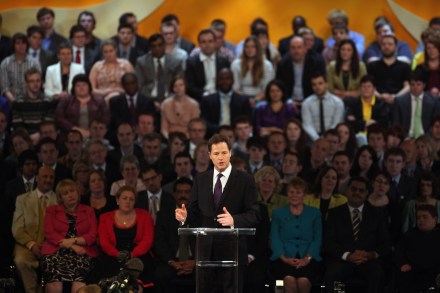
Nick Clegg should be congratulated for doing the right thing by reviving the Future Jobs Fund and the Young Person’s Guarantee, for that is what the Youth Contract is in all but name. This is, of course, another U-turn. As Chris Bryant tweeted rather brutally after Clegg’s announcement, if the government wanted to save young people from the scrapheap, why did it put them there in the first place. It never made sense to abolish the Future Jobs Fund without putting anything in its place and ministers never sounded convinced when they said the Work Programme would deliver for young people. It is to the eternal credit of Clegg and those around him that they realised a job subsidy was an essential intervention in a stagnant jobs market.

Wise up Mr Grayling: youth unemployment is no mere distraction

From our UK edition

Could it be that Matthew Taylor, the RSA's chief executive, is even more influential in Downing Street today than he was when he was head of policy under Tony Blair? His latest blog post is certainly causing a huge stir. David Aaronovitch picked it up in yesterday's Times and put a rocket under it. Matthew suggests a 'bond for hope' to fund a programme to tackle youth unemployment and I hear this has already caused a massive flurry of excitement inside Number 10. Here is the bones of the suggestion in his own words: 'The Government should create a "bond for hope". This would be a five year bond earning say 1% tax free interest (so, below inflation but above what banks are offering).

Miliband’s bind

From our UK edition

Ed Miliband is in a bind. He really should be concentrating on the competence argument, but keeps falling back on the 'evil Tory ideologue' argument. There are several reasons for this. The first is his determination to distance himself from the Blair-Brown era. This makes it difficult to provide a convincing critique of policies which appear New Labour-ish: everything from Free Schools to health service reform and the Work Programme. The second is that many of the statistics available still date from the Labour years and so evidence of the effects of Coalition policies are simply not there. The third, and most serious, is that Miliband has yet to convince that he would be a more competent and reassuring presence at the helm.

Ken’s adventures in Israel

From our UK edition

There is a very peculiar passage in Ken Livingstone's memoirs, "You Can’t Say That", about a visit he made to Israel as leader of the GLC. He had been invited by the Socialist-Zionist party Mapam, which has since merged with Meretz. Livingstone had already been identified as someone who was hostile to Israel and so the comrades took him on "an exhausting round of meetings with all with all Jewish and Arab political factions". He also visited Yad Vashem, the Golan Heights, Masada and a kibbutz. He remained unimpressed. As I have written in the Jewish Chronicle this week, Livingstone rarely changes his mind about anything and never admits he's wrong. But his account of his Israel visit is more than a little peculiar.

Opening the doors to power

From our UK edition

Three young people start work in Westminster for the first time today. Breon Finch, Alice Hannam and Rachel Shackleton are the first apprentices at the Parliamentary Academy, a cross-party initiative to break open access to the nation's seat of power for young people who can't afford to do a lengthy unpaid internship. So hats off to Andrea Leadsom, Conservative MP for South Northamptonshire; Mike Crockart, Lib Dem member for Edinburgh West and Conservative Campaign Headquarters, who have shown the imagination to take on staff who don't come from the usual tiny talent pool of white middle class graduates. John Woodcock, Labour MP for Barrow-in-Furness, will shortly be recruiting and after the initial pilot the scheme will launch in full by Spring of next year.

How the Tories turned generous donors into sinister lobbyists

From our UK edition

The Fox-Werritty story took an interesting turn this week with the news that Conservative Party treasurer Howard Leigh had been soliciting funds from wealthy Jewish donors. The Jewish Chronicle had the story first. It was then “revealed” by the Guardian a day later, although, to be fair, they did put some serious meat on the bones. The coverage of this story has been fascinating. It has been unedifying to watch the government scrabbling to blame sinister “lobbyists” for its predicament. Even now, the party is denying that it actively solicited cash from the three Jewish donors to Fox’s pet projects.

Cameron should continue to resist knee-jerk reshuffle politics

From our UK edition

When things get rough, especially in the area foreign policy, I have the distinct feeling David Cameron asks himself the question “What would Tony do?” before he takes a big decision. But in the management of his Cabinet he can’t do that. Blair never had to deal with coalition politics and did not have the equivalent of the Eurosceptic right to keep on board. Indeed, Blair would famously test a policy’s validity by how much it would annoy the left of his party. Liam Fox has gone now, and in the end it became impossible for him to stay. But in this slow political death, David Cameron did not follow Blair’s lead.

In it together | 13 October 2011

From our UK edition

Governments worth their salt know that a single young person out of work is a tragedy, but a million young people being on the dole is a political catastrophe.   This week’s unemployment figures fall just short of that symbolically important figure. But they also put the coalition’s solutions in sharp focus. Ed Miliband did well in PMQs this week because he could see the panic in David Cameron’s eyes.   It isn’t that the government doesn’t have a solution. It has a solution for all the country’s ills: the riots, social dislocation, worklessness. It is called the Work Programme. According to its champions it will deliver on every front.

A genuinely New Generation

From our UK edition

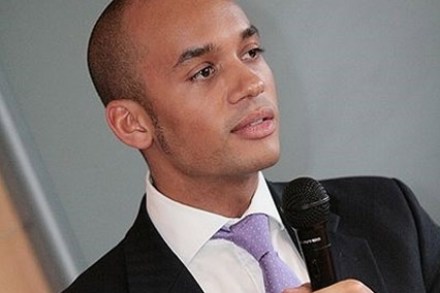
Labour’s reshuffle is the best thing Ed Miliband has done since he became leader. I say this mainly because I am feeling very smug because I have been writing that the Labour Party should skip a generation for some time. I wrote (slightly too admiringly) about Chuka Umunna’s rising star in January 2009 when he was still a not-so-humble lawyer and Westminister hopeful. Umunna was arguing that the party should get more radical long before it became fashionable in Labour circles. Then in September 2009 I wrote (rather pompously) in the pages of The Spectator that it was time to hand over to the next generation. At the time Ed Miliband took me to task for saying that his generation should be passed over.

What Miliband must learn from Cameron: a speech is not a policy paper

From our UK edition

I have been so annoyed by Ed Miliband’s speech to Labour Party conference that I haven’t been able to bring myself to write about it. As the Tories gather in Manchester I should really be turning my thoughts to things Conservative, but I can’t stop thinking about last Tuesday. In Liverpool Labour loyalists kept telling me to read the whole thing again – and there is no doubt that this is a serious attempt to redefine the centre-ground of British politics. Polly Toynbee from the left and Peter Oborne agreed that this was an important, near-epochal attack on vested interests.

Why all the apologies, Ed?

From our UK edition

The Labour Conference 2011 has turned into a horrible misery-fest. What a daft idea to make the theme of the conference: “We’re really sorry, we won’t do it again”. At least it’s not the slogan, although it would have been more honest than “Fulfilling the Promise of Britain”. I agree with Steve Richards in the Independent that the pessimism is self-fulfilling. This does not feel like a platform for re-election I spent most of the New Labour era criticising Tony Blair and his government. I thought he was too cosy with the ultra-rich, cynical about criminal justice policy, disingenuous about the use of the private sector in providing public services and over-cautious about redistribution.

What Ed Miliband should say at Labour conference, but won’t

From our UK edition

It is now beyond question that Ed Miliband is moving his party to the left, or redefining the centre ground if you prefer, or drawing a line under the New Labour era. Or whatever. The latest symbolic move has been to back Palestinian statehood in advance of a vote at the UN. This is a peculiar decision that makes no real sense before knowing what the Palestinians are putting on the table, except to send a strong message to the party faithful that Ed Miliband is shifting policy on the Middle East. This line on Israel/Palestine is one that Tony Blair and Gordon Brown would never have countenanced and that is the whole point.

Political Stepford Wives

From our UK edition

At the beginning of the conference season I mused on Twitter that these occasions were very tribal, but that I had never been able to work out what defined the Liberal Democrat tribe. I was bombarded by suggestions. Iain Martin bluntly wrote: “What is the Lib Dem tribe? Answer: A lot smaller than it used to be.” Andrew Boff, the Tory London Assembly member said, naughtily: “It depends on who they are talking to.” Peter Beaumont drew on his experience as a foreign correspondent to paint a horrifying picture: “all sandals and penis gourds”. And Max Wind-Cowie pointed out what Nick Clegg himself recognises as a problem: “Perhaps surprisingly an almost exclusively white, male & middle class tribe. Unlike either the Tory tribe or the Labour.

A piece of illiberal silliness

From our UK edition

Memories are short in journalism, but reading about the attempts by the Met to force the Guardian to hand over source material in the Hackgate case, reminded me of a case the same newspaper group fought over a decade ago. Bizarrely, the story isn’t in the Guardian’s online archive, which doesn’t go back far enough. But here’s the report of the original hearing in The Independent. Libya, spooks and a renegade MI5 officer: the story had it all. “In a further crackdown on leaks from the renegade MI5 officer David Shayler, the Government launched a court action yesterday against two newspapers.

Was the glory of the labour movement just a crazy dream?

From our UK edition

Watching the footage of the debates at the TUC this week can’t have been a happy experience for anyone on the left. I understand the leadership’s decision to hold an “austerity Congress”. I can also understand why the unions want to take the argument on cuts and pensions to the government. It is their job to protect the interests of their members using tactics up to and including the withdrawal of labour. The trouble is that the scaled-down version of the once-mighty Trades Union Congress just didn’t feel grand enough, heroic enough or scary  enough, despite the apocalyptic tabloid headlines. The threat of a mass walkout in November and allusions to 1926 just drew attention to the pint-sized nature of the event.

What Alistair Darling and I have in common

From our UK edition

The coverage of Alistair Darling's memoirs at the weekend was fascinating, not least for the almost universal respect he was shown. Some senior Labour figures tried the old "ancient history" line. But this was ridiculous given the fact that the events described are relatively recent and that they continue to have a profound effect on he Labour Party. Darling was one of the few key players during the banking crisis to have kept a cool head. The extracts from his memoirs demonstrate just how difficult that must have been considering the utter chaos around him. The process of publishing these memoirs must have been difficult as he is someone who, by his cautious lawyerly nature, prefers to keep his counsel.

May blanket ban a bizarre overreaction

From our UK edition

Just as it looked as if Theresa May was about to do the right thing over the EDL march on Tower Hamlets, the Home Secretary decided to issue a blanket ban on all marches across five London boroughs for 30 days. The whole point for those of us advocating a ban in the EDL was that there was a specific threat of violence associated with this extremist view. This new draconian measure suggests the police and government are suspicious of all protest. At what point do these boroughs become "march-safe" again? While I accept that these are particularly difficult times for the Met in the aftermath of the riots, I can't accept that all street protest should be off limits. Would I support a march in protest at the ban? Yes, I probably would.

Welcome moves against the EDL

From our UK edition

Great to hear that the police have formally applied to the Home Secretary to get the English Defence League march on Tower Hamlets banned. I’m something of a freedom of speech fundamentalist but this was an open invitation to violence. I have had my differences with East London Mosque and believe that it is a pernicious political influence in the area. But there are many decent people who attend the mosque and no one deserves to be threatened with violence by these extremist thugs. Hats off to Hope Not Hate, the anti-fascist organisation, which has been lobbying hard to persuade the authorities to see sense on this issue. Oddly, Sunny Hundal at Liberal Conspiracy thought the march should go ahead.