Martin Bright

Taking stock of politics after the conferences

From our UK edition

Party conference season is over and it all felt very mid-term. It’s always best not to be swept away by the immediate reaction to leaders’ speeches. Miliband’s was surprisingly good, Cameron’s was not bad at all and Clegg’s was OK too. Where does that leave us? Just under three years until the next election with everything to play for. At the Jewish Chronicle we planned the usual round of political interviews. Simon Hughes was admirably frank. He has not always had the best relationship with the Jewish community, especially since his involvement with the all-party parliamentary group on Islamophobia. He said he was worried the case for a two-state solution was being lost and that realists might have to countenance a one-state option.
What else could go wrong for the Tories?

From our UK edition

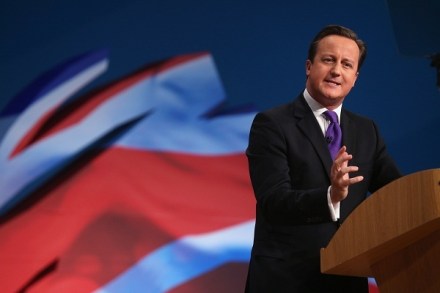
Beyond being implicated in the Jimmy Savile scandal it’s hard to imagine how last week could have been worse for the Tories. The build up to their conference in Birmingham has been marked by about as catastrophic an example of incompetence as it is possible to imagine at the Department for Transport. The cancellation of the West Coast rail franchise competition is plain embarrassing and has led to the usual response of this government: blame someone else. Three civil servants have been suspended while Justine Greening, who was Secretary of State at the time of the fiasco, remains in the Cabinet. You had to feel for her successor, Patrick McLoughlin, who was left to apologise on the Today programme for failings in the department he inherited.

Ed Miliband: my two penn’orth

From our UK edition

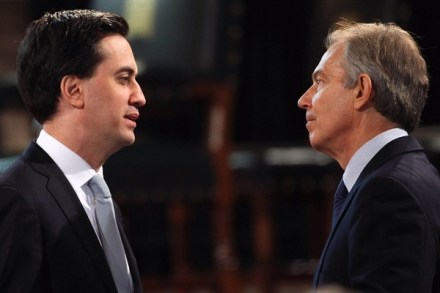
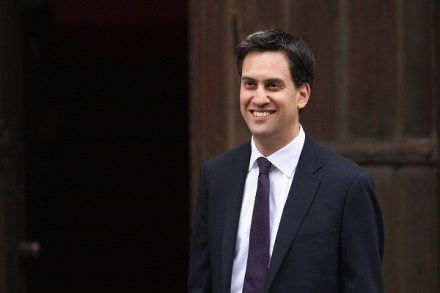
It seems that everyone is offering Ed Miliband advice. Jonathan Freedland wrote him an alternative leader’s speech. Matthew D’Ancona urged Miliband to answer his own fundamental question: “What is the point of a Left-of-centre Labour leader with an empty wallet?” And Owen Jones urges the Labour leader to find a vision. It would be understandable if Ed Miliband was beginning to get more than a tad exasperated with all this advice. His party is united, he is ahead in the polls and his opponents are in disarray. He has already survived longer than many sage heads believed he could and is now the man most likely to be the next prime minister.

The dangers of yearning for a simple life

From our UK edition

What is this mania for simplification? Listening to Nigel Farage struggling to explain UKIP tax policy on the Today programme this week made me wonder why, in so many areas of policy, politicians of the right have such a fetish for making things less complicated than they really are. UKIP’s message is the very essence of this tendency and in Farage’s case you have to wonder whether he’s just too dim to entertain a complex idea. It is no surprise that UKIP’s comfortingly simple message is gaining support, but we should be wary of political oversimplification in times of crisis. This tendency is not restricted to UKIP. The government is learning that simplification of systems can sometimes be very problematic indeed.

Israel is losing the battle in Britain

From our UK edition

The simplest way to react to the madder pronouncements of the trade union movement is to dismiss it as so much infantile 'group think'. Solidarity can be very selective and Israeli trade unionists are apparently discounted simply for being Israeli. The latest decision of the TUC to send a delegation to Gaza under the auspices of the Palestine Solidarity Campaign is not the daftest. But the idea that it would give delegates anything approaching balance is absurd. My Bright on Politics column for the Jewish Chronicle this week was addressed to the Jewish community but the Israel/Palestine conflict has a wider resonance: 'Supporters of Israel are losing the battle of ideas in the UK. This has probably been true for some time, if only they would admit it.

Face it: Ed Miliband could be the next prime minister

From our UK edition

It’s fun isn’t it, all this speculation about a leadership challenge to David Cameron? It was obvious really in the run-up to party conference season. We all needed a new narrative. Last year we enjoyed giving Ed Miliband a good kicking and his 'anti-business' conference speech played into the hands of his critics. The infantile booing of Tony Blair’s name by delegates made it look like the party was determined to make itself unelectable. But the reality now - and there are plenty on the left as well as the right who still find this a scary prospect - is that Ed Miliband is the man most likely to be the next prime minister. Looking back, the speech looks rather prophetic with its appeal for a shift in the country’s cultural values in favour of 'grafters'.

David Cameron’s oddballs

From our UK edition

I’m coming to the conclusion that the character of the Cameron government is the inversion of the Brown government. During the dying days of New Labour there was a snarling, socially dysfunctional Prime Minister whom most of the electorate found deeply unappealing. But around Gordon Brown was a group of Cabinet ministers who were really pretty impressive and, well, normal. Alistair Darling, Jacqui Smith, James Purnell, Andy Burnham, Ruth Kelly (remember her?), Alan Johnson, Yvette Cooper: these are all people who it was possible to imagine having  a chat or a drink with in the local pub (or perhaps wine bar).  I could go on. The inverse is true with this government. David Cameron is socially adept and genuinely charming. Whether it is an act or not, he does good normal.

Why did Pete Townshend play the finale to the Olympics?

From our UK edition

I returned from holiday to discover that the silly season has turned into something much more serious. The daily list of horrors from Syria, the Eurozone crisis and the terrifying state of the UK economy: they had all been there when I left (for Greece by the way, where people are genuinely scared about the future — stockpiling food and preparing for civil conflict in some cases). But the Olympic fiesta atmosphere seems to have been replaced by something darker following George Galloway's moronic comments about the Assange case. There are plenty of men of the Left whose sexual politics don't bear much scrutiny, but Galloway really is the prize poseur of radical chic. The Assange case is a deeply troubling one for the Left.

Downing Street humbled by Mo Farah

From our UK edition

The genius of Mo Farah was only underscored by the plodding stupidity of Downing Street's statements about the "All Must Have Prizes" culture this weekend. If this is the culture which produced Mo Farah then surely we should be celebrating it. But the truth is that it doesn't exist and never has done. How does David Cameron think we managed to get 28 gold medals if not through the promotion of competitive sport in schools? Mo Farah attended an inner city comprehensive his talent was spotted and encouraged. What's wrong with that? Considering the scale of the success of London 2012, it's no surprise that there have been attempts from both ends of the political spectrum to claim this Olympics for their side. It is a rather pointless game to play.

Are you thinking what Aidan Burley was thinking?

From our UK edition

When you are not a part of the Tory tribe there are certain subjects you worry about mentioning as journalist, whether it's at a Conservative Party conference, or indeed, on a blog for the Spectator. One is Europe, another is immigration and a third is multiculturalism. These three interlocking bogies drive the Tory grassroots and emerge, from time to time, to trouble the party leadership. The views of constituency activists on these issues (and people who like to comment on the Spectator site) can be fruity, but I have been talking to Tories for long enough to know that they can be genuinely passionate about this stuff.

The unusual case of Matt Nixson, the hack with the big heart

From our UK edition

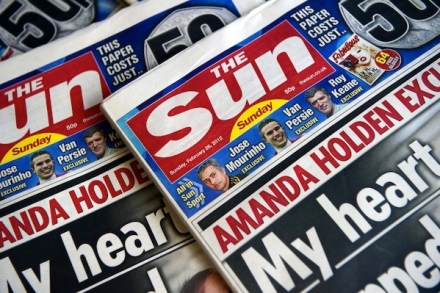
This is not a great time to be a tabloid journalist. It is an even worse time to be an out-of-work tabloid journalist. Few tears are shed when red-top hacks lose their jobs and they are consigned to a discard pile that includes unemployed bankers and politicians. This is why the case of Matt Nixson is so unusual. When the phone hacking scandal broke, Nixson had just moved from the News of the World, where he was features editor, to take the same job on the Sun. He was given the push last July amid a flurry of allegations about alleged payments to police and prison officers (Nixson was alleged to have authorised a £750 payment to a prison officer for a story about the Soham murderer Ian Huntley, although he wasn’t told this until five months later).

Anti-Semitism: no longer big news

From our UK edition

My fellow Spectator blogger Douglas Murray wrote a powerful post yesterday. Like him, I was disturbed by the way the Bulgarian bus-bombing and the Manchester terror trial were treated in the media. You won’t hear me say this very often, but I don’t think Douglas has gone far enough. For once, I think even he has pulled his punches. ‘What links these two events across a continent?’ he asks. ‘The answer is ideology. It is an ideology which deliberately targets Jews as Jews.’ I know what Douglas means: that there is a deeply entrenched anti-Semitism at the heart of the politics of extremist Islamism which strips its victims of humanity. We tip-toe around this phenomenon at our peril.

Why I’m backing my local free school

From our UK edition

Last night I attended a public meeting to discuss the successful bid by parents in north London to set up a free school in East Finchley. The Archer Academy is to be a non-selective, non-denominational community school. It was an extraordinary occasion, with hundreds of local parents prepared to throw their weight behind the project. Tellingly, a local Labour councillor was on the panel to answer questions about the new school which has cross-party support. This is due, in no small part, to the desperation of the community in the face of consistent refusal on the part of the local authority (Tory-controlled Barnet) to do the right thing and build a new school.

First, call the lawyers

From our UK edition

I have just started a new column, Bright on Politics, for the Jewish Chronicle. My first piece last week discussed Ed Balls and Israel. And this week I discussed why politicians turn to judges when they have lost their moral compass. Here's the piece. I'm sure you'll let me know what you think. Blind faith of Brothers and others in law When the political class loses faith in its ability to make moral judgments, what does it do? It calls in the lawyers. The present fashion for judge-led inquiries in the UK has given us the Leveson inquiry into the ethics of the press, and may yet lead to a similar examination of the ethics of banking. On the moral issue of settlements in the Occupied Territories, Israel and the Trades Union Congress could not be further apart.

Tennis and the rise of the ‘mediocracy’

From our UK edition

The discussion of Britain’s latest tennis nearly man has turned inevitably to the culture of a sport which, in this country at least, remains laughably exclusive. Asked on the Today programme why we fail to produce consistent numbers of good tennis players the tennis evangelist and comedian Tony Hawks (who knows a thing or two about what is laughable) made a good suggestion about opening up our ridiculously expensive (and often empty) courts to the public. But the debate about tennis reveals a deeper malaise. In this country we are prepared to accept mediocrity because the last thing we would dare tamper with is the class system. There is a difference between elitism and exclusivity.

Let’s get to work getting our veterans back to work

From our UK edition

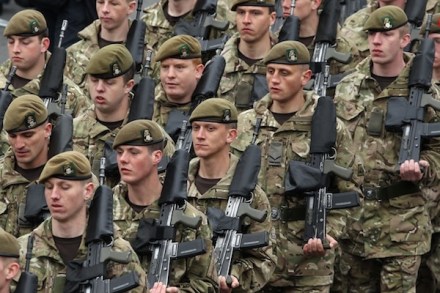
The cutting of 17 army units by 2020 was never going to be popular. It is over-dramatic to suggest we now have a self-defence force rather than an army, but the loss of 20,000 regular soldiers will clearly have an effect on the UK’s ability to wage war. And yet the cutting is the easy part. The test for the government (or the next) is how they tackle the consequences. One of these will be large-scale redundancies among ex-soldiers and support staff. Has anyone thought about this? We already know that unemployment and mental health problems are an issue among veterans and that many end up in prison. This is a disgrace.

Is Michael Gove the government’s only true radical?

From our UK edition

I have been waiting more than two years for this government to say or do something really radical. By this I don’t mean taking the Blairite revolution to its logical conclusion (or is it reductio ad absurdum?) by introducing pseudo-markets deeper into every area of the public sector and reforms to the welfare state New Labour certainly considered but never dared to carry out. But what was genuinely counter-intuitive for the Labour Party is not necessarily so for the Conservatives. For Tony Blair to embrace the private sector, distance himself from the trade unions and challenge the received wisdom of Labour’s state-ism was a genuine break with the past. For David Cameron to do so is merely to embrace tradition.

Why this government is not down with the kids

From our UK edition

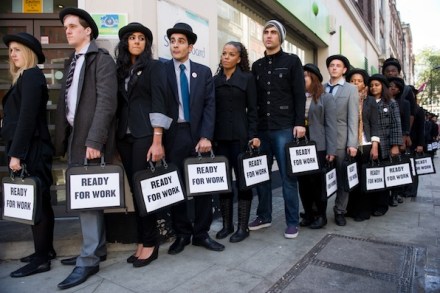
Hardly a day goes by without more bad news on youth unemployment. The latest figures on NEETs (a horrible de-humanising term for school leavers who are not in education, employment or training) show that the numbers rose between 2010 and 2011 to over eight per cent. The release of these statistics coincided with new polling which showed a near-complete collapse of support for the government among young people. Does this government hate young people? Probably not. Does it belatedly realise it has a massive problem with youth unemployment? Yes it does. The Youth Contract was introduced by Nick Clegg because he and those around him recognised that the Work Programme was not designed to tackle this problem.

Meet Professor Bright

From our UK edition

I have not often been called a 'renowned political commentator' (for readers of this blog it tends to be 'hopeless naive leftie' and elsewhere it’s 'notorious Zionist neo-con') so I was delighted to come across this description of myself in the Harlow Star. The article was prompted by my appointment as Visiting Professor at Harlow College, one of the best journalism training schools in the country. Over the years, this magnificent Essex institution has produced such stellar alumni as Alan Rusbridger, Roger Alton, Jeremy Clarkson, Piers Morgan and Richard Madeley. I intend to invite them all back over the course of the next academic year to discuss the future of journalism in the light of the Leveson Inquiry.

Who funds think tanks?

From our UK edition

I was very interested to see the launch of the Who Funds You? website today. This is an intriguing new initiative to examine the transparency of think tanks. The tendency over recent years to outsource political policy to these micro-institutions makes it ever more important for the public to know the sources of their funding.   In keeping with the spirit of the exercise, the website’s founders are entirely transparent about the sources of its funding (it has none). And in the same spirit, I should disclose that one of the people involved is a friend of mine, Paul Evans, the founder of Political Innovation and editor of Local Democracy blog.