Martin Bright

Will journalists soon have to pay for the privilege?

From our UK edition

I had the strangest call today from an outfit called publicservice.co.uk. A rather pleasant woman, albeit with a slightly insistent phone manner, asked me for my views on work creation and the government’s policy on hard to reach &"NEETS” (horrible jargon for young people not education, employment or training). I have my views, but I also have my own ways of making these known to government, so I asked how the information I gave her would be used. Was someone paying her to provide intelligence? In which case, I wondered how much she was proposing to pay me.

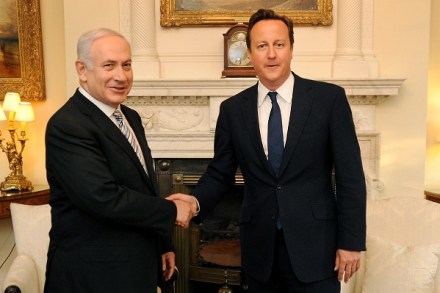
Have Israel and Britain given up on each other?

From our UK edition

Benjamin Netanyahu’s announcement to authorise more than 800 new housing units in West Bank settlements, and the condemnation which followed from British Foreign Secretary William Hague, has marked a new high-water mark in the mutual frustration felt by the two governments.

The Jubilee stewards scandal reveals the flaws of the Work Programme

From our UK edition

It all seemed innocent enough. I even found myself in the rain at Somerset House watching the river pageant (for the kids, you understand). The street party in my road meant I met neighbours I had never spoken to. And the high-kitsch of the Diamond Jubilee concert seemed to give the world a lesson in how not to take yourself too seriously. But then came Shiv Malik's scoop on the unpaid Jubilee pageant stewards shivering under the bridges with sodden food and no shelter from the elements. It is hard to imagine a more powerful image of our divided nation. Sometimes a news story emerges which has a symbolic power beyond the mere facts it reports. This is one of them.

 The expense of the Jubilee celebrations was always difficult to justify in these straitened times.

The Lobby’s existential search for meaning

From our UK edition

There was a small but important piece in the Independent this week by my former boss John Kampfner. He’s not my boss any more, so I don’t have to be nice to him. But it really was rather good. John simply pointed out that political journalism goes in cycles of hype and condemnation. Thus, just after his election as Labour leader, Gordon Brown could do no wrong — until he failed to call a snap election, after which everything he did turned to dust. So where once sat Teflon-coated David Cameron, we now find a man presiding over an omnishambles, and it is very difficult to find anyone saying ‘I agree with Nick’ these days. Meanwhile, Ed Miliband has been transformed from a clown to a man who has ‘found his mojo’.

Rochdale is a lesson to all of us

From our UK edition

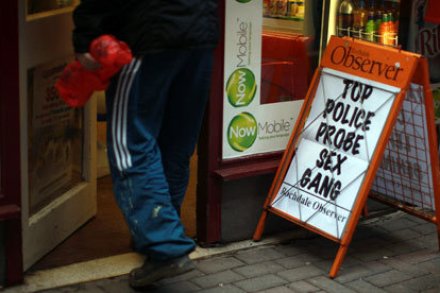
The coverage of the appalling Rochdale grooming case has been, for the most part, well-informed and responsible. In the Times today David Aaronovitch takes on the cultural issue directly (£) and should be saluted for so doing. ‘So here are the bald facts about this specific kind of abuse. Men, many middle-aged and most of previous good character, and largely from one community, have been committing a particular series of sexual crimes almost entirely against young girls. Why? Almost certainly because of their attitudes towards women and sex.’ But he saves his most important point for the end of his article when he says: ‘we ought to be mad as hell about the neglect of our most vulnerable kids.

This omnishambles is no joke

From our UK edition

As those of us in London face up to the prospect of the none-of-the-above election, it’s worth thinking ahead to 2015 and asking yourself if any of the major parties really deserves your vote. It’s hard to remember a time when things were quite like this. Daniel Finkelstein has a theory that the British electorate rarely makes the wrong judgement. And it is almost always the case that at least one party is firing on all cylinders. The 1992 election was an exception, but right now John Major, Neil Kinnock and Paddy Ashdown are looking like political giants. We are staring into the political abyss and we think it is mildly amusing to talk in terms of an omnishambles. But this is no joke.

It’s hard to find a minister who hasn’t messed up

From our UK edition

Over the weekend I had some interesting responses to my rather flippant tweet asking if there was a government minister not under pressure at the moment. The consensus seemed to be that William Hague was still looking pretty good, with Michael Gove a close second. No one mentioned Eric Pickles, but it was interesting to see the substantial figure of the Communities Secretary sitting at the Prime Minister’s side during his appearance in parliament yesterday. It would probably be too chippy, even for me, to point to the class origins of the government’s best performers. But the posh boys are certainly not at peak performance at the moment.

Get it right, and the Big Society bank could be massive

From our UK edition

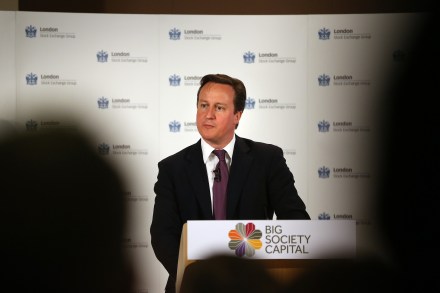
Michael Dugher is only half right when he tweets that you know the government is in trouble when it dusts down another Big Society announcement. The idea, in principle, is a good one, or at very least it is an interesting and important experiment in finding new ways of funding public services. Sir Ronald Cohen, the chair of Big Society Capital, was once a close ally of Gordon Brown and much of the thinking in this area happened in the New Labour era. There is no need for this to become a party-political battleground. The real question is, will it work? Or is it another example of boom-time policy making that will prove unfit for purpose in harder times? For a start, the government needs to get its message on this clear.

The closer you are, the bluer they get

From our UK edition

I have always thought Francis Maude was a rather decent chap on the moderate side of Tory politics. He has worked valiantly to drive the Big Society agenda from the Cabinet Office. He has the good hair of a classic Conservative MP of the old school. But he gave the game away when he talked on the Today programme about the ‘suppers’ held at Downing Street. For the people out there who think that supper is a snack you have in your pyjamas just before bedtime, and dinner is something you eat in the middle of the day, Maude's comments will be mystifying (if, that is, they ever listen to the Today programme). In these straitened times a lot of voters out there can't afford to have anyone around for dinner, tea or supper.

15-a-side solidarity

From our UK edition

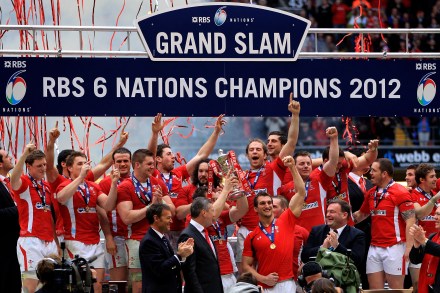
Wales have won the Grand Slam and I have grown to love rugby. Over the past weeks I have been completely captivated by the Six Nations and I don’t quite know how this has happened, because I used to hate it. I look back to those bitterly cold afternoons up on the hills above the Gordano Valley near Bristol where the weather always seemed to hover somewhere between horizontal sleet and hail. I’d loved playing football for my primary school and for the local electricity board team, Portishead Sparks. It seemed unjust that I had been sent to a rugby school at 11. I was small, skinny and increasingly short-sighted.

Visionaries, poetry and a game that turned deadly serious

From our UK edition

There is a certain poetry to the leaking of Vince Cable’s ‘vision thing’ memo and the departure from Downing Street of Steve Hilton, the very man who is supposed to have been providing the government’s vision all this time. Cable’s message to David Cameron and Nick Clegg was nothing if not forthright: ‘There is still something important missing — a compelling vision of where the country is heading beyond sorting out the fiscal mess, and a clear and confident message about how we will earn our living in the future.’ It is also difficult to argue with. Where is the industrial policy? Where is the distinct message that we are pursuing a high-tech future, or re-booting manufacturing, or encouraging the creative industries?

David Cameron, A4e and subcontracted policy

From our UK edition

It has taken some time, but the media has now worked out that the government’s back-to-work reforms are a story which just keeps on giving. Under the Work Programme, vast amounts of taxpayers’ money will find its way into the pockets of the people running the new system. When these contracts were given out last year, it all seemed a little too technical to make into a headline story. But a castle and an £8 million bonus changed all that. Now, the story of Emma Harrison and A4e is in danger of taking on the status of fable for the Cameron government. This weekend the Observer and the Independent on Sunday both had a pop and shadow Work and Pensions secretary Liam Byrne has begun to ask some probing questions. I should declare an interest here.

The Coalition must not create the modern workhouse

From our UK edition

I have warned on this blog before that the reforms of the welfare-to-work system risk embedding unpaid labour into the benefits system. This week’s story about Tesco advertising for night shift workers to be paid Job Seeker’s Allowance plus expenses has rightly caused outrage now it seems that large retailers and charities are pulling out of the work experience element of the Work Programme. As the Independent reports today, Matalan has suspended its involvement in the scheme and Waterstones, Sainsbury’s and TK Maxx have expressed their opposition. Employers are now said to be concerned that job seekers will lose their benefits if they drop out of placements.

Making the Work Programme work

From our UK edition

Last week David Milband showed some real class when he presented the recommendations from his Commission on Youth Unemployment. This was a sober and intelligent review of the crisis and the government would do well to take note. He has welcomed the introduction of job subsidies under the new Youth Contract, which will come in from April, but is right to urge a boost in the number of these that will be made available to employers. His idea to set up Youth Employment Zones in hotspots of worklessness around the country is also a solid idea that should be lifted by ministers. One element that was not highlighted by the report was self-employment.

Opening up Westminster’s closed shop

From our UK edition

I was immensely proud to co-host an event at the House of Commons with Robert Halfon, the Conservative MP for Harlow, to promote apprenticeships in parliament. The workaholic Mr Halfon came up with the idea of launching a Parliamentary Academy last year after taking on an apprentice in his own office. To me it seems the ideal way to get MPs to put their money where their collective mouth is, which is why my charity New Deal of the Mind has  started a pilot scheme with four apprentices in and around Westminster in partnership with the National Skills Academy for the creative and cultural sector and North Hertfordshire College. To show that it is possible even for small organisations, we have also taken on an apprentice in our own office.

The brave men of Camp E715

From our UK edition

Last year I travelled with the Holocaust Educational Trust to Auschwitz and the experience had a profound effect. I had been warned it would, but having been a voracious reader of Holocaust memoirs and literature, I thought I was prepared for what I would see. Others have written more eloquently on this subject. Mark Ferguson, who was on the same trip as me wrote an excellent piece on Labour List to mark Holocaust Memorial Day. As he says, there is no ‘normal’ way to respond to what you see at Auschwitz.

Matthew Norman, David Brenteron and the end of the compassionate Conservative

From our UK edition

Until now I haven’t seen Matthew Norman as a radical figure in British journalism. But his column in the Independent this week was a genuine anti-establishment rant in the best tradition. The headline was a corker: ‘Cameron is the David Brent of welfare reform’ – clear, to-the-point and expressive of the fury of the piece to come (he later describes the man he dubs ‘David Brenteron’ as a ‘galaxy-class hypocrite’ for his government’s betrayal of the disabled in its welfare reforms).

Labour is the third party, get used to it

From our UK edition

This has been a terrible week for the Labour leader – truly, bone-crunchingly awful. Inevitable comparisons have been made with the IDS era of the Tory wilderness years, but this is different because it is Labour. Conservative leaders are trophies, symbols of the best or worst the party can aspire to at any given time. But Labour leaders are expected to embody hopes and dreams: they are pragmatic Utopianism made flesh. If all political careers end in failure, then Labour leaders always fail better. Could Ed Miliband fail best of all? Patrick O'Flynn of the Express tweeted this week that the Labour Party's irritation at their ideas on executive pay being poached by the government reminded him of how the Lib Dems used to behave. I think he is on to something.

It’s not about you, Ed

From our UK edition

One thing you learn in life is that most people have no idea how they are perceived by others. This is particularly true in Britain, where we don’t generally feel it is polite to tell people what we think of them. Politicians and public figures therefore find themselves in the unusual position of having opinions about them shoved right in their faces. Maurice Glasman’s description of Ed Miliband as having ‘no strategy, no narrative and little energy’ must have been deeply hurtful to the man who elevated a previously little-known academic to the House of Lords. High-profile politicians must cauterise a certain part of their mind (or is it their soul?) in order to cope with the white noise of personal insult they have to endure.

Nazis, Aidan Burley and memories of the bad old days

From our UK edition

News of the antics of Aiden Burley and his friends at a Nazi-themed stag party in France made me think about the strange ways some Tories like to have fun. When I was at university in the mid-1980s the Tories were in their pomp. My time at Cambridge was sandwiched between the two Thatcher-era landslides of 1983 and 1987 and those of us on the left felt pretty embattled. Through a mixture of ignorance and accident I ended up at a particularly ‘traditional’ college, Magdalene, which was then all-male and proud of its public school rugger-and-rowing reputation. I was seen as something of a pinko because I went on few marches against grant cuts, dyed my hair, wore an earring and didn’t eat meat.