Martha Gill

Martha Gill is comment editor at the Evening Standard.

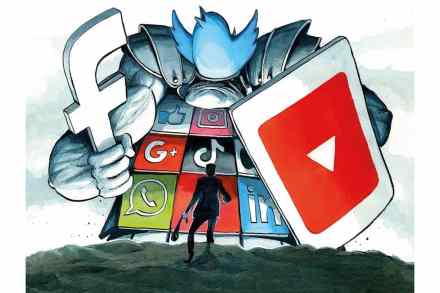
Can Elon Musk take on the tech censors?

25 min listen

In this week’s episode: Is Elon Musk heading for a clash with the British Government over free speech?Elon Musk is buying Twitter. But might the Tesla CEO be in for a battle he wasn’t expecting with the UK government? Spectator Editor Fraser Nelson writes about this potential clash in this week’s issue and he joins the podcast to expand on his thesis. (00:49)Also this week: Where is it ever ok to stare at someone? If you’ve been on the tube recently you might have spotted a rather startling sign. This poster warns passengers about intrusive staring on public transport, so as to protect women from feeling intimidated on their commute. But who, we ask, will speak up for those who love staring at people on public transport?
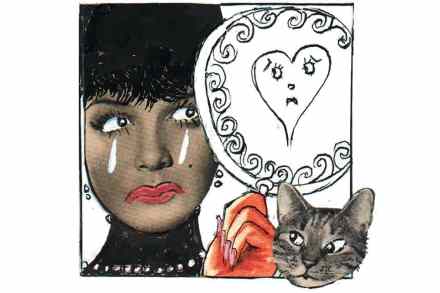
Getting a fringe is always a cry for help

Fringes have in recent years been considered attractive – Bettie Page, Elizabeth Taylor, Jane Birkin, Kate Moss – so it is easy to forget the period we have been living through is something of an aberration. For most of history, cutting a fringe has tended to mark a woman out as odd, mad or suspicious. In the 1600s, conservative churches thought a fringe indicated you were on your way to committing a mortal sin. This was true even as late as the 1920s, which is why the fringe was key to the rebellious flapper bob. There are stories of parents suing hairdressers for giving their daughter this haircut in case it damaged her chances of marriage. Those old fringe politics are back. Having a fringe nowadays says one of three things: break-up, breakdown or mutiny.

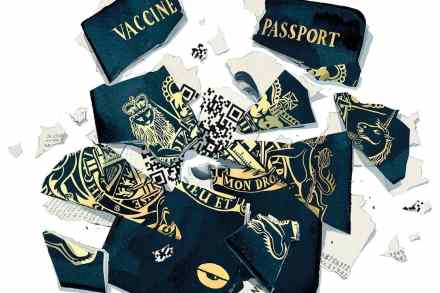
Rip it up: the vaccine passport experiment needs to end

38 min listen

In this week’s episode: Is it time to rip up the idea of vaccine passports? In The Spectator’s cover story this week, our economics editor Kate Andrews writes about her disdain for the idea of vaccine passports after being exposed to their flaws first hand. She joins the podcast along with Professor Julian Savulescu from the University of Oxford. (01:01)Also this week: Is Covid putting a spotlight on understudies?In this week's Spectator, Sarah Crompton champions the understudy as one of the heroes of the pandemic. These are the community of stand-in actors who have kept productions alive during Covid. She is joined on the podcast by Chris Howell, understudy to Michael Ball in Hairspray last year and currently stand-in for Julian Clary at the Palladium, to discuss.

The problem with pop psychology

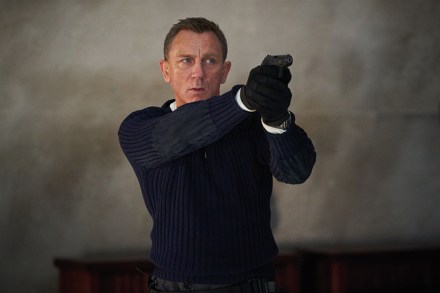
James Bond is not what he used to be. His motivations were once so simple: MI6 had told him to do it. Of late, though, he has been propelled about the screen by his inner demons, shooting people he’s not supposed to shoot, revisiting his childhood, collecting traumas, developing a mother-complex with Judi Dench. What makes Bond, Bond? Once, it didn’t matter, now it does. The next film, Bond girl Léa Seydoux has said, will be ‘even more psychological’. The screen reflects the culture. Psychology, it seems, is what we want now. The stuff is simply everywhere. Imposter syndrome, projection, narcissism, Stockholm syndrome, triggering, boundaries, personality type, self-care — these terms now pepper the discourse.

Let’s talk about sex | 25 July 2019

Every so often an idea for a show will come along that is perfect, and therefore should never be made. A sitcom based on Julian Assange’s time in the Ecuadorian embassy. Or a gender-flipped version of What Women Want. These are concepts to treasure, to return to, to discuss with friends. Once made flesh though, they disappoint. And this is what happened with the podcast My Dad Wrote A Porno. Here’s the concept. One Christmas Jamie Morton is asked to review a self-penned manuscript by his dad, which turns out to be astonishingly bad erotica written under the pen-name Rocky Flintstone. Morton recruits two old friends — BBC Radio 1 presenter Alice Levine and producer James Cooper — to read it out and talk about just how bad it is, a chapter an episode.

I believe in animal research. But it’s time to draw a line

Imagine, for a minute, that you’re a frog — a pro-science frog. You’re so pro-science that you’ve decided to donate yourself to it. You sign the consent forms, climb into the barrel and await your fate. It’s all quite exciting, you think, as you travel the bumpy road to the lab. A huge sacrifice, but a chance to expand the shores of human knowledge. You might be part of a cure for cancer, or the common cold, or help to eliminate polio. Finally you emerge — and for the first time, a doubt does too. You’re in a lab, sure, but instead of scientists, there are children everywhere — all dissecting frogs. ‘Dissecting’, though, is a loose description.