Mark Mason

Mark Mason talks about trivia via books, articles, guided walks and the pub.

The milk of human kindness

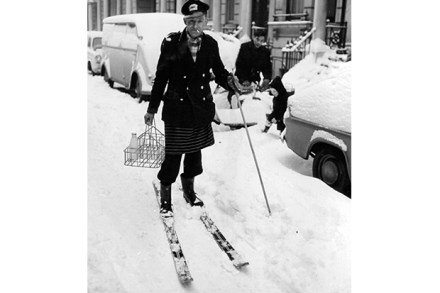
One of David Cameron’s choices on Desert Island Discs, this book reminds us, was ‘Ernie (The Fastest Milkman in the West)’. The book does not, however, explain why Cameron chose the Benny Hill ditty. Consulting the online archive, I found the then leader of the opposition explaining that ‘when you’re asked to sing a song’, ‘Ernie’ was the only one to which he could remember all the words. Sue Lawley tested him, and Cameron responded: ‘You can hear the hoof beats pound as they race across the ground, the clatter of the wheels as they span round and round’. It’s a miracle the Notting Hill Set was ever seen as smart.And yet I know what Cameron means. For our generation milkmen are an exercise in nostalgia.

Burlington Arcade

It all began with oysters. Londoners used to eat them as they walked along, throwing away the shells much as they do burger wrappers now. Lord George Cavendish, owner of Burlington House on Piccadilly (now the Royal Academy), was sick of shells littering his garden, and so in 1819 decided to open a shopping arcade down that side of his property to protect it from the ‘tossers’. Nearly 200 years later the place is thriving. You can buy expensive watches and shoes, perfumes and scarves, wallets and pens. Fred Astaire would get ‘lost for days’ in the Burlington, having discovered it when an admirer bought him nine pairs of gold striped slippers there.

Beautiful city, beautiful game…

The secret to keeping any relationship going is, of course, to see as little of each other as possible. We all know what familiarity breeds, so there’s no point pushing your luck. Imagine my delight, therefore, on discovering a holiday company that specialises in separating you from your other half while you’re away. Well, for a couple of hours anyway. Footballbreak.co.uk offers trips to European cities whose teams play the beautiful game particularly beautifully: Madrid, Munich, Paris and the like. As well as organising your flights and hotel, they also arrange tickets for the match. So while the female(s) of your party swan off to hammer the credit card, the male(s) can sit and admire the skills of Ronaldo or Alonso or Silva.

Aga can’t

Earlier this year my partner paid several hundred thousand pounds for an Aga. There’s no other way of putting it. A major cause of her excitement about our new house was the presence in its kitchen of the whacking great oven. I, on the other hand, was unsure how I felt about it — Aga-nostic, if you like. Six months later I’m sick of the bloody thing. What’s more, I’ve worked out why Aga lovers go on about them so much. For those of you fortunate enough never to have encountered one of these beasts, the facts are these. An Aga has to be kept on constantly, sapping your fuel source (ours is electric) 24 hours a day. My model has two ovens, one at a fixed high temperature, the other at a fixed low temperature. There are two hotplates, ditto. And that’s it.

The Douro Valley

They’re called quintas, Joana tells us, because the rich families who owned the land along this stretch of the Douro river used to let others work it in return for a fifth of the profits. And in this part of northern Portugal, ‘work’ means only one thing: wine. We’re here in the Douro Valley to learn more about it all, including this trip to Quinta do Bomfim, the winery where Dow’s port is made. The valley also produces Cockburn’s — but don’t worry, the Portuguese needed those TV adverts telling them that the Scottish name is pronounced ‘Co-burn’ too. The Americans just dispense with the ‘ck’ — hence James Coburn, who was of Scottish descent.

Paths to fulfillment

You could say that this book contradicts itself. Robert Moor’s chosen topic is trails — not just walking, where you go for a bit of a stroll and might turn here or might turn there, but specifically trails, where you can only follow one route. He likes them because ‘they are a rigidly bounded experience. Every morning, the hiker’s options are reduced to two: walk or quit.’ And yet the book itself operates by exploring tangents, lots of subjects related to trails but which aren’t themselves trails. Not that the contradiction matters; Moor goes down some pretty interesting tangents.

Straight talking | 11 August 2016

Thirty years ago this week, Queen performed what would turn out to be their last gig, at Knebworth. Their penultimate concert, at Wembley, was shown on Channel 4. I recorded it, and became obsessed. Time after time I watched-Freddie Mercury prance on to the stage sporting a moustache you could have swept a factory floor with. I watched him simulate the act of self-love with his famous sawn-off mic stand. I watched him preen, pout and posture, shaking his backside at the crowd, reappearing at the end dressed as the Queen. The previous year I’d watched him at Live Aid wearing a skimpy white vest and a leather armband studded with metal. Not once did it occur to me that-Freddie Mercury was gay. Those of you born since then-probably won’t believe that.

Maryland’s mean streets

Quick tip, should you ever find yourself alone in the interview room at the police headquarters of Prince George’s County, Maryland: don’t go to sleep. The officers will see you through the peephole and assume you’re guilty. Anyone innocent finding themselves in that windowless, 8ft by 8ft room paces around, bounces on their toes and sobs. Only the guilty snooze there. It’s known as the ‘felony nap’. Del Quentin Wilber learned a lot as he tailed the PG homicide squad during February 2013. His account of the experience is a non-fiction version of faction, the genre in which novelists incorporate real people into their stories. Coming at it from the opposite end of the spectrum, Wilber presents his facts as if in a novel.

Guilty displeasures

Strawberries. Ella Fitzgerald. Lying on the beach. They’re three of my ‘guilty displeasures’. You haven’t heard of the guilty displeasure? That’s because the concept hasn’t been invented yet. But it needs to be — and quick. The phrase ‘guilty pleasure’ is widely known. It was coined by the DJ Sean Rowley, who, not content with being the man on the cover of What’s the Story Morning Glory? by Oasis, applied a label to the songs we love despite them being uncool. The idea expanded, and now anything naff can be a guilty pleasure: chocolate spread, knitting, Countdown, you name it. But what about the opposite phenomenon, the supposedly cool things that we don’t like?

Paul McCartney

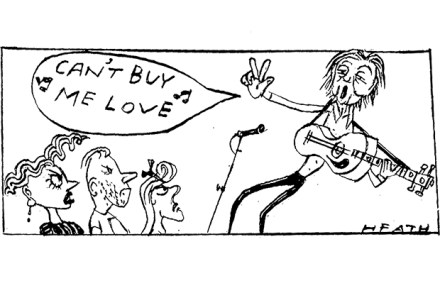
It’s slightly galling, after years of sticking up for Paul McCartney, to read a new biography of the bloke and realise that you don’t, in the end, really like him that much. But that’s how good Philip Norman’s book is — Macca has no agenda, it simply lets you make up your mind. And for me, it was the leg-combing wot won it. You can’t argue with McCartney’s work. In fact, what you have to argue against is the ridiculous notion that he was the poppy, pappy one while John Lennon was the radical. It was Macca who funded the underground newspaper International Times; who was into Stockhausen, Cage and Berio while Lennon was (to quote McCartney himself) ‘living on a golf course in bloody Weybridge’.

Reading the waves

Water accounts for 70 per cent of your planet, and 60 per cent of your body. Yet when do you ever stop to consider it? The quirks and habits and secrets of good old H2O were crying out to have a book written about them. That said, it had to be written by the right person. A subject like this could have attracted a complete dullard, the sort of person you dread getting between you and the door at a party. Fortunately, the job went to Tristan Gooley. His previous books include The Walker’s Guide to Outdoor Clues and Signs and The Natural Navigator. There’s more of the same here, like the trick to getting your bearings from the puddles on a path: there will be more of them on the path’s south side, as the undergrowth at the edge shields that half from the sun.

The game of the name

You have to pity the Welsh woman who was last week prevented by the Court of Appeal from naming her daughter ‘Cyanide’. An unusual choice, admittedly. And the mother’s defence — Cyanide is a ‘lovely, pretty name’ because it was the drug Hitler used to kill himself ‘and I consider that this was a good thing’ — didn’t help. But given some of the names being foisted on kids these days, Cyanide almost seems sensible. Naming your child was once simple: you picked from the same handful of options everyone else used. But modern parents want exclusivity. And so boys are called Rollo, Emilio, Rafferty and Grey. Their sisters answer to Aurelia, Bartolomea, Ptarmigan or Plum.

Mistakes to remember

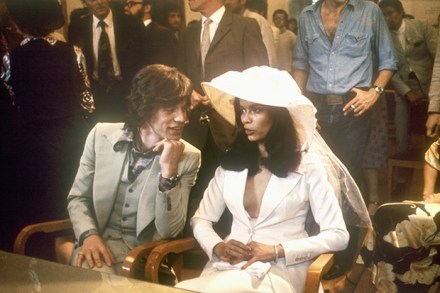
It’s the only thing Bianca Jagger and I have in common: we’ve both been victims of false memory. You almost certainly have, too. False memory is the meanest trick your brain can play on you. Instead of refusing to admit that it can’t recall something, the treacherous little creep supplies a wrong answer instead. It’s a phenomenon I’ve been reminded of by two new books. We wouldn’t mind if our brain fessed up, if it said ‘Sorry boss, can’t help you on that one.’ Simple failures of memory, where you know you can’t remember something, are common. But false memory is your brain going out of its way to provide you with incorrect information.

Girl about town

The old ditty got it wrong: it should have been ‘Maybe it’s because I’m not a Londoner that I love London so’. The capital’s biggest fans, I tend to find, are those who weren’t born there, and Emily Chappell is yet another example. Originally from Wales, she has written more than just an engaging account of her work as a London cycle courier: she has chronicled the way in which the capital provides a home for those who don’t fit in elsewhere. The job itself is a perfect fit for a restless soul: Chappell describes the sweet spot where my body became so attuned to the bike and road that all resistance seemed to melt away … experiencing a strange sense of stillness, as though I had gone so far into motion that I had reached its centre.

Looking for Nessie

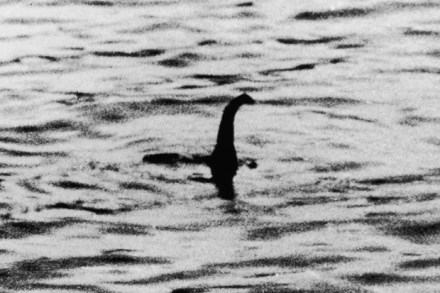
It wasn’t until I drove past Loch Ness a couple of years ago that I realised just how enormous it is. Over 20 miles long and deep enough to hide Blackpool Tower, it could hold the water from all the lakes in England and Wales combined. But it’s still not as big, I found myself thinking, as the human imagination. Gareth Williams’s excellent book isn’t about the Loch Ness monster; it’s about the people who have looked for it. There is Alexander Keiller, rich from marmalade and ‘fond of sex, sometimes on a near-industrial scale’. There’s wing commander Basil Cary and his wife Winifred, known as Freddie, who can work out which pub her husband is in by dangling a pendulum over a map (she then rings up and shouts: ‘Send him home!’).

Sir Ian Botham is a hero – and a fool

In 1981, when I was ten and Ian Botham was 26, I thought he was God. Now, the week after Botham turned 60, the 44-year-old me thinks he’s an arse. And that makes me sad. The world is a simple place when you’re ten. There are heroes and villains, victories and defeats. The very best victories are the ones that were nearly defeats. Headingley 1981, for example. No need for the details — you know them already, not just from the match itself but from the hundreds of documentaries made about it since. I still lap them all up like an addict, silently mouthing along as Richie Benaud describes Botham’s six going ‘into the confectionery stall and out again’.

Spectator books of the year: Mark Mason discovers the royal family’s ‘Marmite strategy’

Royalty Inc. by Stephen Bates (Aurum Press, £20) is a superb account of how ‘the Firm’ (Windsors rather than Krays) became ‘Britain’s best-known brand’. Bates is a veteran royal journalist, though much of his career was on the Guardian, which wouldn’t let him use that title. He reveals that the palace’s own term for their gameplan is the ‘Marmite jar strategy’: pretend you’re a timeless and static part of the national furniture, while subtly and constantly changing to remain relevant. Simon Hughes’s Who Wants to be a Batsman? (Simon & Schuster, £18.99) brilliantly analyses this fragile creature.

Discover your inner nerd

There’s a curious thing about the bowling green in my Suffolk village. The footpath running alongside it is on a slope, meaning that as you descend, the wall gradually rises and hides the players from view. What’s strange is that the older I get, the more I find myself slowing down to see what happens to the wood that’s just been delivered. Not knowing whether it reached the jack, or managed to nudge the opponent’s wood to one side, simply isn’t an option. It would be like going to see a whodunit and not staying to the end. This book gave me the same feeling. Crown green bowls is one of those things you don’t want any personal contact with; you’re just glad it’s still there. A bit like penicillin, or Ken Dodd.

From Spike Milligan — and Marge Simpson — with love, light, peace and great respect

This book is a serious bit of kit. Its hard covers measure 28.9 by 21 centimetres, and it weighs 1.62 kilograms — 324,000 times the amount of valium, we learn on page 98, that Tom Clancy needed to appear on Good Morning America (‘Sorry to wimp out, but, shit, I was scared’). The illustrations are beautiful. Very often they are simply the letters themselves (don’t worry about handwriting, there are transcripts too), but sometimes they reference the content. For instance a photograph of butterflies accompanies the biologist Rachel Carson’s letter about watching said creatures with a friend..

Fancy that

[audioplayer src="http://rss.acast.com/viewfrom22/boris-nickyandthetoryleadership/media.mp3" startat=1677] Listen [/audioplayer]Stand by your remotes, girls: the second series of Poldark is under way. Filming has started — yes, he’s out there somewhere, wearing those trousers, not wearing that shirt, swinging that scythe. You’ve only got to wait for someone to edit it all together and then Sunday nights can be special again. You’ll be able to gaze and sigh and imagine. Us blokes, meanwhile, will be considering an anomaly: why is that women can express lust without sounding seedy, but men can’t? I didn’t watch the first series. About three weeks in, when the Twitter drums had really started beating, I asked a female friend if it was that good.