Mark Mason

Mark Mason talks about trivia via books, articles, guided walks and the pub.

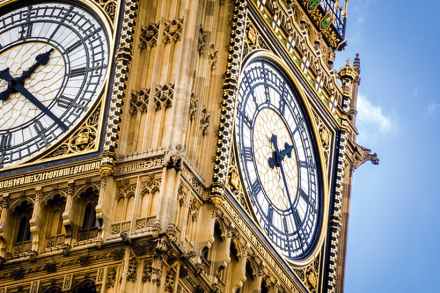
Why does Big Ben bong on the radio before it does in real life?

The debate over whether Big Ben should bong to mark Brexit isn’t the first time the famous bell has caused consternation. Listeners to a BBC radio news bulletin in 1949 were horrified when the chimes failed to sound. They had to wait until a later bulletin for an explanation: the clock was running four minutes slow because a swarm of starlings had gathered on the minute hand. In fact, right from the start there were problems with the Great Bell. (That’s its official name — ‘Big Ben’ is a nickname honouring, depending on who you believe, either Sir Benjamin Hall, who oversaw its installation, or Benjamin Caunt, a heavyweight boxer.) The original bell, cast in Stockton-on-Tees, cracked during tests in New Palace Yard.

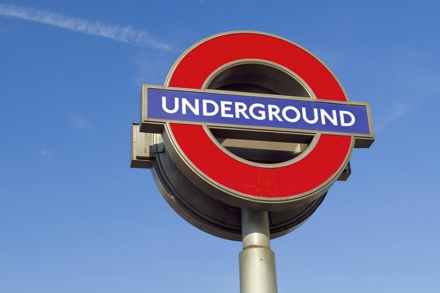
What is the only London Underground station to share no letters with ‘mackerel’?

Don’t worry, this isn’t a piece about fishing quotas. It’s about the word ‘mackerel’ itself. Specifically, the fact that St John’s Wood is the only London Underground station to share no letters with it. Really? Half a page in The Spectator, just about that? Well, yes. The fact has gathered a life all of its own. It’s been doing the rounds in pub quizzes for ages. At least 20 years: in a trailer for his 1999 TV chat show, Jeremy Clarkson promised to reveal the answer (and then didn’t). No less an authority than Only Connect host Victoria Coren Mitchell calls it her favourite quiz question ever. ‘It’s the comic juxtaposition,’ she explains.

Why everyone loves Dolly Parton

When her musical 9 to 5 opened at the Savoy Theatre earlier this year, Dolly Parton stayed at the Savoy hotel itself. Very convenient, you might think: the walk between the two takes about ten seconds. But to ensure she arrived at the far end of the red carpet like everyone else, Dolly had to be collected from the back entrance of the hotel, and driven in a black SUV around to the front. Such are the lunacies of stardom. We learned about this in Dolly Parton’s America, a nine-episode podcast from WNYC radio. ‘In this intensely divided moment,’ they claim, ‘one of the few things everyone still seems to agree on is Dolly Parton — but why?’ A clue came in the episode focusing on the star’s approach to politics.

Why I love a bit of death on a Sunday night

There’s nothing like a nice bit of death on a Sunday evening. Radio 4 originally transmit their obituary programme Last Word on Friday afternoons, but I love listening to the repeat. Sunday at 8.30 p.m. is the perfect time — the ending of people’s lives at the ending of the week. The stresses of Monday morning are beginning to appear on your mental horizon, so Last Word is a handy reminder that none of it matters. Triumphs and tragedies come and go, but in the end we all check out. This week provided the usual smorgasbord of mortality. Everyone from Irene Shubik, the TV producer behind Rumpole of the Bailey, to Abu Bakr al-Baghdadi.

The unlikely beauty of urinals

In 1966, just as he was becoming famous, Michael Caine met John Wayne. The Holly-wood veteran offered him some advice: ‘Never wear suede shoes.’ The explanation? ‘One day, you’ll be taking a pee, and the guy next to you will say “Michael Caine!” and he’ll turn and piss all over your shoes.’ Urinals are tricky places. Women seem to think they’re temples of laddishness, all footy banter and lewd jokes. A few men are like that, the sort who stand with their free palm planted high on the wall (God knows why). But most of us find the whole thing rather awkward. The broadcaster Mark Chapman once stood next to his hero Bryan Robson.

An ‘I’ for a ‘my’: why we’re terrified of getting our grammar wrong

Jonathan Agnew recently described off-the-record interviews as those where you agree that it’s ‘between you and I’. Last month, Jess Phillips tweeted that she had ‘read a few wild accounts of Boris Johnson and I in the lobby’. And a Times journalist wrote about someone who had ‘made Jenny and I feel so welcome’. All three are articulate, intelligent people. And yet all three wrote ‘I’ where they meant ‘me’. It’s happening more and more. The only explanation can be self-doubt. Give any of these people a second to think about it, and they’ll reply that yes, of course they should have said ‘me’. It’s easy to work out: just remove the other person from the sentence.

We have the French Revolution to thank for Ordnance Survey maps

You could say it started because of the French. The turmoil caused by their revolution got the British military worried about the possibility of an invasion, so maps of the ‘invasion coast’ (beginning with Kent in 1801) were produced. Hence the name ‘Ordnance Survey’. Until the 1960s every director general of the agency held an army rank. The first five-mile baseline from which everything was measured had been laid out earlier by Major-General William Roy, its two ends marked by cannons stuck in the ground. Coincidentally one of these lay just outside what is now Heathrow. It’s still there, near the junction of Northern Perimeter Road and Nene Road. Searching for it once, I asked a planespotter if he knew where it was.

Motorways

The first one was too straight. In the absence of a speed limit, early motorists on the M1 used the long sections without bends as racetracks. The record was set in April 1964 by two drivers testing their AC Cobra for Le Mans: they reached 185 mph. The following year new express trains appeared on the track next to the motorway, and some drivers tried to keep up with them. So the 70 mph limit was introduced. Subsequent motorways were built with curves even where they didn’t need them, purely to discourage speeding. As if driving itself wasn’t risky enough, some users of the new M1 stopped for picnics on the hard shoulder, with one family even doing so on the central reservation.

Blessed Brian

Brian Bilston’s life is summed up perfectly by the incident with his neighbour’s dog. The annoying Mrs McNulty comes round to claim that the animal has spontaneously combusted. Brian has his doubts, not least because Mrs McNulty has never owned a dog. But he nevertheless uses the incident as inspiration for a poem, ‘The Day My Dog Spontaneously Combusted’: there he was, chasing sticks, doing tricks, and all that stuff next minute, woof Brian tweets the poem to his 23 followers. This is part of his ‘renewed commitment to social media’, but serves only to reduce his follower count to 17. What’s worse, ‘to add insult to invisibility’ he also gets angry messages from the RSPCA. Bilston is the greatest English anti-hero of our time.

Company names

Poor Mr Bergstresser. He put up the money to start the financial reporting company but his name wasn’t as snappy as those of his two partners, so ‘Dow Jones’ it was. At least he got the rewards, though, unlike Mr Taylor: the grocer sold out to Mr Waite and Mr Rose after just a couple of years, hence Waitrose. Other ‘people’ never existed in the first place. Faber & Faber was started by Geoffrey Faber on his own: he added the second name to sound more respectable. And there was no Mr Aston — Lionel Martin raced his cars at Aston Clinton in Buckinghamshire. His wife realised that the combination would put the firm near the beginning of alphabetical trade directories. Other people sort of existed.

Off the agenda

God save us from committees. They’re an increasingly outdated way of getting things done. But there’s a certain sort of person who loves them. What’s worse, they want you to love them too. Anyone who has spent more than 15 minutes as the parent of a school-age child will be familiar with the emails. ‘Joyce has now served as treasurer of the committee for seven consecutive years, and really does want a break. Please can someone volunteer to take over? It’ll only take a few hours of your time each month — and it can be great fun!’ Yeah, right. Then comes the emotional blackmail. ‘I’m sure your child loves attending the club every week, and all the great activities they get up to there. Now’s your chance to give a little back!

The ultimate comfort food

‘You are what you eat.’ The old phrase always reminds me of Denzil, John Sparkes’s character in the comedy sketch show Absolutely, who quotes it to his girlfriend and then adds: ‘And you have obviously eaten something very stupid.’ Pete Brown, on the other hand, has taken it as the theme of his book about British food. By examining nine classic ‘dishes’ — fish and chips, the full English, cream tea, crumble and custard, pie and peas, a cheese sandwich, spag bol, curry and the Sunday roast — he builds a picture not just of the grub itself but of the people who put themselves outside it. It says something about the British, for instance, that cheddar sells more by volume in this country than all other cheeses put together.

The Connaught

You may have noticed the Connaught a little more since 2011, when ‘Silence’, the steamy fountain by Japanese ‘architect philosopher’ Tadao Ando, was installed outside the entrance. But actually the hotel doesn’t want to be noticed. It prides itself on guaranteeing famous guests their privacy. Eric Clapton added his own layer of protection by checking in as ‘Mr W.B. Albion’ (he’s a West Brom fan). Alec Guinness valued its discretion, and was annoyed when Jack Nicholson’s stay during the filming of Batman attracted the paparazzi. The hotel in turn had its own issues with Jack and his entourage. As the star put it to a friend: ‘They have a shit fit every time we walk through the lobby with jeans on.

Love match

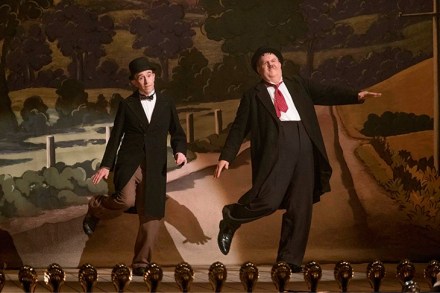
You mess with Laurel and Hardy at your peril. Their fan base is essentially the entire world. Samuel Beckett adored them: many think they inspired Waiting For Godot. Eric Morecambe’s reluctance to appear in bed with Ernie Wise melted when he was reminded that Stan and Ollie had used the same conceit. In Poland the duo are known as Flip i Flap, in Germany as Dick und Doof. I once attended a New Year’s Eve party at which the two dozen children present (toddlers to teenagers) were parked in front of a screen with a stack of Laurel and Hardy DVDs — not one of them left the room all evening. You have to ask yourself: could you honestly be friends with someone who didn’t love Laurel and Hardy? Which means that Stan & Ollie has got us nervous.

Girl trouble

Talking to someone in her mid-twenties recently, I mentioned someone else of the same age. ‘She’s a really talented girl,’ I said. Then I checked myself. ‘Sorry… er… woman.’ Sara smiled. ‘It’s OK,’ she replied. ‘That’s what I call myself. I’m a self-identifying “girl”.’ Fair enough. But the exchange stayed with me. It brought back the episode of Have I Got News For You which featured the ‘Michael Fallon touched Julia Hartley--Brewer’s knee’ story. Quentin Letts offered the opinion that Fallon had been brave, on the grounds that Hartley-Brewer is a ‘big strong girl’. ‘She’s not a girl,’ responded the presenter Jo Brand.

St Martin-in-the-Fields

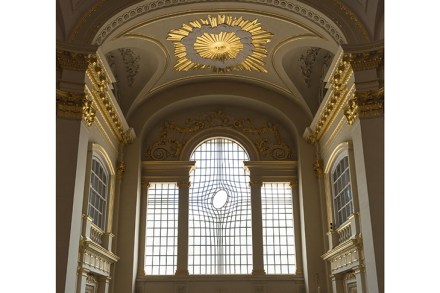
St Martin’s really did once stand in the fields, just as nearby Haymarket was a market selling hay. But the church has moved with the times. In 1924 it hosted the first ever religious service to be broadcast live. You might have expected Westminster Abbey or St Paul’s to get the nod, but neither wanted it — many in the religious establishment thought it would be wrong to transmit divine worship over the airwaves, as people might listen in pubs. Dick Sheppard, St Martin’s vicar at the time, was delighted to receive a letter saying that people in one south London pub had tuned in. Not only had they sung hymns for the first time since childhood, they’d discussed his sermon over their beer. Sheppard also got the better of George Bernard Shaw.

Davenports Magic

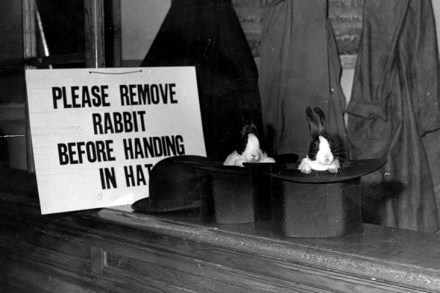
It’s a very fitting place for a magic shop. Hidden away in the maze of pedestrian tunnels that lead from Covent Garden to Charing Cross station, Davenports certainly takes some finding. But that’s to the good — a complete absence of passing trade means they no longer have to stock stink bombs and novelties, as they did in their old location opposite the British Museum. These days Davenports concentrate solely on the proper stuff. The shelves boast Svengali decks and thumb tips, gimmicks like the Raven (it’s a beauty), and instructional DVDs and books by everyone from David Devant to Roy Walton. If those names are familiar to you, you’re probably a pro.

Coming second

Who was the second prime minister? Everyone knows Robert Walpole was the first. Firsts get all the fame and glory. But what about the poor seconds, elbowed into the shadows of history? Isn’t it time they were given some love? Step forward, the Earl of Wilmington, PM from 1742 to 1743. Let us celebrate the fact that his country house in Warwickshire appeared as a monastery in Carry On Camping — and was the inspiration for Croft Manor, Lara’s childhood home in the Tomb Raider games. Likewise, no one knows very much about James Garfield, the second US president to be assassinated. I certainly didn’t until I researched him for my new book, The Book of Seconds. I didn’t know that he could write in Latin with one hand and, simultaneously, in Greek with the other.

How ‘safe’ is the Bank of England?

‘Safe as the Bank of England.’ So goes the old phrase. And yes, with walls 8ft thick, the Old Lady is pretty impregnable. Even the keys to her vaults are more than a foot long (the locks also now incorporate voice-activated software). Until 1973 the building was guarded at night by soldiers from the Brigade of Guards, who received a pint of beer with their dinner there. With all this security, how can you hope to get in? One answer came in 1836, when the directors received an anonymous letter inviting them to meet the letter writer in the bullion room late one night. At the agreed hour they heard some floorboards being dislodged, and looked down to see a man’s head appearing. He worked in the sewers, and had calculated that a drain ran directly underneath the vault.

The Bank of England

‘Safe as the Bank of England.’ So goes the old phrase. And yes, with walls 8ft thick, the Old Lady is pretty impregnable. Even the keys to her vaults are more than a foot long (the locks also now incorporate voice-activated software). Until 1973 the building was guarded at night by soldiers from the Brigade of Guards, who received a pint of beer with their dinner there. With all this security, how can you hope to get in? One answer came in 1836, when the directors received an anonymous letter inviting them to meet the letter writer in the bullion room late one night. At the agreed hour they heard some floorboards being dislodged, and looked down to see a man’s head appearing. He worked in the sewers, and had calculated that a drain ran directly underneath the vault.