Mark Mason

Mark Mason talks about trivia via books, articles, guided walks and the pub.

Porn Britannia, Xi’s absence & no more lonely hearts?

47 min listen

OnlyFans is giving the Treasury what it wants – but should we be concerned? ‘OnlyFans,’ writes Louise Perry, ‘is the most profitable content subscription service in the world.’ Yet ‘the vast majority of its content creators make very little from it’. So why are around 4 per cent of young British women selling their wares on the site? ‘Imitating Bonnie Blue and Lily Phillips – currently locked in a competition to have sex with the most men in a day – isn’t pleasant.’ OnlyFans gives women ‘the sexual attention and money of hundreds and even thousands of men’. The result is ‘a cascade of depravity’ that Perry wouldn’t wish on her worst enemy.

Magic and the art of lying

Talking to a former politician about lying felt very appropriate. It was during one of my ‘Magical Thinking’ sessions, a corporate team-building event I run in which I perform close-up magic tricks and the participants try to work out how they’re being done. Among those at this session was Anne-Marie Trevelyan, who had initially been baffled by a particular mentalism effect. She thought of a day of the week, then a month of the year and finally a playing card, and my guesses on all three proved correct. Every possible route by which I could have cheated seemed blocked off – but Anne-Marie was brilliant at responding to my hints (part of the process, of course), and gradually she led the team towards the solution. The moment it dawned on her how the trick worked was wonderful.

Ian Williams, Philip Patrick, Guy Stagg, Ysenda Maxtone Graham, Mark Mason and Catriona Olding

37 min listen

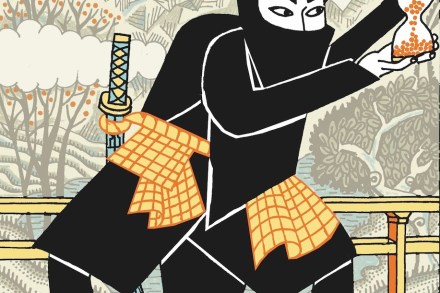
On this week’s Spectator Out Loud: Ian Williams looks at Chinese influence in the UK (1:39); Philip Patrick interviews Japan’s last ninja (9:35); Guy Stagg reviews Damian Le Bas and explores the myths behind the city of Atlantis (18:23); Ysenda Maxtone Graham reviews an exhibition on school dinners at the Food Museum in Stowmarket (23:38); Mark Mason provides his notes on quizzes, ahead of the Spectator’s garden quiz (28:00); and, swapping Provence to visit family in America, Catriona Olding takes us on a trip up the east coast (31:27).  Produced and presented by Patrick Gibbons.

The art of a great pub quiz

‘What’s the capital of Albania?’ The correct answer is, of course: ‘Who cares?’ If you’re at a quiz and this is one of the questions, find another quiz. Either you know it’s Tirana or you don’t, and in neither case is there any satisfaction. A really good quiz question is one you can work out. For instance: ‘Which major UK retailer has the same name as Odysseus’s dog in Greek mythology?’ Even if you don’t know your Classics, you can take a mental trip up and down the high street until you arrive at Argos. Or, in the case of one team I encountered, FatFace. A good quizmaster should also avoid themed rounds. Saying ‘and now – geography’ will produce a groan from at least a quarter of the crowd.

How to walk away from greatness

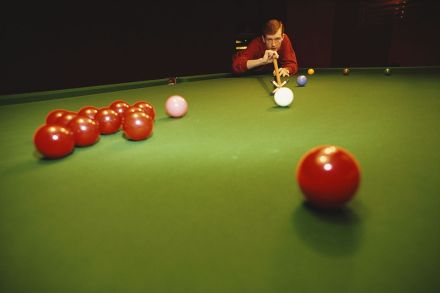
How do you walk away from greatness? How do you vacate the position of being literally the best person in the world at something? Most of us never have to face this challenge, but at some point Ronnie O’Sullivan will. In Steve Davis and Stephen Hendry he has contrasting examples of how to tackle it. I’d argue that Davis’s approach is by far the better – and indeed teaches all of us about life and the way it should be lived. ‘If he plays his best, he wins. It’s as simple as that.’ There aren’t many who disagree with Hendry’s verdict on O’Sullivan, his successor as the king of snooker and the greatest player, by common consent, ever to pick up a cue.

Owen Matthews, James Heale, Francis Pike, Christian House and Mark Mason

32 min listen

On this week’s Spectator Out Loud: Owen Matthews argues that Turkish President Erdogan’s position is starting to look shaky (1:19); James Heale examines the new party of the posh: the Lib Dems (7:51); Francis Pike highlights the danger Chinese hypersonic missiles pose to the US navy (13:54); Christian House highlights Norway’s occupation during the Second World War, as he reviews Robert Ferguson’s book Norway’s War (22:01); and, Mark Mason provides his notes on coins (28:18).  Produced and presented by Patrick Gibbons.

The curious language of coins

Lewis Carroll used to travel with purses divided into separate compartments, each containing the exact number of coins he’d need for a particular transaction (train fare, porter, newspaper and so on). These days we have one bank card which gets tapped everywhere. The coinless society might be more convenient – but it’s also more boring. Coins are beautiful and fascinating. For centuries they were the only way most people knew what their monarch looked like. Henry VIII was nicknamed ‘Coppernose’ because of the way the silver coating on copper coins rubbed away, starting with his nose. Even Oliver Cromwell put himself on the currency (as a Roman emperor wearing a laurel wreath). Since Charles II, monarchs have alternated the way they face.

Why no news is good news

I’m hiding from something I used to love: the news. It’s a common tendency these days – Loyd Grossman noted it in his Spectator diary recently, calling himself a ‘nonewsnik… unable to deal with a daily diet of misery and despair’. I understand the need to escape the depressing effects of war and economic turmoil. That’s part of my own reasoning too. But my main point is slightly different: it’s not so much that the news is depressing, it’s that the news is boring. We’ve been here before. Whatever the issue, we’ve faced the same old problems and run through the same old arguments. For my 50th birthday, a friend gave me a copy of the front page of the Times from the day I was born.

Katy Balls, Alexander Raubo, Damian Thompson, Daisy Dunn and Mark Mason

27 min listen

On this week’s Spectator Out Loud: Katy Balls analyses the threat Reform pose to the Conservatives (1:20); Alexander Raubo talks us through the MAGA social scene and the art collective Remilia (6:42); Damian Thompson reviews Vatican Spies: from the Second World War to Pope Francis, by Yvonnick Denoel (12:27); Daisy Dunns reviews the new podcast Intoxicating History from Henry Jeffreys and Tom Parker Bowles, as well as BBC Radio 4’s Moving Pictures (17:50); and, Mark Mason provides his notes on obituaries (22:46).  Produced and presented by Patrick Gibbons.

Labour’s Irish insurgent, Germany’s ‘firewall’ falls & finding joy in obituaries

48 min listen

As a man with the instincts of an insurgent, Morgan McSweeney, Keir Starmer’s chief of staff, has found Labour’s first six months in office a frustrating time, writes The Spectator’s editor Michael Gove. ‘Many of his insights – those that made Labour electable – appeared to have been overlooked by the very ministers he propelled into power.’ McSweeney is trying to wrench the government away from complacent incumbency: there is a new emphasis on growth, a tougher line on borders, an impatience with establishment excuses for inertia. Will McSweeney win his battle? And what does this mean for figures in Starmer’s government, like Richard Hermer and Ed Miliband? Michael joined the podcast alongside Starmer’s biographer Tom Baldwin. (1:04) Next: can the AfD be stopped?

What makes a good obituary?

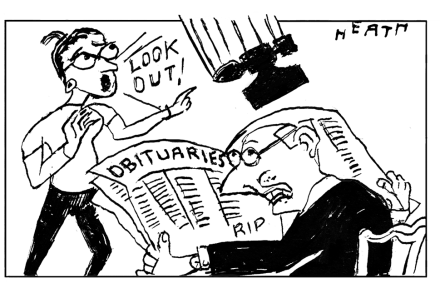
My obituaries habit gets ever stronger. I find there’s nothing as inspiring or instructive or entertaining as reading a few hundred words about someone’s time on this planet. My main dealers are the Times and Radio 4’s Last Word. Each batch throws together a varied mix, people who share only one thing in common: the fact that they checked out at the same time. All human life is here, as it were. A good obituary knows we want stories, not lists of achievements. Some obituaries read like sitcom scripts. Like the obit for a rugby hero who played in a match between the British army of the Rhine and the French army. Twelve players were sent off, one of them our hero for landing a right hook on the nose of an opponent who had just bitten him on the genitals.

How to serve smelt

Donald Trump has form with the smelt. In his 2016 presidential run, he complained that California’s authorities were prioritising the endangered fish (which are native to the Sacramento-San Joaquin River Delta) over farmers’ irrigation needs. ‘Is there a drought?’ he asked a private audience of farmers ahead of a rally. ‘No, we have plenty of water.’ Environmentalists, he said, were wasting water in their efforts ‘to protect a certain kind of three-inch fish’. Last week, he levelled a similar accusation against California’s governor Gavin Newsom – or, as he calls him, ‘Newscum’ – for using the state’s water (which could have fought the LA fires) to provide the ‘essentially worthless’ smelt with a habitat.

Christopher Caldwell, Gus Carter, Ruaridh Nicoll, Tanya Gold, and Books of the Year I

34 min listen

On this week’s Spectator Out Loud: Christopher Caldwell asks what a Trump victory could mean for Ukraine (1:07); Gus Carter argues that leaving the ECHR won’t fix Britain’s immigration system (8:29); Ruaridh Nicoll reads his letter from Havana (18:04); Tanya Gold provides her notes on toffee apples (23:51); and a selection of our books of the year from Jonathan Sumption, Hadley Freeman, Mark Mason, Christopher Howse, Sam Leith and Frances Wilson (27:08).  Produced and presented by Patrick Gibbons.

Michael Gove, Max Jeffery, Christopher Howse, Robert Jackman and Mark Mason

31 min listen

On this week’s Spectator Out Loud: new Editor Michael Gove discusses his plans for The Spectator (1:08); Max Jeffery heads to Crawley to meet some of the Chagossians based there (5:44); Christopher Howse reads his ode to lamp lighting (12:35); Robert Jackman declares the Las Vegas Sphere to be the future of live arts (19:10); and Mark Mason provides his notes on the joy of swearing (26:50).  Produced and presented by Patrick Gibbons.

The art of swearing

Sometimes it’s the only word that will do. Every journalist at Max Verstappen’s press conference last month understood him perfectly when he said his car was ‘fucked’, the adjective chosen not to convey mechanical failings but rather Verstappen’s emotions. But the Formula 1 authorities were displeased, and the driver has been punished. Perhaps the FIA should listen to Billy Connolly. The comedian is a fan of the f-word, relishing its harsh consonants. He maintains there simply isn’t a polite equivalent to match it: ‘“Go away” just dissipates.’ Of course you can take it too far. Scattergun swearing is tedious, the words losing their power with each repetition. But sparing, well-timed use of an expletive or two can be hugely effective.

Farewell, Jimmy Anderson

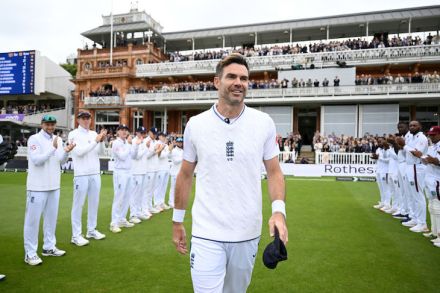
Forget the extraordinary achievements – the reason we’re going to miss James Anderson is that, as a man, he’s so ordinary. Yes, he’s played more Tests for England than anyone else (188), and taken more wickets (701 and counting, at least for another day or two). Indeed his haul is easily the best by any fast bowler in the world – only the spinners Muttiah Muralitharan and Shane Warne did better, Warne by a very slim margin. Goodbye then, Jimmy, you routine superstar, you everyday hero Anderson has bowled more Test maidens than Phillip de Freitas bowled Test overs. (This is a tribute to the former rather than a dig at the latter, who played 44 times for his country.) Shoaib Bashir, one of his teammates in this final match, wasn’t even born when Anderson played his first.

Lawfare: how Starmer will govern through the courts

40 min listen

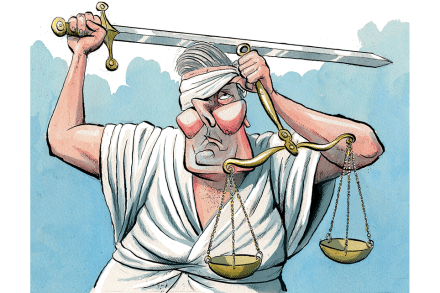
This week: Lawfare Our cover piece examines how Keir Starmer’s legal experience will influence his politics. Ross Clark argues that Starmer will govern through the courts, and continue what he describes as the slow movement of power away from elected politicians. As poll after poll predicts an unprecedented Labour majority, what recourse would there be to stop him? Ross joined the podcast to discuss alongside solicitor and commentator Joshua Rozenberg (02:15). Next: we’ve become accustomed to the police wearing cameras, but what’s behind the rise in bodycams in other industries? In her article this week, Panda La Terriere highlights the surprising businesses that have begun using them, but what are the implications for daily life and how concerned should we be?

Why we love to be baffled

So much of life is a search for answers. How to get ahead, how to earn more money, how to be happy. But deep down, is there a part of us that likes not knowing an answer? Do we sometimes want to be baffled? It’s a question that’s come to fascinate me as I’ve embarked on a new career leading corporate team-building sessions based around magic. I do the tricks (close-up stuff – cards, coins and the like), then the team has to work out how I’m doing them. People who don’t want to know how a magic trick is done are saying: ‘I want to be three again’ Of course they need hints to get them started, but you’d be amazed at how much the group brain can achieve.

Peter Parker, Wayne Hunt, Nicholas Lezard, Mark Mason and Nicholas Farrell

33 min listen

On this week’s Spectator Out Loud: Peter Parker takes us through the history of guardsmen and homosexuality (1:12); Prof. Wayne Hunt explains what the Conservatives could learn from the 1993 Canadian election (9:10); Nicholas Lezard reflects on the diaries of Franz Kafka, on the eve of his centenary (16:06); Mark Mason provides his notes on Horse Guards (22:52); and, Nicholas Farrell ponders his wife’s potential suitors, once he’s died (26:01). Presented and produced by Patrick Gibbons.

Assassination attempts, executions and volleyball: a history of Horse Guards

Will they never learn? The signs are very clear: ‘Beware! Horses may kick or bite.’ Yet last week a woman became the latest tourist to get a shock at Horse Guards, when the animal she was fussing suddenly turned its head and bit her arm. She was unhurt, but you can see why the animals occasionally lose their rag. They’re there to protect the monarch, after all. Sending a gentle message once in a while can’t do any harm. This small patch on Whitehall is where the King’s Life Guard do their thing because it’s still classed as the official entrance to Buckingham Palace. The building also used to house the office of the commander-in-chief of the British Army.