Mark Galeotti

Mark Galeotti

Mark Galeotti heads the consultancy Mayak Intelligence and is honorary professor at the UCL School of Slavonic and East European Studies and the author of some 30 books on Russia. His latest, Forged in War: a military history of Russia from its beginnings to today, is out now.

Putin has made Wagner boss Yevgeny Prigozhin eat his words

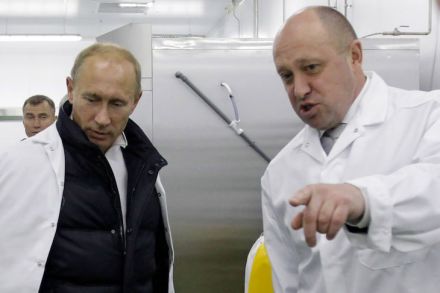
He huffed, and he puffed, and he damn near blew his own house down. The way Yevgeny Prigozhin, the man behind the Wagner mercenary force, was forced to walk back his threat to pull out of the fighting for Bakhmut is a reminder of the divided nature of Russia’s war effort in Ukraine. Prigozhin has periodically and publicly called out defence minister Sergei Shoigu and chief of the general staff Valery Gerasimov for their alleged back of support for Wagner. But on Friday, he escalated with two expletive-laden videos posted on social media. In the first, he pointed at the corpses of dead soldiers and bellowed: 'Shoigu, Gerasimov, where the fuck is our ammunition?' He continued: 'You scum sit there in your expensive clubs.
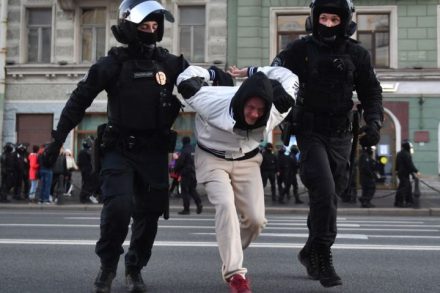
How ordinary Russians continue to resist Putin

Russia is gearing up for its annual festival of state-sponsored militarist kitsch that are the 9 May Victory Day celebrations, albeit in rather more limited form thanks to security concerns surrounding the ongoing war. Amongst all this, it is all too easy to forget that not everyone is consumed with nationalist pageantry. Instead, what is in many ways so much more striking is that there is still an active, if beleaguered, civil society in this country. To be sure, open protests against the war have become increasingly small in scale. This is an authoritarian regime sliding into full-blown totalitarianism, which has been cracking down viciously on any such 'fifth columnists'.

What’s the truth about the Kremlin drone attack?

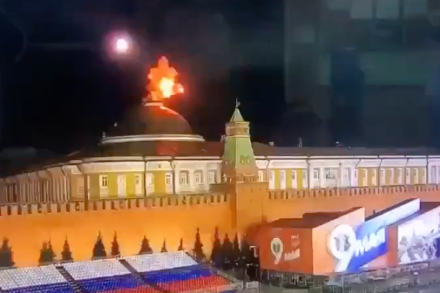
The Russian government has claimed that ‘two unmanned aerial vehicles were aimed at the Kremlin. As a result of timely actions taken by the military and special services with the use of radar warfare systems, the vehicles were put out of action.’ There were, it continues, ‘no victims and material damage’, although it is considering it a ‘terrorist’ attempt to kill Putin. That said, unverified videos circulating on social media (which, of course, is not necessarily proof in the age of deep fakery), shows at least one drone hitting the Senate Building, one of the larger structures inside the Kremlin complex, starting a small fire. Ukraine has been developing longer-range drones and getting closer to Moscow.

What’s behind Putin’s digital crackdown on draft dodgers?

With the break-neck pace with which it tends to respond to measures coming from the Kremlin, this month Russia’s parliament rushed through a new measure intended to make it harder for draftees and mobilised reservists to dodge military service. In the process, it highlighted the country’s slide into techno-authoritarianism. Until now, the law demanded that the state prove that it had presented the potential serviceman (or his family) with the appropriate draft papers. Although they were meant to be signed for, this still created opportunities for the individuals in question to claim they had never received them. – or make a dash for the border. Hundreds of thousands of reservists did just this in September and October, during the first mobilisation wave.

Can Zelensky hold back his hawks?

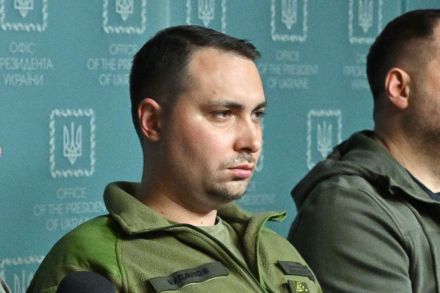
There is no doubt that the West supports Ukraine’s fight for its sovereignty and survival. There is equally no doubt that, for all the fulsome rhetoric, this support is both conditional and limited by a desire to prevent the war from escalating. This was amply demonstrated by recent revelations about Washington’s relationship with Kyrylo Budanov, head of HUR, Ukrainian military intelligence.

Russia’s spy ships are playing mind games in British waters

The news that Russian spy ships appear to be mapping British and other underwater cables and pipelines in the North Sea sounds very Cold War. But in fact it reflects the realities of modern conflict, and also the ways Moscow is playing psychological games with the West. In November, The Admiral Vladimirsky, an Akademik Krylov-class ship officially classified as an oceanographic research vessel but regarded by Western authorities to be an intelligence-gathering asset, entered the Moray Firth and loitered near the RAF's maritime patrol base at Lossiemouth. Since then, it has been on a tour around British and Nordic waters, on a route that took it past seven British and Dutch offshore wind farms and then a Swedish naval training ground.

The US intelligence leak and the hypocrisy of the spy world

So what did everyone learn from the massive trove of more than a hundred top secret US documents a 21-year-old Air National Guardsman apparently put on a gaming server to wow some fellow God-fearing gun enthusiasts? Both little and a lot. Despite some clumsy cut-and-paste editing of casualty figures, as well as some carefully-worded claims that, as a British defence official put it, ‘a significant proportion of the content of these reports is untrue, manipulated, or both,’ the Americans are shamefacedly admitting that these are genuine documents. There will no doubt continue to be suspicions in some quarters that there is some baroque plot at work, whether a Russian long con or a US attempt to spread disinformation.

Kyiv wants to make it untenable for Russia to hold Crimea

Crimea matters to Russians – whether they adore or abhor Vladimir Putin – in a way none of the other claimed or occupied Ukrainian territories do, and as such the peninsula’s fate will probably be central to any eventual resolution of the current war. That some Ukrainian sources are now talking about a military reconquest in the summer campaign season and others of diplomatic solutions suggests the possibility of movement. Whatever the official line, there are also many in Kyiv who are uncertain if they really want Crimea To be sure, there is no fundamental shift in Kyiv’s official position, that Crimea – like all the occupied territories – must be returned to its control, and that this could be by military force if necessary, negotiation if possible.

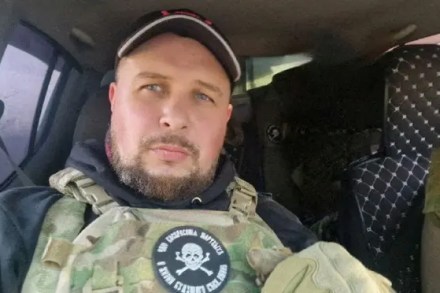
Who is behind the murder of Putin’s propagandist?

Those who live by hate often die by hate, too. Maxim Fomin, better known as Vladlen Tatarsky, was one of the ultra-nationalist social media 'milbloggers' who emerged largely off the back of Russia's war on Ukraine. On Sunday evening, he was addressing a gathering at a cafe in St Petersburg when he was killed by a bomb that also injured another 16 people. Fomin came from Makiivka, in the contested Donetsk region. In 2014, on escaping from prison where he was serving time for a bank robbery, he joined the pro-Russian Vostok Battalion. He would go on to become amongst the more famous 'milbloggers', whose Telegram channel had over 560,000 followers.

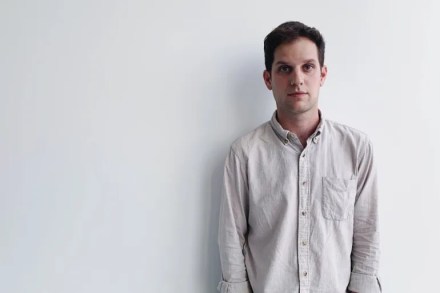
Evan Gershkovich and Russia’s descent into thugocracy

It’s a crude but inescapable fact of history that many states had their origins in better-organised bandit gangs. It’s a depressing feature of the present that some states seem determined to slide back into bandit status. While Putin's Russia retains the institutions of modern statehood, he and his clique of cronies and yes-men have no problem adopting the tactics of the thug – including kidnapping. The arrest of American journalist Evan Gershkovich on espionage charges appears to be the most recent example. The Kremlin is tiptoeing closer to a kind of ‘North Koreanisation’ Gershkovich, part of the Wall Street Journal's Moscow bureau, was on assignment in Ekaterinburg when he was detained by the Federal Security Service (FSB).

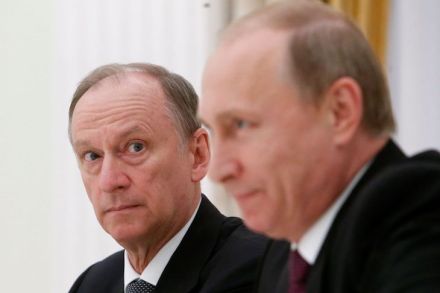
Nikolai Patrushev, the man dripping poison into Putin’s ear

If I were to have to pick the figure in Vladimir Putin's inner circle who scares me the most, it would have to be Nikolai Platonovich Patrushev, secretary of the Security Council and the closest thing there is in the Russian system to a national security adviser. Patrushev's profile has grown steadily as both cause and symptom of the system's drift towards nationalist imperialism, and he best channels the worst impulses within the id of Putin's clique. Whenever he speaks, it is sadly worth listening. After all, he does not just channel but shape those worst impulses. The Security Council itself is not the Soviet Politburo 2.0 that some assume. While it does bring together all key security-related officials, it is not a decision-making body.

Dmitry Medvedev and the weakness of Putin’s Kremlin

It’s a long time since Dmitry Medvedev was last considered a potential liberal hope for Russia. Most recently, after all, he has threatened to bomb any country that seeks to apply the International Criminal Court’s (ICC) recent arrest warrant on Vladimir Putin and separately read a working group of the Military Industrial Commission a 1941 telegram from Stalin that threatened anyone who failed to meet their targets with being 'smashing as criminals who disregard the honour and interests of the homeland'. What is going on?

After his trip to Moscow, Xi Jinping still holds all the cards

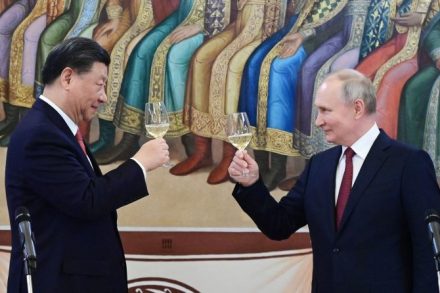
After his arrival in Moscow on Monday, President Xi Jinping said that China is ready, along with Russia, ‘to stand guard over the world order based on international law’. This statement came closer than ever before to articulating his view that a normative struggle is going on between a western-dominated order, and one more suited to Beijing’s interests. As he departed yesterday, he went further: ‘Right now there are changes, the likes of which we haven’t seen for 100 years. And we are the ones driving these changes together.’ Having positioned himself as a potential peacemaker, Xi clearly believes the war in Ukraine presents him with a win-win situation ­­­– or even a win-win-win one.

Wagner’s founder Evgeny Prigozhin is in a fight for his life

As Wagner mercenaries are being deliberately expended by the regular military as cannon-fodder in the battle for Bakhmut, their backer, Evgeny Prigozhin, is learning a hard lesson in Kremlin politics: it doesn’t matter how useful you were yesterday, what matters is how useful you may be tomorrow. Last year, the Russians were desperately short of soldiers. Ukraine was fully mobilised, but Vladimir Putin was unwilling for political reasons to follow suit, only launching a partial mobilisation in September. His generals simply lacked the soldiers they needed. In politics, as in economics, the laws of supply and demand meant that whoever had soldiers to offer – such as Prigozhin – could command a high price.

How Russia is dodging sanctions

They might not be the quick knock-out blow their champions misleadingly claimed they’d be, but sanctions are having a serious effect on the long-term viability of the Russian economy. However, we should never underestimate the Russians' capacity to find rough and ready workarounds. Back in Soviet times, I was regaled with stories of Lada cars being fixed with sticky tape and cast-off hosiery. Likewise, people would find ways around onerous bureaucracy and uncaring officialdom, whether turning to the black market or stealing from the state (as one told me, ‘only a fool buys a light bulb if he works in an office and can steal one’).

Did the Ukrainians bomb the Nord Stream pipeline?

There’s an uncomfortable fact about covert operations in the information-saturated modern world. Like personal WhatsApp messages, they always leak – the only questions are how long it takes, who leaks, and what the consequences will be. With reports coming from both Washington and Berlin that Ukrainians may have been behind the spectacular bombings of the Nord Stream gas pipeline back in September, it looks as if the current lag is just months. If, as some suggest, the operation was bankrolled by a Ukrainian oligarch, he could presumably afford to hire the best At the time, the mysterious attacks were variously blamed on Moscow, Kyiv, Washington, London and who knows who else. The quandary was that it was hard to see who would benefit.

Ukraine’s drone war on Russia could backfire

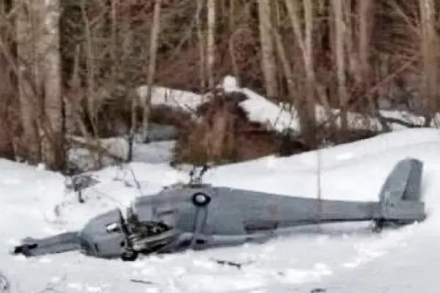
Vladimir Putin has sold his Ukrainian war to the Russian people by trying to find the sweet spot between existential threat and reassuring distance: the Russian president portrays the conflict as a struggle to preserve the nation from a hostile West and its Ukrainian proxy, but one fought safely outside its borders. Increasingly, Kyiv seems to want to bring the war to Russia, though, in a gamble which could go either way. A drone identified as a Ukrainian-made Ukrjet UJ-22 Airborne, capable of carrying up to 20kg of explosives, crashed close to a gas distribution station 60 miles southeast of Moscow yesterday. This is more than 300 miles from the closest Ukrainian territory – and too close to comfort for Putin.

Why is Zelensky playing deadly mind games with Putin?

Many have weighed in on how Vladimir Putin’s reign will end. Now it is the turn of Volodymyr Zelensky, asserting that he will be killed by his own. But is this wishful thinking, prediction or trolling? The Ukrainian president was speaking in a documentary, when he said that There will definitely be a moment when the fragility of Putin’s regime will be felt inside the state and then the predators will devour a predator. It is very important, and they will need a reason to justify this. They will remember. They will find a reason to kill the killer. Will it work? Yes. When? I don’t know.

Has Prigozhin pushed his luck too far with Putin?

Yevgeny Prigozhin, the businessman behind Russia's Wagner Group mercenaries, is hardly a man to keep a low profile. He is at his loudest and most vitriolic, though, either when he feels he has the upper hand over his (many) enemies or when he is on the ropes. He’s pretty outspoken these days, and no one thinks it’s because he's winning. For months, many of the small gains made by the Russians had been thanks to Wagner and its use of expendable soldiers recruited from the prison system. This had given Prigozhin a degree of latitude and license and, true to form, he had used that to prosecute his personal vendettas, against targets ranging from Alexander Beglov, the governor of St Petersburg to, most strikingly, defence minister Sergei Shoigu.

Macron is right about the danger of Russia after Putin

France's President Macron has raised hackles time and again with his interventions on Russia's aggression against Ukraine. For all his grandstanding bombast though, he has often raised the policy dilemmas that the West really ought to be discussing. Most recently, he warned, while returning from the Munich Security Conference, that active efforts to topple Vladimir Putin would be a mistake, because someone more dangerous would succeed him. Discussions about Russia's future after Putin – and the advisability of outright seeking to unseat him – are in many ways a touchstone about attitudes towards Russia.