Mark Galeotti

Mark Galeotti

Mark Galeotti heads the consultancy Mayak Intelligence and is honorary professor at the UCL School of Slavonic and East European Studies and the author of some 30 books on Russia. His latest, Forged in War: a military history of Russia from its beginnings to today, is out now.

Why Putin didn’t mention the war in his New Year’s address

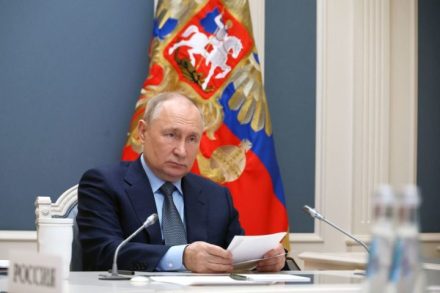
With ‘don’t mention the war!’ the order of the day, it felt as if Vladimir Putin’s message to his people this year was haunted by the ghost of Basil Fawlty. The New Year’s message is a Soviet and then Russian tradition dating back to the 1970s. It is watched widely across the country, sometimes with reverence, often with irony, but nonetheless something of a ritual observed almost regardless of class, location or political orientation. Aired just before midnight in each of the country’s 11 time zones, before the chimes of the Kremlin belltower and the national anthem, in the past it was an opportunity for Putin to try and present himself as the caring father of the household.

Does Putin use body doubles?

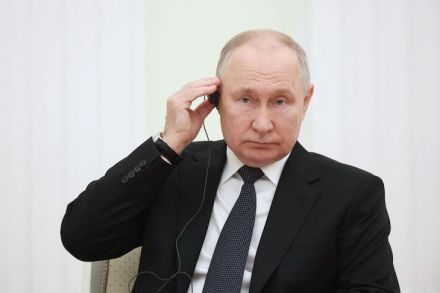
It has become something of a fad to try to identify and quantify the body doubles of Vladimir Putin. There are even outlandish claims that the man himself is dead and has been replaced by one. But why the fascination? It is hardly unusual for autocrats to have doubles – as a shield against assassination or simply as handy proxies to take on the more tedious and less important duties. Stalin had at least a couple; Panamanian strongman Manual Noriega apparently had no fewer than four. North Korean dictator Kim Jong-un was once photographed chatting with two of his identically-dressed doubles. The likelihood is that those uncharacteristic public events were, indeed, carried out by Putin's double Certainly there is good reason to suppose Putin has at least one.

Why Ukraine’s attack on the Novocherkassk warship matters

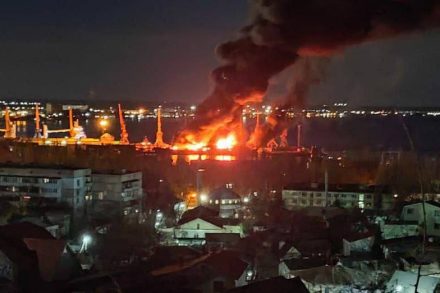
It was not quite in time for Christmas (which Ukraine now celebrates on 25 December, after switching this year from the Russian Orthodox Julian calendar), but Kyiv will still be celebrating today’s apparently successful Storm Shadow missile attack on a landing ship in a Crimean port. There are no seasonal ceasefires on either side in this increasingly bitter conflict. The Ropucha-class landing ship Novocherkassk (BDK-46) had already had a rather unhappy war. In March 2022, it was damaged by Ukrainian shelling when docked in Berdyansk in occupied southern Ukraine. Later in the year the Novocherkassk, along with its sister ship, the Tsezar Kunikov, were reportedly immobilised by a lack of spare parts thanks to sanctions.

Vladimir Putin bores the nation

From time to time, the tsar must listen to the complaints of his subjects. Having dodged this duty last year, Vladimir Putin has an election looming, so held a press conference. While he punished his viewers in the process with a performance of stupefying boredom, nonetheless today’s event gave us a sense of his election strategy. Once a year Putin traditionally held a press conference and also his Direct Line event, a kind of town hall at which he would field questions from around the country. Both were marathon events that peaked at over four and a half hours, respectively, and they were opportunities for him not just to connect with his people but also demonstrate his mastery of his brief.

An election campaign is still dangerous for Putin

It was elaborately staged precisely to try and look unstaged. After a medals ceremony at the Kremlin for Heroes of the Fatherland day, Vladimir Putin joined an oh-so-unchoreographed gaggle of participants. One, Lt Colonel Artem Zhoga, appealed for him to stand for re-election. Although Putin admitted he had had second thoughts, he accepted ‘that there is no other way,’ and would indeed be running. This is, it is fair to say, not much of a surprise. Nor will it be a surprise if Putin wins in March. But that doesn’t mean there won’t be upsets along the way.

The US Senate is playing into Putin’s hands

The news this week that Republicans in the US Senate had voted together to block a supplemental funding bill that included provision for $61 billion for Ukraine was greeted with predictable dismay in Kyiv and glee in Moscow. Ostensibly this was a bid to force the White House into prioritising more spending on securing the Mexican border. However it also reflects a real sense on the part of some within the GOP that the United States is either throwing good money after bad in maintaining support for the conflict, or continuing to subsidise a backsliding Europe that really ought to be taking the lead on this crisis. After all, while Europe as a whole has committed more funds to Ukraine – $143.

Sanctions against Russia haven’t failed

One of Russia’s toxic TV presenters recently cackled that Western sanctions ‘have only helped Russia wean itself off dependence on foreign imports and given a boost to our own producers’. At a time when Russia’s third quarter growth has actually exceeded expectations, hitting 5.5 per cent, it is worth noting what sanctions can and cannot do. The bottom line is that sanctions have not failed – but were never going to be the silver bullet solution to Kremlin aggression some claimed at the start. As in so many aspects of the West’s response to the 2022 Ukraine invasion, unrealistic early boosterism has led to subsequent, and arguably equally unrealistic, despondency.

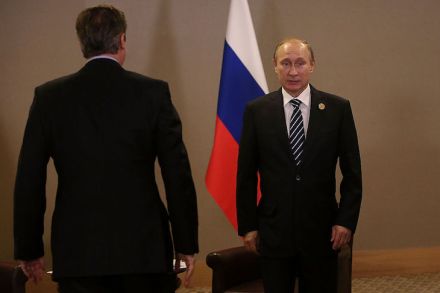
Putin isn’t afraid of Cameron

Considering the obsession Russia has with Britain as the source of all its woes, it is perhaps surprising how David Cameron's return to politics is being taken. Or rather, how little Moscow thinks it matters. After all, there is a flatteringly pervasive sense that while the United States is the main threat to Russia, Britain is more than just its sidekick. Instead, if Washington has the resources, London has the low cunning. Time and again, the Kremlin claims to see MI6 or the Foreign Office or some other arm of Perfidious Albion behind its reversals. Even the recent allegations that a Ukrainian officer masterminded the bombing of its Nord Stream 2 pipeline, which one would have thought was a propaganda gift, was rubbished as Kyiv simply taking the punch for its 'Anglo-Saxon masters.

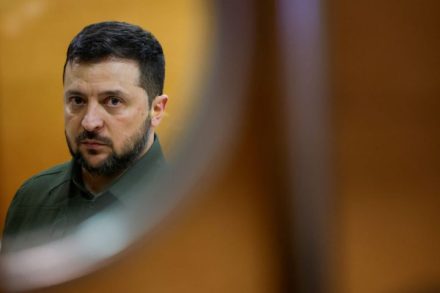
Is the West losing interest in Ukraine?

There’s a very different tone coming from Kyiv these days. Speaking to Time magazine, Volodymyr Zelensky had just returned from Washington after failing to make another impassioned public address on Capitol Hill, and not even managing to get on Oprah. The Ukrainian president sounded angry. The constant struggle to maintain international support seems to be taking its toll. ‘Nobody believes in our victory like I do. Nobody,’ he insisted, but added that dragging Ukraine’s allies along with him ‘takes all your power, your energy… It takes so much of everything.’ Meanwhile, in the Economist, Gen.

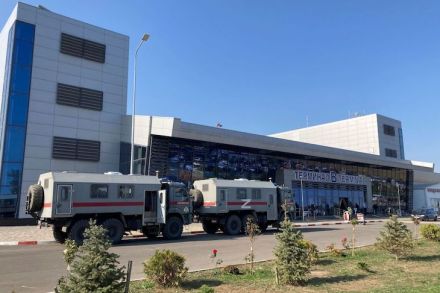
Why the Kremlin will fear Dagestan’s anti-Semitic mob

As the war in Gaza continues to have global repercussions, a mob in the southern Russian city of Makhachkala stormed their local airport, after news spread that a flight from Tel Aviv was due to land. Beyond the heightened passions of Muslims around the world, this incident also demonstrates the particular challenges for multi-ethnic Russia. Tensions in the predominantly Muslim regions of the North Caucasus had been rising in recent days. Last week, there was an arson attack on a Jewish centre under construction in Nalchik, capital of Kabardino-Balkaria.

Are Ukraine’s sabotage tricks going too far?

There has never been any doubt that Ukraine was the focus of an intelligence war as much as a physical one. But the extent of Western assistance, as well as growing concern at some Ukrainian tactics, is only now becoming clear. On Monday, the Washington Post ran a lengthy examination of the level of CIA assistance for the Ukrainian Security Service (SBU) and military intelligence (HUR) that bore all the hallmarks of being facilitated by the US government. It acknowledged that since the annexation of Crimea in 2014, the Americans has invested ‘tens of millions’ of dollars in training and technical assistance for their Ukrainian counterparts, even building new headquarters for HUR’s special forces, for fear that the old ones were compromised.

ATACMS missiles alone won’t change the game in Ukraine

America’s ATACMS long-range missiles were a potential ‘game changer’ to the war in Ukraine to some, a potential source of escalation to others. Now, with no real sense that either has proved true following Zelensky's confirmation this week they were used for the first time, what does that tell us? The MGM-140 Army Tactical Missile System (ATACMS) undoubtedly offers Kyiv new capabilities. It can deliver a 500-pound warhead or hundreds of cluster bomblets very accurately to a range of up to 190 miles. Unlike the Anglo-French Storm Shadows already in use, the two-ton missile is fired from a tracked HIMARS launcher rather than an aircraft and thus can respond very quickly to strike even mobile targets.

Putin has been blindsided by the Israel attack

Inevitably, some have tried to suggest the terrorist invasion of Israel was in some ways orchestrated by Moscow. 'Russia is interested in igniting a war in the Middle East so that a new source of pain and suffering will weaken world unity,' said Ukraine's president Volodymyr Zelensky in the aftermath of the attack. But if Russia was involved, why has its response been so weak and uncertain? In fact, the Kremlin seems near-paralysed by the unfolding conflict. Of course, Moscow hopes that this crisis will distract the West from Ukraine and undermine its ability to continue to fuel its war effort. It is also trying to spin useful narratives, such as the unproven assertion that Western weapons donated to Ukraine have turned up in the hands of Hamas.

Why a gangster’s death in Central Asia matters

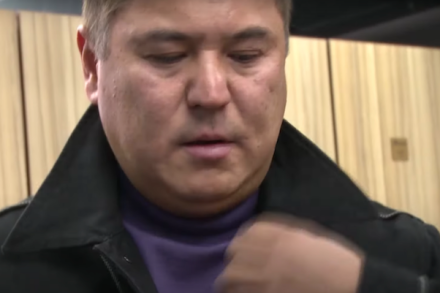
Such is the globalisation of the modern underworld, that the fate of a gangster you may never have heard of, in a country of which you may know little, may actually matter to you. I’d suggest this is true of the Kyrgyz godfather Kamchy Kolbayev, who was killed on Wednesday by a bullet in the head, during a police operation to arrest him in the capital, Bishkek. Kolbaev was widely recognised as the most powerful gangster in the Central Asian nation of Kyrgyzstan. Born in 1974, he took fullest advantage of the political and economic disruption that followed the collapse of the Soviet Union in the 1990s to establish a criminal empire that spanned smuggling drugs (notably heroin from Afghanistan), protection racketeering and money laundering.

Ukraine’s Crimea strike is a warning shot to Putin

Admiral Viktor Sokolov, commander of Russia’s Black Sea Fleet, appears to be Schrodinger’s admiral, alive according to Moscow, dead according to Kyiv, with no clarity as to who may be right. The real significance of the missile strike on his headquarters, though, is not so much whether it did kill him, but what it says about Ukrainian goals and capabilities. On Friday, Su-24M bombers of Ukraine’s 7th Tactical Aviation Brigade launched British-supplied storm shadow cruise missiles at the headquarters of the Black Sea Fleet in the Crimean port city of Sevastopol. Some were apparently jammed or shot down, but two slammed into the building, leaving it in flames.

The EU needs a coherent strategy on Russian sanctions

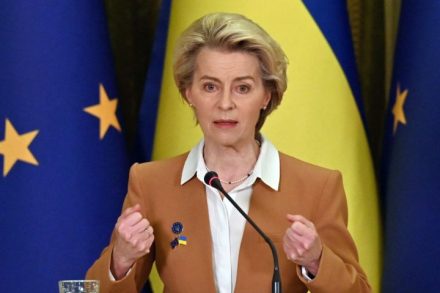
This week, the European Union opted to extend sanctions on some 1,800 Russian companies and individuals for another six months, but it also lifted sanctions on three wealthy individuals. Alongside this, a recodification of the rights of member states which means that, in the name of preventing 'exports', individual Russian travellers' cars, phones and even toiletries can be seized on entry. These decisions have raised a predictable storm. The three lucky Russians whose sanctions were lifted are the billionaire Farkhad Akhmedov and businessmen Grigory Berezkin and Alexander Shulgin, all of whom had been put under restrictions for their links to the Kremlin.

Putin’s North Korea summit was pure theatre

If a little tyrant theatre is your goal, then rumbling across the border in an armoured train decked out like a palace (if your palace was decorated in the 1970s) is hard to beat. As North Korea's Kim Jong Un and Russia's Vladimir Putin met at the Vostochny spaceport, the Bond villain vibes were strong – and one might suspect that was the point.  As of writing, we don’t yet know the precise terms of whatever deal has been thrashed out. Even though his factories are running 24/7, Putin clearly wants more munitions for his war in Ukraine. North Korea's are reportedly of stunningly poor quality, but something is better than nothing, and at least they are built to Russian calibres.

Why Putin is pointing the finger at Britain

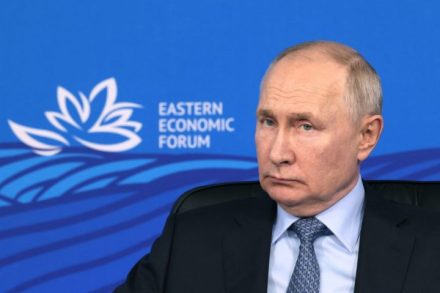
Perfidious Albion is, we are told, at it again. In the course of a wide-ranging and often quite surreal speech at the Eastern Economic Forum in Vladivostok, Vladimir Putin accused Britain of being behind attempted nuclear terrorism, rhetorically asking whether the government was ‘trying to provoke us into retaliating against Ukrainian atomic power stations’ or whether the British Prime Minister even ‘knows what his secret services are doing in Ukraine?’ Needless to say, no evidence is forthcoming to support Putin’s claims that a number of Ukrainian ‘saboteurs’ had been intercepted and detailed by Russia’s Federal Security Service on their way to break the power lines at an unnamed Russian nuclear power station.

Prigozhin’s death has exposed Putin’s weakness

So much is still unclear about the fate of Wagner group head Yevgeny Prigozhin, from whether he really did die in the private jet that plummeted to the ground in Russia's Tver region to what caused the crash. In today's Russia, after all, 'mechanical problems' could be anything from maintenance issues to the difficulty in flying when a bomb has blown a hole in your fuselage. The odds are, though, that he is indeed dead. Putin himself offered lukewarm praise to the ‘talented businessman’ who nonetheless ‘made serious mistakes in his life’ (one of which may have been reassuring Putin’s guarantees). Three things would follow from this. First of all, that Wagner's fate is sealed.

Sanctions are failing to turn Putin’s oligarchs against him

When personal sanctions on Russian oligarchs and officials were imposed by the UK, US and EU after Putin’s invasion, the rationale was that this would undermine the Kremlin. In the main, this has failed – and there is still no coherent strategy to encourage those Russians willing to turn against the regime. Wider economic sanctions are slowly grinding away at the economic base of Putin's regime and its war machine. The case for personal sanctions is much less clear. It is absolutely right and proper that those directly involved in the war, conducting repressions or justifying aggression ought to be punished.