Mark Galeotti

Mark Galeotti

Mark Galeotti heads the consultancy Mayak Intelligence and is honorary professor at the UCL School of Slavonic and East European Studies and the author of some 30 books on Russia. His latest, Forged in War: a military history of Russia from its beginnings to today, is out now.

How likely is Putin to target the Paris Olympics?

From our UK edition

One thing the French seem to be learning (or, given their history, re-learning) is that the Russians are always up for a scrap. A ministerial phone call between the two countries has led to a diplomatic spat such that a stung Emmanuel Macron is now claiming that Moscow plans to target this summer’s Paris Olympics – and he’s probably right. On Wednesday, French defence minister Sébastien Lecornu had a rare phone conversation – the first since 2022 – with his Russian counterpart Sergei Shoigu. Paris claims that, following the Crocus City terrorist attack in Moscow last month, the call was wholly about the scope for anti-terrorist cooperation, and their willingness to share what Macron later described as 'useful information… on the origin and organisation of this attack'.
How Putin will rig the Russian election

From our UK edition

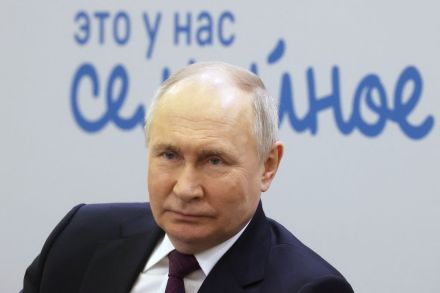
Pity the poor political technologists, as Russia's professionals in the dark arts of spin, propaganda, gerrymandering and outright ballot box stuffing are known. They are not only expected to produce the exact expected election result – that’s the easy bit, when you control the count – but they are meant to make it look as plausible as possible. That’s the rub. As Russia goes to the polls, there is no question whether Vladimir Putin will be re-elected by a landslide. Indeed, it has long been rumoured that the presidential administration has already decided on the result: a clear first-round victory for Putin with 70-plus per cent of the vote on a turnout of 70-plus per cent of the electorate.

Putin wants to talk about Russia’s future, not the war

From our UK edition

Vladimir Putin’s annual address to the Federation Council (the upper chamber of the legislature) is rarely an exciting event, but it does provide an opportunity to gauge his mood and assess his priorities. This year’s – the longest yet, at over two hours – was in many ways his stump speech for March’s presidential elections, without ever even acknowledging the upcoming vote. Early on, there was an array of the familiar talking points around his ‘special military operation’ – the invasion of Ukraine.

Putin’s nuclear doctrine has been revealed

From our UK edition

Secret documents have been leaked that reveal Russian scenarios for war games involving simulated nuclear strikes. They shed light on Moscow's military thinking and its nuclear planning in particular, but ultimately only reinforce one key factor: if nuclear weapons are ever used, it will be a wholly political move by Putin. The impressive 29 documents scooped by the Financial Times date back to the period of 2008 (when Vladimir Putin was technically just prime minister but still effectively in charge) to 2014 (after the sudden worsening in relations with the West following Ukraine's Revolution of Dignity and the annexation of Crimea). Although this means that they are a little dated, they nonetheless chime with our understanding of Russian doctrine today.

Why Macron won’t send troops to Ukraine

From our UK edition

French President Emmanuel Macron does enjoy a good grandstanding. Having once been keen to present himself as a possible bridge-builder with Moscow, he is now suggesting that western troops might go fight in Ukraine – secure in the knowledge that his bluff is unlikely to be called. At a press conference at the end of a summit in Paris on supporting Kyiv he said: ‘there is no consensus to officially send ground troops. That said, nothing should be ruled out.’ He wouldn’t say any more. He wanted to maintain some ‘strategic ambiguity.’ It is certainly true that manpower is a key Ukrainian constraint. Ukrainian President Volodymyr Zelensky recently admitted that 31,000 Ukrainian soldiers have died in the war, although other informed assessments put it at 50,000 or even higher.

The fantastical myths that swirl around Vladimir Putin

From our UK edition

If there is one man who is probably happiest that Vladimir Putin’s travel schedule has been so heavily curtailed of late, it is probably the Federal Protection Service officer responsible for ensuring the product of the president’s bathroom breaks return to the Motherland. Foreign powers may, after all, go to extreme lengths to test his health. When Putin does travel abroad, it is not just with his own food and drink, his own chefs and his array of bodyguards, it is also with his dedicated porta-potty. This allows his numbers ones and twos to be collected, sealed into special bags, and then put in a briefcase, ready to travel home with the boss.

Two years on, the Ukraine war matters more than ever

From our UK edition

There are inevitably voices in the West questioning the value of committing more than £5.5 billion a month in support of the war in Ukraine. It looks for now deadlocked at best, and at worst – in light of the recent Russian capture of Avdiivka – a slow defeat. Yet it is important to realise just how the Ukraine war matters to the world outside that country’s borders, even if perhaps not quite in the ways some would suggest. There is much overheated talk about a Ukrainian defeat leading to a direct threat to Nato. Some presume that this means the whole country falling to Vladimir Putin and Russian troops drawn up along the Romanian border. However, the whole notions of what a Ukrainian ‘defeat’ means now are as hazy as a ‘victory.

Expelling the Russian ambassador would be a mistake

From our UK edition

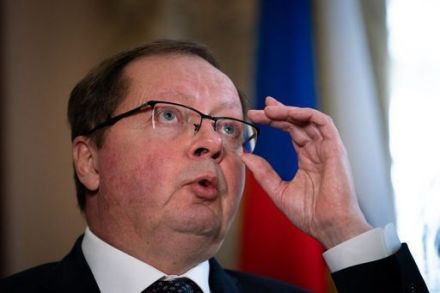
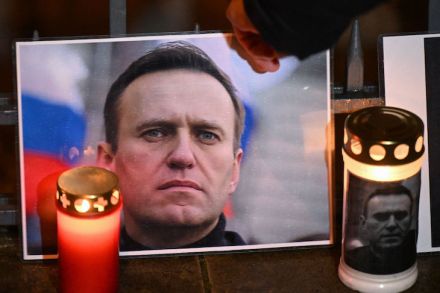
Jacob Rees-Mogg spoke for many people horrified by Alexei Navalny’s death in a Russian prison last week when he suggested that the Russian ambassador to the UK ought to be expelled in response. Labour’s David Lammy and the SNP’s Ian Blackford also advocated this back in 2022. This, however, would be a mistake. It’s a wholly understandable emotional response. At worst Navalny's was a direct killing, or else slow-motion murder by putting a man whose system is already compromised by near-death thanks to Novichok in an Arctic prison camp and subjecting him to treatment verging on torture. While we may not have much to say to the Russians today, tomorrow it may be different Besides, Andrei Kelin, Russia’s ambassador since 2019, has hardly endeared himself to his hosts.

How the West can truly avenge Navalny’s death

From our UK edition

With the Kremlin now claiming that it needs to hold on to the body of opposition leader Alexei Navalny for another fortnight for 'tests', there is little doubt in the West that Vladimir Putin's regime was either directly or indirectly to blame. Inevitably, the talk is now of punishing it. Junior Foreign Office minister Leo Docherty told the Commons yesterday that the government was considering further measures beyond the immediate diplomatic prospects, and that 'it would be premature...to comment on the prospect of future sanctions,' but that he could confirm 'that we are working at pace and looking at all options in that regard.' There are cheap and easy ways to challenge Putin's toxic propagandists It is quite right that there should be consequences.

What Tucker Carlson gets wrong about Russia

From our UK edition

‘I have seen the Future and it works,’ proclaimed leftist American journalist Lincoln Steffens after visiting Bolshevik Russia in 1919. By then, of course, the Cheka, or All-Russian Extraordinary Commission for Combating Counter-Revolution, Profiteering and Corruption, was already summarily executing presumed enemies of the people in droves. Now, conservative pundit Tucker Carlson is admiring Vladimir Putin’s Russia with equivalent admiration, but a rather different agenda.

Is Nato ready for war with Russia?

From our UK edition

38 min listen

Welcome to a slightly new format for the Edition podcast! Each week we will be talking about the magazine – as per usual – but trying to give a little more insight into the process behind putting The Spectator to bed each week. On the podcast: TheSpectator’s assistant foreign editor Max Jeffery writes our cover story this week, asking if Nato is ready to defend itself against a possible Russian invasion. Max joined Nato troops as they carried out drills on the Estonian border. Max joins us on the podcast along with historian Mark Galeotti, author of Putin's Wars. (00:55)  Then: Lionel Shriver talks to us about the sad case of Jennifer Crumbley, the mum who's just been convicted of manslaughter – for her son carrying out a school shooting.

How long will Nadezhdin dare to defy Putin?

From our UK edition

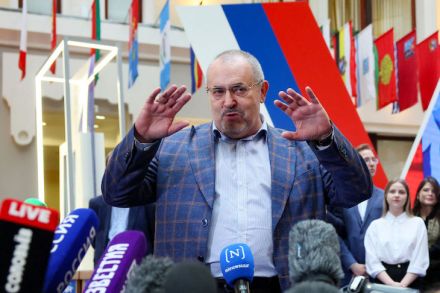
Despite a little eleventh-hour drama, Boris Nadezhdin’s bid to become the only genuine opposition candidate in March’s Russian elections has been blocked. What’s interesting is not that he was barred, but what this whole process says about the evolution of ‘late Putinism.’ Once, after all, it was marked both by a – limited but real – degree of genuine pluralism, especially at a local level, and also dramaturgiya, a theatrical facsimile of genuine democratic politics. The elections were stage-managed, of course, and the so-called ‘systemic opposition’ knew that their job was to put on a show rather than actually challenge the regime.

Zelensky’s rivalry with Zaluzhny spells bad news for Ukraine

From our UK edition

Is he out or not? After a night of claim, counter-claim, rumour and speculation, it appears that Ukrainian president Volodymyr Zelensky has decided not to dismiss his commander-in-chief Valery Zaluzhny. Tension, however, clearly remains between the two – and this is bad news for Ukraine. Ukrainian news outlets were the first to begin claiming that General Zaluzhny had either been dismissed or was about to be. Insider sources contacted by well-connected Western journalists were, on balance, also apparently confirming rather than denying the claims. Ukrainian parliamentarian Oleksy Goncharenko asserted that Zaluzhny had resigned and had refused the offer of an ambassadorial position in Europe.

Putin’s Kaliningrad visit wasn’t a threat to Nato

From our UK edition

President visits part of his own country. Shock. Vladimir Putin’s visit yesterday to the Russian exclave of Kaliningrad, perched precariously on the other side of the Baltic states, was not, as some overheated commentary has claimed, a threat to Nato. Rather, it was a sign of his renewed need to campaign domestically. The threat from Kaliningrad and to the Suwałki Gap is heavily mythologised Kaliningrad, once East Prussian Königsberg, is a territory a little larger than Northern Ireland that was annexed by the Soviets at the end of the second world war and subject to an intensive period of industrialisation, militarisation and colonisation.

Who shot down the plane carrying Ukrainian PoWs?

From our UK edition

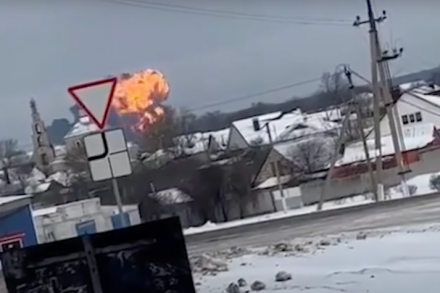
It will prove to be a terrible and tragic irony if it turns out that Kyiv shot down a Russian transport aircraft today that was transporting Ukrainian prisoners of war ready to be exchanged. Around 11 a.m. local time this morning an Il-76 transport aircraft crashed in a fireball near the Russian village of Yablonova in the Belgorod Region, some 35 miles from the Russian-Ukrainian border. Everyone on board was killed. It appears that, perhaps alongside a military cargo, the plane was carrying 65 Ukrainian PoWs – if the claims of the Russian defence ministry are to be believed. As is always the case in this war, multiple and contradictory explanations quickly emerged, often without any real evidence.

Why is Zelensky echoing Putin’s rhetoric?

From our UK edition

Today is Ukraine’s Day of Unity which necessarily had to be marked with an expression of national pride. However, president Volodymyr Zelensky’s decision to issue a decree ‘On the Territories of the Russian Federation Historically Inhabited by Ukrainians’ represented not simply that, but an open political challenge to Moscow, and one which strangely echoed Putin’s rhetoric. The decree begins castigating Russia for oppressing Ukrainians ‘in the lands historically inhabited by them,’ which is defined as the ‘modern Krasnodar, Belgorod, Bryansk, Voronezh, Kursk and Rostov regions’ – a large swathe of south-western Russia.

Despite three years in prison, Navalny still scares Putin

From our UK edition

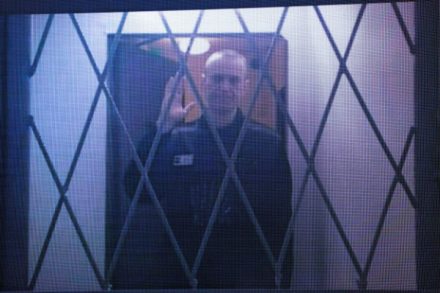
The March presidential elections in Russia will, of course, be a stage-managed farce, but that doesn’t mean that real politics has been entirely extinguished. It offers a narrow window of opportunity for the opposition to try and connect with the Russian people – so the Kremlin is doing its best to muzzle them. On the third anniversary of his return to Russia on Wednesday, opposition leader Alexei Navalny issued a statement on X (via his lawyers, his only connection with the outside world) intended to bolster his supporters’ morale. He returned from Germany in 2021 following a poisoning attempt that saw government agents lace his underwear with Novichok.

Has Putin really revived Stalin’s infamous spy-catching unit?

From our UK edition

Is Moscow reviving a notorious 1940s security agency? Or is the suggestion that the infamous SMERSH counterintelligence unit has been revived in Russia simply a way to troll the West? Worse yet, could it be that the country is facing the threat of a neo-Stalinist revival? A recent video circulated on Russian social media shows a young man from the Belgorod region making a public apology for having filmed and posted footage of Russian air defences online. In front of him, with only their backs shown, are two uniformed men. On their vests are patches with the infamous name 'SMERSH', a contraction of 'Smert’ Shpionam' or ‘Death to Spies' on them.

Putin’s migrant headache

From our UK edition

The Russian economy has become heavily dependent on migrant workers, largely from Central Asia. As the defence ministry tries to recruit them into the army, and certain extremists call for them to be sent home, the Kremlin is having to tread a fine line between economic pragmatism, nationalism and the immediate needs of the war. The glittering new metro stations still being built and opened around Moscow are to a considerable extent built by migrant workers. Migrants also shovel the snow off roofs and pavements, pack boxes at the warehouses of Russia’s equivalents to Amazon and drive taxis. In all there are more than four million legal guest workers across the country, and possibly as many illegals.

Russia’s egg shortage is panicking Putin

From our UK edition

The fall of the house of the Romanovs in 1917 may have been a long time coming, but arguably it was finally triggered by bread prices. It would be ironic if another Russian autocrat fell to food, which may help explain why the Kremlin has been moving so decisively to address Russia’s egg crisis, after prices rose by over 40 percent last year. On Friday, the Investigatory Committee – loosely analogous to an FBI on steroids – ordered an enquiry into potential price fixing, following on the heels of Prosecutor General Igor Krasnov’s decision to launch his own probe. Rather more directly, the much-feared Federal Security Service (FSB) has been instructed to arrest anyone hoarding eggs.