Mark Galeotti

Mark Galeotti

Mark Galeotti heads the consultancy Mayak Intelligence and is honorary professor at the UCL School of Slavonic and East European Studies and the author of some 30 books on Russia. His latest, Forged in War: a military history of Russia from its beginnings to today, is out now.

Can Russia really ban smoking?

The UK isn’t the only place which has been toying with the idea of introducing a ‘generational’ tobacco ban. Rishi Sunak’s bill that would ban sales to anyone born after 1 January 2009 was taken over by Labour following the election, but now it is Russia that is debating a similar measure. The Ministry of Health is reportedly close to proposing a ban on the sale of tobacco and other nicotine-containing products to everyone born after 31 December 2009. A draft bill has already been circulated and has been adopted by the New People party, one of the government’s tame pseudo-opposition factions, although it has not yet been reviewed by the executive.

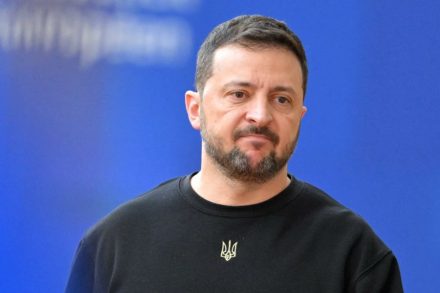
Zelensky’s ‘victory plan’ is unlikely to impress Europe

After confidentially briefing it around various Western capitals, President Zelelsnky has unveiled – to a degree – his much-trailed ‘victory plan’ to the Verkhovna Rada, Ukraine’s parliament. His statement on the plan came ahead of today’s meeting with the European Council. Along with three additional secret codicils shared only with certain partners, the plan has five main points. In and of themselves, none of them are implausible, and all would certainly strengthen Ukraine’s security. However, they also embody certain assumptions that likely make them unworkable, simply because they are asking from Nato, the EU and the West in general a great deal more than they seem willing to offer.

The Novichok inquiry raises some big questions for MI5

The inquiry into the death of Dawn Sturgess as an innocent victim of the attempt to murder Russian double-agent Sergei Skripal in 2018 has begun, a mere six years after the event. The question is, what can it tell us that we don’t already know? Britain’s love affair with lengthy, expensive and tardy inquiries continues with, in this case, a brief to ‘ascertain… who the deceased was; how; when and where she came by her death', to identify ‘where responsibility for the death lies’ and to ‘make such recommendations as may seem appropriate'. On one level, all the inquiry can offer is a snapshot of what happened in what seems like another world While no doubt of great comfort to the Sturgess family, on one level this seems a rather pointless exercise.

Why MI5 is so worried about Russia’s GRU

Ken McCallum, head of the Security Service (MI5), has warned of the serious threat to Britain posed by the Russian and Iranian intelligence agencies. McCallum said in a speech yesterday that the Russian GRU was on a mission to generate 'sustained mayhem on British and European streets', deploying 'arson, sabotage and more dangerous actions conducted with increasing recklessness'. That the GRU is being highlighted demonstrates both how the threat to the UK is evolving, but also the changes underway in Russia’s intelligence agencies. Officially, since 2010 the GRU has been known as the 'GU', but everyone from Putin down still uses the old name. The GU, or Main Directorate of the General Staff, is Russia's military intelligence service.

Vladimir Putin’s 72nd may have been his unhappiest birthday yet

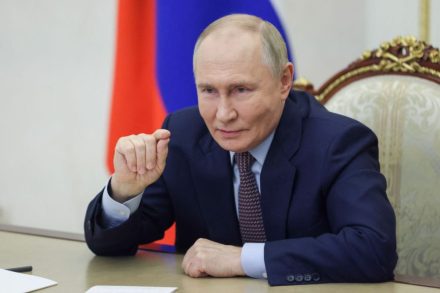
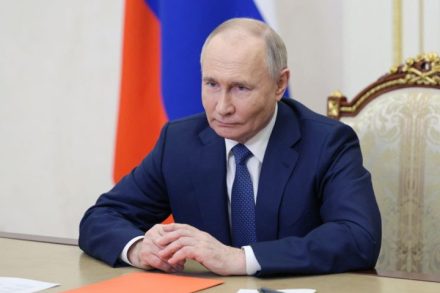
Happy birthday, Mr President? With Vladimir Putin turning 72 on Monday, this has become an opportunity for the Kremlin’s spin doctors to present their ideal notion of the septuagenarian sovereign. Ambitious courtiers have been competitively performing their sycophancy, as if in an over-the-top production of King Lear. Posters were anonymously pasted up in Kyiv, vowing that ‘Putin will come and restore order’ The ponderous official paper of record, Rossiiskaya Gazeta, offered up a portrait of the diligent chief executive: 'Russian President Vladimir Putin will celebrate his birthday in a working environment.

Moscow wants to ruin your weekend

When is slower internet better than none at all? When are travel delays more serious a political challenge than threats of nuclear war? These questions acquired particular significance with the news that Stockholm's Arlanda airport was temporarily closed this week when several drones intruded into its airspace. Investigations are still in progress, but the police are suggesting this was deliberate sabotage and suspicion is already falling on Moscow. It has highlighted what is likely to be a central element of Russia's emerging political warfare against the West: a strategy of inconveniences. What is the strategic value in such seemingly petty and spiteful acts?

Why is Putin expelling more British diplomats?

Another six bite the dust. The British Embassy in Moscow, already pared to the bone, is being reduced by another six diplomats. Their accreditation has been withdrawn because they were ‘threatening the security of the Russian Federation’ by ‘conducting intelligence and subversive work.’ It is bad news for international stability as diplomatic links become more and more attenuated, but perhaps something of a tribute to Britain.

Moscow is blaming Britain for the Kursk attack

Is the sinking of the super-yacht Bayesian and likely death of Mike Lynch a bigger story than Ukraine’s Kursk incursion? The Russian mid-market tabloid Moskovsky Komsomolets certainly thinks so, reflecting a clear unwillingness on the part of the Kremlin and the state-controlled or state-dominated media to get to grips with the current crisis in Kursk. Likewise, the stodgy government newspaper of record, Rossiiskaya Gazeta, recently stuck with a piece about plucky locals ready for whatever happens, under the headline, ‘A city with a special history and a spirit that cannot be broken. How Kursk lives today.

Power play: Zelensky’s plan for his Russian conquests

40 min listen

This week: Power play. The Spectator’s Svitlana Morenets writes the cover article in this week’s magazine exploring Zelensky’s plan for his Russian conquests. What’s his aim? And how could Putin respond? Svitlana joins the podcast alongside historian and author Mark Galeotti (02:10).Next: Will and Gus discuss their favourite pieces from the magazine, including Richard Madeley’s diary and Lara Prendergast’s argument that bankers are hot again.Then: how concerned should we be about falling fertility rates? In the magazine this week Jesus Fernandez-Villaverde argues that the problem is already far more grave, and far more global, than we realise. Why should we worry about this, and what can be done to stem this?

Will Ukraine’s Kursk offensive pay off?

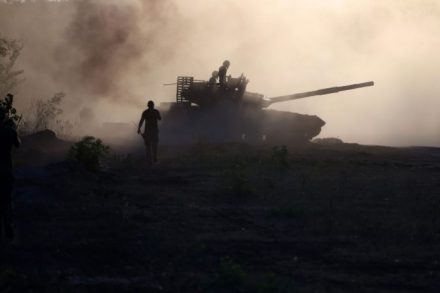
For the first time since the Second World War, foreign forces have invaded Russia. As Ukrainian troops push over the border into the Kursk region, Vladimir Putin, with breathtaking lack of irony, denounces this as ‘terrorism’ and a ‘provocation’. But what is Kyiv’s goal? Previous incursions, largely into the Belgorod region, have been carried out by small units of pro-Kyiv Russia troops, so although they are in practice controlled by HUR, Ukrainian military intelligence, this could be spun as ‘liberation’ by anti-Putin forces. However, these have also been little more than PR exercises: a dash across the border to take some half-defended villages, some selfies, and a hurried withdrawal.

The Soviet Union’s gerontocracy should serve as a warning to the US

One waspish – but not entirely inaccurate – Russian media assessment of the first US presidential debate was that it was 'a reality show about the lives of pensioners.' They ought to know, as Russia's own history has highlighted the dangers of gerontocracy. When the Bolshevik revolutionaries who had just seized power formed their ruling Politburo in 1917, the only member who was more than 40 years old was their leader, Lenin, at 47. By 1981, the average age was 69. As for the actual leaders, General Secretary Leonid Brezhnev died at the age of 75 in 1982. His successor, Yuri Andropov, was a relative stripling, dying in 1984 at 69, to be followed by Konstantin Chernenko, who died in 1985 at 73.

Is the Russian murder machine ramping up?

Are we witnessing a new and more dangerous stage in the indirect war between Russia and the West? The news that Moscow’s agents may have been planning to assassinate European defence industrialists suggests they are escalating their covert operations abroad, which demands a quick and serious response. German and US intelligence sources are claiming that Russia’s intelligence services were planning to kill Armin Papperger, head of the German arms firm Rheinmetall, as the first in a number of targeted hits against senior figures in the European defence-industrial complex.

Why the plot to kill Putin would be a mistake

Is the assassination of Vladimir Putin the answer to ending the war in Ukraine? A collection of émigré Russians who have declared themselves the ‘Congress of People’s Deputies’ and a Russian parliament in opposition have called for the West not only to support them in a campaign to overthrow Vladimir Putin, but actively to play a role. This would be a serious mistake. At a recent gathering in Warsaw, these émigrés, all of whom at some point or another had previously been elected as parliamentarians in Russia, agreed their ‘victory plan,’ a seven-point programme, due to be presented during Nato's forthcoming Washington summit.

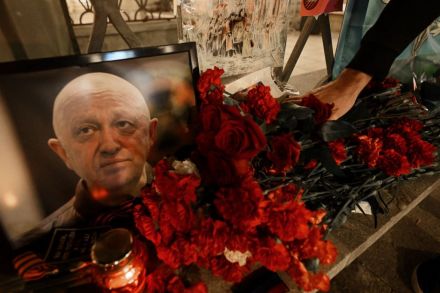
The myth and memory of Yevgeny Prigozhin

Yesterday was the one-year anniversary of Yevgeny Prigozhin’s mutiny, when his Wagner mercenaries seized the city of Rostov-on-Don and sent a flying column of several men towards Moscow. You would scarcely know it, though, because while Russian social media is full of discussion, eulogies and conspiracy theories, the state-controlled press is largely pretending this never happened. The closest thing to a recognition of the anniversary has been the arrest on extortion charges of two senior figures from Prigozhin’s media – and trolling – arm.

Who are the Russian NHS hackers?

What do you do if you’re a modern state and need extra capacity in a hurry? You outsource. And if you’re also a kleptocracy, to whom can you turn for this? Criminals. It’s not clear whether Qilin, the Russian hacker group behind the recent attack on NHS suppliers is run, encouraged, or simply given a pass by the Kremlin, but the growing interpenetration of espionage, subversion and crime is a threat we must recognise. Qilin, which engages in ‘ransomware’ attacks whereby it locks up a target’s systems until it pays to have them unlocked – £40 million is the demand in this latest attack – has been active since October 2022. The group refuses to discuss its origins ‘for security reasons’, but has been widely linked to hackers in Russia.

Why is Putin still so desperate for western validation?

Everyone loves Russia, or at least echoes its talking points – if you believe the country's state media. Why should it be so important for Vladimir Putin, who tries to appear impervious to foreign criticism, to magnify any seemingly supporting words? It underlines a centuries-old insecurity at the heart of Russia There was a distinct absence of western guests at last week's St Petersburg International Economic Forum (SPIEF), once Russia’s shop window for investment and trade deals and nicknamed the 'Russian Davos'. There was the Hungarian foreign minister (who presented attending as an act of maverick courage), but otherwise the main dignitaries there came from the Global South – or World Majority, as Moscow has taken to calling it – and even the Taliban.

Why is Putin purging his generals?

Five down – how many more to go? As more and more senior Russian officers and defence officials are arrested on corruption charges, the rumour mill is in full spin as it cranks out claims that this is everything from a purge of potential coup plotters to a Federal Security Service (FSB) takeover of the military. The truth is likely to be at once more prosaic and also more significant.  Tackling corruption within the top brass is a Herculean task Before defence minister Sergei Shoigu was given his sideways move to become secretary of the security council, deputy minister Timur Ivanov had already been arrested. He was followed in quick succession by Lt. Gen. Yury Kuznetsov, head of the ministry’s personnel directorate, the former head of the 58th Army Maj. Gen. Ivan Popov, Lt.

What the Shoigu reshuffle means for Putin’s war machine

There was an expectation that the appointment of Vladimir Putin’s new government would see some change in the Russian security apparatus, but few predicted that Russia’s defence minister Sergei Shoigu would be replaced by an economist, Andrey Belousov, with Shoigu becoming secretary of the Security Council. With an economist taking over the defence ministry, and the old minister taking up a policy and advisory role, the technocrats are in the ascendant. The goal though is not peace, but a more efficient war. The technocrats are in the ascendant. The goal though is not peace, but a more efficient war Much has been made in some quarters about the fact that Belousov is an economist rather than a soldier.

Why Russia’s ‘king of the kickback’ was arrested

The universal corruption of the Russian elite suits Vladimir Putin. When everyone has a skeleton in their closet, power rests with whoever decides which closets get searched. The arrest on corruption charges of Timur Ivanov, deputy minister of defence, is noteworthy not because he was infamously corrupt, but because it raises the question: why him, why now? This could be the start of a ‘ditch Shoigu’ campaign by his enemies Ivanov was well known for his lavish lifestyle and his reputation as the ‘king of the kickback.’ Since 2016, he had been in charge of the Defence Ministry’s property portfolio, construction projects and medical services.

Why is Russia jamming plane signals across Europe?

The 'Baltic Beast' is at it again. Mysterious – or not so mysterious – GPS signal disruption has become a growing problem for civilian air traffic, not just in the Baltic but also the Black Sea and the Eastern Mediterranean. It is clear that Russia is behind it, but why? Airplanes have, while in flight, encountered signals designed to interfere with their GPS and other systems, whether by jamming them or spoofing, making them think they are somewhere else from their actual location. Last year, there were some 50 suspected attacks every week, but there were a full 350 in March and this month looks set to see a similar tally.