Mark Galeotti

Mark Galeotti

Mark Galeotti heads the consultancy Mayak Intelligence and is honorary professor at the UCL School of Slavonic and East European Studies and the author of some 30 books on Russia. His latest, Forged in War: a military history of Russia from its beginnings to today, is out now.

Where does Trump’s suspension of Ukraine aid leave Europe?

13 min listen

Overnight President Trump made another extraordinary move in his ongoing attempt to broker a deal between Ukraine and Russia, suspending all U.S. military aid to Ukraine. Katy Balls talks to James Heale and geopolitical analyst Mark Galeotti about how serious this development is and where it leaves Ukraine's European supporters. Produced by Natasha Feroze and Cindy Yu.
What does Trump’s minerals deal mean for Ukraine?

Has Donald Trump’s heavy-handed negotiation style scored a win, or have the Ukrainians managed to wrench a victory of sorts from the jaws of defeat? Although the details are still unclear, Kyiv and Washington are confirming that a deal on mineral rights has been agreed, and that Volodymyr Zelensky will be on his way to the White House on Friday to sign on the dotted line. Trump has abandoned his ludicrously overblown demand for a $500 billion (£400 billion) return on what has actually been no more than $120 billion (£95 billion) given in total aid, through revenue from Ukrainian oil, gas and rare earth metals. Zelensky had understandably rejected this, saying ‘I am not signing something that ten generations of Ukrainians will have to repay.

Is Trump’s hostile takeover of Ukraine a trap?

That Donald Trump’s vision of the presidency is less statesman and more CEO of USA Inc. is evident in the terms of the deal he tried to foist on Ukraine last week. As talks begin between the US and Russia in Saudi Arabia, a leak reveals that Trump wanted Kyiv to sign away much of its mineral resources to Washington. Ukrainian President Volodymyr Zelensky has rejected this piece of blatant economic colonialism, but the Ukrainians expect further such demands to come. This is the essence of Trump’s brave new world The draft frames this as the establishment of a joint investment fund such that ‘hostile parties to the conflict do not benefit from the reconstruction of Ukraine’ – although after last week, one might wonder if this means Europe rather than Russia.

How seriously will Putin take Ukraine negotiations?

We have no idea whether Vladimir Putin is serious about peace negotiations with Ukraine. He may simply be going through the motions while enjoying the spectacle of the West engaging in mutual recrimination and performative outrage, or he may genuinely feel there are grounds for some kind of agreement. More likely, given his track record as a tactician rather than a strategist, he is simply seeing what opportunities emerge. Nonetheless, his choices of format, venue and representatives may give us some sense of his intentions. His lead negotiator at abortive talks in Istanbul in 2022, for example, was Vladimir Medinsky.

Will flattery buy Zelensky help from Trump?

For all the efforts on every side to manage expectations, there is a sense that some kind of Ukraine deal – even if more likely a ceasefire rather than some comprehensive settlement – is coming. With the risk that this is, as Vladimir Putin would prefer, a decision made between Moscow and Washington, over Kyiv’s head, the Ukrainians are scrambling to gain traction on the process. We have already had Volodymyr Zelensky’s suggestion that the United States could get priority investment access to Ukraine’s mineral wealth. Now in a set-piece interview with the Guardian, he has offered a finely-balanced mix of flattery and entreaty in the hope that even a ceasefire would come with proper security guarantees.

Has Putin picked up the phone to Donald Trump?

So, did they speak? How often? What about? The very coyness around the question of whether Donald Trump and Vladimir Putin spoke on the phone – Trump says so, maybe more than once, while the Kremlin is neither confirming nor denying – suggests that pre-discussion discussions on the war in Ukraine are indeed already taking place. General Keith Kellogg, Trump's special envoy for the war, has stated that no peace plan will be unveiled at next weekend's Munich Security Conference (the Davos of the security set). But in some ways that is disingenuous. As one Foreign Office staffer suggested, 'It's not necessarily the time and place for a public reveal, but it is a great place to float some ideas and see who thinks what.

Russia’s quest to woo Africa is paying off

The West may like to convince itself that it is, in the words of one American diplomat, 'strangling the Russian foreign ministry', but it ought to look south for a rather different perspective. On Tuesday, foreign minister Sergei Lavrov was in expansive mood as he announced the formation of a brand-new Department of Partnership with Africa. Recognising that for years Moscow had neglected Africa, Lavrov blamed in part the bankruptcy of the late USSR and Russia in the 1990s, when embassies had to be shut down and sold off. I remember one polyglot diplomat who, while serving in Nigeria, had taken to spending his mornings giving English, French and Russian classes to make ends meet because his salary was so often in arrears.

Can a second Kursk offensive give Ukraine bargaining power?

In theory, the Kursk salient is one of the most militarily insignificant fronts of Putin’s war on Ukraine. However, war is ultimately all about politics, and the presence of Ukrainian troops on Russian soil is sufficiently problematic for President Vladimir Putin that Kyiv has decided to deploy more troops in a bid to reverse the slow recapture of the occupied territory. Having originally seized some 400 square miles in its lightning attack in August 2024, by last month, steady Russian pressure had shrunk Ukraine's grasp on territory to some 180 square miles. Although Ukraine still held the town of Sudzha – about the only significant settlement in this area – the front line had crept perilously close.

Has Ukraine just carried out another assassination in Moscow?

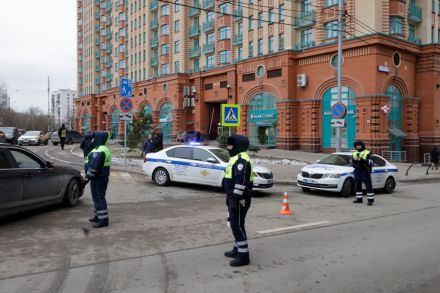
The Alye Parusa (Scarlet Sails) apartment complex in Moscow’s north-western Shchukino suburb bills itself as an exclusive place to live, and a safe one, too, with cameras, gates and 24-hour security. Neither this, nor his detail of bodyguards, saved Armen Sargsyan when, on Monday morning, a bomb with more than a kilo of explosive detonated as he was walking out the lobby. His leg was blown off, and although he was airlifted to hospital, he died shortly after. So far, this appears to be the latest in a campaign of assassinations carried out by Ukrainian intelligence. Sargsyan was a rather different figure to the last target in Moscow, Lt. Gen. Kirillov.

Britain is taking a punt on Ukraine’s future

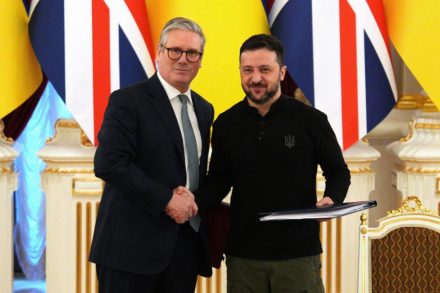
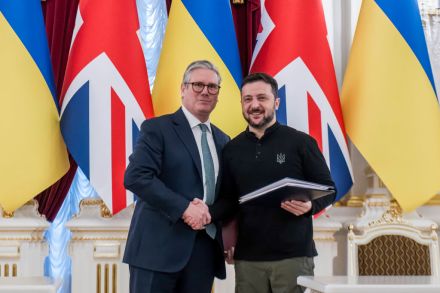
There is a perverse congruence of interests between the British and Russian governments, as both sides seek to talk up London’s level of influence in Ukraine. This was particularly visible in the new agreement signed between the UK and Ukraine last week – and Moscow’s response to it. To the Kremlin, after all, Perfidious Albion remains its most devious antagonist. True to form, the Russian embassy in London tweeted out that Prime Minister Keir Starmer's surprise visit to Kyiv represented 'a desperate attempt by British handlers to keep the agonising Kiev [sic] regime afloat' with 'new highly provocative UK plans, including the establishment of military bases within Ukrainian territory'.

Is Starmer doing enough for Ukraine?

13 min listen

Keir Starmer is in Ukraine today, on his first visit to Kyiv since becoming Prime Minister. And he came bearing gifts: a 100-year partnership agreement between the UK and Ukraine, covering nine ‘pillars’ from culture to science. It is hoped that the new pact will define the relationship between the two countries well beyond the current conflict with Russia. This is all in the context of Donald Trump’s return to the White House, with his administration agitating for a peace deal. Is peace on the horizon? Also on the podcast, Kemi Badenoch's big speech – in which she criticised the decisions made by successive Tory prime ministers – was overshadowed by the announcement that there will be  government-backed inquiries into grooming gangs. Is this the right call?

Where have Russia’s Zs gone?

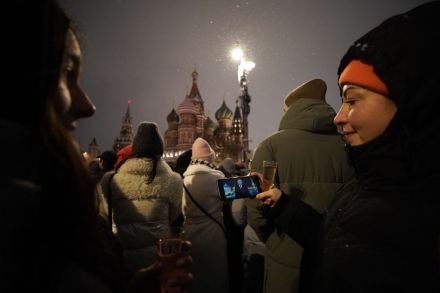
A social media post on 30 December: photographs of admittedly-splendid new year decorations in Moscow, archly captioned ‘back to 2021.’ The poster is alluding to the fact that obscene and extravagant references to Putin’s war in Ukraine – notably the letter Z, which has come to symbolise it – were notably absent from city decorations this new year. Moscow’s mayor, Sergei Sobyanin, has never seemed especially enthused about the war. He has done what the Kremlin required – diverted resources to help raise ‘volunteer regiments’; wallpapered the city with recruitment adverts; renamed Europe Square Eurasia Square – but he has avoiding too close an identification with the war, unlike so many of his less-secure counterparts across the country.

Russians are feeling the pinch as Putin’s war rumbles on

The Russian Orthodox Church or state calendar doesn't recognise 25 December as a special day: their Christmas is 7 January by their old calendar and, in any case, it is New Year's Eve that is the real blow out. As households prepare the usual staples of Salad Olivier, Herring under a Fur Coat (smothered in mayonnaise), tangerines and champagne, it will be impossible for them to ignore a basic fact: everything is getting more expensive. Indeed, while the headline inflation rate is just under 10 per cent, the price of many basic foods have increased dramatically more. One Russian newspaper estimated that the price of a typical New Year's Eve dinner has riven by almost 30 per cent, year on year.

Vladimir Putin’s four-and-a-half-hour troll

Every year, Vladimir Putin gives a marathon town hall event that lasts for hours. Every year, I feel compelled to watch. Every year, I wonder if it will be the last time I do, as these have become increasingly formulaic, but there is always something in them that rewards watching. (Or so I tell myself.) It was briefly tempting to write this ahead of time, because by now the format and content has become thoroughly predictable Originally, there were two such events a year: a mammoth end-of-year press conference and then ‘Direct Line,’ a kind of online town hall at which Putin addresses a selection of questions (more than two million this year) posed by ordinary Russians.

Why Ukraine killed Igor Kirillov

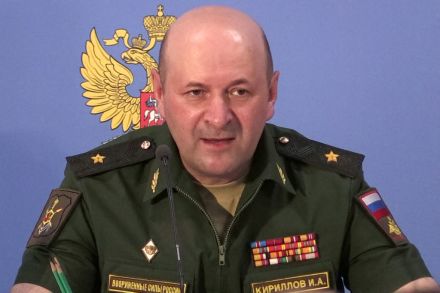
Another one down. This morning, Lt. Gen. Igor Kirillov, head of RKhBZ, Russia’s Radiological, Chemical and Biological Defence Troops, was heading out of his block of flats in Moscow’s Ryazansky Avenue, accompanied by his aide, when a bomb placed inside an electric scooter exploded. Both men were killed in the latest Ukrainian assassination operation targeting Russian officers accused of war crimes. The timing was hardly coincidental. The 54-year-old Kirillov has been under British sanctions since 2017, both because of RKhBZ’s activities (including supporting the Syrian use of chemical weapons) and also his role as a propagandist, spreading such falsehoods as the claim that Ukraine hosted secret western biological warfare laboratories.

How Putin will make Assad pay for his exile

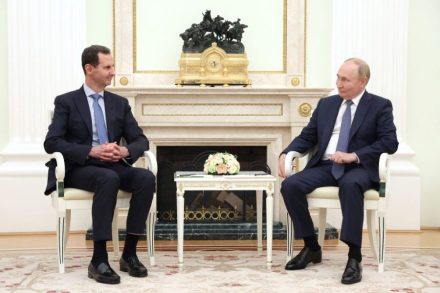
‘Brave Assad fled to Putin. Where will Putin flee?’ asked Ukrainian president Volodymyr Zelensky after the Syrian dictator escaped embattled Damascus for Moscow at the weekend. Assad was granted asylum in the Russia capital on the ‘humanitarian grounds’ he had denied his own subjects for so long. But what kind of life is Putin offering him? On the face of it, the answer is a rather opulent one, even if in practice it means becoming part of one of the most rarified zoos of all: Putin’s collection of ex-dictators. West of Moscow, a little way beyond the city’s MKAD orbital motorway along the A-106 Rublyovo-Uspenskoye Shosse, lies the village of Barvikha.

Kate Andrews, Mark Galeotti, Adrian Pascu-Tulbure, Michael Hann and Olivia Potts

31 min listen

On this week’s Spectator Out Loud: Kate Andrews examines the appointment of Scott Bessent as US Treasury Secretary (1:20); Mark Galeotti highlights Putin’s shadow campaign across Europe (7:10); Adrian Pascu-Tulbure reports on the surprising rise of Romania’s Calin Georgescu (15:45); Michael Hann reviews Irish bands Kneecap and Fontaines D.C. (22:54); and Olivia Potts provides her notes on London’s Smithfield Market, following the news it may close (27:28).  Produced and presented by Patrick Gibbons.

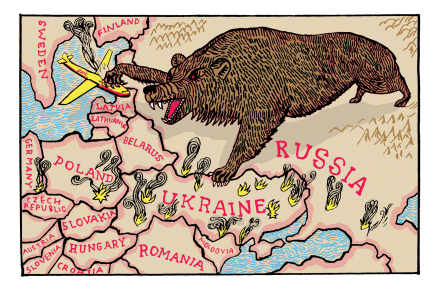
Russia’s sabotage campaign against the West

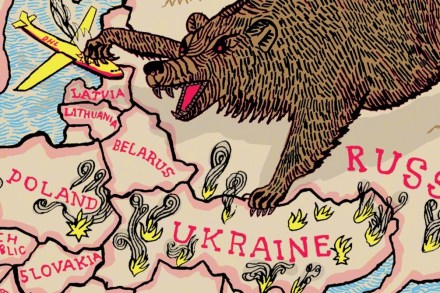
When a DHL cargo plane crashed while approaching Vilnius airport on Monday, killing one of the crew, it looked like technical failure, but given that Russia was believed to be behind a series of incendiary devices which ignited on DHL flights and in warehouses this summer, inevitably many feared Moscow’s hand. The suspicion is likely to be the point. In the past year, the Russians have stepped up their disruptive activities in Europe, from cyber-attacks to assassinations, with the apparent aim of generating chaos and a climate of fear as much as anything else.

How will Putin respond to Ukraine’s Storm Shadow attack?

The air raid sirens sounded yesterday, the American embassy in Kyiv closed, as did the Italian and Greek. The British and French embassy warned nationals to take care and encouraged staff to work remotely. The Ukrainian air force warned residents of the city to seek shelter from an incoming massive air attack. And then nothing happened. It’s not clear which is more embarrassing. That the Russians seem to have been able to perpetrate a nerve-jangling hoax, not least by circulating messages on social media and messaging apps seeming to come from HUR, Ukrainian military intelligence. These claimed that a ‘particularly massive’ airstrike was on the way involving more than 300 drones and also an equally imposing salvo of missiles launched simultaneously from land, air and sea.

Could Trump save Ukraine?

One thousand days into Vladimir Putin’s full-scale invasion of Ukraine, three facts seem to be evident. First, Russia is losing. It is using its soldiers like human ammunition, burning through its economic reserves and mortgaging its future to Beijing. Second, Ukraine is losing faster than Russia. Ukraine’s forces are beleaguered along a too-long front and increasingly reliant on what looks like press-ganging for recruits. The country’s energy infrastructure is 80 per cent damaged or destroyed. The third fact: Donald Trump's election is throwing all the old assumptions about the war into doubt. It is a sign of the odd times in which we live...