Mark Galeotti

Mark Galeotti

Mark Galeotti heads the consultancy Mayak Intelligence and is honorary professor at the UCL School of Slavonic and East European Studies and the author of some 30 books on Russia. His latest, Forged in War: a military history of Russia from its beginnings to today, is out now.

Will Navalny’s gamble backfire?

From our UK edition

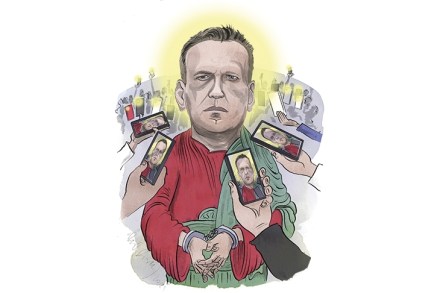
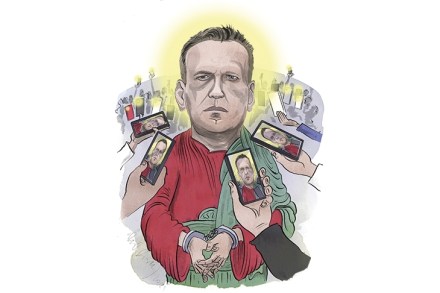
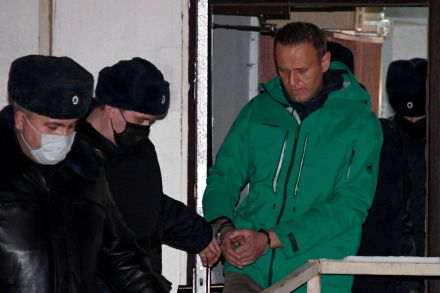
For years, Alexei Navalny had been – barely – tolerated by a Kremlin that was willing to permit very limited opposition and criticism. When security officers tried to poison him last year, it reflected a distinct swing towards more ruthless authoritarianism. Back in Russia, and back in prison, Navalny likewise seems to have taken off the gloves. Until now, everyone was fair game for Navalny’s investigations into official corruption – except for Vladimir Putin and his family. Yesterday, after Navalny had been sent to Moscow’s notorious Matrosskaya Tishina prison until his next trial date in February, his team released their latest investigation.

Why Navalny is becoming a danger to Putin

From our UK edition

The man with no name is now a prisoner with a number. Alexei Navalny, the Russian opposition leader poisoned by security officers back in August, flew back to Moscow yesterday and was promptly arrested. Whether this is symbolic catch-and-release or a sign that the Kremlin plans to bury him – literally or metaphorically – in its prison system remains to be seen. The Kremlin certainly did everything they could to prevent his return being a media event. He was due to arrive at Moscow’s Vnukovo airport, where a crowd of journalists, supporters and riot police jostled in anticipation. So too did a rent-a-mob of supposed fans of a Russian media personality who, judging by her Instagram feed, wasn’t expecting this kind of reception. Anything to muddy the waters.

Why Merkel and Putin are cooperating on the Sputnik vaccine

From our UK edition

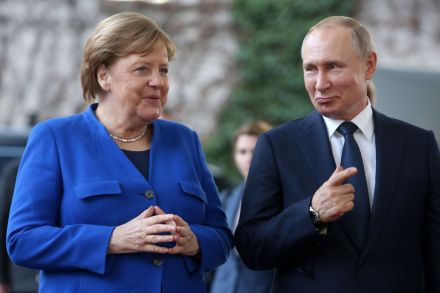
Churchill, FDR and Stalin could cooperate against Hitler, so perhaps we shouldn’t be too surprised that even amidst talk of a new Cold War, sanctions and more than a little sanctimony, people in the West are willing to make deals with Moscow in the name of fighting the new global threat, Covid-19. Russia’s Sputnik V vaccine may have been rushed through its certification at home and been the subject of some overblown nationalist hype (not that the Oxford-AstraZeneca vaccine has been entirely free of the latter), but so far it appears to be a serious and effective jab, with a potential 91.4 per cent efficacy.

What Boris should do about a problem like Putin’s Russia

From our UK edition

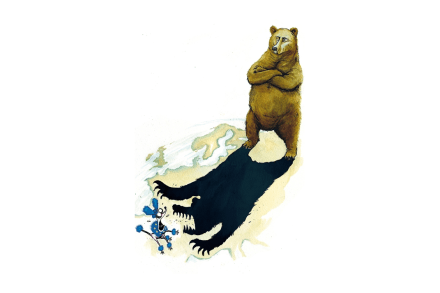
With Brexit, the arrival of a new US administration, and trade deals like the Trans-Pacific Partnership, the government’s foreign policy docket for 2021 will likely be pretty full, but in the odd spare moment, perhaps when he’s walking Dilyn, Boris might want to give some thought to his Russia policy. The great virtue is, after all, that there is pretty much nowhere to go but up. Putin’s Russia is an antagonist, and although the threat is primarily through disinformation, espionage and subversion, the first necessity is a continued firm reaffirmation of the UK’s commitment to Nato. This is, after all, not just or even mainly as a source of common military defence, but a powerful statement of solidarity.

Putin’s New Year’s resolution: survive

From our UK edition

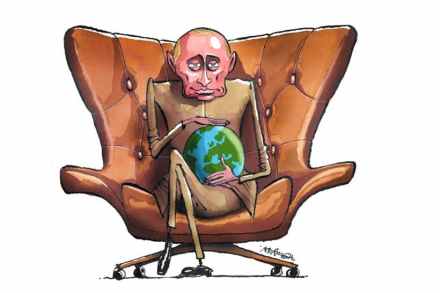
Even in tough times, Russia tends to put on a show to welcome the New Year, and 2020/21 is no exception. But what may be on Vladimir Putin’s New Year’s resolutions this time round? Most immediately, to test Joe Biden’s incoming administration. We have already had a taster, with alternating calls for renewed arms control talks and tough rhetoric about the need for Russia to field advanced new weapons. Beyond a not-so-secret relief at having a White House that will at least be relatively stable and predictable, the Kremlin is not expecting an easy time from a Biden administration on a range of fronts, from sanctions to Ukraine.

Putin is finally waking up to Russia’s climate change problem

From our UK edition

The snow is falling in Moscow, but that is after the warmest autumn there on record. Meanwhile, perhaps reflecting that with the arrival of vaccines, there is at least the prospect of an end to the Covid-19 crisis, the climate change debate is rekindling – and with a particular geopolitical angle. Much of the conventional wisdom is that it is a perverse boon to Russia. Representative of this perspective, for example, has been a recent study that led the New York Times to predict that Moscow will ‘win the climate crisis’ – while its partner, ProPublica, warned that ‘Russia could dominate a warming world.’ Stirring stuff, and no doubt music to Vladimir Putin’s ears.

Heads will roll following the Navalny prank call blunder

From our UK edition

From vicious tragedy to outright farce, the saga of the poisoning of Russian opposition leader Alexei Navalny has acquired a surreal new chapter. Pretending to be an aide to the powerful secretary of Russia’s Security Council, Navalny actually rang up one of his would-be assassins and got him to confess, on tape. It’s hilarious; it’s astonishing; it’s embarrassing. Does it prove that Russia’s security agencies are the Keystone Kops of the intelligence world? Citizen investigator outfit Bellingcat and the Russian journalists of the Insider recently published the results of an extraordinary inquiry into the attempted assassination in August 2020, when he was on a campaign visit to Tomsk, in Siberia.

Putin’s festive message: the world’s naughty, but I’m nice

From our UK edition

It’s the most wonderful time of the year. When a reclusive figure comes bearing gifts, when the air is full of familiar golden oldies, and when time itself seems to stand still. I am talking, of course, of Vladimir Putin’s annual marathon press conference this week. Stretching for hours – four-and-a-half in this case – these carefully choreographed events have in the past been opportunities for Putin to present himself in a variety of roles: the omnicompetent chief executive; the caring father of the nation; the stern defender of the Motherland. This one was much the same, but somehow the magic has been slipping away. The coronavirus precautions probably didn’t help.

Russians are wary of Putin’s vaccine

From our UK edition

Never one to let a bandwagon pass by, Vladimir Putin launched his own national vaccine programme the moment Britain said it was starting its roll-out. Given how badly Russia has been hit, you would expect it to be a popular move. But Russians themselves seem cautious, not least because they mistrust the Kremlin. On Thursday, Russian health officials announced a new record of more than 28,000 coronavirus cases reported in a single day, bringing the total caseload to almost 2.4 million. Russia has the world’s fourth-worst case numbers, behind only the USA, India and Brazil, with over 41,000 deaths to date. Or at least 41,000 according to official statistics — confidential documents leaked to the press suggest the real figure is at least 75,000.

The Kremlin relishes this American carnage

From our UK edition

For the supposed information operations masterminds who can bend American politics to their will, the Russians seem no better at predicting the outcome of the elections than the rest of us. But they are still going to make the best of the current uncertainty. When Donald Trump was elected in 2016, the nationalist showman-politician Vladimir Zhirinovsky opened champagne, toasting ‘a new domestic and foreign policy in the US’ and ‘a speedy improvement of US-Russia relations.’ The foreign policy professionals, though, were scrambling, caught off guard. They had treated Trump as one of a number of weapons to launch against the presumed next president, Hillary Clinton. They never expected him actually to win.

Putin’s culture war

From our UK edition

One thing we know that Putin reads is history. He’s keen on chronicles and biography of great Russians, presumably with an eye to his own reputation. And this may help explain why he's increasingly trying to control his country’s backstory. In Russia, 1 September is not just the start of the school year, it is Den’ Znanii or ‘knowledge day'. There is a whole ritual, a celebratory welcome to all the new crop of children coming from kindergarten to big school, with sonorous speeches about the value of learning and the promise of a new generation. For the head of state, this is usually a softball opportunity to play the role of father of the nation.

Putin prepares to send in the troops

From our UK edition

Sometimes, Vladimir Putin just can’t help himself. Russian coverage of the popular revolution in neighbouring Belarus has been unusually even-handed, perhaps reflecting a belief that strongman Alexander Lukashenko might be on the ropes. Then Putin, having been quiet about Belarus for so long, used an interview with a tame TV journalist to drop a bombshell: a reserve force has been established that could intervene. Apparently Lukashenko had asked him ‘to create a reserve group of law enforcement personnel’ which could be deployed if ‘the situation becomes uncontrollable, when extremist elements… overstep the mark.

Why the Kremlin sees Britain as its greatest foe

From our UK edition

Russian opposition leader and anti-corruption campaigner Alexei Navalny is, as of writing, fighting for his life, hooked to a ventilator in a hospital in Omsk. He was flying back to Moscow from Tomsk when he fell suddenly ill, and many assume poison. Think the government did it? Of course not: according to the Kremlin’s lead propagandist, it was us. Navalny’s efforts to establish a nation-wide political party in all but name – every time he tries to register a party, the Kremlin finds a way to disallow it – and his glossy exposés of elite corruption presumably struck a chord at a time when the city of Khabarovsk is still protesting the arrest of its elected governor and Belarus offers an implicit commercial for people power.

Belarus’s regime is nearing collapse

From our UK edition

It’s hard to believe Belarus’s Alexander Lukashenko will retain his half-affectionate, half-exasperated nickname ‘Batka’ (Dad) after his re-election yesterday in a presidential vote rigged beyond the point of farce, which led to violent street protests across the country. Despite claims he had fled the country, the ‘last dictator in Europe’ made it through the night – but his regime is now nearing its end. Lukashenko has been more-or-less firmly ensconced in Belarus since 1994, and under his rule the country has remained a strange Soviet-capitalist hybrid.

The weakness of the Russia report

From our UK edition

No one comes that well out of the long-delayed Intelligence and Security Committee (ISC) Russia report. Well, maybe except for Vladimir Putin. After all, while his Russia is clearly the villain – paranoid, determined to be ‘seen as a resurgent “great power”’ and hostile to the ‘Rules Based International Order’ – there’s a sense of a grudging recognition that it is at least good at what it sets out to do. It is ‘one of the hardest intelligence challenges that there is,’ quick and decisive in its decision-making, ‘world-class’ in its capabilities. One could almost see it being called a ‘swashbuckling’ or ‘buccaneering’ ‘Global Russia.

These Russian cyber-attacks are a wake up call for the UK

From our UK edition

Days before the release of the becalmed Intelligence & Security Committee (ISC) report on Russian political interference, we suddenly started to hear news of Moscow’s meddling on Thursday. It’s almost as if the government, sensitive about appearing like it wants to bury the report, suddenly wants to steal the thunder and look serious. Surely not. Putting cynicism aside, it is worth taking a proper look at these two new stories of Russian interference and what they tell us about what Moscow is and isn’t doing – and, more to the point, what it can and cannot do. The first story is a leak about a leak.

The hypocrisy of Raab’s selective sanctions

From our UK edition

Will the new wave of sanctions on foreign human rights abusers, announced by Dominic Raab this week, work? While much of the coverage focused on the fact that, for the first time, London was acting unilaterally, rather than as part of a European or wider initiative, the actual measures – controls on entry to the country to them and their money – are pretty familiar. So, too, are the targets. In the first wave (we are promised more) are 49 'individuals and organisations involved in some of the most notorious human rights violations and abuses in recent years', from Russia, Saudi Arabia, Myanmar and North Korea.

Putin’s referendum rigging is a sign of weakness

From our UK edition

Putin has his result. After a week of postal, online and in-person voting, his controversial package of constitutional amendments that mean he could stay in office until 2036 has been passed by a hefty margin of 78 per cent voted in favour and 21 per cent against, with a turnout of just under two-thirds of the electorate. That Putin got the endorsement he wanted is, in fairness, not the biggest surprise of the year. The irony is, though, that however rigged they may be, Russian elections, referenda and plebiscites do matter. The Kremlin will ultimately get or at least claim the result it wants. The real question is how much effort it has to put into getting it. How much propaganda needs to be pumped out? How many dissenting voices silenced? How much money spent on sweeteners?

The hunt is on for Putin’s successor

From our UK edition

Putin does like to spring a surprise. The first hour or so of his state of the nation address yesterday was the usual fare: Russia standing tall again, measures to address poverty, encouraging larger families. So far, so cut and paste. Then suddenly he dropped a series of constitutional bombshells: tougher presidential term limits, more powers for both parliament and the prime minister. Within three hours, prime minister Dmitry Medvedev was clearing his desk, and we had a sense of the shape of Russia after Putin’s presidency. Which is not, by any means, Russia after Putin. His current term ends in 2024, and although no one doubted he could stay on if he wanted, regardless of term limits, the real question was whether he truly wanted to.

Some Russians think Britain’s bungled Brexit is just an illusion

From our UK edition

It's hardly a surprise that Russian and American views of the world differ sharply. But there is one area of unexpected congruence in Moscow and Washington: Brexit. Travelling between both capitals, it is hard to tell the difference between the perplexity and even suspicion with which Britain's ongoing and bungled departure from the EU is being viewed. Of course, the two administrations have rather different interests when it comes to Brexit. In the United States, there is some excitement among big business about the prospect of the UK market opening up. In the main though the feeling is one of dismay about the crisis gripping one of the country's closest allies.