Margaret Mitchell

Margaret Mitchell

Margaret Mitchell is The Spectator’s US assistant editor.

Sofia Coppola made girls sad

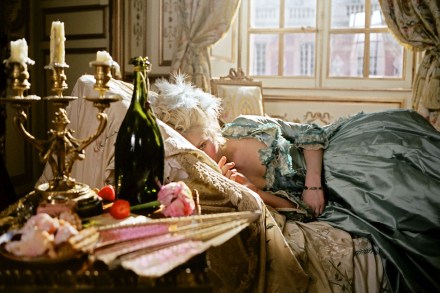
When Cecilia Lisbon, the youngest of the five Lisbon daughters in Sofia Coppola’s film The Virgin Suicides, winds up in the hospital having survived an attempt on her own life, the doctor tells her: ‘You’re not even old enough to know how bad life gets.’ ‘Obviously, doctor,’ Cecilia replies, ‘you’ve never been a 13-year-old girl.’ The dark edge of adolescence runs through Sofia Coppola’s films. You get a sense from even the most playful and romantic scenes that, behind the lustre of expensive clothes or dappled sunlight, girlhood is tragic and that its transformations are traumatic. Coppola’s eye for these contrasts makes her films brilliant.

Leave my pumpkin spice latte alone

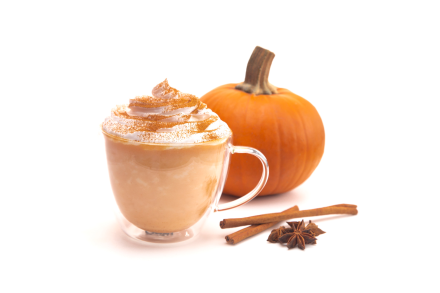
It didn’t matter that it was 33˚C. Starbucks staff across Britain spent the beginning of September putting out pumpkin-themed menus, selling customers pumpkin spice lattes in pumpkin-shaped mugs, to be drunk alongside a slice of pumpkin-flavoured loaf cakes, a pumpkin seed cookie, or a brownie cut into pumpkin shapes and frosted in hazardously orange icing. Happy fall, y’all.   The minor humiliations don’t stop me – I'm a creature of nostalgia and these drinks don’t taste bad, either The hot early autumn didn’t stop us obsessives: there is, inevitably, an iced pumpkin spice latte. The spice mix in question, of cinnamon, ginger, nutmeg, clove and sulphur-based preservatives doesn’t necessarily have to include any pumpkin.

The Office Lounge is everything a Texas bar should be

From our US edition

The downtown streets of Georgetown, Texas, are a grid of pastel storefronts and Victorian architecture, centering around the domed and columned Williamson County Courthouse (named after the judge known as “Three-Legged Willie”). America’s fastest-growing city looks like a time capsule from the old Southwest. But thirty miles south, Austin — or “Silicon Hills” — is undergoing a tech boom. Microsoft, Musk’s gigafactory and a host of tech startups have unleashed a flood of yuppie commuters into Austin’s surroundings, rapidly transforming not just Georgetown, but what we think of as quintessentially Texan. Rodeos, the Alamo, cowboys and outlaws — will we one day think instead of smartwatches and Bill Gates? I doubt it.

office lounge

Is Scottish reeling the route to romance?

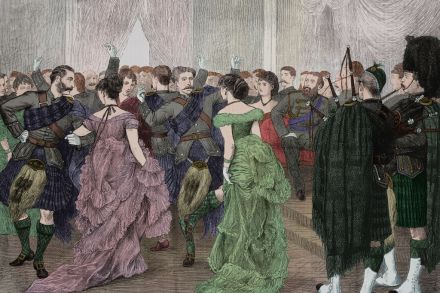
‘Remember to flirt outrageously.’ This essential piece of advice is imparted courtesy of Country and Town House magazine for its readers curious about Scottish reeling. The reel, a social folk dance, dates back to 16th-century Scotland and has remained popular for all this time, notwithstanding a brief hiatus in the 17th century when the Scots Covenanters assumed the stance (rightfully, some might say) that such amusement leads to mischief leads to sin. Less curious about the dancing than the flirtation, I joined some friends for the final, sweaty session of the season at London Reels.

Lorrie Moore explores the thin veil between life and death

From our US edition

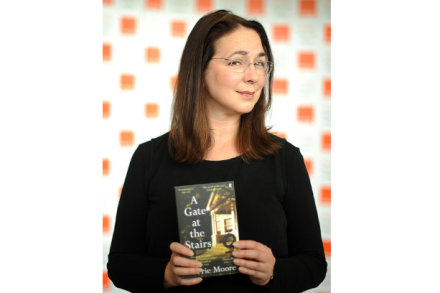
Very few of us could evade accusations of pretension if we quoted Faulkner in everyday conversation. The characters conjured up in Lorrie Moore’s fiction are granted an exception, though not always solely by virtue of their earnestness. In her novel I Am Homeless If This Is Not My Home, which traces a journey toward a final burial in the American South, allusion to As I Lay Dying is particularly apt. Moore has made a name for herself as one of America’s masters of the short story, with her inimitable style on display ever since her first work of fiction, “Raspberries,” was published in 1977. In this, her first novel for fourteen years, she once again wields her wordplay playfully and powerfully, striking a balance between levity and gravity.

Moore

Why religious art is as relevant as ever

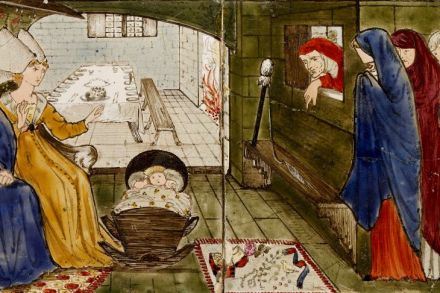
In the heart of Shoreditch, a handful of arts students have strayed from their typical east London mould. Those who study at the Prince’s Foundation School of Traditional Arts are taught, through research and the practice of traditional arts and crafts, to ‘experience the beauty of the order of nature – a spiritual, sacred beauty, connecting the whole of creation.’ The School’s ethos is centred around the philosophical vision of its president, the King. Charles is known to have some woolly ideas about aesthetics and spirituality and alternative medicine, articulated in his 2010 book Harmony: A New Way of Looking at Our World.

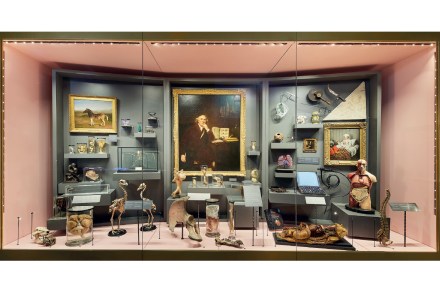
Are surgical museums such as the Hunterian doomed?

I have a soft spot for specimen jars and skeletal remains. Museums of natural history, surgical pioneering or anthropological oddities have always struck me as equally suitable for lunch breaks and first dates as for serious study and research. As far as public and casually accessible encounters with mortality go, these kinds of museums are the most straightforward way of confronting the realities of human nature. But whether we should have this kind of casual access is now increasingly being questioned. Telling history through displays of human remains presents a challenge for curators.

The sex appeal of lobsters

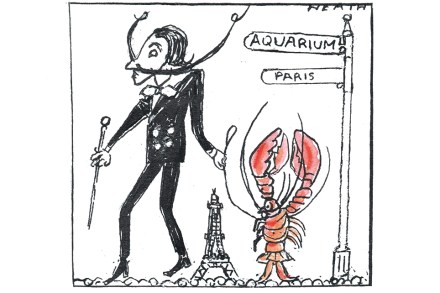
The night before I moved a pet lobster into my flat, I ate agnolotti all’ aragosta for dinner. It was possible that my soon-to-be companion, Snips McGee – who I inherited from a friend – would outlive me (the oldest lobster on record was estimated to be 140 years old) and I wanted one last plate of lobster ravioli, hold the moral hang-ups. The French author Gérard de Nerval also owned a pet lobster, which he took for walks on a blue silk leash. ‘They are peaceful, serious creatures,’ he said. ‘They know the secrets of the sea, they don’t bark, and they don’t gnaw upon one’s monadic privacy like dogs do.’ How I wish that were true. My Snips didn’t bark, but it was hard to find monadic or any other kind of privacy with an infant-sized cockroach by my bed.