Margaret Mitchell

Margaret Mitchell

Margaret Mitchell is The Spectator’s US assistant editor.

Michael Simmons, Kapil Komireddi, Margaret Mitchell, David Abulafia and Melissa Kite

27 min listen

On this week’s Spectator Out Loud: Michael Simmons argues that Trump is winning the tariff war with China; Kapil Komireddi reviews Robert Ivermee’s Glorious Failure: The Forgotten History of French Imperialism in India; Margaret Mitchell watches a Channel 4 documentary on Bonnie Blue and provides a warning to parents; David Abulafia provides his notes on wax seals; and, Melissa Kite says that her B&B is the opposite of organic. Produced and presented by Patrick Gibbons.

The NHS is to blame for Bonnie Blue

Channel 4’s documentary begins as the ‘adult content creator’ Bonnie Blue (real name: Tia Billinger, 26, Derbyshire) prepares to beat the world record of men shagged in 12 hours. Spoiler: she beats it, raising the bar to 1,057, though she was a bit nervous that no one would show up. You might wish to see her cry – because you despise her, or because you need some sign she’s human – but the worst she suffers is a nasty flu. It does somewhat clarify things to discover that Bonnie Blue had been an NHS financial recruiter Bonnie Blue was prohibited from selling the tape on OnlyFans – the porn website where, until recently, she was making more than £1 million a month – because it’s considered an ‘extreme challenge’.

How the Bank broke Britain, Zelensky’s choice & the joys of mudlarking

49 min listen

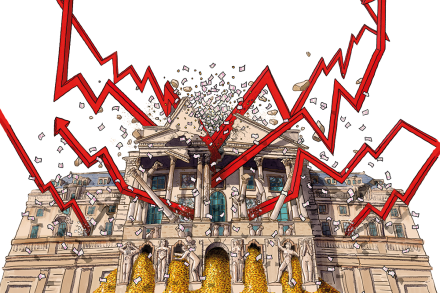
First up: how the Bank of England wrecked the economy Britain’s economy is teetering on the brink of a deep fiscal hole, created by billions of pounds of unfunded spending – never-ending health promises, a spiralling welfare bill and a triple lock on the state pension, which will cost three times as much as originally estimated. Although politicians ‘deserve much of the blame for the economic state we’re in’, it’s Andrew Bailey – Michael Simmons argues in the magazine this week – who ‘has enabled their recklessness’. He joined the podcast to discuss who really broke Britain with Kate Andrews, Deputy Editor of The Spectator’s world edition and former Economics Editor. (01:15) Next: has Ukraine lost faith in Zelensky?

The joys of mudlarking

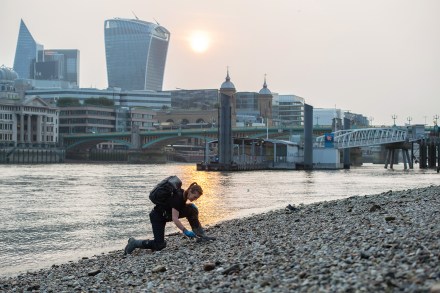
Imagine a London of the distant future. A mudlark combs through the Thames foreshore, looking for relics of the past. What would they find? A rusted Lime bike, a message in a takeaway soy sauce bottle? ‘Vapes,’ says Kate Sumnall, curator of the Secrets of the Thames exhibition at the London Museum Docklands. ‘Lots of vapes.’ Mudlarking – the practice of scavenging at low tide for washed-up historical treasures, oddities or mundane objects – has become a well-gatekept hobby over the past five years. More than 10,000 people are now on the waiting list for mudlarking permits. Of course, anyone can go down to the foreshore to look around and turn pebbles over with their shoe, but even if you flout the rules, mudlarking is no longer the grubby, lawless enterprise it used to be.

How ice cream got cool

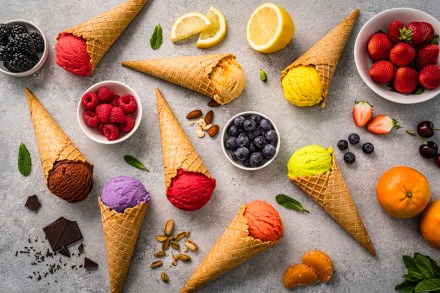
In the depths of winter last year, an ice cream and wine bar opened in Islington. The Dreamery serves ice creams and sorbets in silver goblets with tiny vintage spoons. On the ceiling is a glowing mural of happy cows and a sun with a face, resembling a child’s finger-painting (the artist is Lucy Stein, daughter of Rick). Outside, neighbours whisper about a recent Dua Lipa spotting. The Dreamery is inspired by the Parisian ice cream and wine bar Folderol, and makes fairly sophisticated flavours such as salted ricotta blueberry and Greek mountain tea. It is TikTok chic – a gamble, after Folderol unwillingly became a viral sensation and ended up sticking up signs saying: ‘No TikTok. Be here to have fun, not to take pictures.

Why I’m ditching ‘authentic’ travel

From our US edition

I’ve always heard Americans describe the food in Rome as “authentic,” though maybe that’s only relative to our three square meals of Little Debbies, reconstituted meat and freeze-dried astronaut food. The things we eat are not authentic food. But abroad, authenticity means anything sourced locally and served by a very small old woman with limited English. If a nonna told me she’d fished anchovies out of the Trevi Fountain and plucked chicory from cracks in the sidewalk, I’d swoon and think: they really know how to do it right in Europe. Authenticity, to me, also means a little discomfort. Bones in your rabbit stew. Lugging a suitcase up a dirt road. Getting pickpocketed.

authentic

Donald Trump’s papal style

From our US edition

The election of the first American pope, Leo XIV, comes at a strange time when a Catholic establishment is running the show in his home country: vice president J.D. Vance, of course, as well as health secretary RFK Jr., border czar Tom Homan, press secretary Karoline Leavitt, secretary of state Marco Rubio, to name the most prominent few. Melania is allegedly one as well. They are American exceptionalists who want to Make America Great Again and, in the process, Make Catholicism Great Again too. MAGA and Catholicism seem like strange bedfellows at first glance. Donald Trump has been divorced twice and married thrice. The rich may have a difficult time entering the kingdom of God, but they’ve had no trouble finding roles within Trump’s administration, which hosts 13 billionaires.

Trump

Is AI evil?

Is Claude your confidant? Is ChatGPT your yes-man? Your wingman? Artificial intelligence seems more like a friend than the apex predator we feared. Maybe it’s not gearing up to enslave us or turn us into paperclips after all. But I find there is something just as malign about AI posing as our friend. Slowly, subtly, politely, it is changing how we think of ourselves, other people and our relationships. The friendliness of AI is a user-retention tactic. OpenAI, for example, relies on its models to be informative, yes, but also on them being more agreeable than humans. Sam Altman recently announced that OpenAI was rolling back its latest model of ChatGPT because it had become ‘sycophantic’.

At Japan House humanity has arrived at the perfect future: food for ogling, not eating

There is a popular Japanese television show that features a segment called ‘Candy Or Not Candy?’. Contestants are presented with objects and must guess if they’re edible or not. Is that a dish sponge – or a steamed sponge cake? I might not consider afternoon tea to be art, but the confectionery artifice required to dupe contestants into mistaking the replica for reality is impressive – or at least entertaining. The lacquered steaks, fruits, vegetables and sliced bread feel wrong. They surely ought to be matte The inverse – using inedible materials to create replicas of food – is also a Japanese art form, and the subject of Looks Delicious! at Kensington’s Japan House.

The tyranny of the restaurant booking system

Last week, the London restaurant St John opened reservations for a celebration of its 30th birthday. For much of September, the Smithfield restaurant will bring back its 1994 menu at 1994 prices. Tables were snatched up within minutes, possibly seconds. I sat at my computer refreshing the OpenTable booking site like a monkey at a slot machine and got nothing but a manic adrenaline rush that ruined my morning. I’ve seen the algorithm create Soviet breadlines overnight Please, reader, don’t pity me – it was, of course, just a minor inconvenience. What does wind me up is the principle: fun now has to be meticulously planned and booked weeks in advance.

Japan is great, but it defeated me

It’s great having toilets with warm seats that shoot water up your bum until you need somewhere to throw up. After eating two kilos of raw, vengeful tuna, I was leaning over a hotel loo in Osaka and all I wanted was to rest my clammy forehead on a cold plastic seat. Six hours earlier, I had watched a man carve up a metre-long bluefin tuna on Dotonbori Street. It appeared very much still alive, apart from the limp way its mouth fell open when the fishmonger turned it upright on its belly. ‘Very, very fresh!’ he hollered, whacking it to bits. ‘Very, very, very delicious!’ I took his word, like the tourist sucker I am, and ate an entire bowl filled with chunks of chutoro and kamatoro, and 13 more pieces of nigiri.

Spanish food is deliciously obsessed with death

The moral absolutist in me believes that in every city, with its finite number of restaurants, there is such a thing as the best of all possible lunches. I don’t have to find it, but I have to get close. Mediocre doesn’t cut it. In fact, on holiday, the idea of wasting a meal on mere ‘mediocre’ fills me with crippling guilt over wasting not just money but time. What if I die before I see Paris again? I would be ashamed that I had wasted my precious mortality eating that Pret tuna niçoise salad. Laurie Lee described Spain as a place of ‘distinct appetites...

Biden’s social media needs a refresh

Joe Biden has a cold. That was the desperate message sent out by sources close to the president halfway through Thursday night’s painful debate. Biden’s sick-note recalls the first televised debate in 1960, when the incumbent vice president and Republican nominee Richard Nixon, recently hospitalised and still recovering from a staph infection, appeared pale and sickly beside the tanned, waspy Democrat John F. Kennedy who had the advantage of makeup on his side. Trump and Biden campaigns have been courting ‘content creators’ Six-and-a-half decades on, the presidential debates remain little more than a beauty pageant, this time apparently with morticians staffing the makeup team.

Real Americans drink and drive

Prius owners are always demanding more legislation against drink driving, but an advantage of living in America is that if you are too trashed to drive home, your 15-year-old kid can pick you up from the bar. The only problem with this is that we Americans love reckless driving too much to let anyone else take the wheel. Drink driving is one of our great illegal freedoms. Actually, it’s called ‘buzzed’ driving in the States, and as we like to say, ‘it’s only illegal if you get caught.’  Driving while intoxicated is about the rights enshrined in the Constitution Justin Timberlake was caught indeed in the early hours of Tuesday morning after a policeman in the Hamptons saw him swerve between lanes and blow through a stop sign.

Will my generation still remember D-Day?

In the town of Sainte-Mère-Église, just inland of Utah Beach on the coast of Normandy, a crowd had gathered before an outdoor projector to watch the British, French and American heads of state pay respects to those who served and the thousands who gave their lives on D-Day. While the dancing and drinking and celebration of the town’s 80 years of liberation went on around me, I was caught off guard by the small, dignified faces of the veterans’ broadcast on screen. Watching the royals, Sunak, President Biden and President Macron lean down to shake the weathered hands of veterans in wheelchairs, I saw them, for a moment, as leaders whose first duty is to serve with humility and devotion.

Botswana’s President: elephant hunting isn’t cruel, it’s necessary

Last month, Botswana’s Minister for Environment and Tourism Dumezweni Mthimkhulu threatened to send 10,000 elephants to Hyde Park. This week, Botswana’s President Mokgweetsi Eric Keabetswe Masisi went a step further and suggested sending 20,000 elephants to Germany. These are strange and not entirely plausible threats, yet they reflect the frustration that Botswanan politicians feel over western governments lecturing them about animal rights. The United Kingdom and Germany are both in the process of passing laws to block the importing of hunting trophies.

Compelling and somewhat heartbreaking: Girls State, on Apple TV+, reviewed

Here’s a fun thought experiment: instead of entrusting the future of American democracy to one of two old men, what if you put it in the hands of 500 teenage girls? Girls State, the sister documentary to Amanda McBaine and Jesse Moss’s award-winning 2020 film Boys State, follows the events of a week-long civic engagement camp where high-schoolers create an all-female democracy from scratch. A feminist manifesto is much easier to compose than a real solution to culturally ingrained inequality Girls State and Boys State programmes have given argumentative American teens an education in the necessary evil of politics since the 1930s.

Celibacy isn’t chic

Abstinence doesn’t typically come to mind when one thinks of Valentine’s Day. But this year it coincides with Ash Wednesday and the beginning of Lent, when we traditionally give something up. (Bear in mind that Christianity recognises a very gruesome torture and death as the ultimate gesture of love. For us, a little bit of suffering seems perfectly in order on a day celebrating love.) White-knuckled sex positivity isn’t serving women’s spiritual needs I was still in Catholic school in Virginia the last time the two days collided. We were, like all teenagers, obsessed with love and fixated on our own nascent desires, although this obsession manifested in strange ways.

Carbon capture: how China cornered the green market

30 min listen

On the podcast: In her cover piece for the magazine, The Spectator's assistant editor Cindy Yu – writing ahead of the COP28 summit this weekend – describes how China has cornered the renewables market. She joins the podcast alongside Akshat Rathi, senior climate reporter for Bloomberg and author of Climate Capitalism: Winning the Global Race to Zero Emissions, to investigate China's green agenda. (01:22) Also this week: Margaret Mitchell writes in The Spectator about the uncertainty she is facing around her graduate visa. This is after last week's statistics from the ONS showed that net migration remains unsustainably high, leaving the government under pressure to curb legal migration.

Can I stay in Britain?

Brexit Britain, for all its flaws, has been welcoming to me. When the UK was a member of the European Union, the only way to control immigration was to crack down on non-EU visas. Ten years ago, Americans like me who studied in Britain and wanted to stay needed to earn £35,000 a year (which would be £47,000 now). That was unrealistic for a recent graduate. After Brexit, Boris Johnson brought back the old post-study visa, giving us two years to find work and requiring a more achievable minimum salary of £26,000. Finally, international students who won places at British universities could meet their EU equals as, well, equals. We had a realistic chance of staying here to work, live and contribute.