Madsen Pirie

A global, free trading Britain should back freeports

Boris’s new government abounds with good people and good ideas to boost business – and we are already reaping the rewards. Liz Truss, as the new President of the Board of Trade has announced today that once we leave the European Union, the UK will be a global free trader, with freeports and safe harbours to help this aim along. Freeports are areas next to shipping ports or airports that we designate as effectively foreign territory. That doesn’t mean they are owned by foreigners; it simply means that for tax and regulation purposes, they are treated as if they were outside the UK. They’re areas where HMRC has no right of entry or the authority to pick pockets. In particular, it means that goods coming into them are not subject to UK tariffs, taxes or regulations.

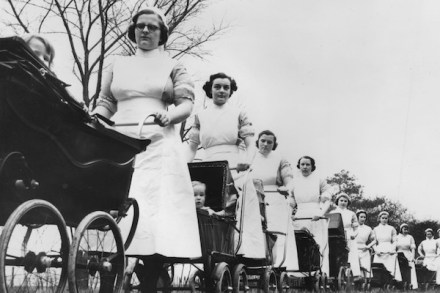
Voters say goodbye to nanny

Has nanny finally blown it?  That was what we sought to find out.  After having the state tell us what to eat and drink, how to exercise, and even how to cook turkey, anecdotal evidence suggests people are growing tired of it all and would like nanny to stop being so bossy.  A small group of self-styled 'experts' who think they know better than we do how to live our lives seems to have persuaded government to bully us into compliance. In 1998 the Adam Smith Institute surveyed, with a polling organisation, the attitudes of the younger generation.  We found then that they didn't expect government to gain them a job, they scored politicians and civil servants low in the admiration stakes, and nearly half (48 per cent) wanted to run their own business.

The role of libraries

New government statistics show that libraries are less popular than ever, with a drop over 5 years of nearly one-third in the number who visit them. Over 60 percent of adults do not use them even once a year. Libraries seem vulnerable. With government striving to make economies and councils made to cut budgets, libraries could see their spending cut dramatically. Libraries face a downward spiral in which councils try to make savings by cutting hours, letting some staff go, and closing some facilities altogether. Libraries then become less convenient to use, and usage figures decline even further. There are alternatives. Although libraries mostly loan popular bestsellers and do-it-yourself books to adults, they also introduce children into the world of reading.

Gaining work experience

Twenty years ago, students typically took low skill "summer jobs" simply to earn money.  Now, most offices and organizations feature youngsters putting in unpaid time for work experience.  It might be a week or two, or even half a year. The practice has its critics.  Union leaders are decidedly edgy about free labour competing for jobs with their members.  There are charges of exploitation and bad treatment.  The caricature has unpaid interns working photocopiers or being sent to collect sandwiches or laundry for management, without gaining any useful hands-on experience.

A short guide to winning arguments

When I taught logic at an American university, the chief problem was to entice students to take the course. The smorgasbord approach they used to build a degree meant that students wanted things which might be useful to them, or ones they might be good at. Logic, alas, was perceived as neither, and classes were largely made up of very bright students who were not afraid of it and who thought it might be fun. It would be difficult to show that it is a valuable life skill, given the remarkable number of successful people who happily get by without it.