Luke McShane

Luke McShane is chess columnist for The Spectator.

No. 617

From our UK edition

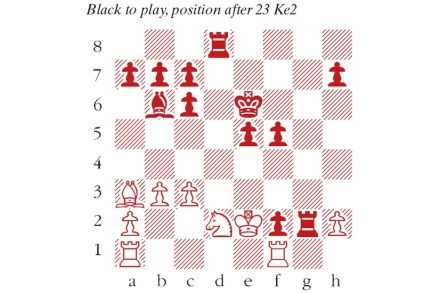
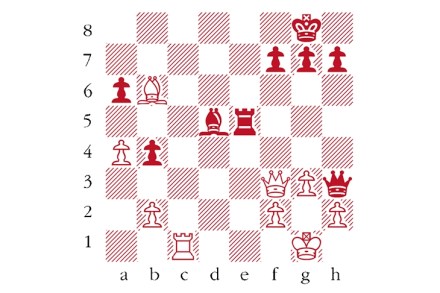
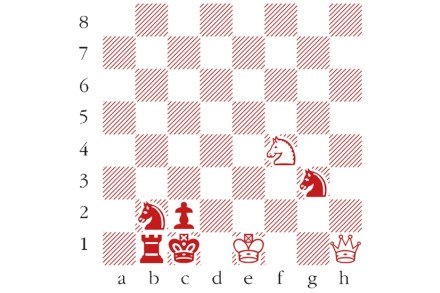
Black to play. Efimov–Bronstein, Kiev 1941. Normally White seeks glory in the King’s Gambit, but here Bronstein scored a lightning victory for the Black side. Which move did he choose? Email answers to chess@spectator.co.uk by Monday 17 August. There is a prize of £20 for the first correct answer out of a hat. Please include

The view from on high

From our UK edition

‘Cabin crew, ten minutes to landing!’ Are there any more exhilarating words? Soon, for a few precious minutes, one can fix one’s gaze on the approaching landscape. The patchwork fields, the lines of terraced houses and shuffling cars — all woven together in an intricate fractal. From a certain point of view, these simple things

No. 616

From our UK edition

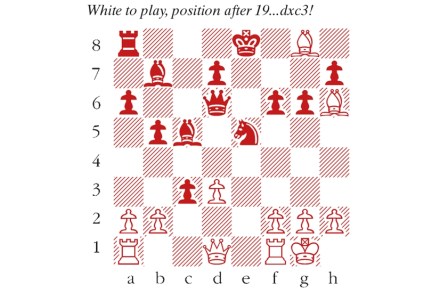
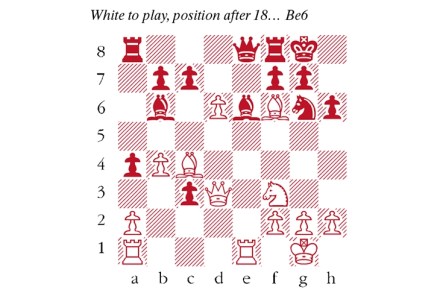
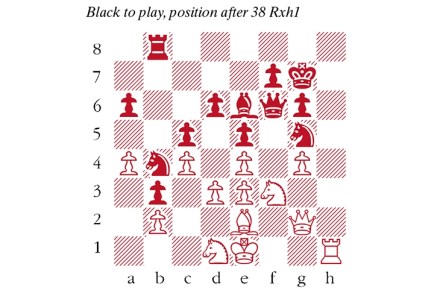
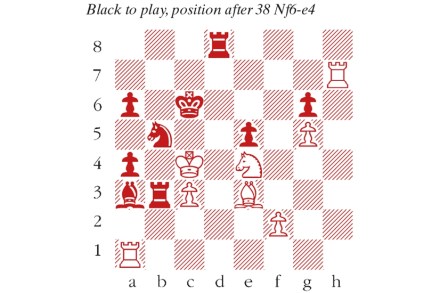
Black to play. Studer–Naiditsch, Biel, July 2020. White intends to meet 1…Bxb5 with 2 Bxe7 Qxe7 3 Qxb5, with an equal position. Which move did Naiditsch play to pinpoint the flaw? Answers should be emailed to chess@spectator.co.uk by Monday 10 August. There is a prize of £20 for the first correct answer out of a

Tech mate

From our UK edition

I am sure I have posed more questions to the chess engine Stockfish than to any living being. I love the instant gratification: you give it a chess position and it gives you an answer: the best move and an evaluation measured in hundredths of a pawn, like +1 24. Leave it alone, it will

No. 615

From our UK edition

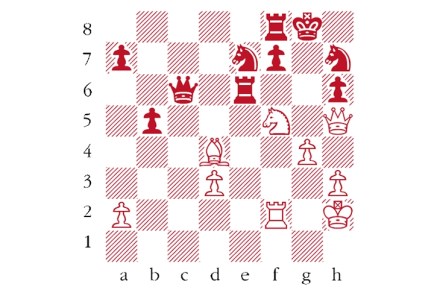
White to play. Stockfish–Leela Chess Zero, TCEC 18, Game 92, July 2020. It looks hard to make progress, despite the far advanced pawns. What was Stockfish’s winning move? Answers should be emailed to chess@spectator.co.uk by Monday 3 August. There is a prize of £20 for the first correct answer out of a hat. Please include

The maestro

From our UK edition

‘Had I not become a composer, I would have wanted to be a chess player, but a high-level one, someone competing for the world title.’ So said Ennio Morricone, who died earlier this month at the age of 91. Looking back on a lifetime of work, you don’t doubt that he could have done it.

No. 614

From our UK edition

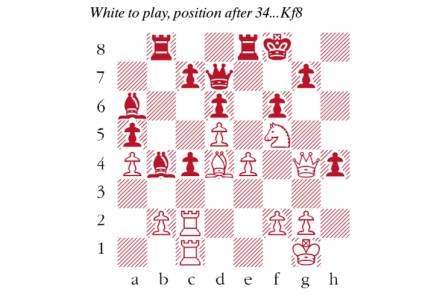
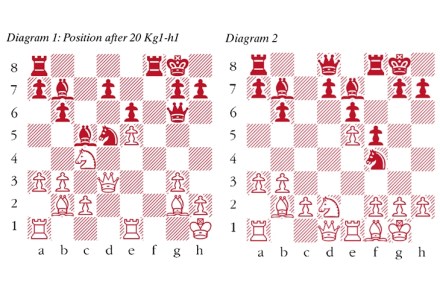
White to play. Stefano Tatai–Spyridon Skembris, Budva Zonal 1981. Morricone’s teacher found a delightful conclusion to this attack. What was his next move? Answers should be emailed to chess@spectator.co.uk by Monday 27 July. There is a prize of £20 for the first correct answer out of a hat. Please include a postal address and allow

An ugly duckling problem

From our UK edition

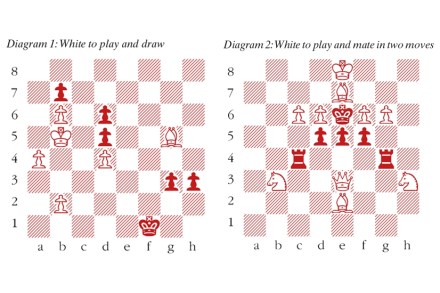
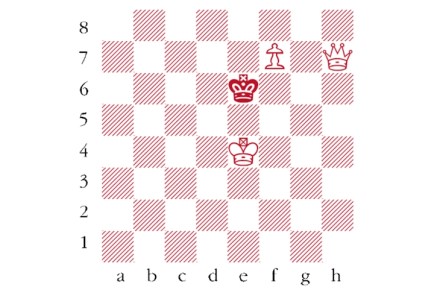
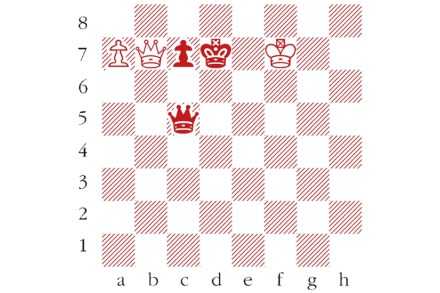
The position shown in this week’s main diagram is the starter problem for the Winton British Chess Solving Championship, an annual competition. White must force mate in two moves, against any defence. (White moves, then Black moves, then White delivers checkmate.) For entry details, see the final paragraph. Many composed positions have an ugly duckling

No. 613

From our UK edition

White to play and mate in three moves. A problem composed by grandmaster Jonathan Levitt (British Chess Magazine, 1995). One tip: note that there is an ‘obvious’ mate in two which actually falls short. Answers (first move only) should be emailed to chess@spectator.co.uk by Monday 20 July. There is a prize of £20 for the

The Streisand effect

From our UK edition

There is no sight so compelling as one that would be hidden. I am fascinated by the Streisand effect, named after Barbra Streisand, whose Malibu house appears in a large online collection of aerial photographs documenting the California coastline. In 2003, she filed a lawsuit to have it removed, which as well as being unsuccessful

No. 612

From our UK edition

White to play. Giri–Nepomniachtchi, Chessable Masters 2020. Giri has sacrificed a knight to lure the black king forward. Which move forced a decisive breakthrough? Answers should be emailed to chess@spectator.co.uk by Monday 13 July. There is a prize of £20 for the first correct answer out of a hat. Please include a postal address and

Twitch pageant

From our UK edition

Chess has much in common with video games — not least, the eager disdain of uninformed critics. An 1859 article in Scientific American noted the achievements of Paul Morphy ‘vanquishing the most distinguished chess players of Europe’ but concluded sniffily that ‘skill in this game is neither a useful nor graceful accomplishment’. You can’t please

No. 611

From our UK edition

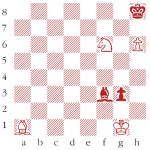
White to play. From the ridiculous to the sublime. According to the ‘Chess Notes’ website, a game won by Edward Gestesi in Paris, 1911. Which move forces a quick checkmate? Answers should be emailed to chess@spectator.co.uk by Monday 6 July. There is a prize of £20 for the first correct answer out of a hat.

Clutch fun

From our UK edition

‘May the best scoring system win!’ is hardly a sentiment to stoke the passions. In the 2011 referendum, the alternative vote (AV) system was mooted to replace first-past-the-post. The electorate didn’t care for AV, which lost by two votes to one. Indeed, people didn’t much care for the issue at all: the 42 per cent

No. 610

From our UK edition

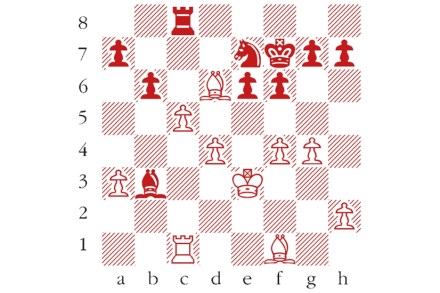
White to play. Grischuk–Aronian, Clutch Chess 2020. Only one rook move draws here. Which one? Answers should be emailed to chess@spectator-.co.uk by Monday 29 June. There is a prize of £20 for the first correct answer out of a hat. Please include a postal address and allow six weeks for prize delivery. Last week’s solution

Chequered histories

From our UK edition

As statues are scrutinised, the tensions that existed within historical figures are thrown into relief. You can admire Churchill’s leadership and criticise his imperialism. Beyond politics, whether one can or should separate the art from the artist is a well-trodden critical minefield. How to appraise the work of sculptor Eric Gill, whose corporeal forms can

No. 609

From our UK edition

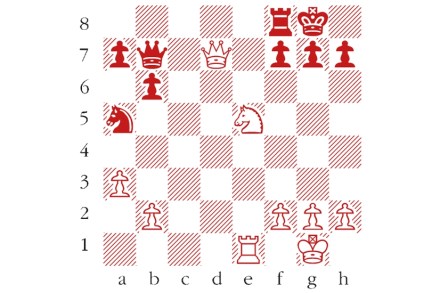
White to play. Tolush–Aronson, Moscow 1957. Strangely, this quick win was once wrongly attributed to Alekhine. How did White exploit the exposed position of the Black queen? Answers should be emailed to chess@spectator.co.uk by Monday 22 June. There is a prize of £20 for the first correct answer out of a hat. Please include a

No. 608

From our UK edition

Black to play, Ding Liren–Daniil Dubov, Lindores Abbey Rapid Challenge, May 2020. Dubov’s rook is under attack, but his next move turned the tables, prompting immediate resignation. What did he play? Answers should be emailed to chess@spectator.co.uk by Monday 15 June. There is a prize of £20 for the first correct answer out of a

Lindores Abbey online

From our UK edition

The Lindores Abbey Distillery in Fife, Scotland was an idyllic setting for an exciting rapid event last year, won by Magnus Carlsen. This year, the ‘views’ were of a different sort, as the Lindores Abbey Rapid Challenge was held online. The Tironensian Abbey is now a ruin, but a quaint entry in the inventory records

Robot Wars

From our UK edition

Twenty years ago, I was an avid fan of the cult TV programme Robot Wars. Teams of contestants would design and nurture their metal offspring, and then set them to fight. The goal of these remote-controlled battles was to cripple the enemy robot, or eject it from the arena. They sliced, bashed, torched, shoved and