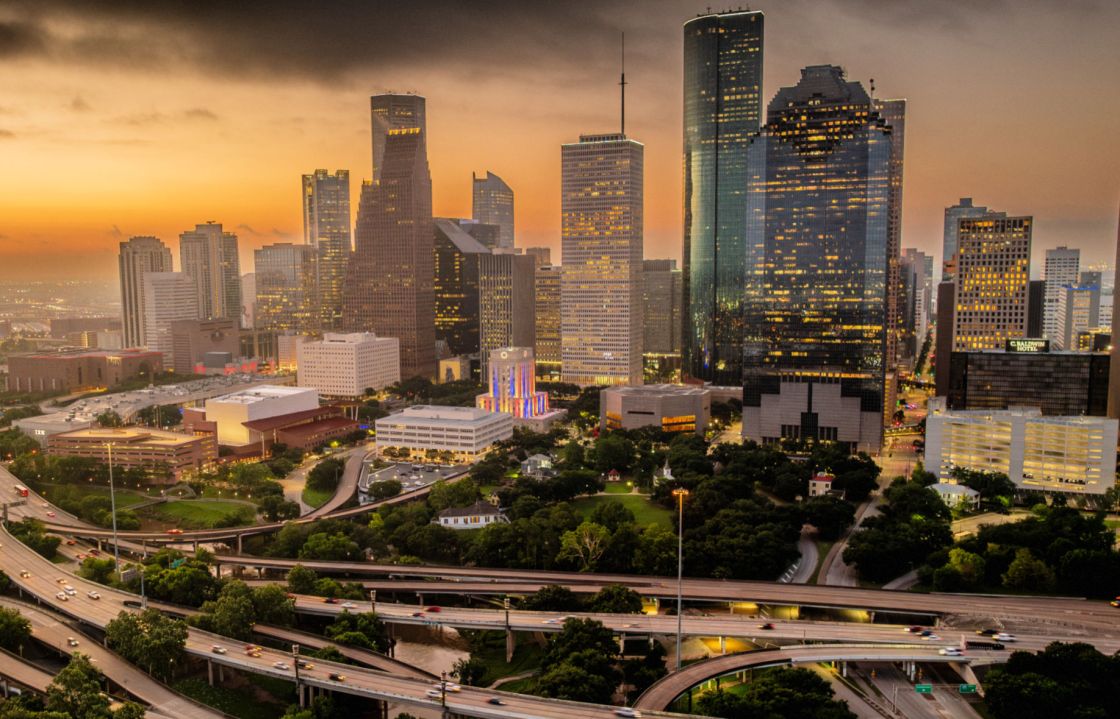
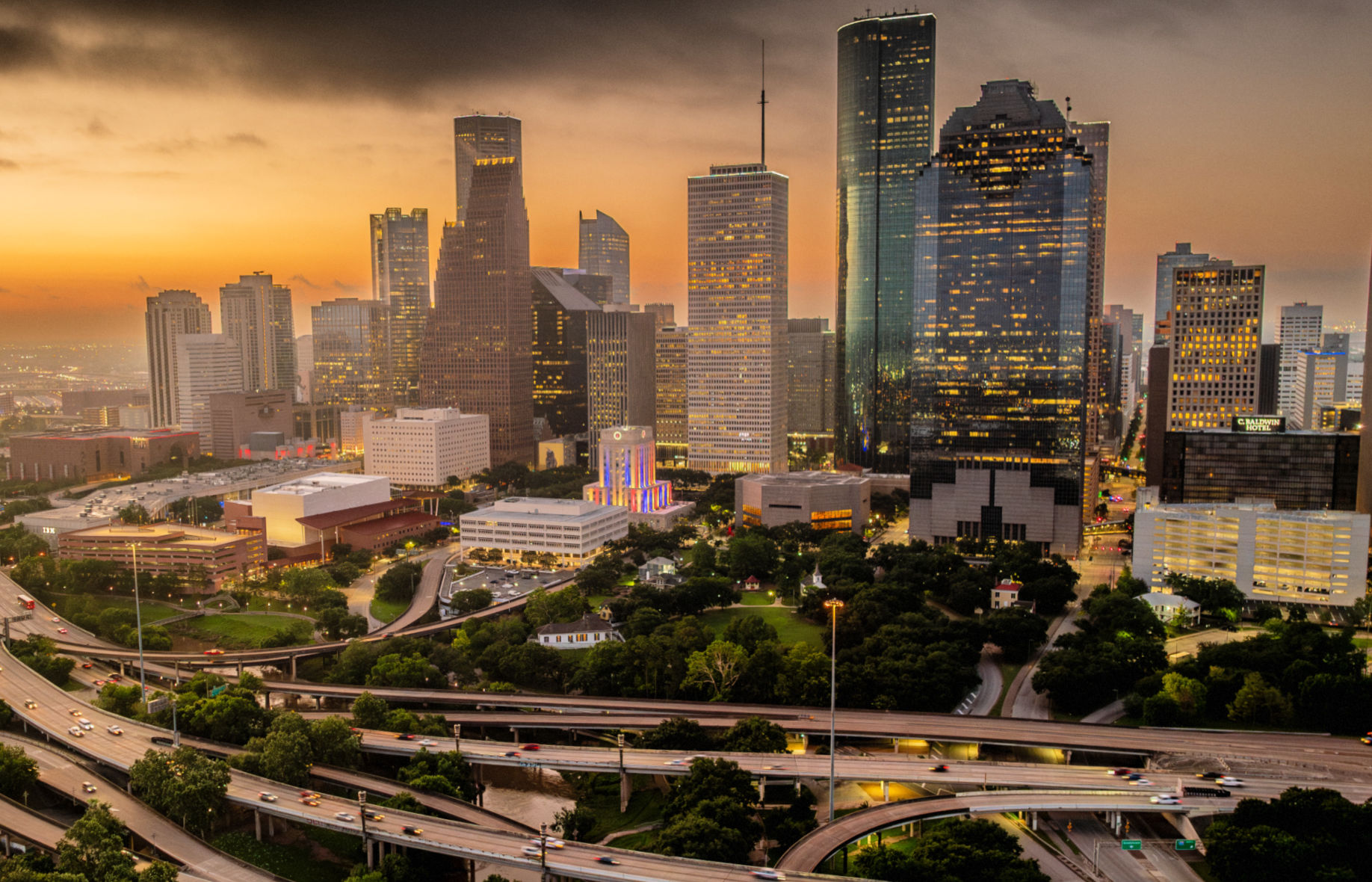
If Greta Thunberg ever docked in Houston, it wouldn’t be for long. Freeways stretch to 26 lanes, flaring oil refineries light the night sky and sports stadiums are sealed against the humidity with year-round refrigeration. At an Astros baseball match, a poster bluntly reminds attendees ‘TODAY’S GAME IS MADE POSSIBLE THANKS TO NATURAL GAS & OIL’. Between quarters at a Texans NFL match, a handful of fans score Chevron gift cards – ‘You’re going home with extra gas money!’ The crowd roars. Welcome to oil country.

When fossil fuels enter Britain’s national conversation these days, it’s behind abstractions of net zero. Oil and gas are cast as an unfashionable throwback, distant industries shrouded in secrecy and corruption – despite the fact that more than three-quarters of our total energy demand is still met by them. The Gulf states at least turn oil into spectacle, conjuring cities from the sand, but it’s always refracted through the state, as if royal Emirati generosity is the source of prosperity rather than, er, geology. Houston is an outlier. With ten refineries churning 2.6 million barrels of crude oil every day (enough to power Britain’s consumption twice over), it makes no apology for what keeps its lights on and its AC constantly whirring.
A friend told me Texans live the way everyone imagined they would when they were teenagers, before restraint set in. Within hours of arriving in the city, I can see what he means. One taxi driver spoke proudly of the motor in his backyard pool that means he could swim forever in an endless flow of water. Downtown, commuters march through six miles of air-conditioned tunnels to evade scorching noon temperatures. On the surface, tarmac is shared by Pontiacs and Cybertrucks – both treating speed limits as optional suggestions.
With its skyline of refineries, Houston offers no conventional beauty. It’s a city of concrete – vast, pale and sprawling. Ribbons of road arc above more ribbons that loop in every direction. At some interchanges, five stacks of pick-up trucks glide over each other, held aloft by hulking pillars. The air smells of tar, petrol and heat.
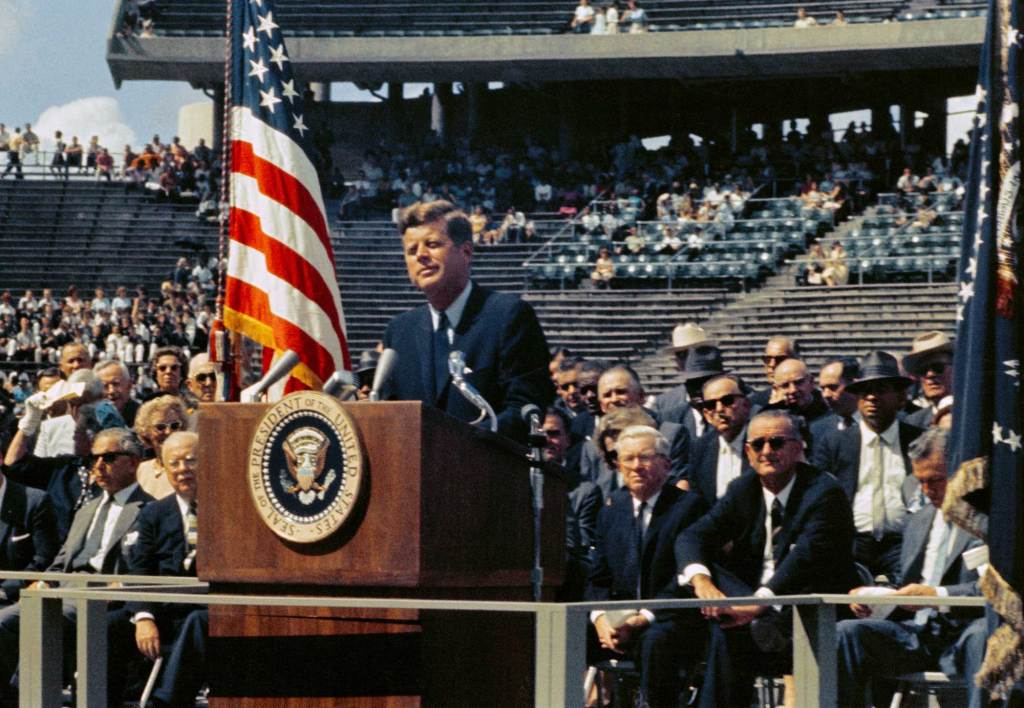
But for many visitors to Houston, its real appeal has roots somewhere far beyond this concrete jungle. ‘Houston’ was, after all, the first word spoken on the Moon by Neil Armstrong. It was Houston where John F. Kennedy told a university audience in 1962: ‘We choose to go to the Moon in this decade and do the other things, not because they are easy, but because they are hard.’ Seven years later, it was 26-year-olds from Houston who sat in mission control with the power to abort Apollo 11 – and, when computers blared alarms and fuel ticked down to seconds, who chose not to.
Bureaucracy and complacency killed the Kennedy spirit for decades. But during his first term, Donald Trump revived the push to return humans to the Moon, laying the groundwork for the Artemis program. Three years ago, the first Artemis mission looped the Moon with no crew; the second, pencilled in for next month, will repeat the journey with four astronauts on board; and the third, for 2027, will attempt a manned landing at the lunar south pole.
Nasa’s Johnson Space Center in Houston is where the Artemis II crew are now training for a flight that could launch as soon as 6 February. Laid out like its own small town, the campus sits at Houston’s outer edge. A white water tower stamped with the Nasa insignia looks over the site. The buildings are beige and box-shaped; the interiors all linoleum floors, metal cabinets and corkboards. Crater names – Shackleton, Shoemaker, Faustini – are marked on printouts on corridor walls showing candidates for Moon landing zones, and engineers in untucked polos and khaki shorts walk past signs counting down to the mission.
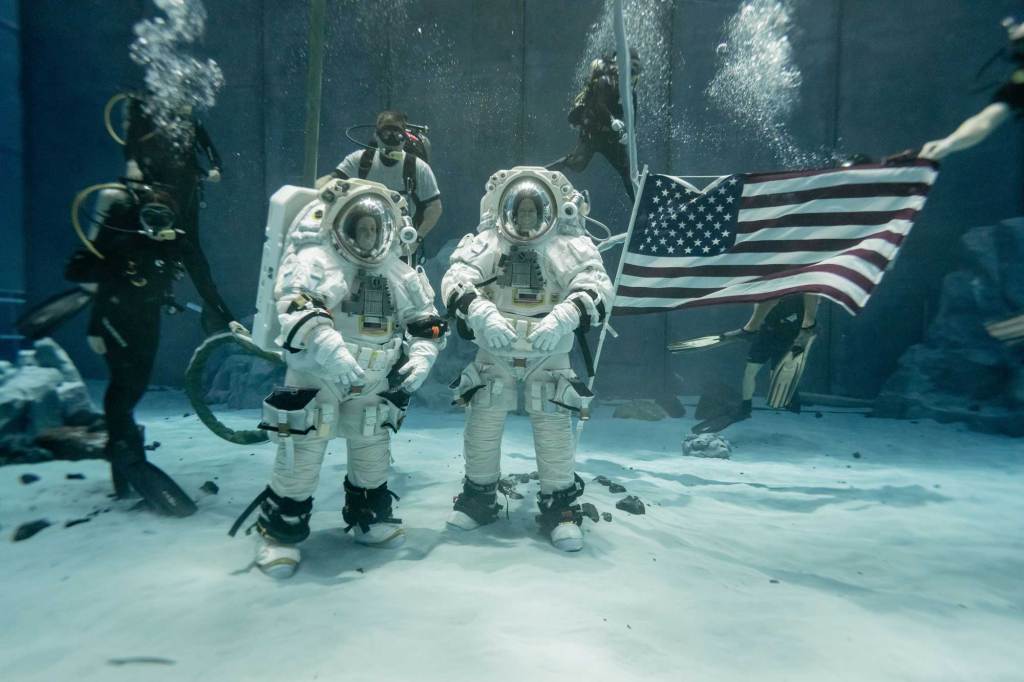
Reid, our guide, takes us to the viewing gallery of the Neutral Buoyancy Laboratory – a cavernous hangar built around a 40ft-deep training pool that holds more than six million gallons of water. Astronauts rehearse spacewalks here by wearing modified spacesuits that mimic the effects of microgravity when they’re submerged in the pool. Along the deck, flags from partner nations – Japan, Germany, even Russia – sit above rows of consoles. Reid mentions that the Artemis II crew had been in the water that morning for a several-hour training dive; we’d missed them by minutes.
Beyond the pool, another hangar is stacked with the hardware of tomorrow. In one corner, a humanoid Valkyrie robot practises the fine motor tasks it may one day perform on Mars. Nearby, a poster for Sierra Space’s Dream Chaser – a spaceplane built to glide back from orbit and land on an ordinary runway – teases a future where spacecraft slot into the same timetables as commercial flights.
Houston’s appetite for experimentation isn’t confined to space labs. We glide back downtown in an HOV (high occupancy vehicle) lane – a rush-hour track for anyone sharing a car. With no zoning to dictate what type of building can go where, unlike in other US cities of its size, Houston’s developers are free to build what they want, where they want; a rehab centre faces a cocktail bar and nobody seems to mind. The food scene is similarly no-holds-barred, and all the better for it: butter cakes with trout roe at Nancy’s Hustle, Viet-Cajun crawfish boil at Cajun Kitchen, tiny Gulf oysters at Pappas.
While nursing a 12 per cent Houston-brewed stout in the evening heat, it clicks. Britain talks about growth; Houston just does it. Ambition isn’t managed or moralised, and certainly never frowned upon. Everything really is bigger in Texas.



Comments