Lucy Vickery

Yawn

From our UK edition

In Competition No. 2891 you were invited to think of the most boring lecture topic possible and submit an extract from that lecture. Christopher Gilbert gamely -submitted an extract from a real lecture he is due to deliver on the impenetrable-sounding topic of heteroscedasticity. But Brian -Murdoch, observing that it was all ‘a bit near the knuckle’, decided against putting his own genuine ‘Comments on the Prologues to the Old Frisian Laws’ into the ring. His fictitious offering not only made it into the winning line-up but also won him the bonus fiver. The rest take £25 each.

Spectator competition: laments for lost newspapers (plus: historical characters’ desert island discs)

From our UK edition

In his 2004 book The Vanishing Newspaper Philip Meyer predicted that the final hard-copy newspaper will plop through someone’s letterbox in 2043. So who’ll be the first to go? In the latest competition you were invited to imagine that one of the major newspapers has ceased publication and provide a verse lament for it. A couple of you submitted entertaining entries in the style of William McGonagall, poet and tragedian — take a bow, David Silverman and Carolyn Thomas-Coxhead — and my head was also turned by Brian Murdoch, who didn’t seem overly sad about the demise of the Guardian. Over to D.A. Prince, who pockets £30 and her fellow prize-winners, who earn £25 each. D.A.

End paper

From our UK edition

In Competition No. 2890 you were invited to imagine that one of the major newspapers has ceased publication and provide a verse lament for it. In his 2004 book The Vanishing Newspaper Philip Meyer predicted that the final hard-copy newspaper will plop through someone’s letterbox in 2043. So who’ll be the first to go? Over to you. D.A. Prince pockets £30; her fellow prize-winners earn £25. No more the morning doorstep thumps that bring news and opinions from the public sphere. The Guardian’s laid to rest where angels sing and deadlines are no more, is grieved for where the muesli-ed tables sit, forlorn and sad. No more the Toynbee fire to heat the grate, no Monbiot to shame us from our bad earth-wrecking habits.

Spectator competition: female chauvinist pigs on men behaving badly (plus: when Damon Runyon met John Bunyan…)

From our UK edition

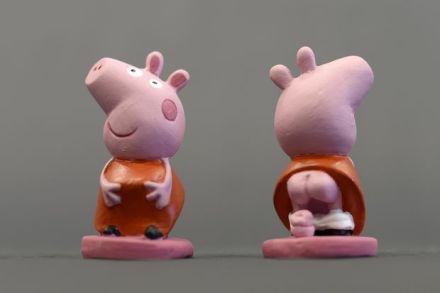
There are man-haters everywhere, it seems, from children’s telly to high culture. Charges of sexism have been levelled against the creators of the Daddy Pig character in Peppa Pig — daddy is portrayed as a hopeless bumbling idiot while Mummy Pig is the embodiment of good sense — and the literary critic Harold Bloom argues that there is ‘a strong element’ of misandry in Shakespeare (whereas misogyny, he says, is hard to find). The latest challenge invited you to climb aboard the bandwagon and compose an extract from an imaginary novel written from the perspective of a female chauvinist author.

Men behaving badly

From our UK edition

In Competition No. 2889 you were invited to submit an extract from an imaginary novel written from the perspective of a female chauvinist author. There are man-haters everywhere, it seems, from children’s telly to high culture. Charges of sexism have been levelled against the creators of the Daddy Pig character in Peppa Pig. Daddy is portrayed as a hopeless bumbling idiot while Mummy Pig is the embodiment of good sense. And Harold Bloom argues that there is ‘a strong element’ of misandry in Shakespeare (whereas misogyny, he says, is hard to find). Commendations to Sergio Michael Petro and Sandra McGregor. The winners take £30 each; Adrian Fry gets £35.

Spectator competition: poets’ acrostics (plus: great bores of today)

From our UK edition

The most recent test of competitors’ skill, wit and ingenuity called for acrostics in the style of a well-known poet, where the first letters of each line spell out the poet’s name. This turned out to be a challenge of unprecedented popularity. Entries came pouring in from regulars and newcomers alike. The poets chosen ranged from Virgil, Sappho and Basho to Spike Milligan and Pam Ayres. Wordsworth, Eliot and Larkin cropped up a lot but John Betjeman was the top choice. Bill Greenwell was on fine form. I was impressed by both his take on Billy Collins’s poem ‘Forgetfulness’ and by his Spenserian stanza in the manner of Wendy Cope — a parody within a parody.

Acrostic | 12 March 2015

From our UK edition

In Competition No. 2888 you were invited to submit a poem in the style of a well-known poet, the first letters of each line spelling out the poet’s name. I liked Jerome Betts’s follow-up to Oliver Goldsmith’s ‘The Deserted Village’ and Bill Greenwell’s Spenserian stanza in the manner of Wendy Cope — a parody within a parody. Barbara Smoker, Brian Murdoch and S.E.G. Hopkin also stood out in an impressive entry. The winners take £20. Basil Ransome-Davies earns £25.   Reading poetry’s a marvel when you’re back be’ind the line Under shelter, feeling ’uman, where the whizzbangs never whine.

Spectator competition: lines on Heaven and Hell (plus: compose a lament for a defunct newspaper)

From our UK edition

Nietzsche famously said that in Heaven ‘all the interesting people are missing’. To judge by the entries for the latest competition — which asked you to describe your idea of heaven or hell in verse — most of you agree that paradise might not be all it’s cracked up to be. It was a large and lively postbag. Commiserations go to Peter Goulding, Sylvia Fairley, Bill Greenwell and John-Paul Marney, who were unlucky to miss out on a place in the winning line-up. The poems below earn their authors £25 apiece. Congratulations to Philip Roe, who nabs £30.

Heaven and hell | 5 March 2015

From our UK edition

In Competition No. 2887 you were invited to describe your idea of heaven or hell in verse. Nietzsche famously said that in Heaven ‘all the interesting people are missing’ and most of you seemed to agree that paradise might not be all it’s cracked up to be. There’s just space to commiserate with Peter Goulding and John-Paul Marney, who narrowly missed out. The winners take £25; Philip Roe nabs £30.   When the heavenly choir eternal sings a glorious Amen It’s a certain indication they’re about to start again; For the singing never ceases in celestial realms above; And the theme is the imperative for unremitting love. The classical cantatas are performed by seraphim, But every hour we blessèd souls all stand up for a hymn.

Spectator competition: a Pepys’-eye view of the 21st century (plus: female chauvinist authors)

From our UK edition

It was Samuel Pepys’s birthday this week and for the latest competition you were invited to imagine him let loose on the streets of 21st-century London and to provide a diary entry chronicling his impressions. Pepys’s candid and minutely observed diary entries hum with a seemingly inexhaustible lust for life and your attempts to capture this spirit were impressive. His perpetual randiness, in particular, loomed large in the entry (as one of Pepys’s biographers Richard Ollard notes, ‘an irresistible air of bedroom farce clings to him’). Commendations go to Barry Baldwin, Roger Rengold and Peter Sain ley Berry. The winners take £25; D.A. Prince nabs £30. D.A.

Londoner’s Diary

From our UK edition

In Competition No. 2886 you were invited to submit a Pepys’-eye view of modern life. Pepys’s candid and minutely observed diary entries hum with a seemingly inexhaustible lust for life and your attempts to capture this spirit were impressive. His perpetual randiness, in particular, loomed large in the entry (as one of Pepys’s biographers Richard Ollard notes, ‘an irresistible air of bedroom farce clings to him’). Commendations go to Barry Baldwin, Roger Rengold and Peter Sain ley Berry. The winners take £25; D.A. Prince nabs £30. To coffee-house for conversation, minded to discuss strange appearance of amphibious shipping on the Thames, such as can deliver foreigners straight from the water deep into our city streets. All strangely silent.

Spectator competition: ‘Shall I compare thee to a camembert?’ — new ways with Sonnet 18 (plus acrostic poets)

From our UK edition

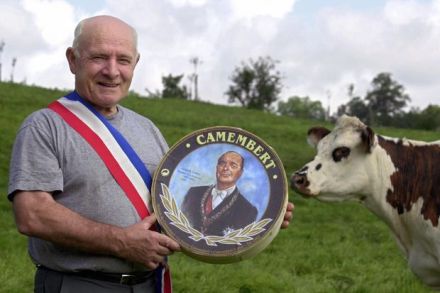
The challenge to put a fresh spin on Shakespeare’s Sonnet 18 was the most popular competition for ages. The brief was to replace ‘summer’s day’ with a trisyllable of your choice. A competitor emailed to ask if I’d meant a single trisyllabic word or a three-syllable phrase. I meant the former but perhaps that wasn’t clear so I allowed both. Objects of comparison ranged from ocelot to shaggy dog, from Shakespeare play to Theresa May. It was a dazzling performance pretty much all round. I’ve squeezed in seven winners, who take £20 each, but there could have been so many more — Ray Kelley, Philip Roe, Douglas G. Brown, Rob Stuart, Frank McDonald and Noel Petty, to mention just a few. Hugh King’s cockapoo scoops £30.

As you liken it

From our UK edition

In Competition No. 2885 you were invited to write a sonnet beginning ‘Shall I compare thee to a [trisyllable of your choice]’. A competitor emailed to ask if I’d meant a single trisyllabic word or a three-syllable phrase. I meant the former but perhaps that wasn’t clear so I allowed both. Objects of comparison ranged from ocelot to shaggy dog, from Shakespeare play to Theresa May. This was a phenomenally popular comp and produced a dazzling performance all round. I’ve squeezed in seven winners, who take £20 each, but there could have been many more — Ray Kelley, Philip Roe, Douglas G. Brown, Rob Stuart, Frank McDonald and Noel Petty, to mention just a few. Hugh King’s cockapoo scoops £25.   Shall I compare thee to a cockapoo?

Spectator competition: pogonophobe or pogonophile? (plus: lines on heaven and hell)

From our UK edition

The beard has come a long way since the dark days of Mr Twit, Jimmy Hill and The Joy of Sex. As Ekow Eshun points out in his insightful essay ‘Welcome to Beardlandia’, the bewhiskered chin will one day come to stand as ‘the definitive visual shorthand for the early 21st century, as the moustache is for the Seventies and a pair of mutton chops for Regency England’. But now that the beard has gone mainstream, its days as a badge of cool must surely be numbered. Certainly, to judge from the response to the call for poems in praise or dispraise of facial fluff, not everyone is a fan. The pogonophiles and pogonophobes were split pretty much down the middle. It was tricky to narrow down what was a large and lively entry to just six.

Hair brained | 12 February 2015

From our UK edition

In Competition No. 2884 you were invited to submit a poem in praise or dispraise of beards. The beard has been rehabilitated since the dark days of Mr Twit, Jimmy Hill and The Joy of Sex. It will, as Ekow Eshun points out in his insightful essay ‘Welcome to Beardland-ia’, one day stand as ‘the definitive visual shorthand for the early 21st century, as the moustache is for the Seventies and a pair of mutton chops for Regency England’. A large entry was evenly split between pogonophiles and pogonophobes. Susan de Sola, Debora Garber and Jonathan Taylor stood out. The winners, printed below, net £25. Basil Ransome-Davies takes £30.

Spectator competition: ‘I really like Ed Miliband. Am I normal?’ Agony uncle Dan Brown responds (plus: a Samuel Pepys’-eye view of 21st-century London)

From our UK edition

The Japanese novelist-turned-agony uncle Haruki Murakami is currently dishing out advice to fans on topics that range from cats and hate speech to parenting and infidelity. The call to cast a well-known writer, living or dead, in a similar role was an opportunity to check out the counselling skills of other literary greats — and not-so-greats. The standard was high. Mark Shelton’s Ted Hughes begins his reply to the question ‘how can I be more confident with girls?’ thus: ‘Stoat does not ask. Forefoot poised, he holds the crosshairs on his victim. The wicked waiting eyes glitter like wet berries. He is a cocked crossbow.

Your problem solved

From our UK edition

In Competition No. 2883 you were invited to cast a well-known writer, living or dead, in the role of agony aunt or uncle and provide a problem of your invention and their solution. Mark Shelton’s Ted Hughes begins his reply to the question ‘how can I be more confident with girls?’ thus: ‘Stoat does not ask. Forefoot poised, he holds the crosshairs on his victim. The wicked waiting eyes glitter like wet berries. He is a cocked crossbow.’ I also liked Nicholas Holbrook’s Machiavelli putting Nick Clegg right on the hazards of power-sharing, and Jane Moth was good too. D.A. Prince takes £30, the rest get £25. Q. Recently my wife has become lazy, lounging in bed all day; I suspect she may be having an affair. What can I do to rebuild our marriage?

Spectator competition: Ed Miliband’s bacon roll blues (plus: new ways with Sonnet 18)

From our UK edition

The most recent challenge asked for blues songs from well-known politicians contemplating the forthcoming general election. In a small but accomplished entry the Lib Dem leader dominated the stage. John O’Byrne’s Nick Clegg drew inspiration from B.B. King’s ‘Worry, worry’ — ‘Apologies, apologies, apologies/ Apologies are all I can do’ — and the ghosts of Robert Johnson and Big Bill Broonzy were never far away (‘It was a dream, just a dream I had on my mind/ And when I woke up, baby, not a voter could I find…’). Bill Greenwell’s contribution was in the talking blues tradition. John Whitworth and Richard Mollet earn honourable mentions, Brian Murdoch pockets the bonus fiver and the rest take £35.

Election blues

From our UK edition

In Competition No. 2882 you were invited to submit a blues song written by a well-known politician contemplating the impending general election. The ghosts of Robert Johnson, B.B. King and Big Bill Broonzy stalked the entry, which was smallish but accomplished. Basil Ransome-Davies’s submission was a clever twist on Kris Kristofferson’s ‘Sunday -Mornin’ Comin’ Down’ but as it’s country rather than blues it didn’t make it into the winning line-up. John Whitworth and Richard Mollet earn honourable mentions, Brian Murdoch pockets the bonus fiver and the rest take £35.   Got up this morning, bought me a bacon roll. You know I got up this morning, bought me a bacon roll. But it left me way down in the opinion poll.

Spectator competition: Henry VIII’s bedroom tax (plus: poems about beards)

From our UK edition

In Competition No. 2881 you were invited to take your lead from Carol Ann Duffy and provide an amusing poem about a piece of government legislation. The first line of Duffy’s poem ‘22 Reasons for the Bedroom Tax’, ‘Because the badgers are moving the goalposts’, is, of course, a reference to environment secretary Owen Paterson’s unfortunate attempt to explain the government’s failure to reach cull targets. A congratulatory slap on the back to Adrian Fry, who managed to wring an entertaining poem out of the Chancel Repair Bill. Commendations, too, to Mike Morrison, Virginia Price Evans, Max Ross and John Whitworth. Alan Millard takes the bonus fiver. The rest get £25 each.