Lucy Vickery

Fan fare

From our UK edition

In Competition No. 2912 you were invited to submit a tribute in verse to a once-popular foodstuff that has fallen out of favour. Bill Greenwell’s entry (Spangles!) brought to mind childhood pleasures, as did Sid Field’s (Creamola) and Jayne Osborn’s (Angel Delight). But I still shudder at the memory of spam fritters, and Alan Millard’s attempt to make them sound appealing fell on stony ground: More fit to nibble than to gnaw But no less tasty, cooked or raw Both Brian Allgar and Dorothy Pope mourned the passing of Fuller’s Walnut Cake, and Richard McCarthy submitted a rousing tribute to mutton in the style of Swinburne. All three deserve a commendation as do David Silverman, Philip Machin, Alanna Blake, Sylvia Fairley and Barbara Smoker.

Spectator competition: a thriller in three text messages (plus: coinages inspired by today’s politicians)

From our UK edition

The latest challenge, to submit a thriller in three text messages, seemed straightforward enough but it turned out to be a tough assignment that stretched veterans and newcomers alike. As in all forms of micro-fiction — the mini-masterpiece attributed to Hemingway, ‘For sale: baby shoes, never worn’, springs to mind — it’s all about the reader filling in the gaps. Many entrants went for the mistaken-identity trope, which became rather monotonous after a time. But while I applauded those who attempted a more original twist, most of these didn’t quite come off. The standard was somewhat disappointing, then, but there were some creditable exceptions, printed below. They earn their authors £15 each.

Triple thrill | 20 August 2015

From our UK edition

In Competition No. 2911 you were invited to submit a thriller in three text messages. This one seemed straightforward enough but it turned out to be a tough assignment that stretched veterans and newcomers alike. As in all forms of micro-fiction — the mini-masterpiece attributed to Hemingway, ‘For sale: baby shoes, never worn’, springs to mind — it’s all about the reader filling in the gaps. Many entrants went for the mistaken-identity trope, which became rather monotonous after a time. But while I applauded those who attempted a more original twist, most of these didn’t quite come off. The standard was somewhat disappointing, then, but there were some creditable exceptions, printed below. They earn their authors £15 each.

The poetic thoughts your pet is having

From our UK edition

My request for poems by a pet who is cheesed off with its owner generated an entertaining parade of bullied, misunderstood and condescended-to creatures. The contempt in Basil Ransome-Davies’s closing couplet, written from the perspective of a bolshie moggy, speaks for the majority: He wants affection, he can kiss a duck. It’s what my mother told me: bipeds suck. I especially liked Sylvia Fairley’s homicidal preying mantis and Bill Greenwell’s scheming goldfish. Equally impressive, and unlucky to be just out of the frame, were Hugh King, John Priestland, George Tetley, John-Paul Marney and Dave East. Those entries printed below earn their authors £25 apiece. This week’s top dog is Martin Parker. He gets £30.

Pet hate | 13 August 2015

From our UK edition

In Competition No. 2910 you were invited to submit a poem by a pet who is cheesed off with its owner. The contempt in Basil Ransome-Davies’s closing couplet, written from the perspective of a bolshie moggy, was echoed throughout the entry by a hacked-off parade of bullied, misunderstood and condescended-to pets: He wants affection, he can kiss a duck. It’s what my mother told me: bipeds suck. I especially liked Sylvia Fairley’s homicidal preying mantis and Bill Greenwell’s scheming goldfish. Equally impressive were Hugh King, John Priestland, George Tetley, John-Paul Marney and Dave East, who were unlucky to miss out on a place in the winning line-up. Those entries printed below earn their authors £25 apiece. This week’s top dog is Martin Parker.

Michael Gove’s department should take a few style tips from P.G. Wodehouse

From our UK edition

Michael Gove has suggested that civil servants take inspiration from George Orwell and Evelyn Waugh, Jane Austen and George Eliot, when writing correspondence. The recent invitation to compose a memo generated by either the Department of Education or the Ministry of Justice as it might have been written by a writer you would like to see Whitehall bureaucrats model their writing style on produced a large and lively entry. My head was turned by Josh Ekroy’s Gormenghast-inspired memo about prisons and Carolyn Thomas-Coxhead’s Virginia Woolf briefing on nit-awareness day. But they were outstripped by the winners below,who earn £25 each. Brian Murdoch takes £30. Brian Murdoch/C.S.

Taking the Michael

From our UK edition

In Competition No. 2909 you were invited to follow in the footsteps of Michael Gove, who has urged civil servants to take inspiration from George Orwell and Evelyn Waugh, Jane Austen and George Eliot, and submit a memo generated by either the Department of Education or the Ministry of Justice as it might have been written by a writer you would like to see Whitehall bureaucrats model their correspondence on. It’s a squeeze this week, so I’ll hand straight over to the worthy winners below who earn £25 each. Brian Murdoch takes £30.

Spectator competition: the best opening paragraphs to the worst of all novels (plus: a thriller in three text messages)

From our UK edition

The latest challenge was a shameless rip-off of the annual Bulwer-Lytton fiction contest which asks for ‘the opening sentence to the worst of all novels’ (Edward Bulwer-Lytton is often described as ‘the worst writer in history’). What a joy it was to wade through the morass of florid, convoluted prose, over-elaborate metaphors and inconsequential tangents. Dishonourable mentions all round, but especially to Bill Greenwell for an opening composed entirely of hashtags and to C.J. Gleed. The best of the worst earn their authors £25 each. The bonus fiver is Edward Gilbert’s. Edward Gilbert Inspector Falcon Foot was an experienced murder investigator. He had seen it all in his long and distinguished career. This case felt very familiar.

Open and shut case

From our UK edition

In Competition No. 2908 you were invited to submit a comically appalling opening to an imaginary novel. Thanks are due to the inventor of the annual Bulwer-Lytton fiction contest from whom I have pinched the idea for this challenge (Edward Bulwer--Lytton is often described as ‘the worst writer in history’). It was a pleasure to wade through your florid, convoluted prose, over-elaborate metaphors and inconsequential tangents. Dishonourable mentions go to Bill Greenwell for an opening composed entirely of hashtags and to C.J. Gleed. The best of the worst earn their authors £25 each. The bonus fiver is Edward Gilbert’s. Inspector Falcon Foot was an experienced murder investigator. He had seen it all in his long and distinguished career. This case felt very familiar.

Spectator competition: TfL’s terrible poems (plus: pets dish the dirt on their owners)

From our UK edition

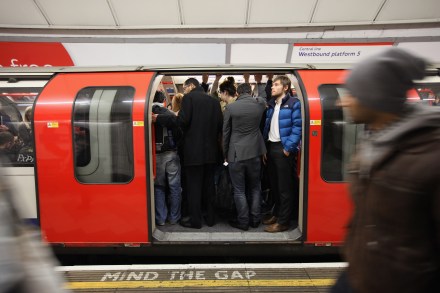
Transport for London’s efforts to use verse to encourage Tube users to mind their manners produced poems whose rhyme and scansion would have made William McGonagall blush. So it was over to the experts: competitors were invited to imagine that poets, living or dead, had been recruited to improve on the unlovely likes of: ‘We really don’t mean to chide/ But try to move along inside/ So fellow travellers won’t have to face/ An invasion of their personal space.’ Adrian Fry’s Emily Dickinson — ‘Because I would not mind the gap’ — was an impressive runner-up, as were Charles Clive-Ponsonby-Fane, Mike Morrison and Alanna Blake, but they were outstripped by those printed below, who pocket £15 each.

Tube lines

From our UK edition

In Competition No. 2907 you were invited to imagine that poets, living or dead, had been recruited to compose verse discouraging antisocial behaviour on the underground. This challenge was prompted by the results of Transport for London’s real-life efforts to use poetry to prompt Tube users to mind their manners: the poems in question feature rhyme and scansion that would have made McGonagall blush. Over to the experts, then. Adrian Fry’s Emily Dickinson — ‘Because I would not mind the gap’ — was an impressive runner-up, as were Charles Clive-Ponsonby-Fane, Mike Morrison and Alanna Blake. The winners, printed below, pocket £15 each.

Spectator competition: a lecherous poet gets his come-uppance (plus: Gove’s rules)

From our UK edition

Given the kerfuffle caused by the recent publication of Craig Raine’s ‘Gatwick’ in the London Review of Books, I thought it might be interesting to invite competitors to compose their own poem about an encounter in an airport. Raine’s poem brought the Twitter bullies out in force to broadcast their disgust at an elderly poet sharing his lustful thoughts about young women. Fiona Pitt-Kethley’s submission imagines a scenario in which one of them wreaks her revenge: ‘We’ll see whose arse is large next time he comes/ To my desk in the airport. I’ve got chums/ With latex gloves and penetrating ways,/ Prepared to hold and search for many days.

Poetry in motion | 16 July 2015

From our UK edition

In Competition No. 2906 you were invited to write a poem about an encounter in an airport. Craig Raine’s poem ‘Gatwick’ caused a right old kerfuffle when it was published recently in the London Review of Books. The Twitter bullies came out in force to broadcast their disgust at an elderly poet sharing his lustful thoughts about young women. I liked Fiona Pitt-Kethley’s entry, which had a warning for lecherous poets in airports: ‘We’ll see whose arse is large next time he comes/ To my desk in the airport. I’ve got chums/ With latex gloves and penetrating ways,/ Prepared to hold and search for many days.’ Honourable mentions also go to Roger Rengold, Brian Allgar and Jayne Osborn.

I can see a rainbow

From our UK edition

In Competition No. 2905 you were invited to write a sonnet whose lines begin with the letters R,O,Y,G,B,I,V,V,I,B,G,Y,O,R, in that order. Thanks to Frank McDonald for suggesting this gem of a competition. I ummed and ahed over what was a vast and accomplished entry trying to whittle it down to a winning seven. It wasn’t easy. Those that missed the cut — Bill Greenwell, Brian Allgar, John Whitworth, Adrienne Parker, Pippa Crawford, Priscilla Bench-Capon, David Silverman and Tim Raikes — did so by the narrowest of margins. Congratulations, all round. The winners, printed below, are rewarded with £20 each. The bonus fiver goes to Alan Millard’s sonnet on the Labour leadership contenders.

Spectator competition: Anyone for tennis? (plus: poems on the underground)

From our UK edition

To mark the beginning of Wimbledon, competitors were invited to take as their first line ‘There’s a breathless hush on the centre court’ and continue for up to 15 lines in the style of Sir Henry Newbolt’s 1897 poem ‘Vitaï Lampada’. Newbolt’s poem (which he came to resent, describing it as a ‘Frankenstein’s monster) draws parallels between schoolboy cricket and war. Though there were echoes of this conceit in the entry, your responses were impressively varied. Commiserations to unlucky losers John Whitworth, who submitted a charming tribute to Christine Truman, Robert Cross, Sid Field and R.M. Goddard. Those printed below are rewarded with £25 each.

Court report

From our UK edition

In Competition No. 2904 you were invited to take as your first line ‘There’s a breathless hush on the centre court’ and continue for up to 15 lines in the style of Sir Henry Newbolt’s poem ‘Vitaï Lampada’. There is just space to congratulate the winners and to commiserate with unlucky losers John Whitworth, who submitted a charming tribute to Christine Truman, Robert Cross, Sid Field and R.M. Goddard. Those printed below are rewarded with £25 each. Bill Greenwell hoists the championship trophy and nabs the bonus fiver in the process.   There’s a breathless hush on the Centre Court: Seventeenth deuce after championship point — The crowd is tense, as the first serve is short. Is this the time? Is there one to anoint?

Spectator competition: Is that ‘Well Spanked’ or ‘Disappointing Sandwich’?

From our UK edition

A spoof Farrow & Ball paint-colour chart doing the rounds on social media was the inspiration for the latest challenge. Competitors were invited to see if they could outdo the rather unappealing likes of ‘economy mince’, ‘provoked wasp’, ‘magnum of Tizer’ and ‘day at Thorpe Park’ by submitting an article from an interiors magazine featuring paint names of their own invention. High points in an otherwise patchy entry were Adrian Fry’s ‘Dresden licht’, John O’Byrne’s ‘failed rouble’, Alan Millard’s ‘hectic cockerel’, Mike Morrison’s ‘Magaluf mea culpa’ and Bill Greenwell’s ‘tartar’s lips’. Chris O’Carroll nabs the bonus fiver.

Off colour | 25 June 2015

From our UK edition

In Competition No. 2903 you were invited to provide an extract from an article in an interiors magazine featuring some paint-colour names of your own invention that rival the ludicrousness of the real-life likes of ‘potentially purple’, ‘salty tear’ and ‘likeable sand’. High points in a patchy entry were Adrian Fry’s ‘Dresden licht’, John O’Byrne’s ‘failed rouble’, Alan Millard’s ‘hectic cockerel’, Mike Morrison’s ‘Magaluf mea culpa’ and Bill Greenwell’s ‘tartar’s lips’. Chris O’Carroll nabs the bonus fiver. The rest take £25 apiece.

Spectator competition winner: The poetry of cricket (plus: can you see a rainbow?)

From our UK edition

In Competition No. 2903 you were invited to supply a poem incorporating a dozen cricketing terms. English poets love cricket: Housman, Betjeman, Chesterton and Sassoon all wrote about the game. And then, of course, there is Harold Pinter, who encapsulated it so beautifully in two lines: I saw Len Hutton in his prime, Another time, another time. I admired P.C. Parrish’s clever poem in the opaque modernist style of Edith Sitwell. Tim Raikes, Peter Goulding, Nick Hodgson and Rosemary Kirk also stood out in a large and impressive field. The winners earn £25 apiece. Brian Allgar takes £30. Brian Allgar My wife reminds me of a game of cricket: A splendid sport, but hard to comprehend.

Howzat!

From our UK edition

In Competition No. 2903 you were invited to supply a poem incorporating a dozen cricketing terms. English poets love cricket: Housman, Betjeman, Chesterton and Sassoon all wrote about the game. And then, of course, there is Harold Pinter, who encapsulated it so beautifully in two lines: I saw Len Hutton in his prime, Another time, another time.   I admired P.C. Parrish’s clever poem in the opaque modernist style of Edith Sitwell. Tim Raikes, Peter Goulding, Nick Hodgson and Rosemary Kirk also stood out in a large and impressive field. The winners earn £25 apiece. Brian Allgar takes £30. My wife reminds me of a game of cricket: A splendid sport, but hard to comprehend. I often feel I’m on a sticky wicket — Caught out, or stumped, or driven round the bend.