Lucy Vickery

What’s not to love

From our UK edition

In Competition No. 3085 you were invited to submit a poem in dispraise of Valentine’s Day. The day is said to have its roots in the Roman pagan festival of Lupercalia. But one scholar has proposed the theory that it was Chaucer who first designated 14 February as a day of love in his poem ‘The Parlement of Foules’, and I wondered if any of you would come up with a Chaucer-ian pastiche (you didn’t). The challenge certainly struck a chord, though, and you captured the ghastliness well: mediocre, overpriced dinners, chocolate genitalia, nasty cards — or no cards at all… A consolatory handshake to Fiona Pitt-Kethley, Susan McLean, Hamish Wilson, Robert Schechter and Mike Morrison, who were unlucky losers. The winners, printed below, pocket £25.

Spectator competition winners: breaking up is hard to do

From our UK edition

The invitation to competitors to write a poem entitled ‘Breaking up is hard to do’ produced an inventive, accomplished entry full of witty flourishes, from David Kilshaw’s Brexit-inspired twist on Neil Sedaka — ‘Commons, commons, down, dooby, do, down down…’ — to Dorothy Pope’s poignant haiku — ‘plum blossom petals/ mistaken now for snowflakes/ so cold is your love’. Philip Roe and Adrian Fry were especially strong performers but they were pipped by the winners below who earn £25 each. Brian Murdoch In Dame Europa’s school the teachers peered Out at the children thronging the school yard. The term seemed to have lasted forty years, But just now, breaking up was rather hard.

Breaking up is hard to do | 7 February 2019

From our UK edition

In Competition No. 3084 you were invited to submit a poem entitled ‘Breaking up is hard to do’.   From David Kilshaw’s Brexit-inspired twist on Neil Sedaka — ‘Commons, commons, down, dooby, doo, down down…’ — to Dorothy Pope’s poignant haiku — ‘plum blossom petals/ mistaken now for snowflakes/ so cold is your love’ — this was an inventive and accomplished entry full of witty flourishes. Space is short this week, so without further ado I’ll hand over to the winners below, who earn £25 each.   In Dame Europa’s school the teachers peered Out at the children thronging the school yard. The term seemed to have lasted forty years, But just now, breaking up was rather hard.

Spectator competition winners: it started with a tweet…

From our UK edition

For the latest challenge you were asked to submit a poem or a short story that begins ‘It started with a tweet…’. Hats off to Philip Machin for an appropriately pithy submission: It started with a tweet — There’s nothing wrong in that — But, sadly, indiscreet: It ended with a cat. Elsewhere, in a varied and engaging entry, there were echoes of Shelley’s skylark, Lear’s owl and Hitchcock’s Birds. The winners below are rewarded with £25 each. W.J.

Tweet beginnings

From our UK edition

In Competition No. 3083 you were invited to submit a poem or a short story that begins ‘It started with a tweet…’.   Hats off to Philip Machin for an appropriately pithy submission: It started with a tweet — There’s nothing wrong in that — But, sadly, indiscreet: It ended with a cat. Elsewhere, in a varied and engaging entry, there were echoes of Shelley’s skylark, Lear’s owl and Hitchcock’s Birds. The winners below are rewarded with £25 each.

Spectator competition winners: how to be happy

From our UK edition

The latest challenge was to write a poem taking as your first line ‘Happy the man, and happy he alone’, which begins the much-loved eighth stanza of poet-translator Dryden’s rendition of Horace’s Ode 29 from Book III. At a time of year when we traditionally take stock and have a futile stab at self-reinvention, you came up with prescriptions that were witty, smart and wide-ranging. The best appear below and earn their deserving authors £20 each. Basil Ransome-Davies Happy the man, and happy he alone, Who dwells securely in his comfort zone, Disdaining the temptations of success While relishing the fruits of idleness.

Happy talk | 24 January 2019

From our UK edition

In Competition No. 3082 you were invited to write a poem taking as your first line ‘Happy the man, and happy he alone’, which begins the much-loved eighth stanza of poet--translator Dryden’s rendition of Horace’s Ode 29 from Book III.   At a time of year when we traditionally take stock and have a futile stab at self-reinvention, you came up with prescriptions that were witty, smart and wide-ranging. The best are printed below and earn their deserving authors £20 each. Happy the man, and happy he alone, Who dwells securely in his comfort zone, Disdaining the temptations of success While relishing the fruits of idleness.

Spectator competition winners: The Parable of the Faithful Servant as P.G. Wodehouse would have written it

From our UK edition

The call to supply a parable rewritten in the style of a well-known author drew a lively and entertaining entry. Like Milton, many of you seemed taken with the Parable of the Talents. Here is Sylvia Fairley channelling Mark Haddon: ‘He gave five talents to one, that’s 14,983 shekels, and two to the next, 5,993 shekels. Those are prime numbers. I like prime numbers…’ I thought Kafka might loom large but he cropped up only once in a sea of Austens, Hemingways, Trollopes and Wodehouses. Strong performers, in a keenly contested week, were Joseph Harrison, David Silverman, W.H. Thomas, Philip Machin, Hamish Wilson, David Mackie, Jan Snook and Hannah Burden-Teh. The winners, below, pocket £25 each.

Unauthorised version

From our UK edition

In Competition No. 3081 you were invited to supply a parable rewritten in the style of a well-known author. Like Milton, many of you seemed taken with the Parable of the Talents. Here is Sylvia Fairley channelling Mark Haddon: ‘He gave five talents to one, that’s 14,983 shekels, and two to the next, 5,993 shekels. Those are prime numbers. I like prime numbers…’ I thought Kafka might loom large but he cropped up only once in a sea of Austens, Hemingways, Trollopes and Wodehouses. Strong performers, in a keenly contested week, were Joseph Harrison, W.H. Thomas, Philip Machin, Hamish Wilson, David Silverman, David Mackie, Jan Snook and Hannah Burden-Teh. The winners, below, pocket £25 each.

Spectator competition winners: ‘O Walkman! O Walkman!’

From our UK edition

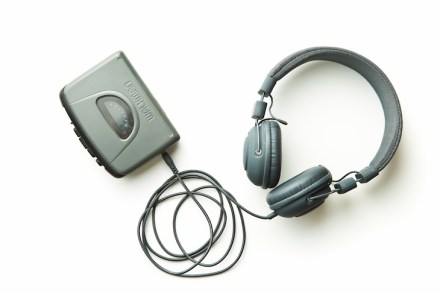
The most recent challenge, suggested by Paul A. Freeman, asked for an elegy on a piece of obsolete technology. There’s nothing like a blast of nostalgia to usher in the new year. Sinclair C5s, faxes, floppy discs, typewriters; all were eloquently hymned. I admired Hamish Wilson’s elegy on a radiogram and John O’Byrne’s Whitman-esque homage to the Walkman: O Walkman! O Walkman! our cassette days are       done, My ears have enjoyed every tune, the tapes I       played are worn, The phone has come, the apps are here, the       playlists all inspiring, But Apple killed this mobile thing for designs       sleek and aspiring. The winners below earn £25 each. W.J.

The ex factor | 10 January 2019

From our UK edition

In Competition No. 3080 you were invited to supply an elegy on a piece of obsolete technology. Thanks to Paul A. Freeman for suggesting this challenge — there’s nothing like a blast of nostalgia to usher in the new year. Sinclair C5s, faxes, floppy discs, typewriters; all were eloquently hymned. I admired Hamish Wilson’s elegy on a radiogram and John O’Byrne’s Whitman-esque homage to the Walkman:   O Walkman! O Walkman! our cassette days are done, My ears have enjoyed every tune, the tapes I played are worn, The phone has come, the apps are here, the playlists all inspiring, But Apple killed this mobile thing for designs sleek and aspiring.   The winners below earn £25 each.

Spectator competition winners: an alternative to ‘Auld Lang Syne’

From our UK edition

Your new year’s challenge was to supply an anthem to usher in 2019, starting with the first line of ‘Auld Lang Syne’ and continuing in your own way. ‘Is not the Scotch phrase “Auld lang syne” exceedingly expressive?’ wrote Robert Burns to his friend Frances Dunlop in 1788, referring to the words of an old folk song that he had heard, written down and later sent to James Johnson, who published it in the Scots Musical Museum. These days, of course, those words are sung with gusto by the inebriated the world over on New Year’s Eve — an expression of fellowship and nostalgia. Not much of that in the entry, needless to say. Though the occasional sliver of cheeriness (C.

Out with the auld

From our UK edition

In Competition No. 3079 you were invited to supply a new anthem to welcome 2019, starting with the first line of ‘Auld Lang Syne’ and continuing in your own way.   ‘Is not the Scotch phrase “Auld lang syne” exceedingly expressive?’ wrote Robert Burns to his friend Frances Dunlop in 1788, referring to the words of an old folk song that he had heard, written down and later sent to James Johnson, who published it in the Scots Musical Museum. These days, of course, they are sung with gusto by the in-ebriated the world over on New Year’s Eve — an expression of fellowship and nostalgia.   Not much of that in the entry, needless to say. Though the occasional sliver of cheeriness (C.

Spectator competition winners: politically correct Christmas carols

From our UK edition

The festive challenge was to submit a politically correct Christmas carol. One of Donald Trump’s election pledges was to end ‘the war on Christmas’, and he has given the electorate the presidential nod to say ‘Merry Christmas’ again instead of the more inclusive ‘Happy holidays’. But was this ‘war’ a pointless and misguided one in the first place? Adam Gopnik, writing in the New Yorker, has pointed out that Christmas ‘is, at its roots, the very model of a pagan-secular-synthetic festival as much as it is a religious one — just the kind, in fact, that the imaginary anti-Christmas forces are supposed to favour...’. He concludes: ‘The war on Christmas is over. Christmas won.

O come let us adore zhim

From our UK edition

In Competition No. 3078 you were invited to submit a politically correct Christmas carol.   One of Donald Trump’s election pledges was to end ‘the war on Christmas’, and he has given the electorate the presidential nod to say ‘Merry Christmas’ again instead of the more inclusive ‘Happy holidays’.   But was this ‘war’ pointless and misguided in the first place? As Adam Gopnik points out in the New Yorker, Christmas ‘is, at its roots, the very model of a pagan-secular--synthetic festival as much as it is a religious one — just the kind, in fact, that the imaginary anti-Christmas forces are supposed to favour…’ and concludes: ‘he war on Christmas is over. Christmas won.

Spectator competition winners: ‘The mother of all horrors, what a comp’ (or Shakespearean characters hiding in sonnets)

From our UK edition

This fiendishly difficult challenge, to submit a sonnet with the name of a Shakespearean character hidden in each line, pulled in a gratifyingly bumper haul of entries – from old hands and newcomers alike. The odd one or two described it as ‘fun’, but many were considerably less keen – C. Paul Evans, for example: ‘The mother of all horrors, what a comp,/ A theme to turn my ashy locks to dust!…’ It dawned on me, as I read your sonnets, that there were different ways of interpreting the brief. Martin Broomfield took a cryptic approach; others an anagrammatic one. The ambiguity was my fault, and I gave equal consideration to all. While the shoehorning in of names occasionally led to some stilted lines, there were bursts of remarkable fluency too.

Shakespearean sonnet

From our UK edition

In Competition No. 3077 you were invited to submit a sonnet with the name of a Shakespearean character hidden in each line This one pulled in a bumper haul of entries, from old hands and newcomers alike. While some competitors described the challenge as ‘fun’, others greeted it with a squeal of horror. C. Paul Evans, for example: ‘The mother of all horrors, what a comp,/ A theme to turn my ashy locks to dust!…’ The shoehorning in of names occasionally led to some stilted lines, but there were bursts of remarkable fluency too. In an entry full of witty touches and clever flourishes, commendations go to David Silverman, Chris O’Carroll, Jan Snook and Julia Griffin; a prize of £20 belongs to each of those printed below.

Spectator competition winners: misguided love poems

From our UK edition

You seemed to embrace the latest challenge – to supply seriously misguided love poems – especially wholeheartedly, and I admired your powers of invention in finding so many ways of making my toes curl. Even Brexit got a look-in: ‘Let me be your Brexit backstop/ I will never set you free…’ (Ian Barker). Dishonourable mentions go to Hamish Wilson and David Shields. The winners take £25 each. The extra fiver is Brian Murdoch’s. Brian Murdoch Let me compare thee to this bag of chips, For you are as desirable. They taste Just slightly salty, like a woman’s lips And steam invitingly, fresh, hot, and chaste. In shape each single chip is uniform And you are also slim, pale, not too long, And nicely firm. Your body is as warm As these.

Bad romance

From our UK edition

In Competition No. 3076 you were invited to submit seriously misguided love poems. You seemed to embrace this task especially wholeheartedly, and I admired your powers of invention in finding so many ways of making my toes curl. Even Brexit got a look-in: ‘Let me be your Brexit backstop/ I will never set you free…’ (Ian Barker). Dishonourable mentions go to Hamish Wilson and David Shields. The winners take £25 each. The extra fiver is Brian Murdoch’s.   Let me compare thee to this bag of chips, For you are as desirable. They taste Just slightly salty, like a woman’s lips And steam invitingly, fresh, hot, and chaste. In shape each single chip is uniform And you are also slim, pale, not too long, And nicely firm.

Spectator competition winners: the beautiful poetry of Donald Trump

From our UK edition

For this week’s challenge you were invited to submit poems by Donald Trump. The Beautiful Poetry of Donald Trump, which is the brainchild of Rob Sears, represents the fruits of Mr Sears’s efforts to find evidence of the president’s sensitive, poetic side in his tweets and transcripts. The verses in the book are stitched together from Trump’s own words, and promise to reveal ‘a hitherto hidden Donald, who may surprise and delight both students and critics alike’. There were some excellent candidates for volume two in an entry in which haikus were especially popular —‘Terrible! Just found/Obama had my wires tapped./McCarthyism!