Lucy Vickery

Belles of the ball

From our UK edition

In Competition No. 3105 you were ­invited to submit a fragment of commentary on the Women’s World Cup delivered by a figure from the world of fact or fiction, dead or alive.  From Joseph Houlihan’s William Mc­Gonagall, who chronicles the ­Scottish team’s defeat at the boots of the Auld Enemy, to R.M. Goddard’s Samuel Beckett — ‘Miss Reilly, a fugue of female feet at frolic, dribbles delicately past the centre forward and passes to the sweeper, then pauses to spit decorously on the greensward…’ — it was a cracking entry.  J. Seery and W.J. Webster earn honourable mentions, those printed below take £25 apiece, and woman of the match, D.A. Prince, pockets the bonus fiver.

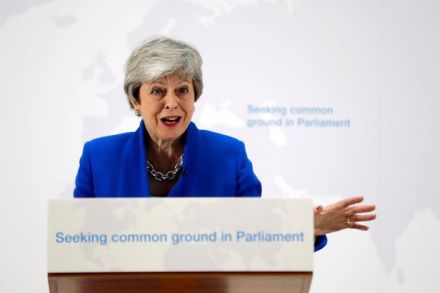
Spectator competition winners: Theresa May’s life in three limericks

From our UK edition

Your latest challenge was to encapsulate the life story of a well-known person, living or dead, in three limericks. The limerick form was neatly summed up by the late Paul Griffin, long-time competitor and a regular winner on these pages: A limerick’s short and it’s slick; Like a racehorse it has to be quick:       The front may seem calm       And cause no alarm But the end is the bit that can kick. The saints and sinners whose lives you squished into 15 lines ranged from Donald Trump, Jim Davidson and Mad King Ludwig to Jesus and Helen Keller. Honourable mentions go to C. Paul Evans, Martin Elster, David Silverman and W.J. Webster; the winners, below, are rewarded with £25 apiece.

Take three

From our UK edition

In Competition No. 3104 you were invited to encapsulate the life story of a well-known person, living or dead, in three limericks.   The limerick form was neatly summed up by the late Paul Griffin, long-time competitor and a regular winner on these pages:   A limerick’s short and it’s slick; Like a racehorse it has to be quick: The front may seem calm And cause no alarm But the end is the bit that can kick.   The saints and sinners whose lives you squished into 15 lines ranged from Donald Trump, Jim Davidson and Mad King Ludwig to Jesus and Helen Keller. Honourable mentions go to C. Paul Evans, Martin Elster, David Silverman and W.J. Webster; the winners, below, are rewarded with £25 apiece.

Spectator competition winners: ‘The hour is come: Now, Gods, stand up for Boris!’ (Shakespearean soliloquies from would-be prime ministers)

From our UK edition

For the latest literary challenge you were invited to submit a Shakespearean soliloquy delivered by one of the contenders for the Tory leadership in which they consider their pitch for the top job. During the 2016 leadership contest, Shakespearean references were flying round. Alex Salmond likened Michael Gove to ‘Lord Macbeth’, and when Boris Johnson announced his withdrawal from the scrum he paraphrased the words of Brutus, saying that now was ‘a time not to fight against the tide of history but to take that tide at the flood and sail on to fortune’. This time round, Boris has — so far, at least — been publicly reticent and most of you chose to plug that gap.

Talking heads | 20 June 2019

From our UK edition

In Competition No. 3103 you were invited to submit a Shakespearean soliloquy delivered by one of the contenders for the Tory leadership in which they consider their pitch for the top job. Though many chose to plug the gap created by Boris Johnson’s public reticence, there was a sprinkling of his fellow hopefuls. Most are now out of the running, but they get one final hearing below.   A round of raucous applause for the winners, who take £20 each. And commiserations to the unlucky losers. Away with hustings, pish to protocol! I am the one convincing candidate To lead our nation through these troublous times. My rivals — ill-starr’d, ineffectual oafs, Crass corner-boys, dim double-breasted spivs, Main-chance manipulators, cheap qui-vivers.

Spectator competition winners: Gradgrind’s fan letter to Michael Gove

From our UK edition

The idea for the latest challenge — to compose a fan letter from one well-known person from the field of fact or fiction to another — came from a letter written by Kirk Douglas to Gary Cooper, received just days before Cooper died of cancer, in which Douglas reflects on the impossibility of complying with a director’s request to ‘play this the way Gary Cooper would’: ‘It sounded easy to me — because I say to myself Coop is a simple man — natural. So I’ll just be natural. Then I learned the big — big lesson. It ain’t easy. My temptation is to ask how the hell have you done it?

Fan mail

From our UK edition

In Competition No. 3102 you were invited to submit a fan letter from one well-known person from the field of fact or fiction to another.   Frank McDonald’s Lady Macbeth fist-bumps Nicola Sturgeon: ‘My dearest Nicola there is no need/ For me to pour my spirits in thine ear;/ Already you excel me in your lust/ To seize the Scottish crown…’.

Spectator competition winners: ‘Please quit all that huddling…’: contemporary takes on ‘The New Colossus’

From our UK edition

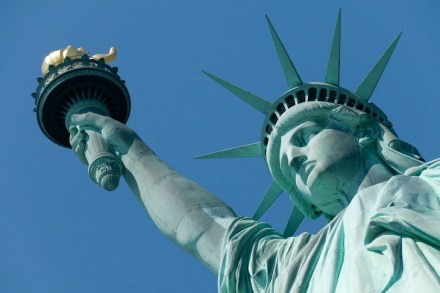
The latest challenge was an invitation to compose a contemporary take on ‘The New Colossus’, the 1883 sonnet by Emma Lazarus that is inscribed on a bronze plaque on the pedestal of the Statue of Liberty: Not like the brazen giant of Greek fame, With conquering limbs astride from land to land; Here at our sea-washed, sunset gates shall stand A mighty woman with a torch, whose flame Is the imprisoned lightning, and her name Mother of Exiles. From her beacon-hand Glows world-wide welcome; her mild eyes command The air-bridged harbor that twin cities frame. ‘Keep, ancient lands, your storied pomp!’ cries she With silent lips. ‘Give me your tired, your poor, Your huddled masses yearning to breathe free, The wretched refuse of your teeming shore.

New ‘New Colossus’

From our UK edition

In Competition No. 3101 you were invited to compose a contemporary take on ‘The New Colossus’, the 1883 sonnet by Emma Lazarus that is inscribed on a bronze plaque on the pedestal of the Statue of Liberty.   Written as part of an effort to raise money for the construction of the 89ft pedestal, the poem has spoken powerfully to successive generations. Today it is often invoked as a counterpoint to Donald Trump’s inflammatory rhetoric, in particular the famous lines:   Give me your tired, your poor, Your huddled masses yearning to breathe free   Most of you ran with this idea and produced accomplished if sometimes predictable entries. The best are printed below and earn their authors £20 each. Commendations go to Ann Drysdale, Frank McDonald, R.M.

Spectator competition winners: odes to Alexa and Siri

From our UK edition

For the latest competition you were challenged to submit an ode to Alexa or Siri. A recent study by Unesco, entitled ‘I’d Blush if I Could’ (Siri’s alarmingly coquettish response to the phrase ‘You’re a slut/bitch’), claimed that submissive female-voiced virtual assistants perpetuate negative, outdated gender stereotypes, and this assignment did seem to bring out the unreconstructed roguish side in some. You know who you are. Honourable mentions go to Frank Upton and Alan Millard, who were narrowly outflanked by the winners below. They earn £25 each. Chris O’Carroll Alexa, you’re the sunshine of my life. You answer wisely like an honest wife.

Life support

From our UK edition

In Competition 3100 you were invited to pen an ode to Alexa or Siri. A recent Unesco study claimed that submissive female-voiced virtual assistants perpetuate negative, out-dated gender stereotypes, and this assignment did seem to bring out the unreconstructed roguish side in some. You know who you are. The winners below earn £25 each.   Alexa, you’re the sunshine of my life. You answer wisely like an honest wife. ‘You Are the Sunshine of My Life’, a song by Stevie Wonder, is three minutes long.   Alexa, are you like a summer’s day? That’s what a poet might be moved to say. Sonnet 18 by William Shakespeare, who Wrote poems and is a well-known playwright, too.   Alexa, are you like a red, red rose, A creature more of poetry than prose?

Spectator competition winners: ‘A beast whose name links Cor with May…’

From our UK edition

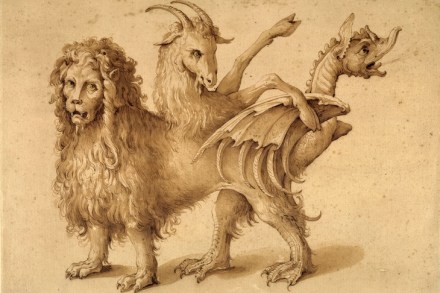
For the latest competition, you were asked to dream up an imaginary animal that is a hybrid of two existing ones and write a poem about it. The discovery, some time ago, that the Romans called a giraffe a ‘camelopard’ (and Thomas Hood wrote an ‘Ode to the Cameleopard’) gave me the initial idea for this challenge. I was then reminded of it when reading Spike Milligan’s Book of Milliganimals with my son (remember the Moo-Zebras and the Bald Twit Lion?). Your fantastic beasts included the Octophant, the kangasheep, the corgiraffe and a couple of llamadillos. It was a difficult comp to judge: there were loads of entries of great merit — many from old hands but plenty from newcomers too.

Animal magic | 23 May 2019

From our UK edition

In Competition No. 3099 you were invited to dream up an imaginary animal that is a hybrid of two existing ones and write a poem about it.   The discovery, some time ago, that the Romans called a giraffe a ‘cameleopard’ (also the subject of a poem by Thomas Hood) gave me the initial idea for this challenge. I was then reminded of it when reading Spike Milligan’s Book of Milliganimals with my son (remember the Moo-Zebras and the Bald Twit Lion?).   Your fantastic beasts included the Octophant, the kangasheep, the corgiraffe and a couple of llamadillos. It was a difficult comp to judge: there were loads of entries of great merit — many from old hands but plenty from newcomers too.

Spectator competition winners: poems that go backwards and forwards

From our UK edition

For the latest competition you were asked to compose a poem that can be read forwards and backwards, i.e. from the top down and the bottom up. I worried, as the entries trickled in, that I had set the bar too high, especially given the anguished comments that accompanied some of them. ‘This was one of your really tough assignments,’ wrote one old hand, ‘a combination of mathematics and poetics.’ ‘This challenge almost made me cry,’ wailed another. But I needn’t have worried: your submissions — some palindromic — combined technical adroitness with clever content. High fives to the winners below who are rewarded with £20 each. Chris O’Carroll What can you show me, mirror on the wall? A rendezvous with my own face?

Verse and reverse

From our UK edition

In Competition No. 3098 you were invited to submit a poem that can be read forwards and backwards, i.e. from the top down and the bottom up.   I worried, as the entries trickled in, that I had set the bar too high, especially given the anguished comments that accompanied some of them. ‘This was one of your really tough assignments,’ wrote one old hand, ‘a combination of mathematics and poetics.’ ‘This challenge almost made me cry,’ wailed another.   But I needn’t have worried. Your submissions — some palindromic — combined technical adroitness with clever content. High fives to the winners below who are rewarded with £20 each. This is a verse you can flip, you can flop. The top is the bottom, the bottom the top.

Spectator competition winners: what is Englishness?

From our UK edition

The call for poems about Englishness in the style of a well-known poet produced a mostly predictable line-up — from Chesterton, so-called ‘prophet of Brexit’, through Larkin, Betjeman, Brooke, Housman and, of course, Kipling. But it was an American, Ogden Nash, whose pen portrait of us prompted me to set this challenge: Let us pause to consider the English Who when they pause to consider themselves they get all reticently thrilled and tinglish, Because every Englishman is convinced of one thing, viz: That to be an Englishman is to belong to the most exclusive club there is… Philip Machin, Joseph Houlihan and Hugh King caught my eye but were outstripped, in a field where the mood ranged from elegiac to caustic, by the winners below, who each earn £25.

The full English

From our UK edition

In Competition No. 3097 you were invited to submit a poem about Englishness in the style of a well-known poet.   The line-up was mostly predictable — from Chesterton, so-called ‘prophet of Brexit’, through Larkin, Betjeman, Brooke, Housman and, of course, Kipling. But it was an American, Ogden Nash, whose pen portrait of us prompted me to set this challenge:   Let us pause to consider the English Who when they pause to consider themselves they get all reticently thrilled and tinglish, Because every Englishman is convinced of one thing, viz: That to be an Englishman is to belong to the most exclusive club there is…   The winners, in a field where the mood ranged from elegiac to caustic, earn £25.

Spectator competition winners: how it feels to be a half-eaten gorgonzola

From our UK edition

Your latest challenge was to submit a short story that ends ‘I feel like a half-eaten gorgonzola’. Thanks to reader Mark O’Connor, who suggested that this observation which, in case you were wondering, comes from a letter written by Lytton Strachey to his elder brother James on 27 July 1908, might be incorporated into a challenge. It turned out to be a tricky one: despite valiant — and often ingenious — attempts to incorporate the given phrase without the edges showing, there was an inevitable element of stiltedness and contrivance. Medusa and Emile Zola enjoyed starring roles in many entries — some more successful than others.

Cheesy feat

From our UK edition

In Competition No. 3096 you were invited to submit a short story that ends ‘I feel like a half-eaten gorgonzola.’   Thanks to reader Mark O’Connor, who suggested that this observation which, in case you were wondering, comes from a letter written by Lytton Strachey to his elder brother James on 27 July 1908, might be incorporated into a challenge.   It turned out to be a tricky one: despite valiant — and often ingenious — attempts to incorporate the given phrase without the edges showing, there was an inevitable element of stiltedness and contrivance. Medusa and Emile Zola enjoyed starring roles in many entries — some more successful than others.

Spectator competition winners: ‘O Poor deceasèd Robbie Burns – or should we call you Rabbie?’: William McGonagall’s elegy on Robert Burns

From our UK edition

The prompt for this challenge – to submit an elegy by a poet on another poet – was ‘Adonais’, Shelley’s celebrated 55-stanza tribute to Keats. Frank McDonald imagined Keats responding in kind: My heart aches for you, brother Percy Bysshe, Who wept for me although my name was writ In water. Dearest friend, it was my wish We two romantics might some autumn sit… Robert Schechter, meanwhile, channelled Auden, who also wrote a famous elegy to a fellow poet. Here he is on Ogden Nash: Earth, receive an honoured guest. Ogden Nash is laid to rest. Let the Yankee vessel sink Emptied of its light-heartedly whimsical yet somehow undeniably indelible ink. In a modestly sized but distinguished entry, David Shields earns an honourable mention.