Lucy Vickery

Economies of scale

In Competition No. 3171, a challenge suggested by a kind reader, you were invited to submit a requiem in verse for the pangolin. One competitor pointed out that my request for a requiem seemed somewhat premature given that pangolins are still very much with us. Well, for the moment they are. But these shy, solitary, nocturnal creatures (which are more closely related to dogs and bears than to the armadillos they resemble) are being hunted down for their scales and meat and are now critically endangered. What is more, pangolins constitute their own taxonomic order, so if they disappear there’ll be nothing like them left on the planet.

Spectator competition winners: Shakespeare lays down the law

In Competition No. 3170, a challenge inspired by Shelley’s assertion that ‘poets are the unacknowledged legislators of the world’, you were invited to step into the shoes of a well-known poet and write their own law in verse. The above quotation is from Shelley’s 1821 essay A Defence of Poetry, written in response to his friend Thomas Love Peacock’s The Four Ages of Poetry. But my favourite lines on the social function of poetry come from Seamus Heaney’s The Government of the Tongue: ‘In one sense the efficacy of poetry is nil — no lyric has ever stopped a tank. In another sense it is unlimited.’ This assignment was a crowd-pleaser, attracting submissions that combined wit with technical adroitness.

Keats and Covid: poems about autumn

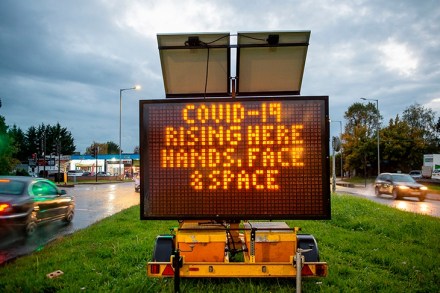
In Competition No. 3169 you were invited to submit a poem about autumn in which the last letter of each line becomes the first of the following line. Many of you wrote in praise of what the novelist Charlotte Mendelson has described as ‘the loveliness of rotting nature’; a time when nature feels at its most alive. But, in this gloomiest of autumns, there were haters too. Honourable mentions go to Richard Spencer, Tim Raikes, John Priestland, R.M. Goddard, Phillip Warke, David Silverman, David Shields, Maggie McLean, Paul Freeman, Janine Beacham and Hannah Killough (aged ten). The best, in a hotly contested week, are printed below and earn their authors £30 apiece. ‘Season of mists’ — OK, give it a rest.

Famous writers on the art of saying no

In Competition No. 3168 you were invited to compose a response on the part of a well-known writer to an inappropriate suggestion about the future direction of their work. This Austen-inspired challenge produced a terrific entry, so high fives to you all. Dorothy Pope’s Philip Larkin, giving short shrift to the suggestion that he venture into writing for children, stood out, as did Janine Beacham, Nick McKinnon, Nick Syrett and Basil Ransome-Davies. The winners, printed below, are rewarded with £25 each. You kindly preface your admonition (and I have no doubt that, despite your placations, I am indeed roundly admonished) with such charming encomia that it seems churlish for me here to attempt to counter your intimation that my work offers no great benison of humour.

Spectator competition winners: the pleasures of bad poetry

In Competition No. 3167 you were invited to submit a rhymed poem that is leadenly prosaic in tone and content. When it comes to the joys of bad poetry, McGonagall tends to steal the show. But I also have a soft spot for Amanda McKittrick Ros, whose novels — and verse — provide passages of inadvertent hilarity to rival the worst of Bulwer Lytton (eyes are described as ‘globes of glare’; alcohol is the ‘powerful monster of mangled might’). An honourable mention goes to George Simmers for his Wordsworthian makeover — ‘I don’t think anywhere could be more pleasant!/ Frankly, you’d have to be boring to pass by…’ — and to Richard Spencer and Janey Wilks. The winners earn £30 each.

Spectator competition winners: poems in praise of naked cyclists

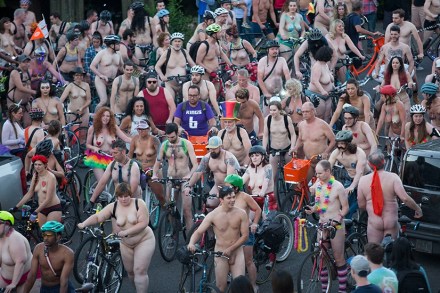
In Competition No. 3166 you were invited to supply a poem either celebrating or lamenting the cancellation of Philadelphia’s annual naked cycle ride. This enormously popular event, whose aim is to promote body positivity and eco-awareness, sees throngs of cyclists, in varying degrees of undress (total nudity optional), complete a ten-mile course around the streets of Philly. This was to have been its twelfth year, but then Covid struck. The inevitable smut was tempered by echoes of Wordsworth and Browning. In a large field, I admired Richard Spencer’s neat reworking of ‘Daisy Bell’; Maggie McLean, and Janine Beacham also shone. The winners, printed below, pocket £30 each.

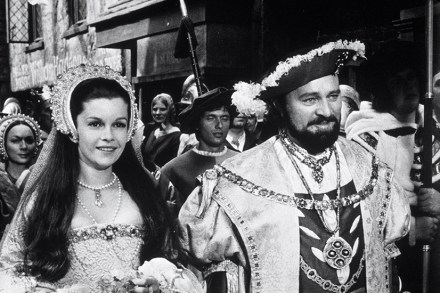
Spectator competition winners: Would you give Anne Boleyn a job?

In Competition No. 3165 you were invited to supply a job reference for a well-known public figure, past or present, that while seemingly positive reveals the failings of the candidate in question. Robert Schechter discerns a streak of modesty in Donald Trump: ‘His reluctance to boast about his great wealth has driven him to take drastic measures to conceal his financial records from the public.’ And Brian Murdoch feels that potential employers should note Boris Johnson’s willingness to surrender the spotlight to others: ‘He can delegate and can even keep entirely out of view when necessary.

Spectator competition winners: patchwork poetry

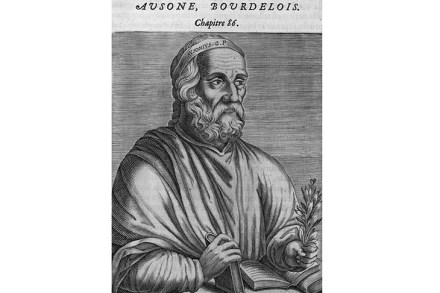
In Competition No. 3164 you were invited to submit a poem in which each line comes from a different well-known poem. The cento form — the stitching together of lines from existing poems — is an ancient one, around since at least the days of Virgil and Homer. ‘Cento Nuptialis’, by the Roman poet and teacher Decimus Magnus Ausonius, is a whopping 131-liner, composed of lines, or half-lines, from Virgil’s Aeneid, Georgics and Eclogue. You were required to cobble together a mere 16 lines (or fewer if you chose), but the challenge, obviously, was to avoid sliding into nonsense. It was an accomplished entry — many of you chose to mine the same poetic seams — and once again, there was a welcome sprinkling of new names among the regulars.

Paradise Lost in four lines

In Competition No. 3163 you were invited to submit well-known poems encapsulated in four lines. Now that the internet has all but destroyed our attention spans, who has the mental wherewithal to plough through Paradise Lost or The Faerie Queene? Well, thanks to the cracking four-liners below, you don’t have to. Props to David Harris, who boiled all of Shakespeare’s sonnets down to a single quatrain, and to -Philip Roe’s impressively pithy two-line version of that charmer Marvell’s ‘To His Coy Mistress’: ‘We’ll soon be dead/ So come to bed’. Honourable mentions go to unlucky runners--up Martin Brinkworth, Richard Woods, Neil Crockford, Bill Morris, Brian Miller, Penelope Mackie, and Richard Spencer.

Tutti-bam! Frutti-boom! Musical double dactyls

In Competition No. 3162 you were invited to submit double dactyls on stars of popular or classical music. Fans of ‘higgledy-piggledies’, as they are also known, should check out Jiggery Pokery, the terrific 1967 compendium of the form, edited by Anthony Hecht and John Hollander, who, in case anyone is wondering exactly what a double dactyl is, spells it out below: Starting with nonsense words: (‘Higgledy-piggledy’),Then comes a name (Making line number two);   Somewhere along in the Terminal quatrain, aDidaktyliaiosWord, and we’re through. This crowd-pleasing challenge drew a whopping entry. Honourable mentions go to Simon Balderson, Helen Zax, Jill Sharp, Iain Morley, Alex Steelsmith and Fabian Carstairs. The winners earn £15 each.

Spectator competition winners: Keatsian sonnets

In Competition No. 3161 you were invited to supply a sonnet with certain rhyme words to be used in a given order. Bout-rimés contests were a favourite parlour game of Dante Rossetti and his brother William, but the given end rhymes for this assignment come from a sonnet written in the winter of 1816 by John Keats. It was also the result of a competition — Keats and his friend Leigh Hunt challenged one another to write a sonnet on the subject of ‘On the Grasshopper and Cricket’ and Keats apparently rustled one up in the space of 15 minutes (as did his opponent). In an enormous and stellar entry, which thrummed with echoes of Keats, themes ranged from zombies to Bruce Forsyth, cricket to Thanos.

Spectator competition winners: killer short stories

In Competition No. 3160 you were invited to supply a short story whose opening sentence is ‘I have no idea whether I killed him.’ The idea for this challenge came from The Mandibles: A Family 2029-2047, Lionel Shriver’s gripping and plausible 2016 novel about societal meltdown in the US following the collapse of its economy (yes, the toilet roll runs out). Towards the end, one of the characters says, ‘I have no idea whether I killed him’, to which another replies: ‘An excellent first line for a short story…’ Indeed.

Spectator competition winners: Poems without the letter ‘e’

In Competition No. 3159 you were invited to supply a poem that does not contain the letter ‘e’. This fiendish challenge was a nod to Georges Perec’s ‘e’-less tour de force La Disparition (protagonist: A. Vowl), which was subsequently translated, also without the letter ‘e’, by the heroic Gilbert Adair. Perec, who once composed a 5,000-letter-long palindrome — beat that — later took all his unused ‘e’s’ and deployed them in Les Revenentes, in which it is the only vowel. The comp elicited moans and groans but proved wildly popular none the less.

Mickey Spillane’s Mike Hammer meets Spock

In Competition No. 3158 you were invited to supply an extract describing a well-known fictional detective who finds themselves catapulted into an unfamiliar milieu. This was a crowd-pleasing comp, attracting a large field of old hands and newcomers alike. But it turned out to be a tricky one too and terrific beginnings were often marred by weak finishing. Lots of you imagined Hercule Poirot and co grappling with Zoom; only Brian Murdoch thought of sending Morse to Narnia. Lord Peter Wimsey found himself in Wetherspoon’s one minute, and in the company of astronaut Nicholas Patrick the next. Nick MacKinnon, who submitted one of many entries featuring Sherlock Holmes, came closest to capturing the spirit of Conan Doyle.

T.S. Eliot goes to Glastonbury

In Competition No. 3157 you were invited to describe a visit to Glastonbury or Glyndebourne in the style of an author of your choice. Highlights in an especially hotly contested week — oh, for more space! — were Timothy Clegg’s John Masefield, R.M. Goddard’s John Cooper Clarke, John Mounsey’s Evelyn Waugh, Hugh King’s Edward Gibbon, Anthony Bevan’s Rev. James Woodforde, Anthony Whitehead’s Martin Amis, C. Paul Evans’s Wordsworth, Nicholas W.S. Cranfield’s Samuel Pepys and several admirable Austens. Over to the winners, printed below, who are rewarded with £25 each. Oh, she said, her pale iris half-open, squinting at the Main Stage.

Poems about schadenfreude

In Competition No. 3156 you were invited to supply a piece of verse or prose on the subject of schadenfreude, a challenge inspired by the late great Clive James’s glorious poem ‘The Book of my Enemy Has Been Remaindered’, of which he said: ‘Not my most worthy moment, but somehow I had more fun writing that one than anything I ever wrote.’ Poetry outshone prose this week. Nick MacKinnon’s riff on ‘That’s Amore’ and F. Shardlow’s clever haiku both caught my eye, but they were eclipsed by the winners below who take £25. Because young Norman often smiledHe seemed to be a pleasant child.But sad to say, his joy aroseFrom contemplating others’ woes.

Poems about picnics

In Competition No. 3155 you were invited to supply a poem entitled ‘The Picnic’. This challenge was prompted by a tweet from picnic-hater @edcumming inviting people to nominate their single worst picnic item. Suggestions included stale warm dry carrot batons, hummus with a skin, supermarket Scotch eggs and gin in a tin that’s been slowly boiled by the sun. So as we face a summer of outdoor socialising, should we all just face the fact that picnics are much nicer in the imagining? There are clearly fans out there, judging by the entry, which was large and tremendous. The winners, especially tricky to choose this week, take £25 each. Oh look!

‘Merrie sing Rishi!’: variations on ‘Sumer is icumen in’

In Competition No. 3154 you were invited to supply your own variations on the medieval round ‘Sumer is icumen in’. This six-part polyphony — the jaunty accompaniment to the ritual sacrifice of Edward Woodwood’s Christian copper in the horrific climax of The Wicker Man — is also known as the Summer Canon and dates from about 1300. Some contend that it contains the oldest example in written English of the word ‘fart’ (‘Bucke uerteth’ can be rendered as ‘the billy goat is farting’) though the correct translation has been the subject of scholarly squabbles.

‘Your guts will form a stinky pool’: Roald Dahl explains Covid-19 to children

In Competition No. 3153 you were invited to recruit a well-known children’s writer to explain Covid-19 to their young audience. Designer Jim Malloy’s reimagining of Dr Seuss titles for the coronavirus age — Oh, the Places You Won’t Go!; Docs in Smocks — gave me the idea for this challenge and though I had high hopes for Seuss-inspired submissions none quite hit the mark. Of the many entries featuring Richmal Crompton’s William Brown, Adrian Fry’s was my favourite: ‘William wasn’t exactly sure what a moonity was, but gathered it had something to do with freedom, of which he naturally approved…’.

The pleasure and pain of staycations

In Competition No. 3152 you were invited to supply a poem about the joys — or otherwise — of the staycation. A poem that transports me back to childhood bucket-and-spade holidays — ‘Half an annual pleasure, half a rite…’ — is ‘To the Sea’ by Philip Larkin (not a fan of holidays abroad). But while lines such as ‘the small hushed waves’ repeated fresh collapse/ Up the warm yellow sand…’ make me long to head straight for the south coast, you lot, judging by the entry, are not relishing the prospect of holidaying at home this summer. Well, most of you.