Lucy Kellaway

Lucy Kellaway is an economics teacher and former FT journalist.

The government’s pathetic response to the Now Teach scandal

One Saturday last July, a couple of hundred people gathered in a conference centre on the bank of the Thames to talk about education. In an earlier life they were lawyers, bankers, engineers, publishers and software engineers, but now they are all secondary school teachers and here they were giving up part of their weekend to talk about how better to help the kids they teach and the schools they work in. All these people joined the profession through Now Teach, the charity I co-found in 2017 when I was still a columnist on the Financial Times. Back then, at the age of 58, I wanted to become a teacher but didn’t know how to begin.
School’s out: the true cost of classroom closures

35 min listen

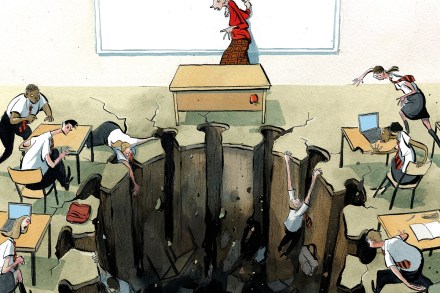
Schools have been closed for almost three months - what is the true cost of these closures on pupils (1:00)? Plus, have Brexit negotiations started looking up (13:15)? And last, are the statue-topplers of Rhodes Must Fall going about their mission the wrong way (22:45)?With teacher Lucy Kellaway; the IFS's Paul Johnson; the Spectator's political editor James Forsyth; the FT's public policy editor Peter Foster; journalists Tanjil Rashid and Nadine Batchelor-Hunt.Presented by Cindy Yu.

School’s out: the true cost of classroom closures

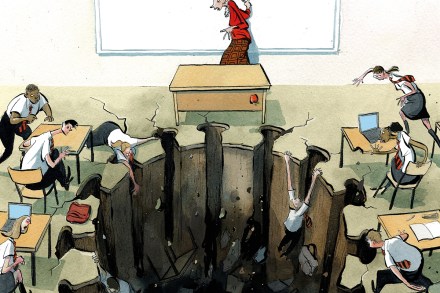
It’s Monday at 9 a.m. and secondary schools in England have just re-opened their gates to students in Years 10 and 12. I have been looking forward to this moment for 13 long weeks, since that frightening afternoon in March when my colleagues and I gathered around a computer in the staff room and saw a healthier-looking Boris Johnson declare he was shutting schools. But today I’m not at the comprehensive in Hackney where I teach economics welcoming back my students with a rousing lesson on the financial devastation caused by the crisis. I’m surplus to requirements and am still marooned at home.

Diary – 15 July 2005

Wednesday last week, back when travelling on the Tube was no big deal, I was on the Central line on my way to White City to appear on a BBC2 lunchtime business programme whose usual select viewing audience was going to be greatly swelled that day by my mum and dad. The loudspeaker at the end of the carriage crackled to life: ‘We would like to inform all customers that London has been successful in its bid to host the 2012 Olympics.’ I looked at the line of people in seats opposite. They responded exactly as they would have done to ‘Stand clear of the doors. Mind the closing doors, please’ — no one moved a muscle. Feeling that some sort of modest acknowledgment was in order, I caught the eye of the woman opposite and raised my eyebrows. She stared back stonily.