Lucy Dunn

Lucy Dunn

Lucy Dunn is The Spectator's political correspondent. She is a qualified doctor from Glasgow.

Why haven’t the Greens cut through more?

19 min listen

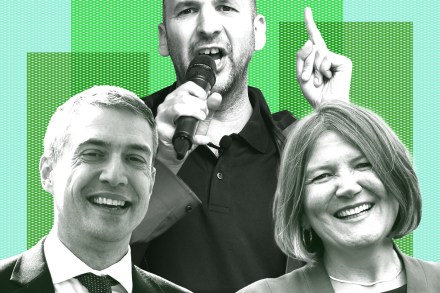
The Green Party leadership election is underway, pitting new MPs Adrian Ramsay and Ellie Chowns against London Assembly Member Zack Polanski. The Greens achieved their best ever result at the 2024 general election, but they’ve remained static in opinion polls ever since. Lucy Dunn and Luke Tryl of More in Common join Patrick Gibbons to try to make sense of this. As Luke says, the dynamics within the leadership election are symptomatic of a wider divide over party strategy – two of the seats they won last year come from more liberal, traditionally left-wing seats, while two others come from traditionally conservative-leaning, rural shires. Plus, does Corbyn’s new party complicate any attempt to make them the anti-system party of the left?
Zelensky’s diplomatic masterclass

13 min listen

What a difference six months makes. The last time Zelensky and Trump met in Washington we were mourning the end of America’s commitment to security in Europe and a new era of isolationism. But yesterday was a totally different story – and Zelensky deserves much of the credit for his change in tactics. Trump complimented Zelensky’s suit as he arrived at the White House, the two exchanged warm words of thanks, and while they didn’t manage to settle on anything substantial when it comes to a peace deal, there was some vague consensus on security guarantees. The stage seems set for a Trump/Putin/Zelensky trilateral. The mood seems positive but is it too soon to celebrate? Lucy Dunn speaks to James Heale and Svitlana Morenets. Produced by Oscar Edmondson.

Farage goes for the Lords

15 min listen

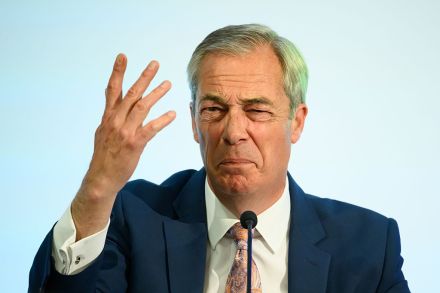
The big news today is of course the bilateral between Donald Trump and Vladimir Putin in Alaska. We should know by around 8 p.m. whether they have successfully negotiated an end to the war in Ukraine – and at what cost – but in the meantime Westminster is abuzz with the news that Nigel Farage is going for the Lords. This morning the Times splashes on a letter from Nigel Farage to the Prime Minister, Keir Starmer, in which he demands that Starmer allow him to nominate Reform peers to the House of Lords. It is not a totally unreasonable request either, with the Greens and the DUP represented in the chamber and Farage has gone after Starmer for ‘democratic disparity’.

Does European solidarity over Ukraine matter?

14 min listen

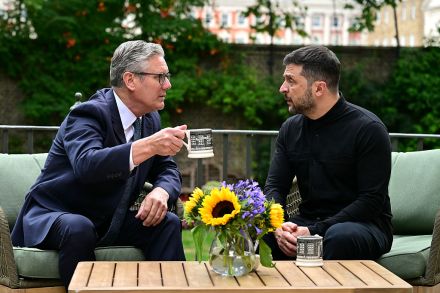
Ukraine's President Zelensky has spent today with Keir Starmer at Number 10. This is in anticipation of tomorrow's Alaska summit between Presidents Trump and Putin – where European leaders will be notably absent. Zelensky's visit to the UK is designed to project an image of solidarity with Starmer, and European leaders in general – but does it really matter? And is Putin really closer to accepting a ceasefire? Tim Shipman and James Heale join Lucy Dunn to discuss Plus – Tim talks about his article in the magazine this week, for which he spoke to George Finch, the 19 year old Reform councillor who is leader of Warwickshire County Council.

Scotland has one of the largest deficits in the Western world

It’s that time of year again: GERS day – when Scotland's annual fiscal health is laid bare – has come back around and the figures paint a pretty bleak picture for the Scottish government. There is a £26.5 billion black hole in public finances (don’t fall off your chair, Rachel Reeves) while the country’s deficit has grown by more than £5 billion. With a Scottish parliament election just around the corner – and the party of government on track to lose seats – it’s more bad news for First Minister John Swinney’s SNP.

Who is the real Nicola Sturgeon?

18 min listen

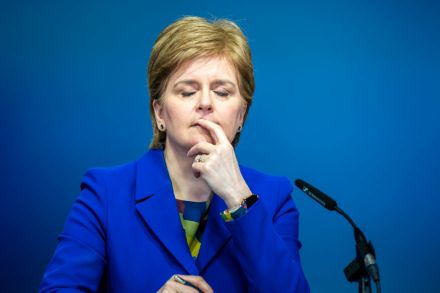
There has been a drip feed of stories over the past few days from Nicola Sturgeon's memoir Frankly which hits the shelves this week. In her book, the former First Minister of Scotland covers a slew of topics including SNP infighting and her relationship with the late Alex Salmond, her sexuality and the police probe into SNP finances, and the gender reform bill that contributed to her leaving frontline politics. Spectator writer and Scottish Daily Mail columnist Euan McColm and Isabel Hardman – who has reviewed the book for this week's Spectator – join Lucy Dunn to discuss. For Euan there is a humility in the prose that he just doesn't recognise in the Sturgeon of real life – is she trying to discover herself? Produced by Patrick Gibbons.

Is Nicola Sturgeon liberated or lost?

Nicola Sturgeon isn’t someone for whom oversharing comes naturally. Throughout her career, she has regularly been labelled ‘dour’ or ‘frosty’ by both her opponents and those on her own side. As her profile grew through the 2010s, so did her popularity among the SNP’s expanding membership – and in her first week of being party leader she mustered a 12,000-strong crowd with which to celebrate in Glasgow’s Hydro. But she remained an introvert with a tight-knit circle of few friends. ‘I can come alive on a stage in front of thousands of people, but put me at a dinner table with four people and I will struggle much, much more,’ she told the Sunday Times.

Introducing ‘Farage’s fillies’

13 min listen

Another day, another Reform party press conference. Following political editor Tim Shipman’s cover piece on how Reform hopes to win over women, this morning’s event was led by the party’s top female politicians: MP Sarah Pochin, Greater Lincolnshire Mayor Dame Andrea Jenkyns, Westminster councillor Laila Cunningham, and Linden Kemkaran, the leader of Kent County Council. Nigel Farage was missing in action as Reform tried to make the case that they are not a one-man band or a ‘boys’ club’. Has Farage solved his women problem? Elsewhere, Kemi Badenoch is in Epping as she tries to wrestle the agenda away from Farage when it comes to asylum seekers and migration. But has she got anything different to say?

Kate Forbes: I am not a quitter

Kate Forbes’s announcement on Monday that she would be standing down as an MSP next year caught most people – her political allies, former backers, current colleagues – by surprise. She decided to make her intentions clear a few days prior to her attendance at the Edinburgh Fringe festival, where she was set to be interviewed by the Herald newspaper. But the timing of the Skye, Lochaber and Badenoch MSP's exit news also coincided, incidentally, with Storm Floris hitting the UK. ‘At about 11 a.m., just after making the news, the power went off completely,’ she confessed to Thursday’s audience. The Wi-Fi broke, a mobile phone mast went down, and there was no 4G and no mobile connectivity at all.

The ghost of Sturgeon looms large over the SNP

Nicola Sturgeon may be stepping down as an MSP next year, but that doesn’t mean she’s done with Scottish politics. Instead it seems like her 32-year-old mini-me, Màiri McAllan, is being primed by the former first minister and her allies to become the party’s future leader. The remarkable similarities between the pair suggest Sturgeon sees a little of herself in McAllan, who also signed up to the SNP at the age of 16, went on to study law at the University of Glasgow, and caught the attention of a first minister before her career took off. Although she remains relatively unknown outside SNP and media circles, Sturgeon’s protégée and former special adviser is racking up an impressive CV.

Vance & Farage’s budding bromance

16 min listen

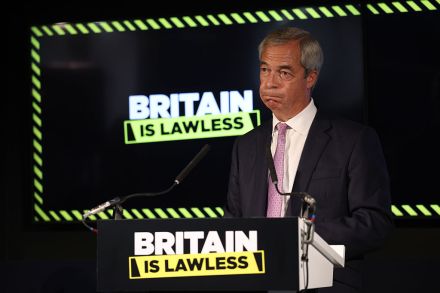
Nigel Farage hosted a press conference today as part of Reform's summer crime campaign 'Britain is lawless'. He unveiled the latest Tory defector: Leicestershire's Police & Crime Commissioner Rupert Matthews. Amidst all the noise of whether crime in the UK is falling or not, plus the impact of migration on crime, is Reform's messaging cutting through? Would US Vice President agree with Farage's message that Britain is lawless? Vance is in the UK, staying in the Cotswolds, as part of his summer holiday. Tim Shipman and Lucy Dunn are joined by James Orr, associate professor at Cambridge University, and a friend of Vance's to talk us through the dynamics between Trump, Vance, Starmer, Lammy and Farage. Does Farage have Vance's ear?

Why Kate Forbes is standing down

A year is a long time in politics. Just over 12 months ago, Kate Forbes MSP was made Deputy First Minister of Scotland when John Swinney took the reins from Humza Yousaf. This morning, with less than a year to go until the 2026 Holyrood election – and after the SNP had finalised its candidate list – Forbes has announced she no longer plans to stand at the Scottish parliament election. While Forbes has claimed her turnaround is down to family reasons, others aren't convinced In a letter she has shared on social media, the Cabinet Secretary for Economy and Gaelic has informed Swinney that ‘after careful thought over the summer recess’ she will not stand again for the Highland constituency of Skye, Lochaber and Badenoch.

Could the Scottish Tories do a deal with Reform?

Senior Tories are floating the idea of an electoral pact with Nigel Farage’s Scottish outfit It’s not a good time to be a Scottish Conservative. While the SNP has seen a bounce in the polls – despite the infighting that followed Nicola Sturgeon’s resignation and the Operation Branchform police probe – the Tories and Labour have both suffered from a surge in support for Reform UK north of the border. Scottish Labour is projected to lose Members of the Scottish Parliament (MSPs) but ultimately it is the Tories who look to be hit the hardest.

Green party leadership contest heats up as ballot opens

Today, Green party members can begin voting for their next party leader – or leaders – as ballots in the leadership contest have now opened. Voting will take place across the month before ballots close on 30 August with the result to be announced on 2 September, just a month before the party heads to Bournemouth for a three-day conference. The choice is between current co-leader Adrian Ramsay who is running on a joint ticket with North Herefordshire MP Ellie Chowns (after Bristol Central MP Carla Denyer announced she wouldn’t be running again) and the party’s current deputy leader Zack Polanski. Yet despite the competitors having worked closely together for years, the race has got off to a pretty disagreeable start.

Will the junior doctors regret picking a fight with Wes?

13 min listen

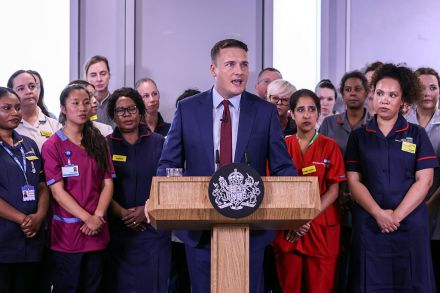
The dispute between the British Medical Association (BMA) – a trade union for doctors – and the government continues, following the five-day strike by junior doctors. Doctors argue that pay is still far below relative levels from almost two decades ago, combined with the cost of study, the cost of living and housing crises, as well as challenging conditions within the NHS. Nevertheless, with an average pay rise of 5.4% for resident doctors this year, support for the strikes appears to be falling – both with the public at large, and within the BMA. Health Secretary Wes Streeting has hit back at the BMA and said they 'will not win a war with this government'. Tim Shipman and Lucy Dunn join Natasha Feroze to discuss whether the junior doctors are wise to pick a fight with Wes.

Could Reform’s Scottish surge provoke indyref2?

20 min listen

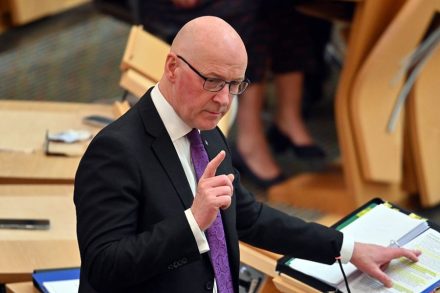
Scotland's First Minister John Swinney unveiled his strategy for pursuing a second independence referendum this week, arguing that an SNP majority at next year's Holyrood elections is the only way to guarantee it. This is seen as an attempt to put Scottish independence back on the table as well as combat the rising popularity of Reform. Pollster Mark Diffley of Diffley Partnership joins Lucy Dunn to unpack the SNP's independence strategy. Mark points out that while Reform are consistently outperforming expectations, their support still primarily comes from ex-Conservatives. This, plus the unpopularity of the current UK Labour government, could provide the SNP with an opening to exploit and shore up nationalist support.

Will the SNP get another independence referendum?

Tumult, turmoil, chaos: select as appropriate how best to describe the last two years for the Scottish National party. Nicola Sturgeon’s resignation, the infighting that followed and the infamous Operation Branchform police probe caused public trust in the party of government to plummet. Fast forward through the gaffe-a-day leadership of Humza Yousaf and current First Minister John Swinney has managed to regain control somewhat, with the SNP noticing a turnaround in the polls and projected to become the largest party in Holyrood next year.  Yet while it has been suggested that the nationalists could pick up a third of the vote, this is some way off a majority.

Questions remain about Farage’s crime crackdown

As Keir Starmer prepared to meet Donald Trump at his Scottish golf course this afternoon, Nigel Farage kept himself busy with another ‘Lawless Britain’ press conference in London. (‘I had dinner with Donald Trump Junior the other week,’ he said to reporters asking if he had been able to secure an audience with the US President.) Social media dominated. Reform’s new police and crime adviser, retired detective Colin Sutton, told attendees: ‘We need to refocus what police are doing onto homes and streets – not posts and tweets.’ The latest addition to the Reform outfit will stand as a candidate in the next general election and in the meantime use his experience to help shape the party’s crime policy.

What should we make of the Starmer-Trump relationship?

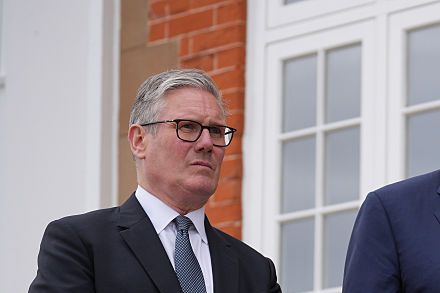
It’s often the rotator blades of Marine One that blare over Donald Trump’s voice as he stands near the helipad on the south lawn of the White House. In Turnberry, Scotland, it was bagpipes. Trump, playing host to the British Prime Minister in Britain, performed his now familiar ingratiation ritual as he welcomed Sir Keir and Lady Victoria Starmer to his golf course. “Our relationship is unparalleled,” he said, above the din. He flattered the PM’s wife and even suggested, in his delightful nonsensical way, that she is a well-known figure all over the United States.   Lucy Dunn is joined by US editor Freddy Gray and political editor Tim Shipman to discuss what the trip means, and what we should make of the Starmer-Trump relationship.

Keir’s Indian Summer

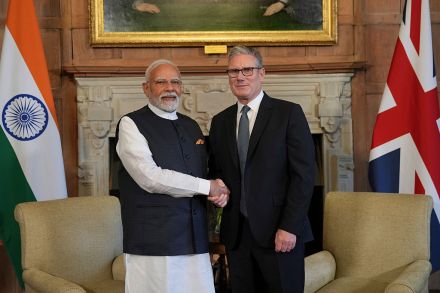
The UK has finally signed a free-trade deal with India after three-and-a-half years of negotiation. The agreement will open up trade for cars, whisky, clothing and food products, with ministers claiming it will boost the British economy by £4.8 billion. For Keir Starmer, it offers much-needed economic and political good news. For Indian prime minister Narendra Modi, it shows that the £3 trillion Indian economy is willing to shake off its protectionist tradition and open up to international investors. Lucy Dunn discusses with James Heale and Michael Simmons.