Lucy Dunn

Lucy Dunn

Lucy Dunn is The Spectator's political correspondent. She is a qualified doctor from Glasgow.

Five graphs that show Humza’s health service disaster

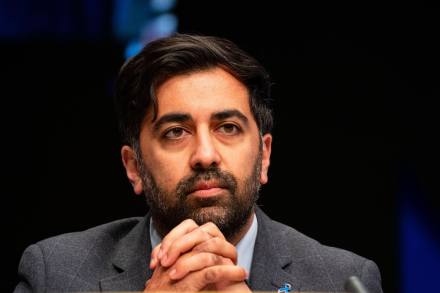
Humza Yousaf has been described as the ‘continuity candidate’ in the SNP leadership race. Yousaf remains the bookies’ favourite and has managed to avoided the media storm that his rival Kate Forbes has faced following her comments about gay marriage. But Yousaf's own record in politics deserves some scrutiny. So how has the Scottish health secretary fared in his current role? This morning, Audit Scotland released a damning report that laid bare the full extent of Humza Yousaf's health service crisis. It urged the Scottish government to be 'fully transparent' about 'what progress is or is not being achieved', and revealed that the health service is still nowhere close to meeting NHS Recovery Plan targets.

Confessions of a meal deal addict

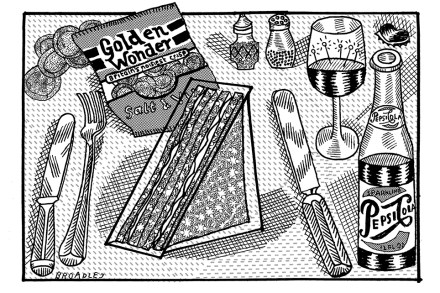
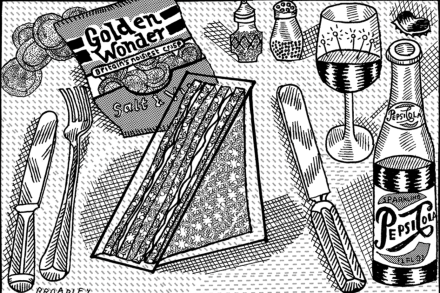
Floor to ceiling, sandwiches are piled high. Not just sandwiches: pastas, wraps, baguettes, sushi. Brown bread, white tortillas, bacon, chicken, vegan chicken, tuna, cucumber, falafel. Smoothies and energy drinks crowd on one side, while yoghurts, crisps and cakes are heaped on the other.  The meal-deal section of a supermarket is a thing of beauty. The variety of combinations covers almost all cravings, preferences and dietary requirements, at roughly the price of a standard London coffee. I don’t understand colleagues who waste their evenings making up a large quantity of the same dish for lunch the next day. The smugness of stringent meal-preppers must turn into gloom when, by Friday, they’re faced with the prospect of defrosting the fifth frozen chilli of the week.

What do SNP members think of Kate Forbes’s views?

Kate Forbes's religious views have sparked a backlash among her SNP colleagues. The party leadership contender's announcement that she would not have supported gay marriage ‘as a matter of conscience’, led to four of her MSP colleagues distancing themselves from Forbes. And there could be more departures yet: earlier today, Forbes also let slip that she is personally opposed to childbearing out of wedlock. She said: ‘[Having children outside of marriage] is something that I would seek to avoid for me personally, but it doesn’t fuss me, the choices that other people make. In terms of my faith, it says that sex is for marriage and that would be the approach that I would practice.

Will public sympathy extend to the junior doctors’ strike?

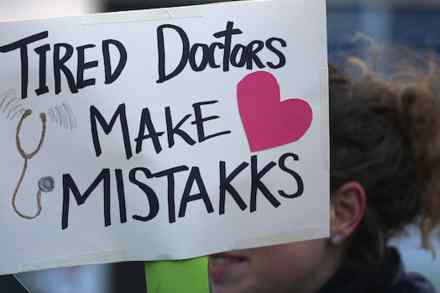
Next month, junior doctors in England will walk out for three consecutive days after an overwhelming majority voted to strike over pay and conditions. Just under 50,000 doctors were entitled to vote in the British Medical Association ballot, and 78 per cent did. Of the votes cast, 98 per cent voted in favour of strike action. The term 'junior doctor' refers to newly qualified foundation doctors, as well as all those doctors ranked in between, up until and including senior registrars. These doctors are hoping for a 26 per cent pay rise – a figure they say would amount to ‘full pay restoration’ after the BMA concluded that junior doctors have seen their real-terms wages fall ‘by more than a quarter’ since 2008.

Bed blocking is crippling Scotland’s NHS

The NHS in Scotland is under enormous strain. Three health boards north of the border have stopped non-urgent elective care as the crisis worsens. Urgent treatment and cancer care is being prioritised as patient demand continues to rise past unmanageable levels. The last time we saw this happening was during the pandemic. What’s going so wrong? One of the major issues in Scottish hospitals is bed-blocking: wards are full of patients who can't be discharged. This means there is no room for those who turn up to A&E requiring overnight admission. The shocking part, though, is that many of those patients stuck in hospitals don’t need to be there. On average, there are 1,950 delayed discharges in Scottish hospitals each day.

We need to stop junior doctors leaving the NHS

Quit your job, leave the country, move to Australia. This may once have sounded like a hastily-planned midlife crisis, but in 2023 these life plans are more representative of doctors' across the country. Four in ten junior doctors plan to leave the NHS as soon as they can find another job, a survey by the British Medical Association (BMA) has found.  The poll asked over 4,500 junior doctors about their plans for the future. A third want to leave the country within the next year to work abroad, Australia often being their number one destination. Over 80 per cent cited real-term pay cuts as the reason they wanted to leave the health service. A similar number referenced poor working conditions.

Wes Streeting’s NHS vision doesn’t go far enough

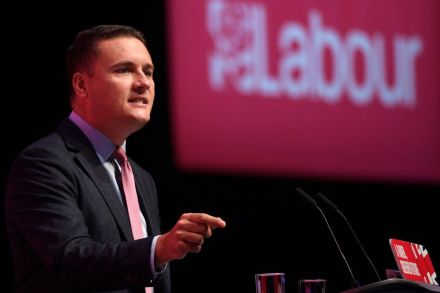
The NHS is facing an existential crisis, the shadow health secretary Wes Streeting said last week. The health service needs to ‘reform or die’. Cue the backlash. How do we keep medical students in the UK without inadvertently funding doctors for other countries?  Sam Tarry, the recently-deselected Labour MP, expressed ‘dismay’ over his colleague’s comments on the health service, while Diane Abbott has warned her Twitter followers that Streeting is ‘trying to push for a privatised/insurance-based NHS’.

Is Scotland’s strike momentum slowing?

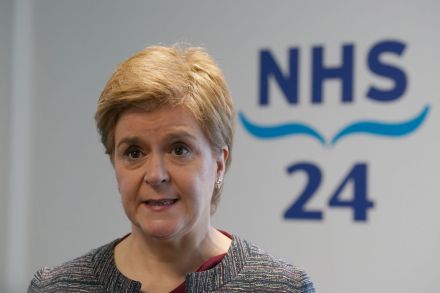
Finally, good news on the strike front: NHS staff in Scotland have decided against walking out after voting to accept an improved pay offer from the Scottish government. The deal means healthcare workers will get pay rises ranging from £2,205 to £2,751. But this isn’t an offer to end all strike threats yet – nurses and physiotherapists are yet to decide whether they will halt strike action after the government’s latest offering. For now, Nicola Sturgeon is hailing the announcement as a victory: the SNP's health secretary Humza Yousaf – who has faced calls to resign as NHS waiting lists continue to grow – welcomed the decision by Unite and Unison to accept the 'record pay offer'.

Volunteers won’t save the NHS this winter

Workers are balloting for industrial action, attending mass demonstrations and preparing to strike. A ferocious tug-o’-war between trade unions and employers is playing out across the country. Though striking RMT members have been accused of ‘ruining Christmas’, the country’s greatest fears should be reserved for the NHS, which will see ambulance workers and nurses walk out before January, when junior doctors in England cast their vote on industrial action. Is there a solution? A leaked briefing from the Department of Health and Social Care suggests that the government believes volunteers could act as a buffer while healthcare staff take action this winter.

Is lockdown to blame for the Strep A spike?

As of today, nine children have died in the UK after falling ill with Strep A. Now, more children under ten have lost their lives from severe infection caused by invasive Strep A (sometimes abbreviated to iGAS) than did from Covid in the first three months of the pandemic in 2020. In most cases, Group A Streptococcus, a bacterial infection common in school-age children, is mild. From ‘strep throat’ that can cause tonsillitis, to skin infections and scarlet fever, it can present in many forms. Spread by respiratory droplets (propelled outwards when you sneeze, cough or kiss), most cases result in mild symptoms and recovery after a short course of antibiotics.

Letting pharmacists prescribe would ease the strain on the NHS

The NHS is facing its own winter of discontent: A&E waiting times are surging, GP availability is plunging and a strike is brewing. The Communication Workers’ Union (CWU), says Britain is facing a 'de facto general strike': from nurses to ambulance drivers to doctors – even in emergency departments and cancer centres – as they ask for pay rises.  Today the Sunday Telegraph reports that (privately-run) pharmacies may be called in to help and given power to prescribe for simple conditions to help ease pressures in A&E departments. I argue in the current edition of The Spectator how they could easily help plug plug the gap that exists between GPs and A&Es by prescribing for minor ailments.

Spectator Out Loud: Jade McGlynn, Lucy Dunn and Graeme Thomson

20 min listen

On this week's episode, Jade McGlynn reads her article on the Russian mothers and wives turning against Putin, because of their sons and husbands missing in the war (00:55). Lucy Dunn, a former junior doctor, asks whether pharmacists aren't part of the solution to the crisis in the NHS (09:45). And Graeme Thompson reads his Notes On protest songs (15:50). Presented and produced by Cindy Yu.

Why not let pharmacists prescribe medication?

It started as a small red shadow on my nose that gradually began to spread as the inflammation took hold. Soon the lesion was painful. A golden crust appeared and my suspicions were confirmed: impetigo. Impetigo is an incredibly infectious skin condition – and if left untreated, it can scar. Topical antibiotics – fucidin ointment – work a treat, but I had just moved to London and had no GP in the city. I wasn’t too worried, though. The importance of the ‘multidisciplinary team’ had been branded on to my brain from day one of medical school and so I called my nearest Boots. ‘I have impetigo,’ I told them, ‘and I’m looking for fucidin.’ I was to come in and ask for the pharmacist, they said. So I did exactly that.

Scotland’s avoidable death rate is on the rise

Scotland is witnessing a concerning uptick in ‘avoidable’ deaths. With an increase of 4 per cent on the previous year, there were almost 18,000 preventable deaths in Scotland in 2021. As the rising pressures on the NHS continue to expose cracks, this week's report on avoidable mortality from the National Records of Scotland does little to diffuse concerns. Things don’t look much rosier when Scotland is compared to the rest of the UK. Although no British data for avoidable deaths in 2021 has been made available yet, historically Scotland has seen the highest rates of avoidable mortality in the UK over the last 20 years. Using the latest comparable data for England and Wales, this trend continues: Scotland is predicted to once again outdo both countries.

The dire state of Scotland’s hospitals

In hospitals, waiting lists have become so long that people have to queue for over two days to be seen. Patients are advised to avoid turning up if they can help it. Bed shortages mean people spend nights on corridor floors. Over 30 patients markedly deteriorate or even die each week as a result of delays. You could be forgiven for thinking this dire situation is unfolding in a developing country, perhaps without proper health infrastructure. It's not: this is happening all across Scotland. Since the pandemic, A&Es in Scotland have gone from bad to worse. Extreme wait times have increased tenfold: over 4,000 people spent more than 24 hours waiting in emergency departments over the last year. Almost 250 patients had to wait more than two full days.

What’s the truth about the NHS’s ‘Black Wednesday’?

If there was ever a bad time to end up in hospital, today – Black Wednesday – is it. The first Wednesday of August is changeover day in NHS hospitals. A fresh-faced cohort of junior doctors arrive on the wards ready to get their hands dirty. It’s also the day that just about every trainee doctor moves jobs. The result can be chaotic, as teams of medics scatter and new ones arrive. Doctors who had become used to working alongside one another not only need to adjust to new teammates, but also navigate unfamiliar wards, or even relocate to entirely different hospitals altogether. It’s no wonder that patient care can take a knock.

The grim reality facing junior doctors

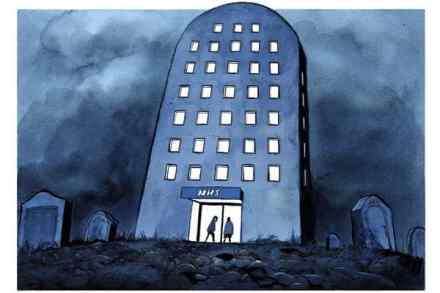
The NHS is facing the biggest crisis in its history. GP surgeries are breaking under pressure, waiting lists could top nine million by March 2024, and there’s a huge shortfall of staff. Many medics are opting to simply throw in the towel. Having recently qualified as a doctor, I can't say I'm surprised. For junior doctors, stress, burnout and bullying are quick to take a toll: seven per cent of medics leave within the first three years. This bucks the expected trend: that people are at their most vitalised nearer the start of their careers. For medicine, the evidence suggests otherwise.