Lucy Dunn

Lucy Dunn

Lucy Dunn is The Spectator's political correspondent. She is a qualified doctor from Glasgow.

Steve Barclay turns to AI to save the NHS

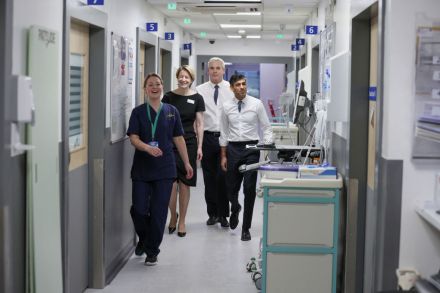
The NHS is struggling to cope with an ageing population. Disputes over pay have created a stand off between doctors and the government, while the crumbling social care system has seen bed-blocking reach record levels. So far, the suggested fixes have usually been calls for more money. But what about tech? That’s Health Secretary Steve Barclay’s big idea.  Speaking to a large audience at The Spectator’s event ‘Can AI and innovation save the NHS?’ this afternoon, Barclay outlined why introducing AI into the health service is right.

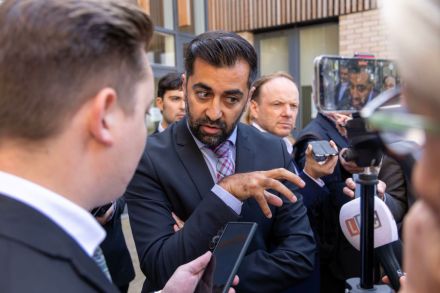
Is Humza Yousaf a people-pleaser?

8 min listen

James Heale speaks to Katy Balls and Lucy Dunn for the latest update on Scottish politics. Humza Yousaf has been on a 'reset'. But critics claim the Scottish First Minister is simply rehashing Nicola Stugeon's policies. Also on the podcast, will Labour take the Scotland by-election from the SNP? And what happened at the Holyrood Magazine awards?

Is Sturgeon’s Holyrood return a help or hindrance to Humza?

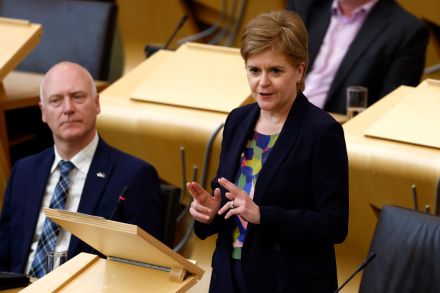
Nicola Sturgeon’s first speech back in Holyrood was a nostalgic return to the past. It felt natural to see the former first minister holding court again, speaking with a presence a leader would. So natural, in fact, that even the Presiding Officer couldn’t help herself from referring to Sturgeon as ‘First Minister’ – to much amusement in the chamber.  Widely expected to focus on childcare, Sturgeon’s speech verged more into the philosophical. She mused about the nature of modern political discourse, admitting that she herself had played a role in creating division. ‘I accept my share of responsibility,’ she told parliament. Urging parties to debate constructively, she went on: ‘Polarisation in politics is much maligned.

There is nothing ‘bold and ambitious’ about Humza Yousaf’s plan for Scotland

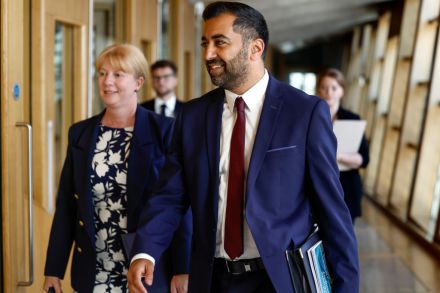
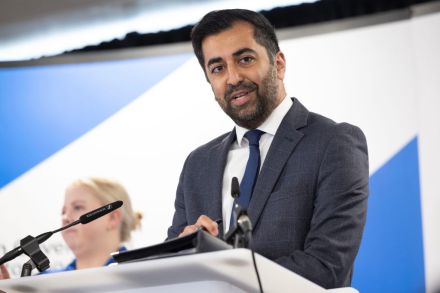
Humza Yousaf’s programme for government was the new First Minister’s chance to separate himself, once and for all, from the legacy of his predecessor. Nicola Sturgeon said herself when resigning that ‘any party that doesn’t change after two decades in power is daft’ – but do Yousaf’s proposals promise the reset the country needs? ‘We are unashamedly anti-poverty and pro-growth,’ the First Minister announced at the start of his speech, sounding eerily like his leadership race rival Kate Forbes. Drawing on the experience of his own family, Yousaf made a show of the Scottish government’s pro-business approach — despite having come under fire from opposition politicians and business owners alike for being out of touch with the industry.

The SNP shakes up its Westminster frontbench

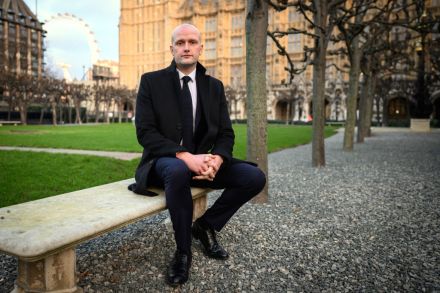
It’s not just Keir Starmer announcing a reshuffle today — the SNP’s Westminster leader Stephen Flynn has taken it upon himself to rearrange his frontbench. Flynn says that the promotion of women to top positions and improving the representation of other Scottish communities informed his decisions. It's clear, however, that the Westminster leader's main consideration is the cost of living crisis. Drew Hendry, MP for Inverness, Nairn, Badenoch and Strathspey, has taken up the role of economy spokesperson, moving across from the foreign affairs brief. Hendry replaces Stewart Hosie MP, one of the eight SNP Westminster politicians to announce they will not stand at the next general election. Part of the 2015 intake, Hendry has held roles in trade, business and transport.

Junior doctors and consultants announce their first ever joint strike

For the first time in NHS history, junior doctors and consultants in England will strike together for four days this September. The joint strikes, announced by the BMA, will be in addition to other separate days of industrial action for both junior doctors and consultants. Health secretary Steve Barclay has slammed the BMA’s announcement as ‘callous and calculated’ while BMA representatives have criticised the government for ‘refusing to negotiate’. The decision by the doctors’ union comes after junior doctors voted today to continue industrial action for another six months. Since March, junior doctors have had 19 days of strikes over pay disputes. To end the strikes, the government has offered doctors a 6 per cent pay rise along with a one-off payment of £1,250.

Who benefits from the SNP-Green alliance?

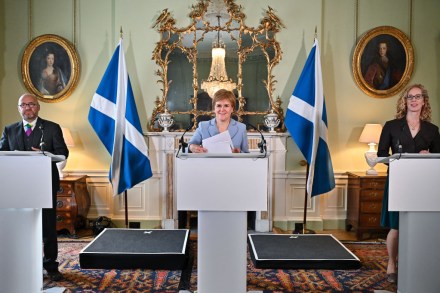
On the SNP’s list of regrets, where does the Bute House Agreement with the Greens rank? Since the agreement, the Scottish government’s deposit return scheme has been delayed, Highly Protected Marine Areas halted and the gender reform bill blocked. This month marks the two-year anniversary of the SNP-Green coalition, but has the partnership – and the pro-independence majority that comes with it – been worth it for the nationalists?  ‘There’s a huge amount that’s been achieved,’ says Patrick Harvie, co-leader of the Scottish Greens along with Lorna Slater. Certainly the deal resulted in Harvie and Slater becoming the first Green politicians in the UK to gain ministerial portfolios.

Will the SNP ditch ‘fringe extremist’ Greens?

Is First Minister Humza Yousaf at risk of sacrificing crucial SNP votes by refusing to ditch his party’s coalition with the Greens? That’s what a growing number of nationalist politicians are worried about. This week, the Bute House Agreement (a framework between the two parties that allows them to govern together) came under criticism from the SNP’s own politicians – and the party is as divided as ever over what to do about them.  The party’s relationship with the Greens needs to be examined, SNP backbenchers believe – and Fergus Ewing and Kate Forbes have gone so far as to call for a party member vote on the Bute House Agreement.

The SNP is failing poor Scottish students

When she became first minister, Nicola Sturgeon told the nation that improving Scotland’s education system was at the top of her government’s priorities. She was specific about exactly what her ‘defining mission’ would be: closing the poverty-related attainment gap. ‘Let me clear,’ she told her supporters, ‘I want to be judged on this.’ Today's results, however, show that she failed: the gap remains as wide as ever. Students across Scotland will receive their exam results today — and while the Scottish government is busy making plenty of noise about pass rates exceeding pre-pandemic levels, the real story is a murkier one about the nation’s attainment gap.

The private sector won’t save the NHS

NHS waiting lists are at record levels, with the number of people in the queue for treatment at 7.5 million. Patients referred to specialists are waiting longer than ever for hospital appointments and vital health investigations. The government’s announcement today that it will use the private sector to help tackle the backlog is surely logical — but it’s not a long-term solution to the crisis facing the NHS. Health secretary Steve Barclay has announced the creation of 13 new community diagnostic centres (CDCs) that will help provide 750,000 more medical investigations a year to waiting patients. Eight of these will be run by the private sector as part of a government plan backed by Rishi Sunak’s elective recovery task force.

Is Scottish Labour embarrassed by Starmer?

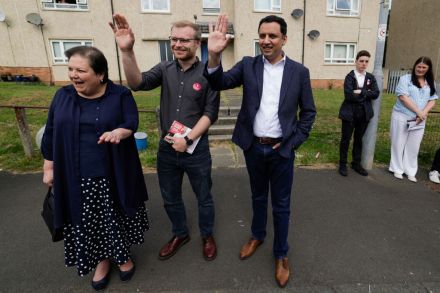
They had balloons, handmade posters and a big red van lit up with ‘Michael Shanks: A Fresh Start’ flashing on the side. The Rutherglen and Hamilton West by-election is Labour’s to lose and don’t they know it. Despite the pressure on the modern studies teacher and now-Labour candidate Michael Shanks, the atmosphere at Labour's by-election launch was relaxed – if the Glaswegian weather miserable. Former SNP MP Margaret Ferrier lost her seat on Tuesday night and constituents will face a second vote in October, a by-election that will bring the SNP and Labour head to head.  Tuesday's result was a small win for Labour – literally.

Can Labour take back Rutherglen and Hamilton West?

13 min listen

A by-election is on the cards for Rutherglen and Hamilton West, after former SNP MP Margaret Ferrier was recalled by her constituents. She'd flouted lockdown rules in 2020, taking a train from London to Scotland despite testing positive for Covid. Given that Labour will need to make gains in Scotland in order to win the next election, this by-election has become a bellwether for the party. Cindy Yu talks to Katy Balls and Lucy Dunn about what to expect. Produced by Cindy Yu.

Humza Yousaf looks to the EU and Ireland for citizenship inspiration

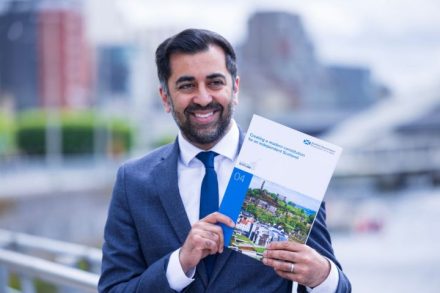
Burgundy passports, dual citizenship and rejoining the EU were a few of the items at the top of Humza Yousaf’s fifth independence paper, published earlier today. The First Minister’s latest independence document in the ‘Building a New Scotland’ series outlines the Scottish government’s proposals for citizenship in an ‘open, inclusive’ and independent Scotland.  Holding a finger up to the UK government over post-Brexit changes, Yousaf’s paper describes how Scottish passports would be a ‘right’ available to Scottish citizens from day one of independence.

NHS waiting list reaches record high — again

On the same day that junior doctors in England are staging their longest strike yet, new NHS statistics show that the service continues to struggle with patient demand. The number of waits for treatment – including elective operations and procedures – has now reached a record 7.5 million, according to figures published this morning. Over 385,000 of these appointments have been on the waiting list for more than a year, an increase on figures at the end of April. Meanwhile, more than 11,000 were delayed for 78 weeks or more, even though waits of this length were meant to be abolished by April.

Will Scottish junior doctors accept Humza’s record pay deal?

As of this afternoon, the junior doctor strikes in Scotland have been called off. Today, the Scottish government and the BMA Scotland’s Junior Doctor Committee announced a brand new, three-pronged deal in a bid to end the pay dispute. Junior doctors in Scotland will receive a single pay rise of 12.4 per cent for this year, and over the following three years, the government has guaranteed a minimum pay rise in line with the rate of inflation for each financial year. Not only that, contract negotiations with the aim of improving both working conditions and training will begin this autumn, to be implemented by April 2026.

The trouble with the Tories’ NHS plan

The NHS is facing the worst workforce crisis in its history. Vacancies are high and retaining staff is getting more difficult. Though medical schools have increased their student intake in recent years, poor working conditions and ongoing pay disputes continue to threaten the functioning of the health service. Prime Minister Rishi Sunak and Health Secretary Steve Barclay have knocked their heads together and concocted a plan in a bid to save the NHS. The question is: will it actually work? More medical school places, shorter degrees, apprenticeships for doctors and increased job flexibility are all on the table as part of the Tories’ blueprint.

What’s behind the Scottish Tory reshuffle?

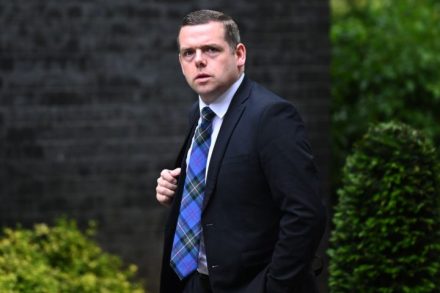
The leader of the Scottish Conservatives has reshuffled his shadow cabinet, just as the Scottish parliament prepares to head into recess. While the rest of parliament has been focusing on winding down before the summer break, Douglas Ross’s decision making has ruffled feathers within the Tory MSP group – particularly given two of the politicians sacked had been rumoured to have leadership ambitions. The move has prompted nervousness across the party – both among shadow ministers about who would receive what portfolio and how the MSP group would react. Last September, it was reported that MSPs were conspiring against Ross, but the coup didn’t transpire thanks to lacking consensus on who his successor would be. So, will this latest reshuffle result in mutiny?

Why doctors voted to strike – and nurses didn’t

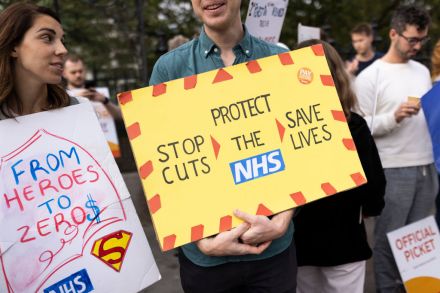
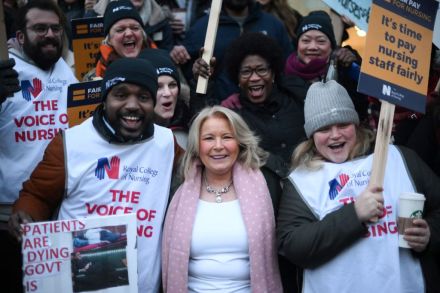
As the crisis in the NHS continues, patients may be glad to hear the nurses' strike is over. The Royal College of Nursing (RCN) has been forced to end its industrial action today after nurses failed to back a vote for more walkouts. But within hours of that announcement, any hope that the NHS might be returning to business as normal fell flat: consultants, the most senior doctors in the service, voted to strike – 86 per cent are in favour, on a turnout of 71 per cent. And while nurses won't be walking out, many join doctors in remaining unhappy about the pay and working conditions within the health service.

Humza Yousaf’s independence plan is a desperate power grab

During her eight years as Scotland’s first minister, Nicola Sturgeon perfected the art of false promises. She consistently told SNP supporters that a second independence referendum was within reach, but the truth was that she had no power to deliver one. All Sturgeon was able to do was lead her troops halfway up the hill before having to bring them back down again. ‘Continuity candidate’ Humza Yousaf, the SNP’s new leader, seems to think that this is a strategy worth copying. In a speech at the party’s independence convention in Dundee, Yousaf unveiled his new Indyref plan. His latest brainwave appears to be, on the face of it, a complete U-turn from everything he said on the subject during the leadership race.

Rebel backbencher creates trouble for the Scottish government

Scottish government minister, Lorna Slater, has managed to survive a vote of no confidence tabled by Conservative MSP Liam Kerr. The circular economy minister, and co-leader of the Scottish Greens, has faced heavy criticism for her handling of Scotland’s controversial deposit return scheme in recent months. To make matters worse, hours before politicians voted on Kerr’s motion, Slater was this afternoon forced to admit that the company running the scheme, Circularity Scotland, had appointed administrators. Though Slater saw off the vote, with 55 MSPs voting for the motion while 68 voted against it, her reputation did not escape unscathed from the rather unedifying debate. The anger at deposit return scheme-related failings radiated from all sides of the chamber.