Lloyd Evans

Lloyd Evans

Lloyd Evans is The Spectator's sketch-writer and theatre critic

Old-git territory

From our UK edition

I’m not the biggest fan of Neil Simon, I admit it. In the programme notes for The Sunshine Boys, I discovered that Time magazine once called him ‘the patron saint of laughter’. Good, I thought. When the curtain goes up I’ve got someone to pray to. The show opens with Danny DeVito slumped in a hotel room watching TV in mid-afternoon. He’s a spent vaudeville star whose feud with his comedy partner forced him into retirement 11 years earlier. His nephew, a pushy young agent, wants to revive the famous duo for one last TV special. DeVito insists that he won’t do it. (But he will, of course.

Cameron’s attack on Balls is strangely endearing

From our UK edition

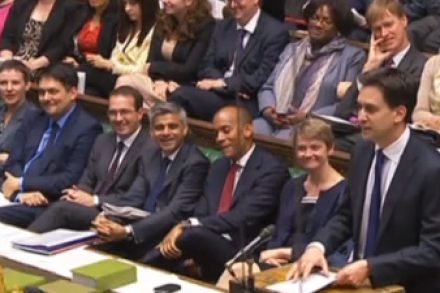
Ed Miliband had it easy at PMQs today. The government is bleeding in all directions. And a further haemorrhage has arrived in the shape of Adrian Beecroft, a government adviser, whose proposal to relax employment law has delighted the Tory right and incensed the soft-and-cuddly Lib Dem left. ‘A proposal to fire at will’, is how Mr Miliband described the Beecroft plan. Did the Prime Minister support it or did he agree with the Business Secretary who has covered it in scorn? Cameron didn’t so much duck the question as swan straight past it. He pretended it wasn’t there. Instead he cherry-picked some positive footnotes from yesterday’s IMF statement on our economy and announced that everything is rosy in the garden.

Select all. Delete all

From our UK edition

If you want to see Scotland’s superiority complex in action, take a look at its literary culture. The works of Hume, Boswell, Walter Scott and Robert Louis Stevenson adorn libraries the world over, and it suits Scotland’s arts lobby to pretend that the age of excellence is still alive. It’s great PR and it justifies the mighty wodges of tax-payer dosh that fund new writing north of the border. But when you seek out the latest Jock geniuses you find someone called David Harrower. Familiar name? Maybe not, but then he’s better known abroad than at home. His most celebrated play Blackbird, written in 2005, told of a child-rape victim who met up with her molester 15 years later and found the stirrings of lurvve still tingling in her loins. Yeah, sure.

Cameron injects some anger into a playful PMQs

From our UK edition

Strange mood at PMQs today. Rather good-natured. Like a staff awayday with both sides joshing each other for fun. A Tory from the shires, Pauline Latham (Con, Mid-Derbyshire), stood up in her best garden-party dress and made this lament: ‘My constituents are having a very difficult time at the moment.’ Labour MPs cheered like mad. They wouldn’t have done that before the local elections. Cameron and Miliband were in a similarly playful mood. After an enforced separation of two weeks they seemed almost glad to see one other. Ed Miliband charmingly conceded that today’s drop in unemployment was welcome. And Cameron welcomed this welcome from his opponent.

Ugly caper

From our UK edition

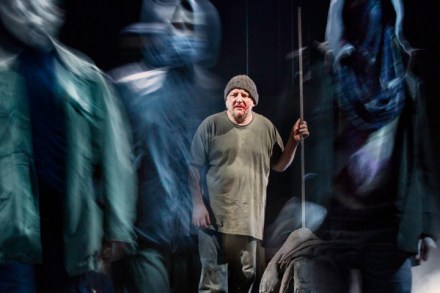
We all know the ‘excellence theory’ of migration. Barriers to entry guarantee that imported cargoes have outstanding qualities. Manfred Karge’s parable of urban despair in the Ruhr comes to the UK with high expectations. It’s been here before. Director Stephen Unwin premièred the play at Edinburgh, 1987. His new revival at the Arcola demonstrates that the ‘false charm theory’ of migration also applies. The foreign and the exotic can mesmerise us more easily than the homegrown. Unwin sets the play in some vague tower-block ghetto. We meet a quartet of jobless alcoholics who become fascinated by Amundsen’s trip to the South Pole. By impersonating Norwegian explorers, the drunken lunks briefly discover some purpose in their sozzled lives.

Hacked off

From our UK edition

Rupert Murdoch is the kept woman of British politics. He inspires love, fear, paranoia and obsessive secrecy. Tony Blair suppressed the fact that he was godfather to Murdoch’s daughter, Grace. Gordon Brown wooed Murdoch but later declared war on him. Cameron smuggled him into Downing Street through the back door. Now, as his vast empire teeters, a breathless bulletin arrives from the desks of an Independent journalist, Martin Hickman, and a campaigning MP, Tom Watson. Their book covers the countless strands of the hacking story with admirable gusto and thoroughness. The tone is combative but fair-minded throughout, though when Watson himself pops up it becomes melodramatic and silly.

Grand designs

From our UK edition

Lloyd Evans talks to the young, dynamic and much-in-demand Tom Scutt about the challenges of bringing to life Narnia and its inhabitants Barky? What does he mean, ‘barky’? We’re talking about Aslan and he says he’s aiming for ‘barky’. ‘Barky like a dog or barky like a tree?’ ‘Like a tree,’ says Tom Scutt, designer of The Lion, the Witch and the Wardrobe, which opens on 8 May in Kensington Gardens. ‘What I often do with Rupert [Goold, the director] is to imagine setting the whole show in one location. In this case, the wardrobe. So you trace the wood of the wardrobe back to a tree and Aslan has a link with a tree, something honest and true and majestic. That felt right.

Small talk

From our UK edition

What’s going on? Everyone’s doing playlets all of a sudden. I saw five this week. The Donmar is presenting a trio of scripts by Robert Holman entitled Making Noise Quietly. A silly title. ‘A writers’ writer’ — an even sillier cliché — is how the programme notes describe Holman. If they mean ‘a boring writer’ they should say so. His first play shows us two teenage pacifists meeting in the countryside during the closing months of the war. One is openly gay, the other is still hunting for the closet door. They chat. They flirt rather innocently. Then they strip off and sunbathe. That’s all that happens. Plays like this, static and plotless, take enormous risks with the audience’s patience.

Bible story

From our UK edition

Be still, at last, you clamouring brainboxes. Those who long for more highbrow drama in the West End can thank God for David Edgar’s Written on the Heart. Commissioned by the RSC, this celebratory play tells the story of the King James Bible, which was first published in 1612. Making scripture accessible to the masses represented a huge moral and cultural upheaval. In 1536 William Tyndale had been executed in Flanders for translating the Bible into English, but just eight decades later the king himself ordered a new vernacular version and showered the translators with rewards. Edgar is no slouch when it comes to taking on lumpish, glutinous topics and he relates the entire story of the English Church during the 16th century.

In PMQs, Cameron has no answers on Hunt

From our UK edition

https://www.youtube.com/watch?v=bf2BXvI3pe8 Ed Miliband led on the economy at PMQs. But he was only warming himself up for the main event. Leveson dominated proceedings. David Cameron lamented the ‘disappointing’ news that the country has slipped back into negative growth. ‘It’s all bluster,’ crowed Miliband. ‘His plan has failed.’ This recession was made in Downing Street, he said, by an ‘arrogant Prime Minister and his Chancellor’. It was potent, punchy stuff from the Labour leader. And he was helped by Ed Balls who has clearly been ordered to clam up during PMQs. Instead of wriggling and calling out names, Balls sat there motionless and mute. His stony glare added to the pressure on the PM.

Playing with the Games

From our UK edition

Once you grasp the essential triviality of the Olympics, the Cultural Olympiad falls perfectly into place, says Lloyd Evans. Even Shakespeare can’t escape Once you grasp the essential triviality of the Olympics, the Cultural Olympiad falls perfectly into place, says Lloyd Evans. Even Shakespeare can’t escape Funny business the Olympics. No one seems to want it. Clearly it doesn’t belong here or anywhere else. So what’s it for? The main athletic competitions — ‘track and field’ — are disciplines devised by Greek hill-farmers during the Iron Age to improve their skills in battle. The field events, like discus and javelin, teach you to throw heavy and/or pointy things at your enemy.

Written in tears and blood

From our UK edition

Great title, Long Day’s Journey into Night. The sombre, majestic words are suffused with auguries of doom. ‘A play of old sorrow written in tears and blood,’ was O’Neill’s description of the script, which is inspired by his personal background. We’re in a beautiful seaside mansion where a prosperous New York family, the Tyrones, are living in great splendour. But beneath the gorgeous surface everything’s going to hell. The oldest son is a washed-up actor who can’t keep away from the local knocking-shop. The younger boy, a preppie drifter, keeps coughing TB spores into his hankie. The mother, still grieving for a lost child, is hooked on morphine. And the whisky-soaked dad is a millionaire who can’t bear to switch on a spare light bulb.

Tim on top

From our UK edition

Tim Minchin swept the board at the Oliviers last Sunday. The Australian’s hit musical, Matilda, won a record seven gongs at the West End’s most prestigious awards ceremony. The rise of Minchin has been stratospheric. Just eight years ago he started out on the Melbourne cabaret circuit performing quizzical spoofs like ‘Inflatable You’, a ballad dedicated to a blow-up doll. He came to Edinburgh in 2005 and scooped the fringe award for Best Newcomer. His material mixes the topical, the cerebral and the unashamedly populist. ‘I get a huge thrill out of writers like Ian McEwan,’ he says, ‘someone very organised in their ideas. It’s what I aspire to, to be able to discuss ideas articulately and with clarity.

In Blair’s shadow

From our UK edition

An ebook arrives! The future of publishing on my hard-drive. All the big profits are in cyber-publishing these days, as I discovered last month when I downloaded an ebook for three quid and found it contained just 85 pages. This one, by Alwyn W. Turner, has only 72 pages, but it’s a penny cheaper at £2.99. I read it in less time than it takes to bake a potato. Turner’s theme is the agony of the British left. In 1992, Labour’s shock defeat at the polls plunged the party into despair and gave the modernisers a mandate to do whatever was necessary to win power. Turner’s plan is to revive our memories of that ignoble turning-point and to enshrine 1992 as the must-have date of 2012.

A taxing PMQs for Cameron

From our UK edition

And on it rumbles. Last month’s budget seems to have created more niche-losers than any tax settlement in history. Those who feel deprived are still squealing about it. At PMQs today Ed Miliband took a swipe at the Prime Minister on their behalf. Billionaires get bungs, grannies get mugged. That’s the headline Miliband was aiming for but didn’t quite find. He adopted his best silent-assassin mode and politely asked the PM to confirm whether or not a bonus of £40k was winging its way into the wallets of Britain’s top earners. Cameron couldn’t switch subject fast enough. The Budget, he claimed, was all about cutting taxes for 24 million workers and lowering corporation tax to make us more competitive.

The magic of speech

From our UK edition

Not yet, since you ask. And I doubt if I ever will. My aversion to multiplex cinemas, with their cheerless foyers and their hordes of texting, tweeting cola-hydrated popcorn-gobblers, has deterred me from seeing new movies lately. The King’s Speech eluded me until it arrived, in its original form as a play, in the West End. You know the plot: stammering monarch makes boob-free speech. What’s striking is that the writer David Seidler has managed to hang his entire drama, and by implication the destiny of Britain, on such a footling little crisis. His script is a tad short on analysis.

There will be blood | 7 April 2012

From our UK edition

John Webster had one amazing skill. He could craft lines that glow in the memory like radioactive gems. ‘A politician is the devil’s quilted anvil; he fashions all sins on him, and the blows are never heard.’ Eliot loved him. Pinter used to stroll around the parks of Hackney shouting his soundbites into the sky. But Webster never discovered how to put his highly wrought lines into the mouths of likable or captivating characters. The Duchess of Malfi is a Jacobean slasher-play, a straight-to-video Tarantino blood-fest, full of cloaked assassins and scheming dukes. We’re in an Italian court where a beautiful noblewoman, played by Eve Best, has fixed her eye on a handsome young bumpkin.

Old meets New

From our UK edition

It’s back. And I can’t believe I missed it the first time. Live Theatre’s dramatisation of Chris Mullin’s diaries has returned to Soho for a lap of honour. Richly deserved as well. The show moves unobtrusively between Mullin’s many spheres of interest. We see his home life as a father of two and as MP for Sunderland South. And we get an insider’s view of Westminster during the glory days of New Labour when parliament, and the entire country, was infatuated with its tooth-some superstar. Some of Mullin’s recollections have already acquired the status of classics. The late Tony Banks confided to him that no one ever saw Peter Mandelson enter a room. ‘There’s just a chill in the air, and suddenly, he’s there.

Web exclusive debate report: ‘Immigration: Enough is Enough’

From our UK edition

The Spectator recently held a debate at the Royal Geographic Society with the motion ‘Immigration: Enough is Enough’. Proposing it were Frank Field MP, Dominic Raab MP and Kiran Bali MBE JP. Opposing were Oliver Kamm, Jenni Russell and David Aaronovitch. Andrew Neil chaired. Here is Lloyd Evans' review: ‘I’m a coward,’ admitted Frank Field, the Birkenhead MP, proposing the motion. For years, his Labour party membership had prevented him from speaking out about immigration. ‘But when we had huge numbers coming in from eastern Europe, I knew it was safe to move.’ Primarily this is an English issue because, ‘for reasons I can’t fathom,’ migrants tend to shun Wales and Scotland.

Rhythms of the Caribbean

From our UK edition

There should be a sign on the door. ‘Plotless play in progress.’ Moon on a Rainbow Shawl, by Errol John, won first prize in a 1957 scriptwriting competition organised by Kenneth Tynan and judged by Alec Guinness, Peter Ustinov, Peter Hall and others. The West End promoters thought the script uncommercial and never gave it a decent shot at success. They had a point. Errol John, an apprentice writer, hadn’t learnt how to shape his tale for the theatre and give it that insistent rat-a-tat-tat rhythm of twists and surprises that audiences expect. His languid drama is set in a Trinidad ghetto where a crew of washouts and wanna-bes bicker and copulate their way through a few steamy midsummer days. The grinding poverty seems quaint, and even attractive, to modern eyes.