Lloyd Evans

Lloyd Evans

Lloyd Evans is The Spectator's sketch-writer and theatre critic

Ryans’ daughter

From our UK edition

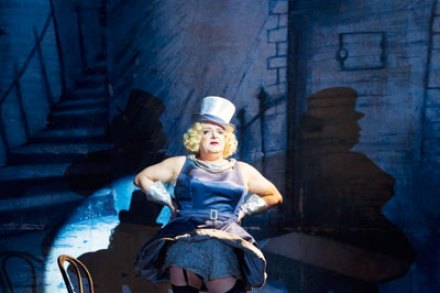
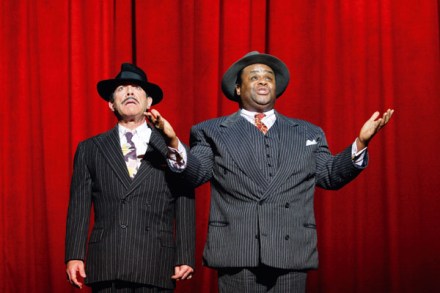
Martina Cole is a rarity among novelists. Her work is set in the ugly, male-dominated world of London’s criminal fraternity and yet nearly all her fans are women. Blonde women, in particular, as I found out when I took my seat in the Theatre Royal Stratford East to see Patrick Prior’s adaptation of her breakthrough novel, Dangerous Lady. In a great sea of peroxide hairdos, my coiffure was the only point of darkness. Cole’s novel starts with a gem of an idea. She takes the brutal mythology of the Kray twins and softens it with a dash of femininity. Her criminal gangsters have a sister. The Ryans are a family of Irish Catholics dominated by a ruthless matriarch, Sarah.

PMQs sketch: Ed Miliband poses as the king of the jungle

From our UK edition

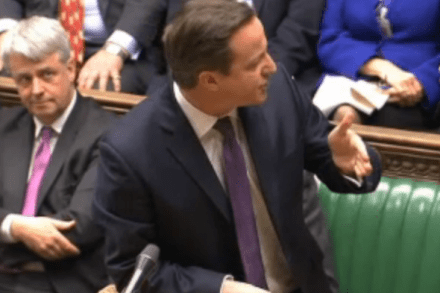
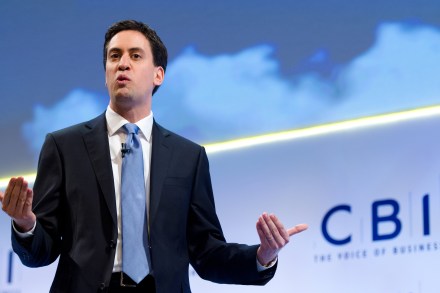
Ed Miliband had fun with his dressing-up box today. At PMQs he tried on all kinds of disguises in the hope of scaring the government. First Europe and the EU budget negotiations. Miliband’s approach here is full of cunning and dishonesty. He called for ‘real terms reduction’ even though he knows full well that a freeze is the best the government can hope for. But by suggesting an impossible tactic he can claim that David Cameron has missed a trick. ‘Rank opportunism,’ declared the PM, ‘and the country will see through it.’ He reminded us of Labour’s record at the negotiating table seven years ago. Back then Ed Milband and his colleagues were happy to pitchfork great flapping bales of cash onto the EU money-pyre.

Addicted to Chekhov

From our UK edition

One departs and three more come charging in. It’s always rush-hour for Chekhov in the capital. As the Young Vic’s production of Three Sisters is drawing to a close, the Vaudeville is preparing to host a star-studded version of Uncle Vanya. Up the road, at the Novello, another Uncle Vanya is about to arrive from Moscow. And rehearsals are already under way for The Seagull, starring Matthew Kelly, at Southwark Playhouse. For years, we’ve been recreational users of Chekhov. We’re now in danger of becoming hopeless addicts. How come we’re hooked? Chekhov’s career as a dramatist was short and full of trouble. Early plays flopped.

Racial tensions

From our UK edition

Covent Garden, 1833. Edmund Kean, the greatest tragedian of his age, has collapsed while playing the title role in Othello at the Theatre Royal. His son, Charles, is all set to take over and has just prised the lid off a trusty tin of boot polish ready to smear dark grease all over his peachy white cheeks. But, instead, a black American actor, Ira Aldridge, is engaged to play the lead. Kean’s company are aghast by this affront to their man’s talent and authority. But his fiancée, Ellen Tree, who plays Desdemona, is smitten by the charismatic American and tries to embrace his realistic new emotional acting style. This is the starting point for Lolita Chakrabarti’s wonderful new play, Red Velvet, at the Tricycle theatre.

PMQs sketch: Miliband gives up on Songs of Dispraise and attacks Cameron on competence

From our UK edition

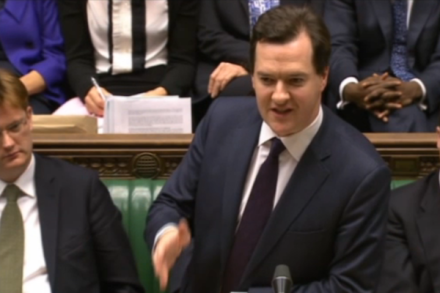
Goodness, he’s enjoying himself. Ed Miliband is brimful of confidence these days and he handles himself like a master juggler at PMQs. He flicks out deft gags and acerbic asides while keeping the central question in the air. He’s having fun. And it’s a pleasure to watch. Greatly helpful to him is the government’s pledge to deliver at least one major and one minor cock-up every week. Last Wednesday it was Cameron’s improvised announcement that energy companies must give customers the lowest tariff. Today he tried to explain this. ‘There were 400 different energy tariffs last year,’ the PM told the Commons. ‘That’s totally baffling.’ ‘The only people baffled,’ said Miliband. ‘were his ministers last week.

Westminster playground

From our UK edition

Wow. This is a turn-up. Politicians and actors rarely see eye-to-eye. Thesps regard Westminster as sordid, petty, corrupt and corrupting. Politicians, for their part, like to dismiss the theatre as pretentious, irrelevant and fake. So here’s a play that brings them together. This House, written by James Graham, and directed by Jeremy Herrin, is a triumph on many levels. It takes the most squalid and depressing era in recent political history —1974–1979 — and turns it into a frothy and hilarious melodrama. James Graham’s inspirational idea is to use Labour’s fragile majority as his sole dramatic motor.

PMQs sketch: Andrew Mitchell needed a haircut, a feed-up, and a good cuddle. But Miliband offered no comfort.

From our UK edition

It was a question of when not if. Today’s PMQs was always going to turn into a kangaroo inquiry into Andrew Mitchell. The man who said ‘pleb’ was in full view on the front bench but he looked as if he were sitting in the Number One dock at the Old Bailey. Ed Miliband started by asking the PM about joblessness which – unhappily for Labour – has fallen. He attacked Cameron for failing to tackle long-term youth unemployment and Cameron countered by pointing out that the number of kids on the dole had doubled during Labour’s last two years in power. They tussled for a few moments over the statistics, quite pointlessly. It was like watching a pie-chart trying to smother a Venn diagram. Miliband manouevred onto the real issue of the day.

Rickety Racine

From our UK edition

High ambitions at the Donmar. Artistic supremo Josie Rourke has chosen to direct one of Racine’s more impenetrable dramas, Berenice. The play introduces us to the emperor Titus, a besotted weakling, and his lover, Queen Berenice, an ageing sexpot from Palestine. Berenice wants to become Titus’s official squeeze but the xenophobic Romans don’t care for asylum-seeking adventuresses seducing their rulers. So Titus sends Berenice packing. She’s reluctant to go and she hangs around while her ex-lover, Antiochus, hovers in the wings awaiting developments. This is the position at the start of the play and, 90 minutes later, not much has happened although a lot of feelings have been discussed in wordy speeches. Racine writes like a corporate lawyer.

Passage to India

From our UK edition

I’ve just come back from India. At least that’s how it feels after a double attack of subcontinental drama. Tara Arts, in Wandsworth, has relocated Molière’s The Miser to modern India and commissioned a script from the Glaswegian standup, Hardeep Singh Kohli. He brings the two cultures together with the insouciant aplomb of an experimental chef concocting a lobster and peppercorn fruit sundae. The result may not please hardcore Molière fans, who speak in reverential tones of the master’s subtlety and elegance, his satirical adroitness and his talent for intricate and charming narrative constructions. This is a show that confidently abandons all such sophistication. It aims for low-brow burlesque. And it scores a direct hit.

Hell hath no fury…

From our UK edition

We all know Edwina Currie as a shrill, tasteless, attention-seeking Thatcherite nuisance from Liverpool. But the private Edwina —  as revealed in her Diaries: Volume II, 1992-97 (Biteback, £20) — is thoughtful, engaging, witty, kind-hearted and, politically, very astute. Has anyone framed a neater analysis of John Major’s idiotic ‘Back to Basics’ drive than this? ‘It outlawed the one protective factor the Tory party has always relied on — hypocrisy.’ She watches senior colleagues plotting to replace him during the mid-1990s, and she sums them up with lethal concision. Michael Portillo: ‘very steely, very cool, very unpleasant’. Ken Clarke: ‘fine brain … lazy character’.

Weaving an artful web

From our UK edition

The Charing Cross Theatre has followed the trends of performance art for more than a century. It used to be a music hall. Then it put in a stint as a cinema. Now it’s a small theatre and it specialises in experimental comedies. The Man on her Mind fits the bill nicely. It opens with Nellie, a sexy young book editor, being seduced in her one-bedroom flat by her handsome lover. There’s a knock on the door. The lover hides in the bathroom. In comes Nellie’s horrible sister, Janet, and she — surprise, surprise — needs the bathroom. She goes in and the lover is discovered. But no. The lover isn’t discovered. The lover doesn’t exist. He’s a figment of Nellie’s imagination.

Fright night

From our UK edition

Here comes Jane Asher. She swings through the doors of a small Chelsea hotel, chucks her bag on the floor, and sits down with an expectant look. Her voluminous red hair has attractive hints of something blonder on top. Her eyes are pale blue, and extraordinarily intense, and she has a fulsome rack of plump white teeth that hint at large appetites. But her figure is as trim as a teenager’s. We meet a few weeks before she begins rehearsing Charley’s Aunt, the classic Victorian farce in which she plays a Brazilian dowager, Donna Lucia d’Alvadorez. Does she think it’ll be more fun because the script is a bundle of laughs? ‘No, there are always those technical things that are just as tricky to do. And if it’s not funny, it’d be a disaster.

Underpowered Ibsen

From our UK edition

The tone is the thing. Ibsen is among the heaviest of the heavy-going playwrights and his masterpiece, Hedda Gabler, is an unbearably tense psychological thriller that ends with one of the biggest shocks in the theatrical repertoire. The play takes us into a doomed marriage between Hedda, a brilliant and eccentric depressive, and George Tesman, a dull-as cheesecake university lecturer. Director Anna Mackmin has read the Old Vic audience correctly. They’ve spent all day at the office, raising enough funds to buy tickets, and they’re not interested in a three-hour Nordic brain-bruiser. Instead, they want a frothy, offbeat marital comedy with a few sad bits. And that’s what they get.

Variety was the spice of life

From our UK edition

Tough job being a disused prime minister. John Major has resisted the temptation to flounce off in a sulk, or to play the international peacemaker, or (as Harold Macmillan was said to do during the 1970s) to fantasise about a glorious comeback urged on him by a despairing populace eager to rediscover its lost greatness. Instead, Major has become a social historian. After a book on cricket he now offers us a personal history of the music hall. His father, Tom Major (b. 1879), made a living as a comic artiste for over 30 years, and his recollections are the starting-point for Major’s investigations. Music hall grew out of the glee clubs and saloon theatres of the 18th century where ‘catches’ (hummable melodies) were played to boozing crowds by impromptu artistes.

Song and strife

From our UK edition

Without You is a show that requires a bit of prior explanation. However, if you’re a gay jobless thesp living in New York in 1994, and your Mom’s dying of cancer back home in Illinois, and you’ve landed a role in Rent, a new musical about Aids, then you’re already up to speed. You have all the data required. In fact, you’re probably Anthony Rapp, the author of this musical autobiography which has just arrived from Edinburgh. Rapp tells two tales through narrative and song. First we hear about Rent which, you may be aware, is a smash-hit musical based on La bohème and relocated to New York during the HIV epidemic. This house-move intensifies its kitsch morbidity by a factor of about a thousand.

A quietly simmering PMQs

From our UK edition

Butch? What the hell does it mean? At the last session of Prime Minister's Questions, Cameron boasted rather rashly that he was ‘butch’. Today Chris Bryant  used it again when he accused the prime minister of anti-female prejudice in the recent reshuffle. ‘He described himself as butch last week,’ said Bryant. ‘Just what is his problem with women?’ Ed Miliband added to the attack and dubbed the prime minister, ‘Mr Butch.’ The word is out-dated but full of flavour and it carries hints of campness and homoeroticism. And perhaps a dash of homophobia too. But it doesn’t pack enough semantic value to have any traction as an insult. Hostilities remained on a low simmer today.

Chance encounter | 6 September 2012

From our UK edition

If you’re thinking of putting on a West End show, here’s what you need. Half a million quid. That should cover it. Unless it’s a musical, in which case you’ll need five or ten times as much, depending on how munificent/crazy you happen to be. Investors tend to be fretful, superstitious types who rarely make rational decisions about the start date of their theatrical ventures. No producer is willing to send 500 grand’s worth of dramatic wonderment into the skies if his rivals aren’t launching similar attractions in the same week. So the West End calendar is either overcrowded or utterly barren. Every year there are two dead zones. One is the end-of-Edinburgh lull, from which we’re just emerging.

A ritualised dust-up for PMQs

From our UK edition

Broom broom. That was the noise that PMQs made today. Britain’s ebullient car sector is the only sliver of happiness the government can glean from our wimpering, faltering, flat-lining economy. And Cameron brought up the broom-brooms as soon as he possibly could. First he had to deal with Ed Miliband who started the session with one of those casual, chatty questions which are designed to make the PM look like a berk by quoting his words back to his face. ‘After two and half years in government,’ Ed began, ‘the PM returned from his break and said he now realises it’s time to cut through the dither. What did he have in mind?’ Beautifully barbed. But Cameron returned strongly. ‘He’s had all summer to think of a question.

The accidental director

From our UK edition

She’s certainly a class act. But how did she manage it? Nina Raine, the 36-year-old writer-director, has established a formidable position in the British theatre. Her first play, Rabbit, opened at a pub venue in Islington in 2007. It transferred to New York and has since been performed all over the world. Last year she directed April de Angelis’s family comedy Jumpy at the Royal Court and the show has just transferred to the Duke of York’s in the West End. Yet, the way Raine tells it, her career has been nothing but a series of blunders and accidents. She left Oxford with an English degree and a few drama productions under her belt. ‘I thought about being an academic. For about five minutes. Both my parents are academics.

Edinburgh snippets

From our UK edition

I saw a few car crashes at Edinburgh but I’ll mention only one. Hells Bells (Pleasance, Courtyard) by the excellent Lynne Truss is a peculiar experiment. Truss sets her play in a TV studio and she spends the first 40 minutes explaining the storyline. The show lasts 45 minutes. So when we finally learn what the action is about, the action is about to cease. The nub of the drama concerns a TV show that was cancelled suddenly in 1995. So the play’s conflicts are rooted in the distant past and involve characters who aren’t on stage. The play culminates, weirdly, in a fight involving the destruction of some elaborately ugly hats. It’s hard to avoid the suspicion that this closing scene is Truss’s comment on her own work. Strange, pointless and a bit desperate.