Lloyd Evans

Lloyd Evans

Lloyd Evans is The Spectator's sketch-writer and theatre critic

Is John Cleese right that the ‘literal minded’ have killed comedy?

From our UK edition

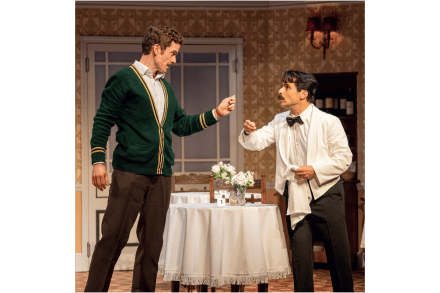
John Cleese appeared in the West End this week. ‘I’ve got vertigo,’ he said as he walked on stage at the Apollo, Shaftesbury Avenue. ‘I cannot get rid of it. So I’m behaving as if I’m 184 not 84.’ He was hosting a press conference for Fawlty Towers: The Play which opens this Saturday night. The press event began with three scenes from the show followed by a Q&A involving Cleese and the leading actors. The character of Basil Fawlty was drawn from Cleese’s family background The first questioner asked about the practical challenges of turning 12 sitcom episodes into a two-hour comedy. ‘It’s what I call carpentry, do you see what I mean?’ said Cleese in his faintly testy manner, like an impatient classics master.

An exquisitely funny sitcom that should be on the BBC

From our UK edition

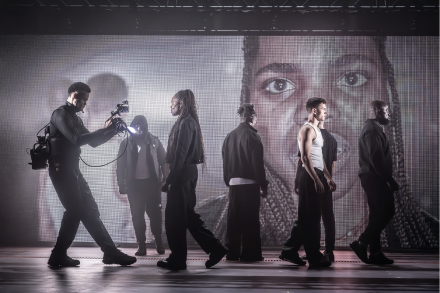
Agathe by Angela J. Davis follows the early phases of the Rwanda genocide 30 years ago. The subject, Agathe Uwilingiyimana, became prime minister on 18 July 1993 but her tenure ended abruptly when she was assassinated by a rioting mob which surrounded the UN compound where she was sheltering on 7 April 1994. She saved her children, according to some accounts, by sacrificing her own life. This is a rough-and-ready play that tells the story impressionistically through monologues, rap lyrics, news broadcasts and reconstructed scenes at the UN headquarters. It doesn’t pretend to offer a full historical account but it generates a horrible mood of impending doom.

Lindsay Hoyle is a hooligan

From our UK edition

How does it feel to wake up and discover that you’re a socialist? We got the answer at PMQs where the TV cameras were trained on Dan Poulter – or ‘Doctor Dan’ as he likes to be called – who recently quit the Tories and joined Labour. But his awakening seems to have poisoned his mood. His cheeks were pale, his eyes lifeless and dull as he glared at his former colleagues across the aisle. There was more absurd behaviour from the SNP’s Stephen Flynn. Why not celebrate with a cheeky smirk? He looked like a man whose knee operation has just been transferred to Wales. And he seems to have lost a few silky locks from his lustrous coiffure as well. His hairline is retreating faster than his principles.

Cheesy remake of Our Mutual Friend: London Tide, at the Lyttelton Theatre, reviewed

From our UK edition

Our Mutual Friend has been turned into a musical with a new title, London Tide, which sounds duller and more forgettable than the original. Why change the name? To confuse fans of Dickens, presumably, and to keep the theatre half-empty while heaps of tickets are sold at a discount. At the end of Act One, an actor explains the entire plot. This might have been delivered earlier The plot is a cheesy Victorian whodunnit involving three main characters and multiple locations so it’s hard to follow the action as it flits from this lowly hovel to that seedy tavern. The chief personalities are a pretentious lawyer, a psychotic teacher and a shifty lodger who won’t reveal his name.

Angela Rayner’s staggering admission at PMQs

From our UK edition

Angela Rayner stood in for Sir Keir Starmer at PMQs, and she opened with fireworks. ‘They’re desperate to talk about my living arrangements,’ she said, referring to her property woes, ‘but the public wants to know what this government is going to do about theirs.’ Brighton resident, Natalie, contacted Rayner about ‘no-fault evictions’. This isn’t much of an issue. When your tenancy ends, you rent a new flat. Big deal. But Labour loves a victim. And they use emotive language to turn the chore of ‘moving house’ into a Dickensian tragedy. ‘Ban this cruel practice,’ cried Rayner. She hasn’t considered that if renters enjoy the same rights as freeholders, the rent will go up. The policy will wreck the benefits it hopes to deliver.

Player Kings proves that Shakespeare can be funny

From our UK edition

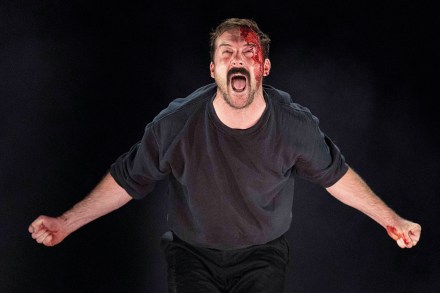
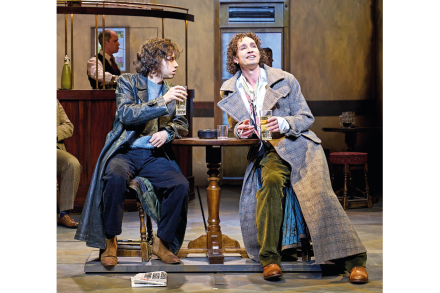
Play-goers, beware. Director Robert Icke is back in town, and that means a turgid four-hour revival of a heavyweight classic with every actor screaming, bawling, weeping, howling and generally overdoing it. But here’s a surprise. Player Kings, Icke’s new version of Henry IV, Parts 1 and 2, is a dazzling piece of entertainment and the only exaggerated performance comes from Sir Ian McKellen who plays Falstaff, quite rightly, as a noisy, swaggering dissembler. Those who imagine ‘Shakespearean comedy’ to be an oxymoron will be pleasantly surprised Small details deliver large dividends. The tavern scenes are set in an east London hipster bar with chipped wooden tables and exposed brickwork. Richard Coyle’s Henry IV has been costumed to resemble the chain-smoking George VI.

My (surprisingly) decent proposal

From our UK edition

‘Like being chained to a lunatic.’ That’s how a man feels in relation to his libido. And the lunatic latches on to anything, irrationally, and without warning. In Cambridge recently I dropped into a lecture given by a beautiful historian, Lea Ypi, from Albania, whose discourse included this observation about revolutionaries: ‘Once they attain power they lose all interest in revolution.’ Good point. Her blonde hair spilling over her shoulders absorbed far more of my attention than her political reflections and I was desperate to speak to her afterwards, but I had no way to orchestrate a meeting. She raised one eyebrow at me suggestively.

Rishi gets witty at PMQs

From our UK edition

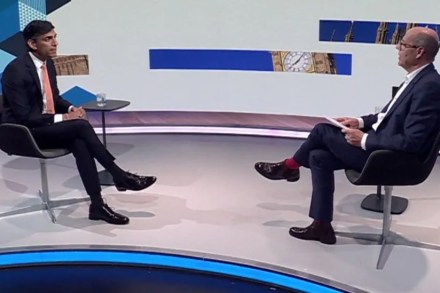
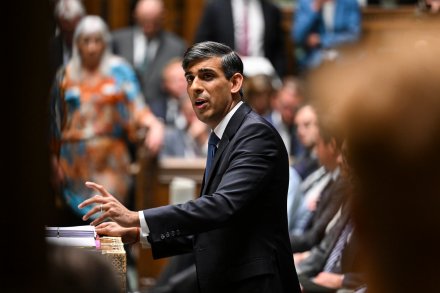
Keir Starmer came to Prime Minister's Questions (PMQs) with a spring in his step. He announced that he owned ‘a rare unsigned copy’ of Liz Truss’s memoirs. ‘The only unsigned copy,’ he added with a chortle. Then he asked Rishi Sunak to justify the calamities of Truss’s premiership.  ‘He should spend less time reading that book,’ said Rishi, ‘and a bit more time reading the deputy leader’s tax advice.’ That scuppered Sir Keir’s day in parliament. To wriggle out of trouble he played the class war card, and he accused Rishi, ‘a billionaire prime minister’, of ‘smearing a working-class woman.’  Rishi deserves great credit as a witty, fleet-footed Commons performer.

Why has the National engaged in this tedious act of defamation of the Brontës?

From our UK edition

The Divine Mrs S is a backstage satire set in the year 1800, when flouncy costumes and elaborate English prose were common cultural ornaments. On press night the venue was full of resting actors and theatrical hangers-on who adored the show’s in-jokes and rehearsal-room wisecracks. Titus Andronicus is ‘an experimental play about a pie’, says an actor. Another thesp demonstrates how to enliven a dreary line by pretending that one’s character is in love. This tedious act of defamation belongs in the bin. Or the Radio 4 early-evening comedy slot The production looks immensely stylish and the company are clearly having a ball, but the ordinary punter may find it tiresome. A few minutes of pastiche is amusing but this lasts well over two hours and it takes nothing seriously.

Exhilarating: MJ the Musical reviewed

From our UK edition

If you’ve heard good reports about MJ the Musical, believe them all and multiply everything by a hundred. As a music-and-dance spectacular, the show is as exhilarating as any Jackson produced while he was alive. The sets, the costumes, the choreography and the live band deliver an amazing collective punch. When he removes his black trilby he looks like Rishi Sunak at a karaoke bar The script, by Lynn Nottage, takes us into Jackson’s twisted personal history. He was one of ten children raised in a four-room shack in Gary, Indiana, by weirdo parents. His mother was a Jehovah’s Witness who refused to celebrate birthdays or Christmas.

If you hate the Irish, you’ll adore this play

From our UK edition

Faith Healer is a classic Oirish wrist-slasher about three sponging half-wits caught in a downward spiral of penury, booze, squalor, sexual repression, bad healthcare, murderous violence and non-stop drizzle. The mood of grinding despair never lets up for a second as the healer, Frank Hardy, along with his moaning wife and their Cockney sidekick, motors around the British Isles trying to cadge pennies from cripples in exchange for bogus cures. Every cliché in the rich thesaurus of Celtic misery is brought together in this rancid melodrama about mob justice.

Richard Madeley, Kate Andrews, Lloyd Evans, Sam McPhail and Graeme Thomson

From our UK edition

35 min listen

This week: Richard Madeley reads his diary (01:06), Kate Andrews describes how Kate-gate gripped America (06:18), Lloyd Evans warns against meddling with Shakespeare (11:38), Sam McPhail details how Cruyff changed modern football (18:17), and Graeme Thomson reads his interview with Roxy Music's Phil Manzanera (25:23).  Produced and presented by Oscar Edmondson.

Dazzling: Harry Clarke, at the Ambassadors Theatre, reviewed

From our UK edition

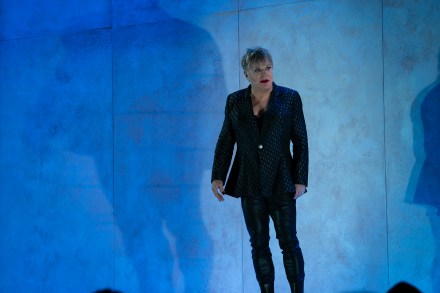
Sheridan Smith’s new show is more a mystery than a musical. Opening Night is based on a 1977 film by John Cassavetes that failed to attract a major US distributor. After opening briefly in LA, it vanished without trace. It’s a backstage drama about a tattooed drunk, Myrtle, who accepts the lead role in a new play which she starts to dislike. Realising her error, she tries to improve the script at the rehearsals and during preview performances ahead of the opening on Broadway. In real life, an actor who sabotaged a show like this would be fired and replaced. But never mind. This is make-believe. Myrtle’s attempts to vandalise the script are opposed by the producer, the director and the writer, and they each moan to her in private about her behaviour.

Directors shouldn’t meddle with Shakespeare

From our UK edition

A strip club, a prison, a mental asylum, a Great War field hospital, an addiction clinic, a Napoleonic palace. These are the typical locations for a modern production of Shakespeare, whose interpreters seem to agree that any setting is better than the one chosen by the playwright. The assumption today is that the Bard needs help from directors who can see where he went wrong and know how to get his ideas across with greater force and clarity. Aside from the Greek tragedians, no other playwright attracts this sort of condescending vandalism. If a director were to set The Cherry Orchard on a spaceship or in a Guyanese penal colony, he’d be asked to see a psychiatrist. If he did the same with The Tempest,he’d be given a grant from the local council.

PMQs is getting sadder and sadder

From our UK edition

At PMQs we saw the next year of politics condensed into a few seconds. Sir Keir Starmer asked the PM why he declined to call an election. ‘My working assumption is that the election will be in the second half of the year,’ said Rishi. So there it is. A date in October rather than January 2025. And he confidently expects to lose which is why he urged Labour’s Dan Carden to ‘chat with his shadow chancellor about her plan to impose £28 billion of tax rises on everyone.’  Sir Keir harried the PM on Rwanda which he called ‘a gimmick’ constantly. The g-word, clearly favoured by focus groups, was thrown across the aisle five times, and Rishi offered no substantial defence. Rwanda is a gift-wrapped, triple-layered vote-winner for Labour.

The price we’ll pay for citizens’ assemblies

From our UK edition

Citizens’ assemblies will transform Britain. That’s the promise made by activists from groups like Extinction Rebellion. Labour has also mooted introducing the assemblies if it wins power, even if it did later backtrack on the plans. In Waltham Forest, north-east London, the revolution has already begun: a citizens’ assembly is underway there that will determine ‘the future of neighbourhood policing.’  I entered a large gym where about 50 delegates and volunteers, seated around six tables, were listening to presentations from criminologists and youth workers. The procedures of the assembly are multi-layered and distracting, as if designed to keep everyone engaged by giving them small chores at regular intervals.

As dry as a ghost’s burp: Donmar Warehouse’s The Human Body reviewed

From our UK edition

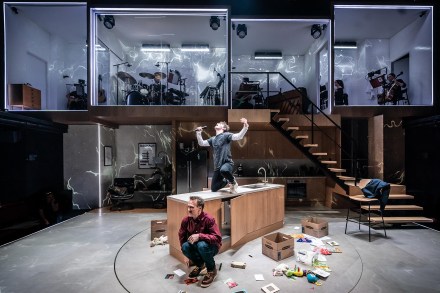
Set in 1948, The Human Body is about four heroic women fighting to create the NHS despite opposition from right-wing extremists led by the ‘snob’ and ‘warmonger’ Winston Churchill. One of these heroic women is a Labour councillor, another is a physician on a bike, the third works at Westminster for a socialist MP and the fourth is a hard-working mother married to a violent drunk. What’s odd about Lucy Kirkwood’s new play is that these four women co-exist within a single figure: Dr Elcock (Keeley Hawes).

Why I’m selling my vote to my son

From our UK edition

‘How are you going to pay me back?’ This is the eternal question of the hard-pressed dad as he hands £10 to a teenage son with an urgent appointment at the snooker club. ‘My Saturday job,’ says Isaac satirically. He hasn’t got a Saturday job and that’s my fault, apparently. His friends all have immensely well-connected parents who can offer them high-powered internships at Miramax and Coutts. But Isaac hasn’t secured one of these coveted placements. His mother, an archivist, employs an assistant who doesn’t need a second assistant. And the only professionals I know are narcissistic scribblers who sit at their laptops in a fug of crack fumes and unwashed laundry.

Rishi came under attack from all sides at PMQs

From our UK edition

The plot to shoot Diane Abbot dominated PMQs. The Tory donor, Frank Hester, reportedly said that the MP for Hackney North inspired violent thoughts in him, and made him want to ‘hate all black women.’ Sir Keir Starmer asked if Rishi Sunak was happy to be bankrolled by someone who harboured fantasies about gunshots and bullet wounds. Rishi replied in kind and trotted out insults like ‘scum’ and ‘Nazi’ that have been hurled at the Tories by Labour members over the years. He pleaded for tolerance towards his financial backer. ‘He has rightly apologised. And that remorse should be accepted.

Did we really need Warsi and Baddiel’s podcast?

From our UK edition

Podcast fever continues to dominate the political airwaves. The rewards for success are enormous and popular podcasters are able to fill concert halls around the county by delivering a couple of hours of chitchat to willing punters. Since the running costs are minimal, the profits are vast. This explains the gold-rush of media darlings and former politicians thronging into the digital space. Often the shows are billed as acrimonious punch-ups between sworn enemies like George Osborne and Ed Balls or Rory Stewart and Alastair Campbell. But the presence of a microphone seems to sweeten the mood and to turn animosity into peace and harmony. Listeners are likely to feel cheated.