Lloyd Evans

Lloyd Evans

Lloyd Evans is The Spectator's sketch-writer and theatre critic

The reality of food banks

From our UK edition

The old man next door asked me to collect his parcel from the food bank. ‘Sure,’ I said. I joined a queue of 20 starvelings outside a chapel in the East End. Most were migrants carrying rucksacks or bags for life, and there were a few Cockney mums with fidgety nippers in tow. Everyone in the queue had a mobile phone – which is normal these days – and most were dressed for the Olympic Games in Adidas sprint shoes, Nike jogging pants and Reebok breathable weightlifting shirts. I felt distinctly under-dressed in my Oxfam castoffs. Despite their keep-fit attire, many of the applicants seemed to be on the corpulent side, and one or two had stepped proudly out of the closet and were openly obese. Good for them.

Keir Starmer’s shameful behaviour at PMQs

From our UK edition

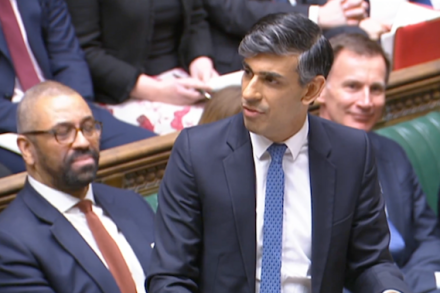
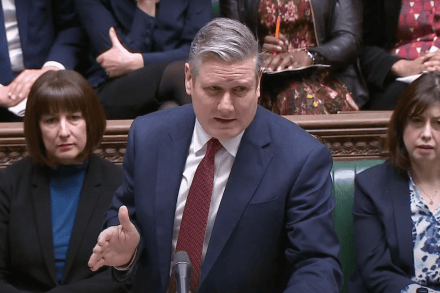
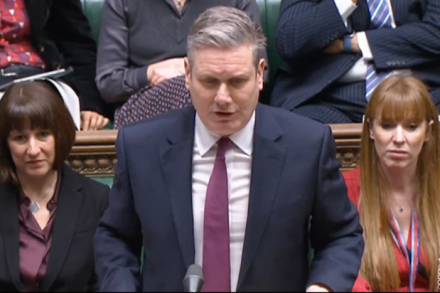
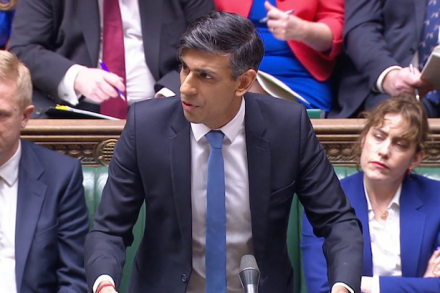
‘Apologise!’ This was the bogus battle-cry that rang out repeatedly at today’s PMQs. Rishi Sunak was asked to genuflect to his enemies and show contrition for fictional sins. The trouble began when Sir Keir Starmer told us that the mother of Brianna Ghey, a transgender girl killed in February, was present in the public gallery. ‘As a father, I can’t even imagine the pain she’s going through,’ he said, strangely placing himself at the centre of somebody else’s nightmare. Sir Keir, unaware of what was about to transpire, then mounted a routine attack on Rishi's unfulfilled pledges. The PM called this ‘a bit rich’ coming from a Labour leader who had broken ‘almost 30 promises.

Casting an able-bodied actor as Richard III isn’t ‘offensive’

From our UK edition

The row over Richard III rumbles on. Disability groups have objected to the Globe’s forthcoming production in which Michelle Terry will take the lead. The able-bodied Terry, who happens to be the Globe’s artistic director, has apologised ‘for the pain or harm that has been caused by the decision for me to play Richard III.’ This carefully worded statement gives the impression that some external authority reached ‘the decision’ to award her the role but was that really the case? Casting decisions at the Globe, she goes on, are made ‘rigorously’ and ‘always in dialogue with members of our many communities.’ One of the 'communities' she seems to have ignored is the fellowship of white male actors for whom the bulk of Shakespeare’s parts were written.

Meandering, flat and witless: Plaza Suite, at the Savoy Theatre, reviewed

From our UK edition

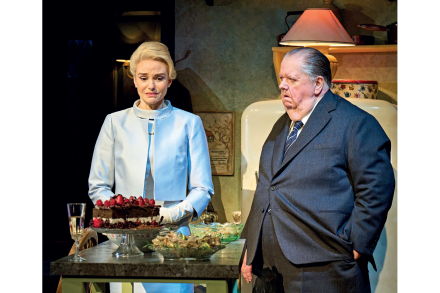
Plaza Suite is a sketch show by Neil Simon set in a luxury New York hotel in 1968. The play is rarely revived and it’s never been staged in the West End before. Simon’s idea (which Noël Coward accused him of stealing from his play Suite in Three Keys) is to place a trio of unrelated stories in the same hotel room. Simon struggles to find good endings for his set-ups and he keeps scribbling page after page of chit-chat in the hope of stumbling on a decent exit-line. He can’t do it. The dialogue sounds true to life but it’s also meandering, flat and witless – the sort of drivel you’d overhear in a vet’s waiting room.

The unexpected star of PMQs is a man you’ve never heard of

From our UK edition

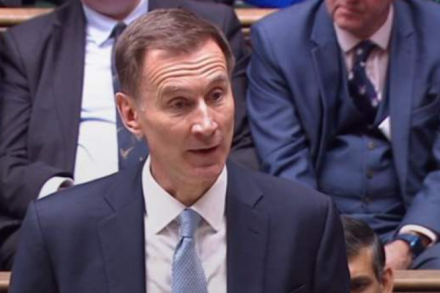
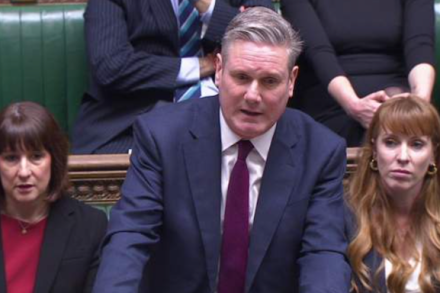
Let’s hear it for Phil. The unexpected hero of PMQs was an Iceland employee in Warrington (referred to as ‘Phil’, no surname given) whom Sir Keir Starmer held up as a victim of Tory fiscal mismanagement. Doubtless poor Phil had no idea his personal circumstances were about to dominate today’s parliamentary punch-up.  The session began as a typical ding-dong between the party leaders who accused each other of lies, failure and incompetence. Sir Keir asked Rishi Sunak to detail the costs faced by a typical mortgage-holder with a fixed-term deal that expires this week. To the surprise of no one, except Sir Keir, Rishi rattled off the precise figures. So Sir Keir ruled Rishi’s unanswerable reply out of order.

Visually world-class, dramatically second-rate: Don’t Destroy Me, at the Arcola, reviewed

From our UK edition

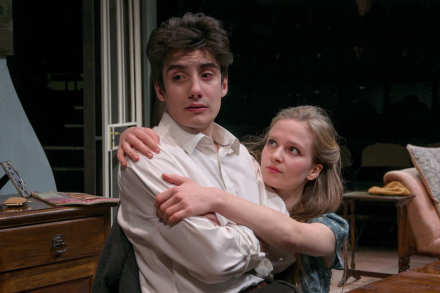
Don’t Destroy Me is the rather breathless title of Michael Hastings’s first play which he wrote when he was just 18. The material draws on his adolescent years in a south London boarding house and the action opens with an elderly husband, Leo, and his unfaithful young wife, Shani, preparing for a visit from their handsome teenage son, Sammy. Leo knows that his marriage is being undermined by Shani’s affair with a cocky spiv who lives next door but this tawdry business fades into the background as the play starts to come alive. The characters upstairs take over. The flat above is occupied by Mrs Pond, a pretentious fraud in her early forties who is desperate for romance and attention.

Has Rishi Sunak already given up?

From our UK edition

Sir Keir’s spin doctors have been enjoying clips of Tony Blair’s performances as opposition leader. In the mid-1990s, Blair took aim at John Major with this, ‘I lead my party, he follows his.’ At today’s PMQs, Sir Keir tried the same judo-throw on Rishi Sunak. ‘I’ve changed my party. He’s bullied by his,’ he said. Less smooth, somehow. The session was dominated by facile insults and awkward name-calling. Sir Keir wants to depict Rishi as a pampered globalist who spent the 2008 financial crash in the banking sector, ‘making millions betting on the misery of working families.’ At the same time, noble Sir Keir was putting ‘terrorists and murderers’ in jail.

How to write the perfect aphorism

From our UK edition

I love aphorisms. As a kid I used to pore over my parents’ book of quotations, relishing its gems and treasures like the defiant wit of Palmerston. ‘Die my dear doctor? That’s the last thing I shall do.’ ‘Sweater: garment worn by a child when its mother is feeling chilly’ The beauty of these sayings lies in their blend of adroitness, concision and wordplay. Here’s Tom Stoppard at his best: ‘what free love is free of is love.’ George Bernard Shaw’s remark, ‘we learn from history that we learn nothing from history’, contains a trivial insight: humans are doomed to repeat the mistakes of their ancestors. But he turns it into a timeless motto by using two related but subtly different meanings of ‘to learn.

Duff nonsense: The Enfield Haunting, at Ambassadors Theatre, reviewed

From our UK edition

The Enfield Haunting is a good old-fashioned horror show that wants to be a documentary as well. It’s based on a hocus-pocus yarn that made the front page of the Daily Mirror in 1977 and was swiftly forgotten. The play opens in an Enfield terrace that resembles a bomb site, complete with charred plasterwork, missing walls and ripped out floorboards. Peggy, a harassed housewife played by Catherine Tate, is struggling to cope with three teenage brats and a ghost that’s got loose in her home. Two ghosts, in fact. Peggy’s daughter, Janet, has been possessed by a demonic spirit that forces her to rasp out nonsense in a hoarse, throaty gurgle, like that annoying girl from The Exorcist.

A beginner’s guide to getting a massage

From our UK edition

 The agony could strike at any moment. Daggering pains in my lower back demanded correction. Not just painkillers, I needed a permanent cure. ‘Thai massage’ suggested the internet, so I hobbled across a tangle of east London streets and found a doorway beneath a pink neon sign. A receptionist of south Asian appearance, bundled in a white winter coat, nodded at me unsmilingly. ‘Massage?’ I asked. ‘Forty,’ she said tersely. I counted eight fivers out into her small pink hand. ‘A receipt?’ ‘No receipt,’ she said. ‘Room Two.’ She gestured behind her at a line of numbered doors. Room Two was a narrow, sweet-smelling nook with silvery wallpaper, piped Burmese music and a tiny shower cubicle.

Rishi Sunak’s nightmare PMQs

From our UK edition

Wow. For Rishi fans, that was one to forget. The Tory leader lacked his usual fluency and focus at PMQs today. Instead of a hungry whippet leaping out of the traps, we watched a fretful hare being chased around the circuit. If mockery won votes, this was a landslide Rishi’s sub-par effort coincided with a rare display of competence from Sir Keir Starmer who, for once, used clever tactics at the despatch box. He cooked up a difficult to answer question and asked it again and again. Why doesn't he do that every week? Rishi kept parroting the same non-answers which made him look feeble. The issue was Rwanda, and Sir Keir accused the government of ‘losing contact with 85 per cent of the 5,000 people earmarked for removal… Has he found them yet?’ he asked.

Donmar Warehouse declares war on Shakespeare

From our UK edition

Many of today’s theatre directors seem to believe that Shakespeare’s work was a huge mistake which they have a duty to correct. According to Max Webster, the director of Macbeth at the Donmar, Shakespeare’s error was to write scripts for the stage which would work better as radio plays. His amended version is set in a fake recording studio where every seat is equipped with a set of headphones. Spectators must test the gear first to ensure that the stereo effect is working. If not, contact a member of staff, etc. David Tennant, playing the lead, transforms himself from a nice friendly Time Lord into an irascible Scottish warlord. He’s a terrific light comedian but his mischievous off-beat style doesn’t suit the role of an earnest, bloodthirsty villain.

Rishi Sunak has nothing to lose anymore

From our UK edition

Both leaders seemed pretty chipper at PMQs. With an election likely this year, Rishi Sunak has nothing to lose and Sir Keir Starmer has everything to gain. He opened with a dig at Sunak’s plan to ‘stop the boats’ which, he alleged, the PM had never truly believed in. Sir Keir lamented that ‘the Rwanda gimmick’ has already swallowed £400 million without a single migrant being removed.  Sunak responded with some interesting footwork. He reduced the problem to ‘Albania’ and said that the number of Albanian applicants had fallen by 93 per cent. Then, with a deft shimmy, he added that Australia had used this method to prevent migrants arriving by boat.

Do we really need this unsubtle and irrelevant play about Covid?

From our UK edition

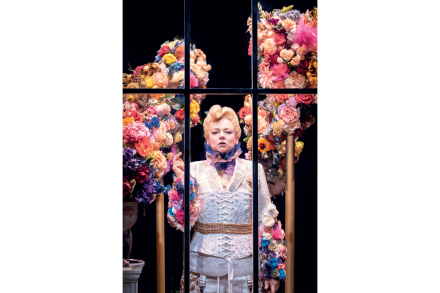
Pandemonium is a new satire about the Covid nightmare that uses the quaint style of the Elizabethan masque. Armando Iannucci’s play opens with Paul Chahidi as Shakespeare introducing a troupe of players who all speak in rhyming couplets. A golden wig descends like a signal from on high and Shakespeare transforms himself into the ‘World King’ or ‘Orbis Rex’. This jocular play reminds spectators with a low IQ that Orbis is an anagram of Boris. The former prime minister, also labelled the ‘globular squire’, is portrayed as a heartless, arrogant schemer driven by ambition and vanity. He retells the main events of the pandemic with the help of an infernal aperture which works as a dungeon, a hospital and, finally, as a version of Hades into which the characters are sucked.

Why are theatres so cowardly?

From our UK edition

Looking back at the year’s West End theatre, a few shows stand out. First, the best. Vanya, starring Andrew Scott at the Duke of York's Theatre, was an audacious and frankly barmy attempt to reimagine Chekhov’s sprawling family melodrama, Uncle Vanya, as a monologue. The risk was that it might come across as a lengthy pitch for a TV show performed by an incorrigible show-off. But Scott made it work. Copycat projects are bound to follow. One of the year’s worst efforts, A Little Life, was based on an American novel about sexual torture and self-harm. The star, James Norton, spent most of his time on stage at the Harold Pinter hacking his forearms to bits or being kicked around by various abusers. Claret got spilled all over the place. Norton tugged his clothes off as well.

You’ll want all the characters to die: Infinite Life, at the Dorfman Theatre, reviewed

From our UK edition

Infinite Life is about five American women, all dumpling-shaped, who sit in a hotel garden observing a hunger strike. Some of them haven’t touched food for days, some for weeks. ‘Don’t be afraid to puke,’ counsels one of the dumplings. ‘Puking is good.’ They pass their afternoons wittering inanely about nothing at all. One dumpling is an air hostess, another works in banking, a third has a job as a fast-food executive. Or so they claim. Each of the dumplings might be lying to the others but it would make no difference because nothing connects them, and they have no stake in the situation other than the desire to burn up time.

Thank God for Christmas, and a break from PMQs

From our UK edition

Christmas at PMQs began with a call for the government to scrap its in-house astrology team.  Greg Smith, a Tory backbencher, said he was fed up with the Office of Budget Responsibility whose latest forecast ‘was £30 billion out.’ Smith wants ‘lower taxes’ and he suggested that ‘we need a better system of financial modelling.’ In other words the OBR’s staff should be confined to a maximum security care-home for incompetent economists. He’s got a point. The OBR’s latest predictions are that Christmas Day will fall ‘in late December’ and that ‘the present decade is likely to end by 2030.’ Mind you, the OBR were right when they foresaw that Sir Keir Starmer would use at least two sham tactics at PMQs.

Sir Keir’s style is too legal to land a blow on Sunak

From our UK edition

The Rwanda treaty has established two new norms in politics. First, the Supreme Court acts as a revising chamber with the power to change government legislation. Secondly, Labour is terrified of Rwanda.  At PMQs, Sir Keir thought he was on a winning ticket and all he had to do was mock the relocation scheme and score an easy victory. He began with a joke: three Tory home secretaries have been sent to Rwanda but not one refugee.  Rishi ignored that and updated the house on Labour’s policy which is to ‘scrap the scheme if and when it is operational,’ he said. He concluded that Sir Keir ‘finds himself on the side of the people smugglers.’  Labour doesn’t realise how bad this will sound on the doorstep.

The new status symbol of the super rich: headlice

From our UK edition

To help out friends, I sometimes collect a boy from his primary school near Sloane Square. This part of London boasts the most expensive homes in Britain and the local families are served by a crop of ultra-pricey schools. The best known, Hill House, was founded in the 1940s by an eccentric army officer, ‘the Colonel’, who replaced the traditional blazers, caps and ties with a uniform of soft shoes, breeches and cravats inspired by George Mallory’s climbing kit. The Colonel’s wife chose the colours – red, brown and saffron – and the pupils became a local landmark as they marched along the King’s Road to play games at the Duke of York’s parade ground. Their red breeches suggested a nickname, ‘the Rusty Blobs’. King Charles was a Rusty Blob.

What a muddle: The House of Bernarda Alba, at the Lyttelton Theatre, reviewed

From our UK edition

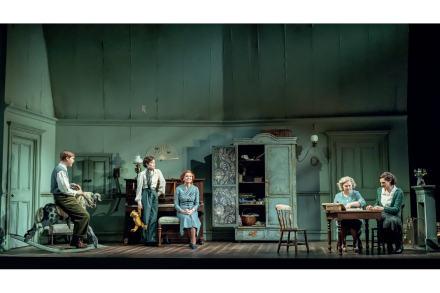
Green, green, green. Everything on stage is the same shade of eau de Nil in the NT’s version of Federico García Lorca’s classic, The House of Bernarda Alba. All the furniture and props are green. The mirrors, the walls, the crucifixes, the clocks and even the bucket and the knife-rack bear the same queasy pigment. The idea, perhaps, is to suggest a lunatic asylum or an NHS waiting room. Lorca’s steamy tale is set in a remote Spanish village in the 1930s where life is dominated by the repressive and superstitious Catholic church. The story opens with a nasty matriarch, Bernarda Alba, celebrating her husband’s death by ordering her five unmarried daughters to spend the next eight years indoors, doing embroidery. No visitors are allowed.