Lisa Haseldine

Lisa Haseldine

Lisa Haseldine is The Spectator's online commissioning editor - foreign affairs.

How Germany is preparing for war

From our UK edition

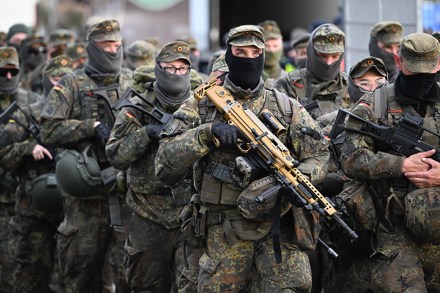
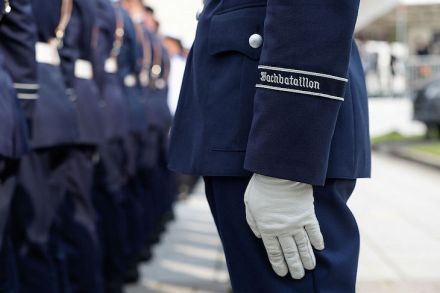
Hamburg What would happen if Russia was planning an attack on Estonia, Lithuania or Latvia – and the threat was sufficiently great that Nato felt the need to send troops east across Europe to face off against Moscow? This was the scenario the German Bundeswehr spent several days rehearsing last month, working out how the army would transport its soldiers towards Nato’s eastern flank in the event of conflict in the Baltics. For three days, the port city of Hamburg played host to the exercise Red Storm Bravo: 500 soldiers, along with roughly 300 members of the emergency services and other civilian organisations, took part – the largest military exercise in the city since the end of the Cold War.

The AfD’s mission to seduce West Germany is paying off

From our UK edition

The Alternative für Deutschland (AfD) party continued its westward march in popularity across Germany yesterday, securing third place in the local elections in the western state of North Rhine-Westphalia. Preliminary results show that, alongside the outcomes of mayoralty and district administrator elections which took place in the state, the far-right party won 14.5 per cent of the vote across the 396 municipalities which went to the polls. The liberal SPD party came in second with 22.1 per cent, while the CDU – the governing party in Berlin – secured a third of the vote, with 33.3 per cent. The German Chancellor, Friedrich Merz, will be breathing a small sigh of relief at the results this morning.

Will Germany really send troops to Ukraine?

From our UK edition

As Donald Trump presses on with his breathless efforts to secure an end to the war in Ukraine, the leaders of Europe face a task of their own. In the event of a peace deal with Russia, how will they – in place of an America that can’t be trusted as a reliable ally – provide Kyiv with the security guarantees against Russian aggression that it craves? And even if they are willing, are they capable of delivering them?

Will Zelensky’s dash to see Trump pay off?

From our UK edition

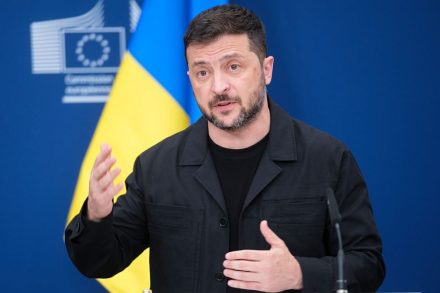
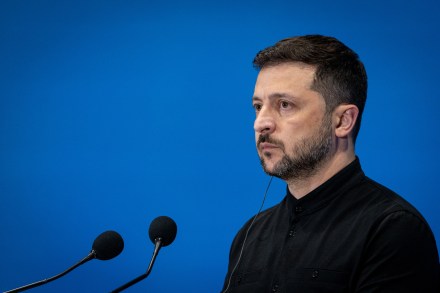
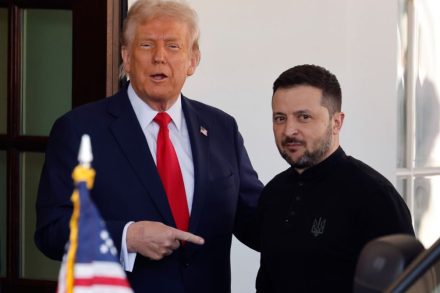
Volodymyr Zelensky is in Washington today to debrief with Donald Trump following the US President’s meeting with Vladimir Putin in Alaska on Friday. The purpose of today’s meeting at the White House will be to discuss the parameters of a potential peace deal in Ukraine. The last time Zelensky came to Washington was in February, when Trump and his vice president J.D. Vance berated the war-time leader for not being sufficiently ‘grateful’ for America’s support in the conflict with Russia. Once again, there is every possibility today’s summit will turn out as tense as it did six months ago.  Zelensky and his allies have a tall task ahead of them today Trump reportedly wants to discuss the territorial concessions demanded by Putin during Friday’s tete-a-tete.

The Alaska summit doesn’t look good for Ukraine

From our UK edition

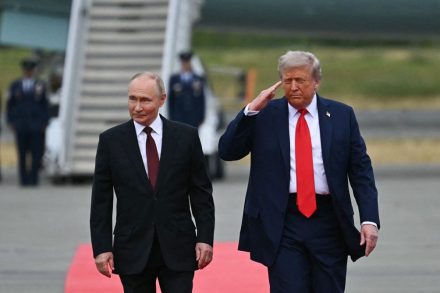
And just like that, the highly-anticipated summit between Donald Trump and Vladimir Putin in Alaska has been and gone, seemingly without very much at all to show for it. The two presidents met in Anchorage yesterday for what Trump had touted as a ‘feel-out’ meeting to lay the groundwork for negotiations to discuss an end to the war in Ukraine. But despite Trump rating the tête-à-tête a ten out of ten – ‘in the sense that we got along great’ – on substance, the American president has come away with little to prove that Putin is any closer to stopping his invasion. The signs for Ukraine don’t look promising.

Border lands, 200 years of British railways & who are the GOATs?

From our UK edition

38 min listen

First: how Merkel killed the European dream ‘Ten years ago,’ Lisa Haseldine says, ‘Angela Merkel told the German press what she was going to do about the swell of Syrian refugees heading to Europe’: ‘Wir schaffen das’ – we can handle it. With these words, ‘she ushered in a new era of uncontrolled mass migration’. ‘In retrospect,’ explains one senior British diplomat, ‘it was pretty much the most disastrous government policy of this century anywhere in Europe.’ The surge of immigrants helped swing Brexit, ‘emboldened’ people-traffickers and ‘destabilised politics’ across Europe. Ten years on, a third of the EU’s member states within the Schengen area have now imposed border controls. Can freedom of movement survive in its current form?

Europe is giving up on free movement

From our UK edition

Ten years ago on 31 August 2015, Angela Merkel told the German press what she was going to do about the swell of Syrian refugees heading to Europe. With the three fateful words ‘Wir schaffen das’ – ‘We can handle it’ – she ushered in a new era of uncontrolled mass migration, not just for Germany but for the rest of the European Union too. The then chancellor, so often described by her supporters in the press as the ‘queen of Europe’, was adamant that Germany was a ‘strong country’, which had the resources to support the sudden influx of migrants. ‘We will provide protection to all those fleeing to us from wars,’ she insisted. Whether or not other European leaders shared her confidence was immaterial.

Zelensky prepares to woo Trump one last time

From our UK edition

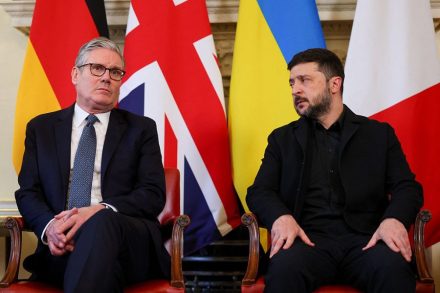
Ukrainian President Volodymyr Zelensky arrived in Berlin this morning, where at 3pm local time he will speak to Donald Trump and his vice president J.D. Vance over video alongside other European leaders to discuss an end to the war in Ukraine. The German Chancellor Friedrich Merz brokered the meeting following the news that the American president would be meeting Vladimir Putin in Alaska this coming Friday to discuss a peace deal – without Zelensky present. Ahead of Zelensky’s summit with Trump and Vance, the Ukrainian president and Merz will first convene a virtual meeting with his strongest European allies.

Is Putin calling Trump’s bluff on Ukraine?

From our UK edition

US special envoy Steve Witkoff was back in Moscow today to meet with Vladimir Putin, ahead of Donald Trump’s Friday deadline for Russia to make peace with Ukraine. This was Witkoff’s fifth meeting with Putin this year. Similar to his previous audiences with the Russian president, today’s one-on-one lasted for three hours. While broadly we know that the two will have been meeting to discuss the Ukraine war, the details or results of the meeting so far remain unknown: according to Russian presidential aides, the Kremlin will hold off from issuing public comments on what transpired until Witkoff has had a chance to brief Trump.

Wimbledon has had enough of tennis

From our UK edition

Wimbledon is the highlight of the year for tennis fans. But for local residents it’s a fortnight of traffic chaos and misery. As a born-and-bred Wimbledonian, I think I have earned the right to ask this: hasn’t the tennis all got a bit much? If you have lived in Wimbledon for any stretch of time, you will quickly learn that there is one thing, and one thing only, non-SW19ers will associate you with: the tennis. There’s a good reason why. After Christmas and Easter, the Wimbledon championships are treated much like the town ’s third annual holy feast. At least two weeks in advance, the first of the ubiquitous tennis ball decorations begin to appear in shopfronts across the borough.

Can freedom of movement survive Europe’s migrant crisis?

From our UK edition

Freedom of movement in the EU received another nail in its coffin yesterday after Poland became the latest European country to introduce checks along its shared borders with fellow member states. As of next Monday, Warsaw will start enforcing border controls at crossings shared with Germany and Lithuania.  The Polish Prime Minister Donald Tusk said that he felt compelled to introduce border checks in particular to ‘reduce the uncontrolled flows of migrants across the Polish-German border to a minimum’. The source of Tusk’s angst is the tougher border regime introduced by new German Chancellor Friedrich Merz less than two months ago.

Mikhail Khodorkovsky: ‘The West isn’t ready for Putin’s hybrid war’

From our UK edition

Mikhail Khodorkovsky is sounding the alarm. The end of the war in Ukraine, whenever it comes, won't mean the end of Vladimir Putin, he says – nor the Russian threat to the West. Moscow, he says, has never been very good at demobilising restless, traumatised soldiers. ‘There is a 600,000-strong group that took part in the fighting. The question for Putin is: ‘What to do with this group?’. Khodorkovsky fears that he knows the answer. ‘These tensions will naturally arise after two or three years,' he says. ‘And then Putin's way of thinking kicks into gear. And Putin's mentality? He has already relieved such points of tension four times [during his rule] by starting a war. This is his modus operandi.

Germany can’t avoid conscription for ever

From our UK edition

Germany’s new chancellor Friedrich Merz seems serious about his pledge to make the Bundeswehr the ‘strongest conventional army in Europe’. Yet less than a month into his chancellorship, a daunting realisation is dawning on Berlin: without resorting to conscription, there is little prospect of growing the German army or fulfilling Merz’s ambitious promise.  Merz’s defence minister Boris Pistorius – the only SPD politician from Olaf Scholz’s administration to remain in the cabinet – is in Brussels today to commit Germany to raising defence spending to 5 per cent of GDP by 2032. This spending would be split, with 3.5 per cent dedicated to core military spending, and the remaining 1.

Ukraine has dealt a stunning blow to Russia

From our UK edition

During their spat in the Oval Office in February, Donald Trump infamously told his counterpart Volodymyr Zelensky, ‘You don’t have the cards’ to play against Russia. It now appears that Trump could not have been more wrong if he tried. Yesterday, Ukraine inflicted a stunningly unexpected act of sabotage on Russia, directing a flotilla of explosive-laden drones at a number of airbases right across the country. Ukraine worked across three time zones to launch 117 drones, successfully blowing up 41 nuclear-capable bomber jets at four air bases across Russia Dubbed ‘Operation Spider’s Web’, Ukraine worked across three time zones to launch 117 drones, successfully blowing up 41 aircraft, including nuclear-capable bombers, at four air bases across Russia.

Is a mood shift on Ukraine underway in Europe?

From our UK edition

Following years of requests, pleas and false starts, Ukraine has, it appears, definitively been given permission to fire missiles deep into Russian territory. Since the start of Moscow’s invasion in 2022, Kyiv had been banned from attacking military targets on Russian soil with western-made weapons. Now, after three years of war, it appears Ukraine’s allies have indeed decided to allow it to retaliate as it sees fit. The news of the change of tack by Ukraine’s allies came yesterday from Friedrich Merz, Germany’s new chancellor. Speaking at an event in Berlin, the Chancellor revealed that ‘there are no longer any range restrictions on weapons delivered to Ukraine. Neither by the British, nor by the French, nor by us.

Putin’s ‘biggest ever’ Victory Day goes off without a hitch

From our UK edition

Not to be outdone by the celebration of VE Day across Western Europe yesterday, Vladimir Putin this morning staged his own ‘biggest ever’ Victory Day celebrations in Moscow. Over the course of Putin’s rule, the annual celebration of 9 May has gradually morphed from a solemn commemoration of the victory over Nazi Germany to being a key ideological cornerstone of his regime. Never one to miss a chance to send a message to Russia’s foreign adversaries, today’s 80th anniversary parade across Red Square – Putin’s 25th – was more a neat showcase of the President’s own militaristic and jingoistic ambitions than a tribute to the country’s past sacrifices. Everything associated with the preparations for today’s event was a degree of magnitude bigger than in previous years.

Merz’s bungled bid to become chancellor plunges Germany into crisis

From our UK edition

Just when he thought he was home and dry, Friedrich Merz has fallen at the final hurdle to become Germany’s next chancellor. At a vote in the Bundestag this morning that many thought would be a formality, the CDU leader fell short of the votes needed to confirm him as the country’s new leader by six ballots, plunging Berlin into fresh political crisis. Never before in Germany’s post-war history has a chancellor-in-waiting failed to get through the first round of Bundestag voting to elect a new leader. While 310 MPs voted in favour of Merz becoming chancellor, 307 voted against him. Damningly, this means that of the 328 MPs who form the ‘grand coalition’ Merz has cobbled together with the liberal SPD party, not all will have voted to make him chancellor.

The AfD’s ‘extremist’ label is a long time coming

From our UK edition

The far-right Alternative für Deutschland (AfD) party has been classified as ‘confirmed right-wing extremist’ by Germany’s domestic intelligence service. Until now, the party – which came second in federal elections in February – had been considered ‘suspected right-wing extremist’. After this upgrade, in the eyes of the Federal Office for the Protection of the Constitution (known by its German acronym BfV), the AfD and the values it holds stand in violation of Germany’s constitution. The BfV had been investigating the party for many months, finally submitting a lengthy report to the Ministry of the Interior this week.

The US mineral deal will give Ukraine fresh hope

From our UK edition

Overnight, Ukraine and the US finally signed a deal on Ukraine’s mineral reserves. The agreement, signed two months later than planned, sees the two countries set up what they have called the ‘United States-Ukraine Reconstructions Investment Fund’, the aim of which will be to attract ‘global investment’ into Ukraine following the end of the war with Russia. Until the last minute, it was unclear whether Ukraine would indeed sign on the dotted line, with sounds coming from Washington late last night that chances of the agreement being locked in over the coming day standing at ‘little better than 50-50’.

Is the US getting closer to a Ukraine deal?

From our UK edition

US special envoy Steve Witkoff arrived in Russia this morning to meet with Vladimir Putin, as Donald Trump ploughs ahead with his plan to secure a peace deal in Ukraine by hook or by crook. This is the pair’s fourth meeting in nearly as many months. Putin and Witkoff are expected to discuss Trump’s final proposal for a ceasefire in the conflict, which is believed to include American recognition of Russian control over Crimea, along with all territories occupied by Moscow since February 2022, a ban on Ukraine joining Nato and the lifting of all sanctions imposed on Russia since 2014.