Lionel Shriver

Lionel Shriver

Lionel Shriver is a columnist at The Spectator and author of We Need to Talk About Kevin, among other books.

Imagine if Remain had won but been thwarted

From our UK edition

Sometimes it’s worth addressing what didn’t happen. For one exasperating aspect of appearing on television news is leaving the studio kicking yourself for what you failed to say. Heading home from Broadcasting House, I’ll often impotently mutter all those killer arguments that fled my head when they might have counted for something. Yet during my last panel on Newsnight, the trouble wasn’t the usual deer-in-the-headlights stupor, but the fact that the lovely Emily Maitlis wouldn’t let me in. So let’s run back the tape. Alastair Campbell is allowed a long riff on (surprise) Brexit. According to him, ‘Brexit’ means all things to all people.

Forgive the IRA and we must forgive the Bloody Sunday soldiers too

From our UK edition

In my 2010 short story ‘Prepositions’, a woman has lost her husband not in 9/11 but on 9/11 — when coming to the aid of a family whose distress had nothing to do with the World Trade Center. Composed as a letter to a friend whose husband did indeed perish in the Twin Towers, the narrator expresses her dismay at being left to a lonely, private grief, while her friend’s loss is heralded in grand ceremonies in lower Manhattan every year. The point: some deaths count more than others. While all bereavements haunt on an individual level, publicly only a small, elite subsection of fatalities is exalted as especially terrible, unbearable and unjust.

Why I hate ‘the n-word’

From our UK edition

One of the depressing aspects of writing a column attuned to social hypocrisy is so rarely running short of new material. Any pundit keen to highlight the grievous injustices committed haughtily in the name of justice these days is spoilt for choice. So: Augsburg University, Minneapolis, Minnesota. A student reads aloud a quote from James Baldwin’s The Fire Next Time: ‘You can only be destroyed by believing that you really are what the white world calls a nigger.’ The last word causes a stir. When the white professor, Phillip Adamo, asks the class what they think of the student’s reciting of the quote verbatim, he repeats the word. The next day, the students kick Adamo out of his own classroom; since as ever the animals are running the zoo, he complies.

There’s no forgiveness in this ‘guilty until proven guilty’ era

From our UK edition

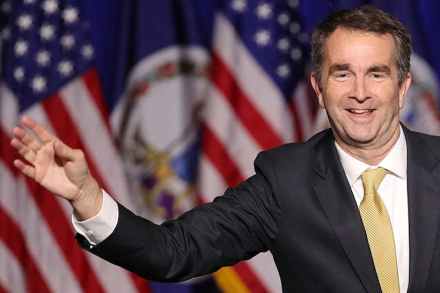
Over Christmas, I digitised slides from my twenties. In many an unidentified photograph, I didn’t recognise the scene. Where was I? Who are these total strangers? What were we finding so funny? Thus it’s credible that on being confronted with his personal page from a 1984 medical school yearbook, Democratic Virginian governor Ralph Northam wavered: presumably that’s him in the photograph; no, on second thoughts, it couldn’t be. The photo quality is poor, and the two jaunty figures holding cans of beer are disguised — one in blackface, the other in Ku Klux Klan robes. I’m more familiar with Virginia than many of the Americans nationwide clamouring for Northam to resign.

Without forgiveness, we’re all doomed

From our UK edition

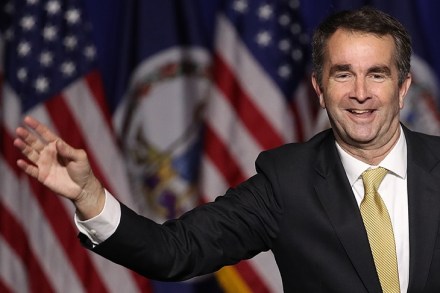
Over Christmas, I digitised slides from my twenties. In many an unidentified photograph, I didn’t recognise the scene. Where was I? Who are these total strangers? What were we finding so funny? Thus it’s credible that on being confronted with his personal page from a 1984 medical school yearbook, Democratic Virginian governor Ralph Northam wavered: presumably that’s him in the photograph; no, on second thoughts, it couldn’t be. The photo quality is poor, and the two jaunty figures holding cans of beer are disguised — one in blackface, the other in Ku Klux Klan robes. I’m more familiar with Virginia than many of the Americans nationwide clamouring for Northam to resign.

If Eurocrats really cared about Irish farmers, they’d chuck the backstop altogether

From our UK edition

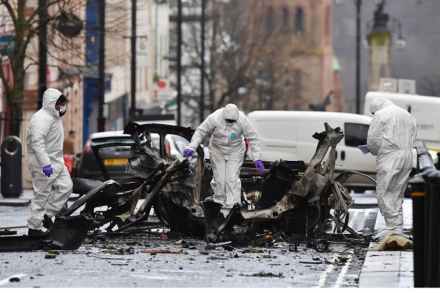
When politics goes round in circles, the columnist inevitably revisits issues that would have been sorted if only everyone read The Spectator. So: back to the Irish border — a demarcation that takes up no geographical space, but has still mysteriously dominated a dozen years of my life. Oh, well. What’s one more afternoon, then? Derry’s recent car bomb underscores a curious omission in all the Brexit argy-bargy about a ‘hard border’. Throughout, neither May, nor Barnier, nor even Varadkar ever utters the letters I, R and A. Yet the scummy residue of this vanquished potato blight lies at the heart of the hysteria about hypothetical border infrastructure that could present a ‘target’. Decorously, no one ever says target for whom.

Why reawaken the IRA?

From our UK edition

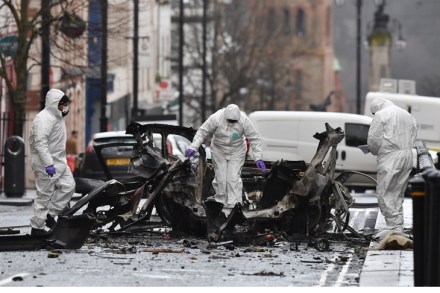
When politics goes round in circles, the columnist inevitably revisits issues that would have been sorted if only everyone read The Spectator. So: back to the Irish border — a demarcation that takes up no geographical space, but has still mysteriously dominated a dozen years of my life. Oh, well. What’s one more afternoon, then? Derry’s recent car bomb underscores a curious omission in all the Brexit argy-bargy about a ‘hard border’. Throughout, neither May, nor Barnier, nor even Varadkar ever utters the letters I, R and A. Yet the scummy residue of this vanquished potato blight lies at the heart of the hysteria about hypothetical border infrastructure that could present a ‘target’. Decorously, no one ever says target for whom.

The biggest story on the planet

From our UK edition

One of my vanities is that all my novels are different. Yet one astute journalist identified a universal thread: ‘Too many people,’ she said. From among the many other piquant factoids in Paul Morland’s The Human Tide, I was unnerved to learn that ‘Hitler was obsessed with demography’ too. Whether you also suffer from this unhealthy preoccupation or are simply shopping for a new way of looking at the world, this is a readable, trenchant, up-to-date overview of the biggest story on the planet — one in which we’re all actors. The author has a moderate bent, and doesn’t claim that population — its surging, contraction and migration — explains all of human history. But it comes awfully close. After all, the long view is astonishing.

Publishers must stand up to the mob

From our UK edition

Suppose you’re a writer with a self-destructive proclivity for sticking your neck out. Would you sign a book contract that would be cancelled in the instance of ‘sustained, widespread public condemnation of the author’? Even cautious, congenial writers are working in an era when a bland, self-evident physiological assertion like ‘women don’t have penises’ attracts a school of frenzied piranhas. So journalists would be fools to sign a document voided if, in a magazine’s ‘sole judgment’, they were the subject of ‘public disrepute, contempt, complaints or scandals’. These are the ‘morality clauses’ arising in standard publishing contracts in the wake of #MeToo.

What have migrants got against France?

From our UK edition

Pitching your tent for weeks on end in the cold and mud, with no power or plumbing. Running in a pack after accelerating lorries and clutching frantically at the back door handles. Risking not only your own life but even the lives of your children by crowding into unseaworthy dinghies, in which to drift precariously across the busiest shipping lane in the world… All this full-tilt determination to flee intolerable circumstances and get into the comparative Valhalla of the UK makes perfect sense — if the place you’re so desperate to leave behind is war-torn Syria or famine-ravaged Yemen. But the country on whose coast these yearning, immiserated would-be UK immigrants are camped, and have historically camped for 20 years, is France. Excuse me.

Great writers are found with an open mind

From our UK edition

We’re closing 2018 by republishing our ten most-read articles of the year. Here’s No. 5: Lionel Shriver on the publishing world's quest for diversity: I’d been suffering under the misguided illusion that the purpose of mainstream publishers like Penguin Random House was to sell and promote fine writing. A colleague’s forwarded email has set me straight. Sent to a literary agent, presumably this letter was also fired off to the agents of the entire Penguin Random House stable. The email cites the publisher’s ‘new company-wide goal’: for ‘both our new hires and the authors we acquire to reflect UK society by 2025.’ (Gotta love that shouty boldface.

Why Christine Blasey Ford’s testimony didn’t make me cry | 24 December 2018

From our UK edition

We’re closing 2018 by republishing our ten most-read articles of the year. Here’s No. 8: Lionel Shriver on the Brett Kavanaugh hearings: Following Christine Blasey Ford’s Senate testimony about being sexually assaulted by the US Supreme Court nominee when he was 17, numerous women on American news reported that listening to her terrible story made them cry. I didn’t cry. Indeed, my reaction to Ford’s statement was at such odds with the garment–rending anguish of my fellow Democrats that I had to wonder whether either I’d missed something or maybe there was something wrong with me. So I just read the entire transcript. I hadn’t missed anything. As for whether there’s something wrong with me, I’ll leave that for others to judge.

You can’t possibly hate cyclists more than we hate each other

From our UK edition

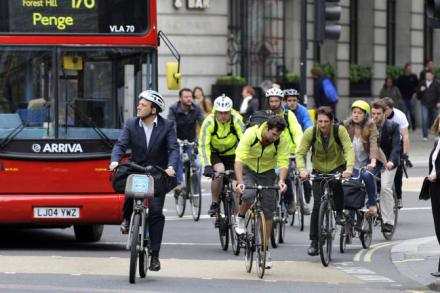
I’ve cycled for primary transportation for 53 years. Accordingly, I’m not naive about the degree of resentment — nay, loathing — that the general population harbours towards what I’m reluctant to dub the ‘cycling community’, since no group of people behaves less like brethren. You may hate cyclists, but you can’t possibly hate cyclists more than they hate each other. Nevertheless, ever since pedal-pushers in London have multiplied by a factor of a bazillion in the past few years, numerous of my encounters in traffic have entailed a degree of incendiary rage that takes even this cynical veteran of the cycling wars aback. All these incidents, if you can call them that, have conformed to the same pattern.

I love the idea of race becoming vague

From our UK edition

Behold, the most incendiary statistic in America: the Census Bureau’s projection of when whites will become a minority in what last century was ‘their own’ country. (In only 1980, 80 per cent of Americans were white. Mind, where the US leads, Europe often follows.) When in 2008 that red-letter date moved up to 2042, notes California demographer Dowell Myers: ‘People went crazy.’ After decades of progressive lobbying for multicultural inclusion, the startling proximity of this demographic tipping point is enticing a certain brand of activist to embrace the rhetoric of replacement instead. Evident during the midterms, this new approach to the melting pot is militant. If I may paraphrase: ‘Move over.

Jazz is dominated by men. So what?

From our UK edition

I’d recommend any aspiring writer to marry a jazz drummer. It’s done wonders for my powers of concentration. If I can write while my husband is practising rolls, or rehearsing with his quartet loudly enough that I don’t know why they didn’t just set up in my study, or worst of all tuning his drums (Bam. Bam. Bam. ‘Nooooo!’ Bam. Bam. Bam. ‘Nooooo!’), then I could knock off novels amid shock and awe in 2003 Iraq. As part-requirement, part-perquisite, over the years I’ve attended a range of jazz clubs, festivals, and concerts. So I can testify: the musicians are nearly all men. Jazz and jazz education make up a small world, but gender disparity has become a mighty tempest in this teacup.

A hamstrung Trump is the best-case scenario

From our UK edition

At my lecture in Sheffield last week, the final question in an otherwise temperate Q&A was antagonistic. My last Spectator column led the man to conclude that I was a Trump supporter. Was this true? I was affronted. And let me tell you, these millennials are on to something. I spend way too much time causing offence, and far too little taking it. Huffing and puffing in indignation is so much fun. Because I am not a Trumpster, I naturally rooted for the Dems to take the House in Tuesday’s midterms. Less intuitively, I did not want Democrats to take the Senate. I believe that DC is in such a perilous, fractious, hysterical and dysfunctional state that we are all safest with the American federal government in a state of maximum paralysis.

The march of the migrants poses a dilemma for the US

From our UK edition

Trump has hinted that Democrats may have been secretly funding the ‘caravan’ of more than 7,000 Honduran immigrants trooping towards the United States. I don’t think so. In the lead-up to the midterms, if any party would sponsor by far the largest organised mass migration to the US on record, Republicans would. For politically, the spectacle is a gift. Thousands of clamorous would-be asylum seekers crammed onto a bridge with no toilets, stampeding, breaking into fights, demanding to cross the Mexican border, the better to gatecrash the US: it was a premier photo op for anti-immigration Republicans. Trump has threatened to close the American border and bring in the military.

Why Christine Blasey Ford’s testimony didn’t make me cry

From our UK edition

Following Christine Blasey Ford’s Senate testimony about being sexually assaulted by the US Supreme Court nominee when he was 17, numerous women on American news reported that listening to her terrible story made them cry. I didn’t cry. Indeed, my reaction to Ford’s statement was at such odds with the garment--rending anguish of my fellow Democrats that I had to wonder whether either I’d missed something or maybe there was something wrong with me. So I just read the entire transcript. I hadn’t missed anything. As for whether there’s something wrong with me, I’ll leave that for others to judge.

What’s wrong with hearing #MeToo men’s side of the story?

From our UK edition

‘There are two sides to every story’ is an aphorism you don’t hear often lately. Ask anyone amidst a family row: most stories have more than two sides. But in the take-no-prisoners world of #MeToo, there’s only one side. All women are victims and all women are truthful. Any man who’s had a shadow of doubt cast on his sexual behaviour since his first wet dream at 12 is deserving of permanent social and professional banishment and is forever forbidden from saying a word in his own defence. As the editor-in-chief of the respected New York Review of Books found out. Ostensibly Ian Buruma resigned, but resignation over your own dead body sounds awfully like ‘sacked’ to me. His fatal error, according to the usual Twits?

One discouraging word and you’re a transphobe

From our UK edition

This column is not in my interest. But then, not for the first time. I cannot count the conversations conducted in recent years with reasonable, moderate people when expressing what should be reasonable, moderate views, during which my companions exhibit signs of drastic anxiety: fidgeting, darting pupils, twisting hands. The mumbling under the breath can border on unintelligible. If we’re in public, they will look wildly around to see who might be listening. Even in private, friends and colleagues emphasise that they’re speaking off the record. These must have been the kind of uneasy, secretive exchanges whispered between folks not wholly on board with National Socialism in 1930s Berlin. But in 2018, what gets discussed in hushed tones? Transgenderism.