Lionel Shriver

Lionel Shriver

Lionel Shriver is a columnist at The Spectator and author of We Need to Talk About Kevin, among other books.

The biggest story on the planet

From our UK edition

One of my vanities is that all my novels are different. Yet one astute journalist identified a universal thread: ‘Too many people,’ she said. From among the many other piquant factoids in Paul Morland’s The Human Tide, I was unnerved to learn that ‘Hitler was obsessed with demography’ too. Whether you also suffer from this unhealthy preoccupation or are simply shopping for a new way of looking at the world, this is a readable, trenchant, up-to-date overview of the biggest story on the planet — one in which we’re all actors. The author has a moderate bent, and doesn’t claim that population — its surging, contraction and migration — explains all of human history. But it comes awfully close. After all, the long view is astonishing.

Publishers must stand up to the mob

From our UK edition

Suppose you’re a writer with a self-destructive proclivity for sticking your neck out. Would you sign a book contract that would be cancelled in the instance of ‘sustained, widespread public condemnation of the author’? Even cautious, congenial writers are working in an era when a bland, self-evident physiological assertion like ‘women don’t have penises’ attracts a school of frenzied piranhas. So journalists would be fools to sign a document voided if, in a magazine’s ‘sole judgment’, they were the subject of ‘public disrepute, contempt, complaints or scandals’. These are the ‘morality clauses’ arising in standard publishing contracts in the wake of #MeToo.

What have migrants got against France?

From our UK edition

Pitching your tent for weeks on end in the cold and mud, with no power or plumbing. Running in a pack after accelerating lorries and clutching frantically at the back door handles. Risking not only your own life but even the lives of your children by crowding into unseaworthy dinghies, in which to drift precariously across the busiest shipping lane in the world… All this full-tilt determination to flee intolerable circumstances and get into the comparative Valhalla of the UK makes perfect sense — if the place you’re so desperate to leave behind is war-torn Syria or famine-ravaged Yemen. But the country on whose coast these yearning, immiserated would-be UK immigrants are camped, and have historically camped for 20 years, is France. Excuse me.

Great writers are found with an open mind

From our UK edition

We’re closing 2018 by republishing our ten most-read articles of the year. Here’s No. 5: Lionel Shriver on the publishing world's quest for diversity: I’d been suffering under the misguided illusion that the purpose of mainstream publishers like Penguin Random House was to sell and promote fine writing. A colleague’s forwarded email has set me straight. Sent to a literary agent, presumably this letter was also fired off to the agents of the entire Penguin Random House stable. The email cites the publisher’s ‘new company-wide goal’: for ‘both our new hires and the authors we acquire to reflect UK society by 2025.’ (Gotta love that shouty boldface.

Why Christine Blasey Ford’s testimony didn’t make me cry | 24 December 2018

From our UK edition

We’re closing 2018 by republishing our ten most-read articles of the year. Here’s No. 8: Lionel Shriver on the Brett Kavanaugh hearings: Following Christine Blasey Ford’s Senate testimony about being sexually assaulted by the US Supreme Court nominee when he was 17, numerous women on American news reported that listening to her terrible story made them cry. I didn’t cry. Indeed, my reaction to Ford’s statement was at such odds with the garment–rending anguish of my fellow Democrats that I had to wonder whether either I’d missed something or maybe there was something wrong with me. So I just read the entire transcript. I hadn’t missed anything. As for whether there’s something wrong with me, I’ll leave that for others to judge.

You can’t possibly hate cyclists more than we hate each other

From our UK edition

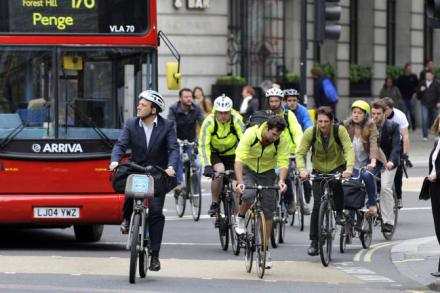
I’ve cycled for primary transportation for 53 years. Accordingly, I’m not naive about the degree of resentment — nay, loathing — that the general population harbours towards what I’m reluctant to dub the ‘cycling community’, since no group of people behaves less like brethren. You may hate cyclists, but you can’t possibly hate cyclists more than they hate each other. Nevertheless, ever since pedal-pushers in London have multiplied by a factor of a bazillion in the past few years, numerous of my encounters in traffic have entailed a degree of incendiary rage that takes even this cynical veteran of the cycling wars aback. All these incidents, if you can call them that, have conformed to the same pattern.

I love the idea of race becoming vague

From our UK edition

Behold, the most incendiary statistic in America: the Census Bureau’s projection of when whites will become a minority in what last century was ‘their own’ country. (In only 1980, 80 per cent of Americans were white. Mind, where the US leads, Europe often follows.) When in 2008 that red-letter date moved up to 2042, notes California demographer Dowell Myers: ‘People went crazy.’ After decades of progressive lobbying for multicultural inclusion, the startling proximity of this demographic tipping point is enticing a certain brand of activist to embrace the rhetoric of replacement instead. Evident during the midterms, this new approach to the melting pot is militant. If I may paraphrase: ‘Move over.

Jazz is dominated by men. So what?

From our UK edition

I’d recommend any aspiring writer to marry a jazz drummer. It’s done wonders for my powers of concentration. If I can write while my husband is practising rolls, or rehearsing with his quartet loudly enough that I don’t know why they didn’t just set up in my study, or worst of all tuning his drums (Bam. Bam. Bam. ‘Nooooo!’ Bam. Bam. Bam. ‘Nooooo!’), then I could knock off novels amid shock and awe in 2003 Iraq. As part-requirement, part-perquisite, over the years I’ve attended a range of jazz clubs, festivals, and concerts. So I can testify: the musicians are nearly all men. Jazz and jazz education make up a small world, but gender disparity has become a mighty tempest in this teacup.

A hamstrung Trump is the best-case scenario

From our UK edition

At my lecture in Sheffield last week, the final question in an otherwise temperate Q&A was antagonistic. My last Spectator column led the man to conclude that I was a Trump supporter. Was this true? I was affronted. And let me tell you, these millennials are on to something. I spend way too much time causing offence, and far too little taking it. Huffing and puffing in indignation is so much fun. Because I am not a Trumpster, I naturally rooted for the Dems to take the House in Tuesday’s midterms. Less intuitively, I did not want Democrats to take the Senate. I believe that DC is in such a perilous, fractious, hysterical and dysfunctional state that we are all safest with the American federal government in a state of maximum paralysis.

The march of the migrants poses a dilemma for the US

From our UK edition

Trump has hinted that Democrats may have been secretly funding the ‘caravan’ of more than 7,000 Honduran immigrants trooping towards the United States. I don’t think so. In the lead-up to the midterms, if any party would sponsor by far the largest organised mass migration to the US on record, Republicans would. For politically, the spectacle is a gift. Thousands of clamorous would-be asylum seekers crammed onto a bridge with no toilets, stampeding, breaking into fights, demanding to cross the Mexican border, the better to gatecrash the US: it was a premier photo op for anti-immigration Republicans. Trump has threatened to close the American border and bring in the military.

Why Christine Blasey Ford’s testimony didn’t make me cry

From our UK edition

Following Christine Blasey Ford’s Senate testimony about being sexually assaulted by the US Supreme Court nominee when he was 17, numerous women on American news reported that listening to her terrible story made them cry. I didn’t cry. Indeed, my reaction to Ford’s statement was at such odds with the garment--rending anguish of my fellow Democrats that I had to wonder whether either I’d missed something or maybe there was something wrong with me. So I just read the entire transcript. I hadn’t missed anything. As for whether there’s something wrong with me, I’ll leave that for others to judge.

What’s wrong with hearing #MeToo men’s side of the story?

From our UK edition

‘There are two sides to every story’ is an aphorism you don’t hear often lately. Ask anyone amidst a family row: most stories have more than two sides. But in the take-no-prisoners world of #MeToo, there’s only one side. All women are victims and all women are truthful. Any man who’s had a shadow of doubt cast on his sexual behaviour since his first wet dream at 12 is deserving of permanent social and professional banishment and is forever forbidden from saying a word in his own defence. As the editor-in-chief of the respected New York Review of Books found out. Ostensibly Ian Buruma resigned, but resignation over your own dead body sounds awfully like ‘sacked’ to me. His fatal error, according to the usual Twits?

One discouraging word and you’re a transphobe

From our UK edition

This column is not in my interest. But then, not for the first time. I cannot count the conversations conducted in recent years with reasonable, moderate people when expressing what should be reasonable, moderate views, during which my companions exhibit signs of drastic anxiety: fidgeting, darting pupils, twisting hands. The mumbling under the breath can border on unintelligible. If we’re in public, they will look wildly around to see who might be listening. Even in private, friends and colleagues emphasise that they’re speaking off the record. These must have been the kind of uneasy, secretive exchanges whispered between folks not wholly on board with National Socialism in 1930s Berlin. But in 2018, what gets discussed in hushed tones? Transgenderism.

Taking offence has become a blood sport

In a recent column, I vowed to return to a point made in passing. To refresh your memory, the American magazine the Nation printed a formal apology for running a harmless 14-line poem by a white writer about homelessness. The poet’s sins: using the word ‘cripple’ and adopting a voice lightly evoking what I gather we’re now to call ‘AAVE’: African-American Vernacular English. Facebookers were incensed, comments huffy. The poet apologised, too. I decried this ritual progressive self-abasement as cowardly and undignified. But it’s worth taking a second look at that story as a prime example of screaming emotional fraudulence in the public sphere.

Identity politics are by definition racist

From our UK edition

To mark last weekend’s one-year anniversary of the violent right-wing demonstrations in Charlottesville, Virginia, a meagre two dozen card-carrying white supremacists showed up in the town, vs thousands of anti-racism protesters — proportions that may reflect the nation as a whole. Nevertheless, ever since the 2017 rally, the American left has thrown around the pejorative ‘white supremacist’ with such abandon that you’d think the country was jagged with peaked white hats from sea to shining sea. By fits and starts, the past 50 years have seen equality of opportunity for minorities in the States improve dramatically. Yet racial rhetoric, and the overall touch-and-feel of race relations on the ground, is deteriorating.

No apology is ever enough for the digital mob

Promoting physical fitness, the left has developed a bracing set of competitive callisthenics. Participants vie over who can complete a marathon crawl on the belly like a reptile, who can flop onto the floor in a pose of the greatest prostration, and who can bend over the farthest, pants down, while begging to have large pieces of furniture shoved up the backside. Athletic displays of public remorse also constitute an increasingly popular spectator sport. The young American poet Anders Carlson--Wee was excited at first about getting ‘How-To’ published in a July issue of the Nation, a storied New Statesman-style weekly.

Remainers will win. The powerful always do

From our UK edition

Before the referendum, I predicted behind closed doors that even if Leave improbably prevailed, Britain’s political establishment would ensure that for all practical purposes the UK stayed in the EU. ‘So Britain wouldn’t be called a “member” anymore,’ I supposed to my husband, ‘but, you know, an “associated affiliate once removed” or something.’ I might as well have said, ‘We’ll join a customs partnership.’ I’ve never been more depressed by being right. The drift seems unmistakable.

You don’t win an argument by getting personal

From our UK edition

‘If you see anybody from that cabinet in a restaurant,’ Democratic Representative Maxine Waters railed to a California rally last month, ‘in a department store, at a gasoline station, you get out and you create a crowd. And you push back on them. And you tell them they’re not welcome any more, anywhere.’ So this is the way Americans do politics these days. It’s roll-up-the-sleeves down-and-dirty, and it’s personal. Democratic activists have indeed harassed, hounded and heckled members of the Trump administration during their downtime at movie theatres, restaurants, and their own homes. Trump’s press secretary, Sarah Huckabee Sanders, was ejected from a Lexington, Virginia restaurant because of the perceived toxicity of her politics.

Don’t fight racism with racism

Dear 2016 WriteNow mentees, Thanks so much for your open letter to me. It seems only good manners for me to write back. You’re rightly proud of having been admitted to a challenging programme at Penguin Random House that mentors gifted young minority authors and helps to cultivate their talents. My own publisher, HarperCollins, runs a similar programme, which enjoys my full support. Such proactive outreach is exactly the approach I endorse for helping to vary the voices on our bookshelves. That is why my column of a fortnight ago said not one discouraging word about WriteNow. Indeed, I made no reference to your programme whatsoever.

Penguin wants its authors to represent all UK minorities. What about just publishing good books?

I’d been suffering under the misguided illusion that the purpose of mainstream publishers like Penguin Random House was to sell and promote fine writing. A colleague’s forwarded email has set me straight. Sent to a literary agent, presumably this letter was also fired off to the agents of the entire Penguin Random House stable. The email cites the publisher’s ‘new company-wide goal’: for ‘both our new hires and the authors we acquire to reflect UK society by 2025.’ (Gotta love that shouty boldface.) ‘This means we want our authors and new colleagues to reflect the UK population taking into account ethnicity, gender, sexuality, social mobility and disability.