Lionel Shriver

Lionel Shriver

Lionel Shriver is a columnist at The Spectator and author of We Need to Talk About Kevin, among other books.

Joanna Lumley, Lionel Shriver, Andrew Doyle and Jeremy Clarke

From our UK edition

27 min listen

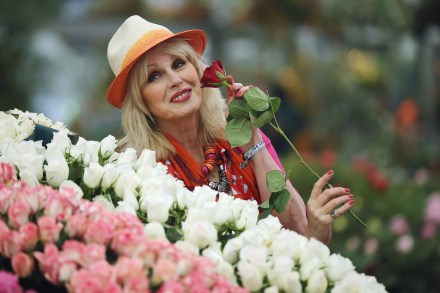
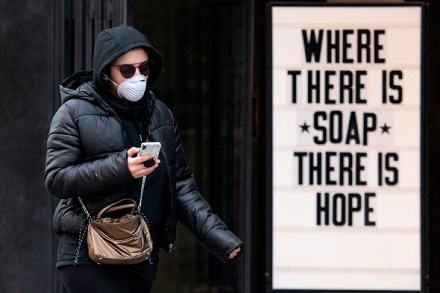
On this week's edition, Joanna Lumley recalls her meeting with Mongolia’s former champion wrestler – now the country’s president – and reflects on the joys of eating birdseed (01:14). Lionel Shriver argues that the true novelty of coronavirus is just how scared it's made us all (07:14). Andrew Doyle suggests that the SNP's hate crime bill could lead to the criminalisation of the bible (15:34). And Low Life's Jeremy Clarke shares his sadness at seeing an old neighbour and friend moving on (20:14).

Never has a virus been so oversold

From our UK edition

There’s nothing unprecedented about Covid-19 itself. The equally novel, equally infectious Asian flu of 1957 had commensurate fatalities in Britain: scaled up for today’s population, the equivalent of 42,000, while the UK’s (statistically flawed) Covid death total now stands at 46,000. Globally, the Asian flu was vastly more lethal, causing between two and four million deaths. The Hong Kong flu of 1968-69 also slew up to four million people worldwide, including 80,000 Britons. Yet in both instances, life went on. What is unprecedented: never has a virus been so oversold. Why, I’d like to sign on with Covid’s agent. What a publicity budget.

Owen Matthews, Lionel Shriver, and Peter Hitchens

From our UK edition

26 min listen

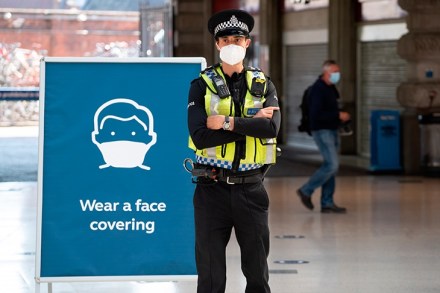
Owen Matthews on Russia's plan to unleash chaos in the West (00:50); Lionel Shriver on the peculiar similarities between the open letter and the ransom note (11:00); and Peter Hitchens on why he won't be wearing a mask when he's giving blood (19:40).

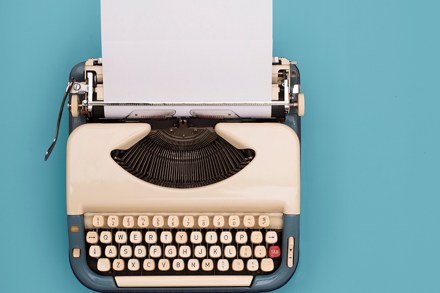
Open letters have become ransom notes

From our UK edition

In the States, the ‘open letter’ is enjoying quite the formal renaissance. Curiously, recent examples of this newly popular epistolary genre exhibit striking similarities to the ransom note. During June’s riots following George Floyd’s murder, a beloved independent bookstore in Denver called The Tattered Cover posted online that the shop would be politically impartial, the better to remain a neutral space for customers. Cue local outrage. Cue the store’s immediate volte-face: fulsome support for Black Lives Matter. The reversal proved unsatisfactory. Signed by miffed patrons and authors, an open letter to the owners listed ten demands.

The Edition: are white working class boys being left behind?

From our UK edition

38 min listen

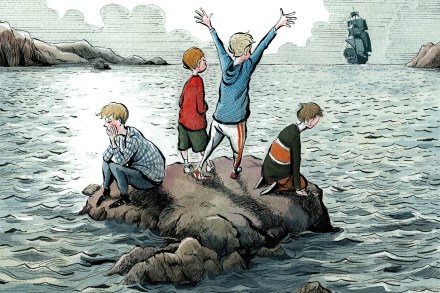
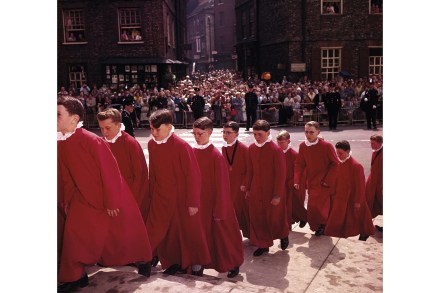
White working class boys consistently perform worse than other demographics in the UK's education system - why? (00:45) What is it like to be 'cancelled'? (14:20) And is it time to return to the office? (24:50)With the IEA's Christopher Snowdon; former Ucas head Mary Curnock Cook; journalist Kevin Myers; the Spectator's columnist Lionel Shriver; editor of the Oldie, Harry Mount; and Director of UK in a Changing Europe Anand Menon.Presented by Cindy Yu.Produced by Cindy Yu and Max Jeffery.

The vanity of ‘white guilt’

From our UK edition

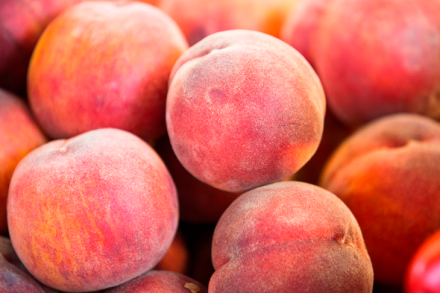
When I was about ten, on return home from church I ate a peach, the juice of which dribbled down my new pink frock. I scuttled to my room to change, bunching the dress under the bed. I emerged the picture of innocence, but I felt guilty. For weeks, the garment pulsed with accusation. Going to sleep, I always knew it was there. Sure enough, my mother discovered the wad while vacuuming, and she was furious. She could have scrubbed out the juice had I told her about it right away. To this day, I’m mindful that you can only expunge stains while they’re still fresh — and somewhere in there lurks a metaphor. I’m not prone to remembering the ingestion of individual pieces of fruit. That small memory looms as a touchstone for the experience of culpability.

A minority opinion on Covid deaths

From our UK edition

When the media have gone large on the conclusions of an overpoweringly tedious report, one of the biggest favours a columnist can do for a readership is to read the source. Friends, you owe me. I will expect flowers and chocolate. For I have located Public Health England’s ‘Beyond the Data: Understanding the impact of Covid-19 on BAME communities’ and ploughed through the whole bloody thing. This is the report that produced headlines like the Guardian’s ‘Historical racism may be behind England’s higher BAME Covid-19 rate’. Channel 4 News hit the same black-and-brown-patients-are-dying-of-racism note, which conveniently chimes with the current hair-shirtery of Black Lives Matter. A bit too conveniently, I thought, which is why I tortured myself.

Marching against racism is too easy

From our UK edition

When I first saw the footage of George Floyd being asphyxiated by a policeman’s knee on his throat, my reaction was pretty standard. My eyes bugged. I stood up. I exclaimed something like: ‘Bloody hell!’ We’ve all seen the video dozens of times now, but it’s worth clinging to that initial shock, the better to appreciate that America’s spontaneous collective revulsion in response to such grotesque abuse of power was genuinely commendable. Yet the nationwide marches a fortnight ago had a clear goal: the culprit’s arrest. If late in the day — had a civilian choked a policeman to death, he’d have been handcuffed faster than it takes to say ‘black lives matter’ — Derek Chauvin was charged.

Audio Reads: Katy Balls, Dr John Lee, and Lionel Shriver

From our UK edition

24 min listen

Hear Katy Balls on the long term impact of the Cummings affair; Dr John Lee on the problem with the way we are counting Covid deaths; and Lionel Shriver on how life isn't worth living without a little risk.Get a month's free trial of The Spectator and a free wireless charger here.

Is living without risk really living at all?

From our UK edition

Taking my life in my hands — as we all do when getting out of bed — I walked along the Thames last week. On the northern footpath east of Blackfriars Bridge, a young man ran atop the adjacent wall and jumped across a gap in the brickwork. The gap was six feet long, the wall as high. Had he missed, he’d have met all manner of hazards on either side. He gained nothing overt from that leap, only an ephemeral sense of satisfaction, yet risked broken bones or a fractured skull. As he turned heel in preparation for repeating the feat, I was both aghast and impressed. We could call that young man foolhardy.

This is not a natural disaster, but a manmade one

From our UK edition

Should our future permit an occupation so frivolous, historians years from now will make a big mistake if they blame the nauseating plummet of global GDP in 2020 directly on a novel coronavirus. After all — forgive the repetition, but certain figures bear revisiting — Covid’s roughly 290,000 deaths wouldn’t raise a blip on a graph of worldwide mortality (reminder: 58 million global deaths in 2019). Covid deaths will barely register in the big picture even if their total multiplies by several times. For maintaining a precious sense of proportion, check out some other annual global fatalities: influenza, up to 650,000. Typhoid fever, up to 160,000. Cholera, up to 140,000. Malaria, 620,000 in 2017, almost all in Africa (so who cares, right?).

If this is a war, let’s fight it like one

From our UK edition

Under the cloud of conformity that has settled over the land as a replacement for air pollution, heretics who doubt the wisdom of annihilating a nation in the name of saving it are obliged to navigate around numerous disputational booby traps. You hate old people and want them to die (though some oddballs questioning the proportionality of wholesale lockdowns are old people). You’re only concerned for individual ‘liberty’ and refuse to make personal sacrifices for the greater good, so you’re unpatriotic. All you care about is money. You’re evidently a Trump supporter, and therefore you’re stuck with endorsing his advice to cure Covid-19 by drinking bleach.

Real problems erase fake ones

From our UK edition

Last week, a friend quoted a two-year-old email of mine: ‘I’m starting to root for a plague or world war to purify western culture, burning to cinders all the petty, neurotic, witch-hunting cliques with the white heat of real problems.’ Depressed by my own foresight, I wrote back: ‘The trouble with this solution is that then you still have the real problems.’ Yup. But since the real problems aren’t going anywhere any time soon, and we’ve so little to celebrate while the world goes to hell without the comfort of even a hand basket, let’s consider the possible benefits. I’ve often remarked that identity politics is the product of prosperity.

I have herd immunity

From our UK edition

I am a type. I don’t like groups. I maintain few memberships. I question and resist authority, especially enforcement of rules for the rules’ sake. I’m leery of orthodoxy. I hold back from shared cultural enthusiasms. Everyone’s met such obstreperous specimens — the original self-isolators — and some readers out there are just like me. We’re irksome in emergencies, when the police want the crowd to evacuate and we insist on knowing why. We sometimes spite our own faces; many of us still haven’t seen Hamilton (and now we can’t). We don’t joyously belt out national anthems, and recently, to popular disgust, many of us curmudgeons don’t lean out our windows every Thursday at 8 p.m. to clap for the NHS.

The longer lockdown continues, the more imperilled we become

From our UK edition

Comically, Chinese Communist party officials have speculated that Covid-19 was planted by the US army. Yet a respectable conspiracy theorist would deduce that a virus sending the rest of the world into an hysterical, wholesale economic shutdown has ‘Made in China’ written all over it. After all, China didn’t flat-line its entire economy to contain the contagion. At the end of this debacle, then, China could rule the world — although it won’t have many solvent customers left to buy its products. The only other countries calling the shots in future could be South Korea, Japan and Sweden, having thus far resisted the stampede to lockdown.

Why Hachette were wrong to drop Woody Allen’s memoir

From our UK edition

Even amid plague, economic apocalypse, and the cancellation of 2020, dumb stuff keeps happening. Besides, loads of us will now beeline for any column not about coronavirus. Key words: Hachette, Woody Allen. See also: Douglas Murray. This isn’t the first time we’ve agreed on something. American publishing has hardly covered itself in glory regarding Woody Allen’s Apropos of Nothing, which my New York editor read on the memoir’s submission last year. ‘It was really good,’ she emailed me. ‘We took an easier way out, that is for sure. Not to be repeated!’ The easy way out, which nearly the entire industry took, was not to bid on the book. Hachette acquired the memoir with no competition and no fanfare.

An open letter to the friend who dropped me after Question Time

From our UK edition

I’ve put off sending a private email that’s been ready to go for weeks. Then last Sunday, I read Julie Burchill’s column in the Telegraph about the rigid ideological conformism amidst today’s purportedly ‘creative’ class, and it hit a nerve. Despite our sanctification of inclusivity and diversity, Burchill wrote, ‘exclusivity and groupthink still control the arts’. Because my own small experience of failing the progressive purity test this winter has been repeated up and down this country, it is not   small. Scaled up, the private becomes the public. So I’m finally sending my email as an open letter, allowing the Spectator readership in on a conversation germane to more than my social life.

Cyclists have become an easy police target

From our UK edition

Most Britons assume at the outset that any misfortune involving a cyclist is the cyclist’s fault. After all, many a two-wheeled hellion has earned contempt. But put aside the understandable cynicism. This is not one of those stories. A week ago, I was cycling around Buckingham Palace while some low-key royal whatnot was pending but not under way. The vicinity was closed to traffic but not to bikes. As usual, I was heading for Hyde Park Corner via Constitution Hill, because the bike path on the right-hand side in Green Park is insensibly ‘shared use’ — meaning, teeming with pedestrians, and I see no point in our inconveniencing one another. As I passed, an officer shouted ‘Cyclist!’ and then barked something I couldn’t make out.