Lewis Jones

Angry old man

From our UK edition

Ecce Homo Erectus. Saul Bellow, John Updike … at 77, Philip Roth is the last of three giants still standing; and he actually does stand to write, at a lectern-like desk — scriptern? This verticality is crucial to his ideas of self and spirit, and is fully evident in his fiction, which is nothing if not erect. Ecce Homo Erectus. Saul Bellow, John Updike … at 77, Philip Roth is the last of three giants still standing; and he actually does stand to write, at a lectern-like desk — scriptern? This verticality is crucial to his ideas of self and spirit, and is fully evident in his fiction, which is nothing if not erect.

Merging poetry and song

From our UK edition

The best book so far about Bob Dylan, the only one worthy of his oeuvre, is his own astonishing Chronicles, Volume One (2004), but while we wait for the next fix, Bob Dylan in America will keep the withdrawal symptoms at bay. Sean Wilentz is a history professor at Princeton, and author of books about Jefferson, Lincoln and Reagan. He is also a second-generation hipster and a Dylan fan since 1964, when he first saw him play. Wilentz planned this book, he explains, as ‘a coherent commentary on Dylan’s development, as well as his achievements, and on his connections to enduring currents in American history and culture’.

Spiv on a grand scale

From our UK edition

He insisted that he was not a pornographer but an entertainer, and told the Daily Herald that the Folies Parisienne (sic) — one of his early shows, featuring the ‘Harlem Nudes’ and their ‘taunting, scantily clad Native Mating Dance’ — was intended for family audiences, and that children were taken along by their ‘doting elders’. When he booked a celebrated American stripper to appear at the Raymond Revuebar (‘The Athenaeum of Strip Clubs’ — Spectator), she was appalled to learn that he and his wife proposed to let their five-year-old daughter watch the show. This family image was rather dented by such assurances as ‘this theatre is disinfected throughout with Jeye’s [sic] Fluid’.

Blow-out in Berlin

From our UK edition

D. B. C. Pierre’s Vernon God Little was an unusual Man Booker winner (2003). D. B. C. Pierre’s Vernon God Little was an unusual Man Booker winner (2003). Not only was it brilliant, it was also a first novel, and apparently by an American. Holden Caulfield was invoked, and Liam McIlvanney called it ‘the most vital slice of American vernacular since Huck Finn’. It turned out, though, to have been written by a Brit, ‘on the floor of a box-room in Balham’. D. B. C. Pierre is the nom de plume of Peter Finlay, an evolved childhood nickname — ‘Dirty But Clean’, which is evidently his motto as a writer. Foully satirical, he is also sweetly allegorical.

Hero of the counterculture

From our UK edition

Michael Moorcock’s career is indisputably heroic. Michael Moorcock’s career is indisputably heroic. At a rate of up to 15,000 words a day, rudimentarily equipped with exercise books, bottles of Quink and a leaky Osmiroid, he has written, among other things, novels by the score, some of which — The Cornelius Quartet, The Colonel Pyat sequence — are among the most ambitious, interesting and funny to have been published since the war. He is not taken as seriously as he might be, though, because most of the rest of his fiction is in the despised and dreaded genre of SF.

Doing what it says on the tin

From our UK edition

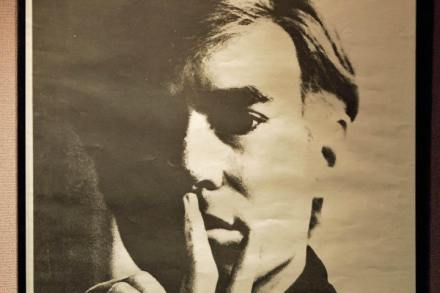
If you want to know all about Andy Warhol, just look at the surface: of my paintings and films and me, and there I am. There’s nothing behind it. Much the same thing has been said by many artists and writers, but seldom has this proposition been so tested as it is by ‘32 Campbell’s Soup Cans’. In the Factory, as he called his atelier, Warhol made paintings of photographs, casually silk-screened prints of blown-up acetates of blow-ups from contact sheets of original negatives, copies of copies, images of images. He inverted high and low culture. He expressed something, defined something, about our psychic relationship to the stuff that surrounds us, in the way that Freud or Proust did. He changed the way we see, and he changed art.

Blood relatives

From our UK edition

The last time I saw Benazir Bhutto was at Oxford, over champagne outside the Examination Schools, when she inquired piercingly of a subfusc linguist, ‘Racine? What is Racine?’ Older and richer than most undergraduates, and as a Harvard graduate presumably better educated, she was already world famous, and was obviously not at Oxford to learn about classical tragedy. The last time I saw Benazir Bhutto was at Oxford, over champagne outside the Examination Schools, when she inquired piercingly of a subfusc linguist, ‘Racine? What is Racine?’ Older and richer than most undergraduates, and as a Harvard graduate presumably better educated, she was already world famous, and was obviously not at Oxford to learn about classical tragedy.

Pretty boy blue

From our UK edition

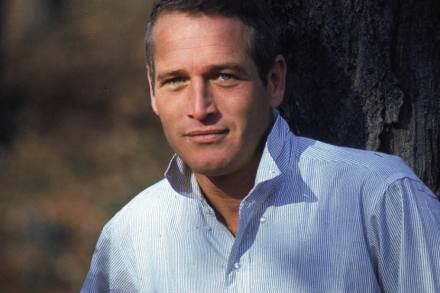
In his memoir Somebody Down Here Likes Me, Too, the boxer Rocky Graziano, on whom Paul Newman based his performance in Somebody Up There Likes Me (1956), describes the actor in perfect Runyonese: I could see right off there ain’t one thing phony about this guy. Maybe there was. He was too good-looking. In fact, the guy is pretty… He’s got bright blue eyes, but when you look in ’em you see a hard look dancing around inside. Only one other guy I see these same eyes on an’ that was another friend of mine, Frank Sinatra. When their blue eyes spot a wise guy, the eyes say, ‘Don’t fuck with me, man!

Ignoble nobles

From our UK edition

Badly behaved toffs have been a gift to writers since ancient times, and in English from Chaucer to Waugh.

Adored friends

From our UK edition

Years ago the late ‘Brookie’ Warwick, 8th Earl, asked me to ghost his memoirs. Years ago the late ‘Brookie’ Warwick, 8th Earl, asked me to ghost his memoirs. In conversation he was full of amusing scandal, but the transcript of his dictated reminiscences was painfully discreet. I suggested they might be ‘sexed up’ — a new, comparatively innocent but still obviously vulgar expression — and he looked puzzled. ‘The first boy I met at Eton was my cousin Bingham,’ the transcript read, ‘who was very stupid and rather dirty, and came to a bad end.

Agony and ecstasy

From our UK edition

Twenty years ago, when William Dalrymple published his first book, In Xanadu, travel writers tended to follow the example of Paul Theroux, whose huge success then dominated the genre, and to cast themselves as the heroes of their narratives. ‘With Nine Lives,’ explains Dalrymple in the introduction to his seventh book, ‘I have tried to invert this, and keep the narrator firmly in the shadows, so bringing the lives of the people I have met to the fore.’ The result is so exemplarily self-effacing — most of the words here are those of others — that it will disappoint some of his fans, who will miss the direct expression of his engaging personality.

Beating his demons

From our UK edition

When I first read Naked Lunch, as a teenager sleeping rough in a Greek olive grove, I thought it funny, baffling and vile, its hallucinatory horrors recalling paintings by Francis Bacon — ‘mouth and eyes are one organ that leaps forward to snap with transparent teeth’. A diet of ouzo and dodgy mousaka played havoc with my bowels, and the pages before me were soon behind me, which I thought would please William Burroughs, whose humour was decidedly cloacal. It would also have pleased Edith Sitwell, whose review suggested that such was a fitting use for the book: ‘I do not wish to spend the rest of my life,’ she sniffed, ‘with my nose nailed to other people’s lavatories.

The Old Red Lion and Dragon

From our UK edition

In the 1970s, when Byron Rogers was appointed speechwriter to the Prince of Wales, the Daily Telegraph, where he was for many years a prolific contributor, report- ed the story in a one-sentence paragraph: ‘The Prince of Wales has appointed as speechwriter Mr Byron Rogers, a colourful Welshman.’ Nearly 40 years on, he still resents that announcement — ‘as though being a colourful Welshman was a job,’ he complains, ‘like a bus driver.’ To judge from Me: The Authorised Biography, though, the Telegraph’s subs had it right — being a colourful Welshman is Byron Rogers’ job, and he is extremely good at it. He was born in monoglot Carmarthen- shire, an only child, ‘amongst people who heard a different drum’.