Lewis Jones

‘A little bit of rape is good for a man’s soul’: the outrageous life of Norman Mailer

From our UK edition

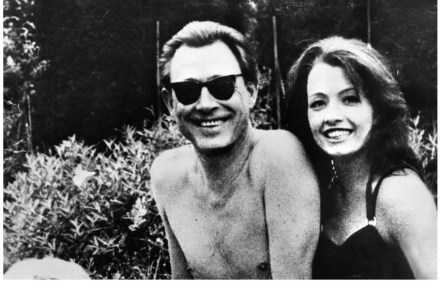
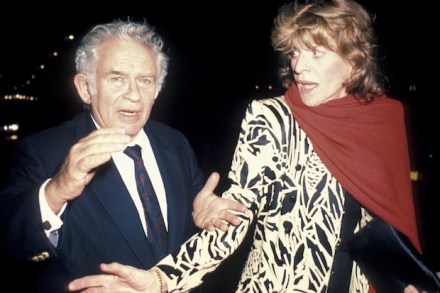
Heroically brave and mad, prodigious in his industry and appetites, Norman Mailer was an altogether excessive figure. Since his death in 2007 there have been several biographies, but this is the big one — big enough to accommodate a triple or quadruple life, let alone a double. It is also the official one, written at Mailer’s request by J. Michael Lennon, his friend, collaborator and literary executor, who is respectful and affectionate but not hagiographic. He calls Mailer a ‘genius’, which in some ways he was, but does not claim that any of his novels were ‘great’, which is just as well. He never glosses over Mailer’s habitually appalling behaviour, and though he has the right he never calls him ‘Norman’.
When Britain Burned the White House, by Peter Snow – review

From our UK edition

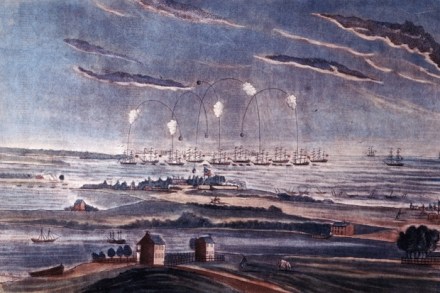
Peter Snow explains that he decided to look into this extraordinary story when he realised how few people knew about it, and was inspired to write a book by the wealth and quality of eyewitness accounts from both sides. The result is superb. When Britain Burned the White House is an exemplary work of history — lucid, witty and humane, with terrific pace, and so even-handed that it will surely be received as well in America as here. Annoyed by what he regarded as the excesses of the British empire — its fight with Napoleon interfered with America’s trade, it was in the habit of pressing American citizens into the Royal Navy, and it supported the Indian tribes who stood in the way of American settlers — President James Madison had declared war in June 1812.

The Unwinding, by George Packer – review

From our UK edition

The Unwinding is a rather classy addition to the thriving genre of American apocalypse porn. The basic thesis can be found online in Jim Kunstler’s The Clusterfuck Nation Manifesto, which runs to a few thousand words, but over hundreds of pages George Packer gives it the full literary treatment. He signals his ambition by taking as his model the USA trilogy of John Dos Passos, which spliced mash-ups of newspaper cuttings and pop lyrics, brief lives of public figures and longer episodic biographies of obscure ones, into an indignant portrait of America in the first three decades of the 20th century.

The Frontman, by Harry Browne – review

From our UK edition

According to a story which Harry Browne accepts is surely apocryphal, but which he includes in his book anyway, at a U2 gig in Glasgow the band’s singer silenced the audience and started to clap his hands slowly, whispering as he did so: ‘Every time I clap my hands a child in Africa dies.’ Someone in the audience shouted: ‘Well fuckin’ stop doin’ it then!’ The story is worth repeating because it reflects the way many people, even charitably disposed rock fans, feel about Bono. They think his name — born Paul David Hewson, he appropriated the stage name from a Dublin hearing-aid shop that advertised devices called ‘Bono Vox’ — is ineffably silly, and join Sinead O’Connor in preferring to call him Bozo.

Eleven Days in August, by Matthew Cobb – review

From our UK edition

It is fair to assume that Professor Matthew Cobb has often been asked if he is related to Professor Richard Cobb since he begins the acknowledgements of his new book by announcing that he is not. Richard Cobb wrote books about France — where he was known as l’étonnant Cobb and, according to his obituary in the Independent, ‘once greeted the dawn nude, in the company of a dozen similarly unattired men and women, in the fountains of the Place de la Concorde’ — and he had a son called Matthew; and Matthew Cobb’s father was called Richard, so the question is understandable. It must also be annoying, though, because Richard Cobb was such a stylish writer, while Matthew Cobb is less so.

The boys’ brigade

From our UK edition

British schoolboys doubtless have quite different fantasies nowadays, but for much of the last century most of them liked to imagine themselves leading their friends in guerrilla warfare against the German army. Stephen Grady is probably unique in having lived the fantasy, an experience he recalls in Gardens of Stone. Born in 1925, in the French village of Nieppe, just over the border with Belgium, he was the elder son of a Royal Artillery corporal who married a Frenchwoman and was a gardener for the Imperial War Graves Commission. In the first world war the district had been a battlefield, and the infant Stephen played marbles with shrapnel, in a house built from rubble and in gardens pegged out with bayonets.

Dirty tricks campaigns

From our UK edition

There are already two excellent books about the Profumo Affair — An Affair of State (1987) by Phillip Knightley and Caroline Kennedy, and Bringing the House Down (2007) by David Profumo — as well as five not-so-excellent ones by poor old Christine Keeler. Now Richard Davenport-Hines has marked the scandal’s 50th anniversary with An English Affair, which is set to become the standard work. He has found new material — the police files on Perec Rachman and Charles Clore, for example — and, as his subtitle suggests, he is big on historical context.

The Wiggins streak

From our UK edition

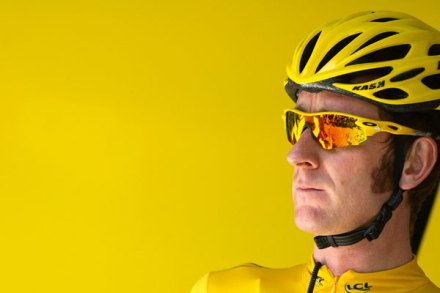
As the first British winner of the Tour de France and a gold medalist at London 2012, Bradley Wiggins is a national hero, and though he insists he is an ordinary Kilburn lad he keeps dropping hints about a knighthood. So it is only fitting that, at the age of 32 and with the help of William Fotheringham, he has written My Time (Yellow Jersey Press, £20). Beneath the dustjacket its covers are the dashing yellow of the maillot jaune, with portraits of our hero front and back and ‘WIGGO’ on the spine, the ‘O’ shaped as a Mod roundel. Inside are more than 40 photographic plates, most of which show him looking pained and moody on bicycles; there is one of him shaving, but only his face, as he sculpts those celebrated sideburns.

Agonies and ecstasies

From our UK edition

William James considered an hallucination to be ‘as good and true a sensation as if there were a real object there’, except that the ‘object happens to be not there, that is all’ — an admirable definition, and a favourite of Oliver Sacks, the eminent neurologist, who has written what he calls ‘a sort of natural history or anthology of hallucinations’, which he thinks are an essential part of the human condition. He excludes schizophrenic hallucinations, on the grounds that they demand separate consideration, but includes every other kind.

Living on the brink

From our UK edition

To write this book Aman Sethi, a journalist for the Hindu, spent five years hanging out with the casual labourers of Bara Tooti Chowk in Delhi’s Sadar Bazaar, who live and die on the streets. ‘Why,’ asks one of them, ‘are you spending all this time and money getting drunk with lafunters like us? What can we teach you?’ He explains that he is trying to write a book. Who would want to read it? ‘I don’t know. I suppose my friends will buy it and maybe a few people interested in Delhi.’ But the lafunters have taught him a lot, and for its observation, sympathy and humour A Free Man deserves a far wider audience. I still don’t know exactly what a lafunter is — or, for that matter, a chootiya, masjid or pallu.

Off the beaten tracks

From our UK edition

In 1941 Roy Plomley was 27, and living in Bushey, Herts. After stints as an estate agent, film extra and mail-order astrologer’s assistant, he had found a better billet on a wireless programme called Swing from London, and, though only a freelance, was excused compulsory enrolment in civil defence on grounds of his valuable contribution to the BBC (which then had two stations, the Home Service and the Forces Programme). In spare moments he pitched his ideas for new shows, such as This Too Too Solid Flesh: ‘The boys and I,’ replied Leslie Perowne, head of Light Entertainment, ‘have now digested your programme on the subject of corpulence … we picture all the fat listeners on this island writing rude letters.

A dark family past

From our UK edition

Like the Dombeys, Pitts, Amises et al, les Dumas are famously père et fils, but there was of course also a grand-père, Thomas-Alexandre, or ‘Alex’ the first, who was a wildly romantic figure, a gallant and tragic hero, and the defining influence on his son’s life and work. In his memoirs, of which he devotes more than 200 pages to his father’s life, the author of The Count of Monte Cristo, (Dumas père) remembers how, one night in 1806, when he was not yet four, he was woken with news of his father’s death: ‘taken by God’. He asked where God lived: heaven. Soon afterwards his mother found him with one of his father’s guns. He explained that he was going to heaven, ‘to kill God, who killed Papa’.

American enterprise

From our UK edition

The title of A.A. Gill’s latest book comes from Emma Lazarus’s poem ‘The New Colossus’ (1883), which is inscribed on the pedestal of the Statue of Liberty: ‘Give me your tired, your poor… I lift my lamp beside the golden door!’ And its subtitle is a tribute to Alistair Cooke, who was a friend and colleague of Gill’s father, and ‘the most urbane, witty and readable journalist of his century’. Urbanity is hardly Gill’s forte, but he is often witty and always readable. ‘This book,’ he explains, ‘is the view of the New World from the Old.

Bookends: One for the road

From our UK edition

Jay McInerney is best known for his first novel, Bright Lights, Big City (1984), which winningly combined sophistication and naivety. In The Juice (Bloomsbury, £14.99), his third collection of wine columns (most of them for House & Garden and the Wall Street Journal), he exhibits a similar mix of qualities, contriving to be both jaded and puppyish, sometimes simultaneously, as when he boasts of his ‘Bad to the Beaune’ T-shirt. Like the character in the film Sideways, McInerney deplores what he calls the ‘ripe, fruity, oaky, over-manipulated Frankenwine’ that has been typical of so much New World production, and loves the subtle yet earthy charm of pinot noir, above all the sublime reds of Burgundy, which he writes about with knowledge, passion and wit.

Femmes du monde

From our UK edition

At the end of Dreaming in French, in ‘A Note on Sources’, Alice Kaplan terms her narrative ‘this pièce montée’, which is the only time she neglects to supply an English translation. From a scholar of her eminence — she is a historian and critic of French modernity, a professor at Yale, and the acclaimed author of The Collaborator, The Interpreter and French Lessons — such neglect must surely be deliberate. The term was new to me, and the best I could manage was ‘assembled piece’, which in the context seems to be just a pretentious way of saying ‘book’. So I looked it up, as Kaplan probably hoped her more ignorant readers might, and I am glad I did.

Bookends: … and the inner tube

From our UK edition

In the early 1990s, when Boris Johnson was making his name as the Daily Telegraph’s Brussels correspondent, Sonia Purnell was his deputy, and last year she published a biography of him — the second, and surely not the last — entitled Just Boris: A Tale of Blond Ambition. Now follows Pedal Power: How Boris Failed London’s Cyclists (Aurum Press, £2.05), which is described as an ebook but is more accurately a (badly written) epamphlet. There are ‘votes in cycling’, as she puts it, ‘in a way that there never has been before’, and she means to sway those votes in the imminent mayoral election. She is, though, a more effective biographer than a polemicist.

Bookends: Disarming but disingenuous

From our UK edition

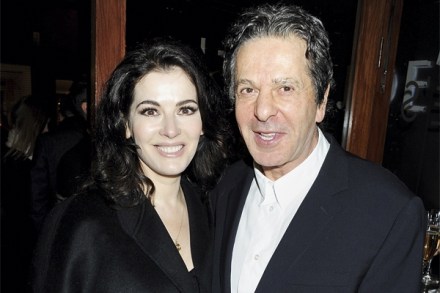
At first glance, Be the Worst You Can Be (Booth-Clibborn Editions, £9.99) by Charles Saatchi (pictured above with his wife, Nigella Lawson) seems a rather distinguished book, with its gilt pages bound in what feels like genuine Gnomitex, and this impression persists until one begins to read it. The title page explains the format — ‘Charles Saatchi answers questions from journalists and readers’ — and the first page sets the tone: ‘If you had a bumper- sticker on your car,’ asks a journalist or reader, ‘what would it be?’ And our modern Maecenas replies: ‘Jesus loves you. But I’m his favourite.’ (Boom boom!) So it’s not a distinguished book. It’s a toilet book. Nothing wrong with that, of course.

The end of the affair?

From our UK edition

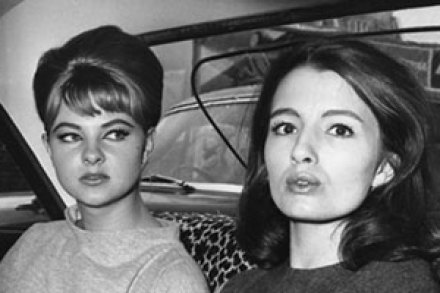
Of those caught up in the 1963 Profumo affair, the only winner seems to have been that blithe spirit Mandy Rice-Davies. Everyone else lost. Profumo’s family bore the brunt, of course, especially his son David, archetype of the boy sent crying home from school, who wrote a brilliant book about it, Bringing the House Down (2006). Harold Macmillan and the Conservative party were driven from office. Yevgeny Ivanov was recalled to Russia. Stephen Ward was hounded to death.

Journal of a disappointed man

From our UK edition

Simon Goldhill introduces his new book by recalling a lunch with his editor, who suggested he make a pilgrimage and write about it. Pilgrimages, he reflected, tend to be made alone, but he is gregarious, so decided that he needed to make up, with his wife and another couple, ‘a party of four Jews’, to keep him company and supply comic material. He is a classics don at Cambridge, where he also directs something called the Victorian Studies Group, so his editor suggested he do ‘something Victorian’, and the result is Freud’s Couch, Scott’s Buttocks, Brontë’s Grave. The title does no one any favours, but the book offers a brief and generally amiable exploration of the British literary pilgrimage.

Bookends: An unreal world

From our UK edition

Even by Hollywood standards, Carrie Fisher is pretty crazy. She was born a Hollywood princess, and remembers her parents — Debbie Reynolds and Eddie Fisher — as ‘not really people in the traditional sense’. Nor, obviously, was her stepmother Elizabeth Taylor, let alone her friend Michael Jackson. And nor is she herself, shackled, as she feels, to the image of ‘a stern-looking girl wearing some kind of metal bikini lounging on a giant drooling squid’, as Princess Leia in Star Wars, aged 19, while these days looking, as she sportingly repeats, more like Elton John.