Lewis Jones

Lewis Jones’s books of the year

From our UK edition

Even in translation, Michel Houellebecq’s novels are witty, mad (particularly in translation) and sickeningly funny. I’m reading his latest, The Map and the Territory, which won the Prix Goncourt last year. As expected, author and characters are superb in their disgust with and contempt for the world in general, and especially France, art, tourism and gastronomy, all of them hideously related. The sex and atrocities have been rationed, though; the writing has new polish and finesse; and a shocking sympathy has crept into the proceedings. Even if it did not win the Man Booker Prize after I backed it at 8-1, I thought Stephen Kelman’s Pigeon English was miraculous. I’m not saying that Sam Leith’s You Talkin’ To Me?
Settling old scores | 10 December 2011

From our UK edition

As a boy, Brian Sewell was unimpressed by opera but enraptured by pantomime which, he reveals in Outsider, sowed in him ‘an undying ambition, never fulfilled, to play the Widow Twanky in Aladdin’. Panto’s loss has been art criticism’s gain for, his tremendous erudition and exquisite prose aside, Sewell is surely the funniest art critic of our time, and easily the campest. In his ‘Prelude’ he remarks that he has ‘dug deep into indiscretion’, and ‘some may say that I have dug deeper still into prurience’. They would have a point. The first chapter, which is about his mother, or ‘principal demon’,  sets the tone.

Bookends: No joke being a comedian

From our UK edition

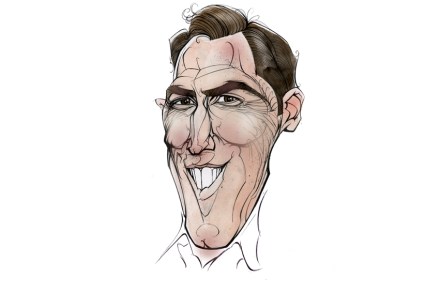
Failure is the very stuff of comedy, but not of showbiz memoirs, so Small Man in a Book (Michael Joseph, £20) is unusual. Rob Brydon’s success came quite late, with Marion and Geoff in 2001, when he was 35, after an ‘era of terrible job after terrible job’, and it makes a happy ending to his book, which is otherwise a gently amusing account of his long and gruelling Kampf. Born a Jones in Swansea, into a milieu of Sugar Puffs, Roy of the Rovers and discouraging teachers (‘You think you’re very funny, don’t you?’), he gave his first stand-up performance aged 14, with a routine pirated from The Two Ronnies’ Joke Book.

Bookends: Pearl before swine

From our UK edition

Here is the latest Bookends column from this week's issue of the Spectator: The Poor Little Rich Girl memoir, popular for at least a century, nowadays slums it in the misery department. ‘One particularly annoying aspect of being sexually abused or traumatised as a child,’ writes Ivana Lowell in Why not Say what Happened? (Bloomsbury, £25), ‘is that everyone wants you to talk about it.’ Does she mean ‘everyone’, or just her agent, publisher and ‘many psychiatrists’?

Bookends: About a boy

From our UK edition

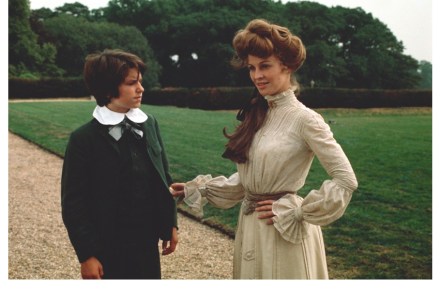
The Go-Between was L.P. Hartley’s best novel, Joseph Losey’s best film, and probably Harold Pinter’s best screenplay. In the novel, the Norfolk house and estate are fairly incidental but, as Christopher Hartop’s charming and generously illustrated Norfolk Summer: Making The Go-Between (John Adamson, £12.99) reminds us, they dominate the film. As a local historian and cinéaste, Hartop recreates the cloudy summer of 1970 — made to seem sunny mainly by sound-effects, of buzzing insects and so on — at Melton Constable Hall, where Losey, Julie Christie, Alan Bates and Edward Fox were visited by various Cokes and Barkers (Elspeth and Raffaella were extras in the cricket match).

Call of Valhalla

From our UK edition

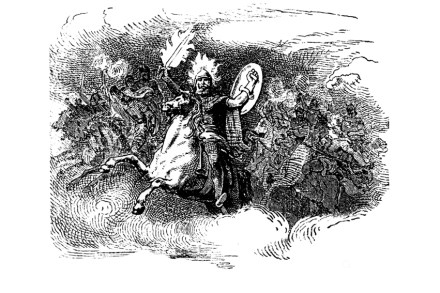
In an appendix to this powerfully poetic and beautifully produced little book, A.S. Byatt explains that when Canongate invited her to write a myth, she knew immediately which one to choose: the myth of the Icelandic sagas and Wagner’s operas — ‘Ragnarök: the myth to end all myths, the myth in which the gods themselves were all destroyed.’ When she began, she realised that she was writing for her childhood self, and the way she thought about the world when she first encountered the myth in her mother’s old copy of Asgard and the Gods, acquired as a crib for exams in Old Icelandic and Ancient Norse: ‘a solid volume, bound in green, with an intriguing, rushing image on the cover, of Odin’s Wild Hunt’.

What is it about Stieg Larsson?

From our UK edition

Stieg Larsson was a rather unsuccessful left-wing Swedish journalist who lived off coffee, cigarettes, junk food and booze, and died aged 50 after climbing seven flights of stairs, having recently sold to a publisher the series of crime novels now called The Millennium Trilogy. It was originally called The Men Who Hate Women, and in Sweden the first of the series was published under that prize-winningly awful title. The Millennium Trilogy is an improvement, but hardly has the ring of a hit. Nonetheless, it has sold millions of copies and inspired a global cult.

The last place on earth

From our UK edition

Colin Thubron has called Siberia ‘the ultimate unearthly abroad’, the ‘place from which you will not return’. Colin Thubron has called Siberia ‘the ultimate unearthly abroad’, the ‘place from which you will not return’. Many millions have not — Dostoevsky and Solzhenitsyn were lucky — but these days quite a few do, and most of them seem to write books about it. The latest is Jacek Hugo-Bader, a Polish journalist who, as a 50th birthday present to himself, travelled from Moscow to Vladivostok in an old lazhi (‘tramp’, a Soviet jeep), driving 12,968 kilometres in 55 days, at an average speed of 43.8 kmph.

Bookends: Scourge of New Labour

From our UK edition

Like all politicians, Bob Marshall-Andrews is fond of quoting himself, and Off Message (Profile Books, £16.99) includes a generous selection of his speeches and articles on such topics as Tony Blair’s messianic warmongering and David Blunkett’s plans for a police state. Less typically, perhaps, he is almost as generous in his quotation of others, such as Simon Hoggart, who has called him ‘a cross between Dennis the Menace and his dog, Gnasher’.

Bookends: Scourge of New Labour | 8 July 2011

From our UK edition

Lewis Jones has written this week's Bookends column in the latest issue of the Spectator. Here it is for readers of this blog: Like all politicians, Bob Marshall-Andrews is fond of quoting himself, and Off Message includes a generous selection of his speeches and articles on such topics as Tony Blair’s messianic warmongering and David Blunkett’s plans for a police state. Less typically, perhaps, he is almost as generous in his quotation of others, such as Simon Hoggart, who has called him ‘a cross between Dennis the Menace and his dog, Gnasher’.

Bookends: Venice improper

From our UK edition

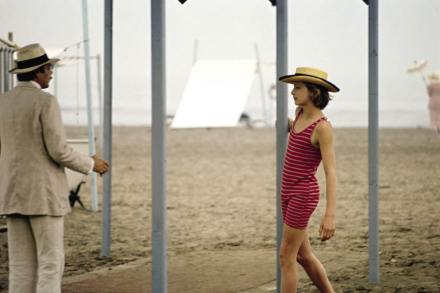
Books about Venice are almost as numerous as gondolas on the Grand Canal, but Robin Saikia is the first to write one about the Lido. The subject might be thought too insubstantial for a book of its own, and so it proves: excluding its index and appendices, The Venice Lido (Somerset Books, £6.95) runs to a modest 132 pages of generously sized print. But what this monograph lacks in volume it makes up for in warmth, charm and eccentric scholarship. Books about Venice are almost as numerous as gondolas on the Grand Canal, but Robin Saikia is the first to write one about the Lido. The subject might be thought too insubstantial for a book of its own, and so it proves: excluding its index and appendices, The Venice Lido (Somerset Books, £6.

Bookends: Venice improper | 24 June 2011

From our UK edition

Lewis Jones has written this week's Bookend in the magazine. Here it is for readers of this blog: Books about Venice are almost as numerous as gondolas on the Grand Canal, but Robin Saikia is the first to write one about the Lido. The subject might be thought too insubstantial for a book of its own, and so it proves: excluding its index and appendices, The Venice Lido runs to a modest 132 pages of generously sized print. But what this monograph lacks in volume it makes up for in warmth, charm and eccentric scholarship.

One hap after another

From our UK edition

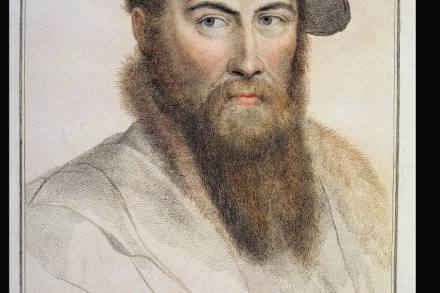
Nicola Shulman begins her rehabilitation of Thomas Wyatt by remarking that there is ‘an almost universal consensus that he can’t write’ — a consensus established within a generation of his death in 1542. Nicola Shulman begins her rehabilitation of Thomas Wyatt by remarking that there is ‘an almost universal consensus that he can’t write’ — a consensus established within a generation of his death in 1542. Even the Earl of Surrey, his friend and eulogist, acknowledged his verse to be ‘unparfited’, and by Shakespeare’s day he was a joke: Malvolio keeps a poem of Wyatt’s about him, proclaiming himself a nincompoop.

Bookends: A felicitous trouper

From our UK edition

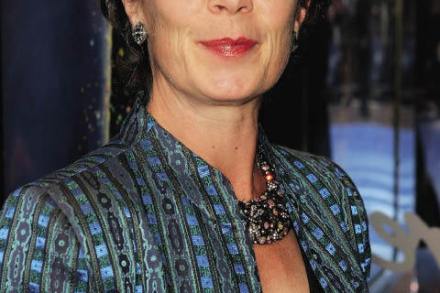
When, during rehearsals for a production of Lorca, Celia Imrie expressed an opinion about a bit of business, a fellow player said to her: ‘And what would you know about playing Lorca? You are nothing but a mere TV comedienne.’ She slapped the impertinent thespian’s face, and quite right too. Though proud to bill herself as ‘Light Ent’, Celia Imrie is more accurately a great comic actor, not only in Acorn Antiques and Coronation Street, but also in The School for Scandal and The Way of the World. When, during rehearsals for a production of Lorca, Celia Imrie expressed an opinion about a bit of business, a fellow player said to her: ‘And what would you know about playing Lorca? You are nothing but a mere TV comedienne.

Bookends: A felicitous trooper

From our UK edition

Lewis Jones has written the Bookend column in this week's issue of the Spectator. Here it is for readers of this blog: When, during rehearsals for a production of Lorca, Celia Imrie expressed an opinion about a bit of business, a fellow player said to her: ‘And what would you know about playing Lorca? You are nothing but a mere TV comedienne.’ She slapped the impertinent thespian’s face, and quite right too. Though proud to bill herself as ‘Light Ent’, Celia Imrie is more accurately a great comic actor, not only in Acorn Antiques and Coronation Street, but also in The School for Scandal and The Way of the World. Other slaps, if not literal ones, are administered elsewhere in The Happy Hoofer.

The call of the wild

From our UK edition

Annie Proulx (pronounced ‘Pru’) began her writing career — quite late, in her fifties — as E.A. Proulx, to baffle misogynist editors; then she was E. Annie Proulx, until she dropped the E and became simply Annie the Proulx. Annie Proulx (pronounced ‘Pru’) began her writing career — quite late, in her fifties — as E.A. Proulx, to baffle misogynist editors; then she was E. Annie Proulx, until she dropped the E and became simply Annie the Proulx. (Her father’s ancestors, who left Anjou for Canada in the 17th century, were called Prou or Preault; her mother’s arrived in New England soon after the Mayflower.) Her fiction tends to be about hard times in rural America, and though her new book is a memoir it runs true to form.

And then there was one . . .

From our UK edition

The English fascination with spies is gloriously reflected in our literature, from Kim to A Question of Attribution, and while their Egyptian and Israeli counterparts remain untranslated, and the Americans unreadable, English spy novelists rule. Compromised, divided and alienated, the spy is a model modern hero, and the spy’s world, with its furtive and fetishistic arcana, is an admirable theatre of identity, of English attitudes to sex and class, hypocrisy and betrayal. (The best recent spy novel is John Banville’s The Untouchable, which tells the story of Anthony Blunt more freely than Alan Bennett’s play, nudging the facts into outrageous fiction — casting Graham Greene as the villain, for example.

BOOKENDS: Pearls before swine

From our UK edition

The Poor Little Rich Girl memoir, popular for at least a century, nowadays slums it in the misery department. ‘One particularly annoying aspect of being sexually abused or traumatised as a child,’ writes Ivana Lowell in Why not Say what Happened? (Bloomsbury, £25), ‘is that everyone wants you to talk about it.’ Does she mean ‘everyone’, or just her agent, publisher and ‘many psychiatrists’? The Poor Little Rich Girl memoir, popular for at least a century, nowadays slums it in the misery department. ‘One particularly annoying aspect of being sexually abused or traumatised as a child,’ writes Ivana Lowell in Why not Say what Happened? (Bloomsbury, £25), ‘is that everyone wants you to talk about it.

Pirate and boy scout

From our UK edition

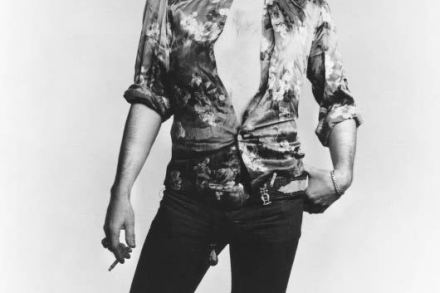
Keith Richards is a cross between Johnny B. Goode and Captain Hook. Like Johnny, he can play the guitar just like ringing a bell. Like Hook, he is selfconsciously piratical in costume, speech and behaviour— though he is modest about his contribution to Johnny Depp’s performance in the Pirates of the Caribbean. ‘All I taught him was how to walk around a corner when you’re drunk — never moving your back away from the wall.’ Johnny B. Goode never ever learned to read or write so well, but ‘Keef’ ain’t half bad. He wrote ‘Gimme Shelter’, after all, one stormy afternoon in Mayfair while his girlfriend Anita Pallenberg was in Notting Hill, making Performance with Mick.

BOOKENDS: Wifelet-on-wifelet

From our UK edition

Apparently Lord Bath is writing an online autobiography, ‘an oeuvre of some seven million words’. For those without a computer, a broadband connection or any better way of spending a few years, Nesta Wyn Ellis’s The Marquess of Bath: Lord of Love (Dynasty Press, £13.99) will make an adequate substitute. It is a repetitive and incoherent book, not obviously reliable – the author thinks that fellatio is performed on women and that Guy Burgess was heterosexual – or even strictly literate, but oddly appropriate to its subject. Apparently Lord Bath is writing an online autobiography, ‘an oeuvre of some seven million words’.