Leo McKinstry

Leo McKinstry is a British journalist, author and historian.

They took a lot of flak: the lives of the Lancaster bombers

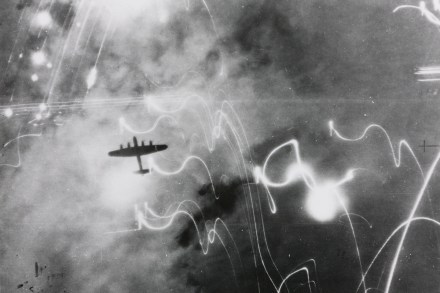
Those of us who write occasionally about military aviation can only admire the compelling personal experience that John Nichol brings to his work. A heroic RAF navigator, he was shot down, captured and tortured by the Iraqis during the first Gulf War before his release at the end of the conflict. Since his retirement from the air force, he has become a successful author, writing five novels as well as an acclaimed, best-selling study of the Spitfire fighter.Now he turns his attention to a very different, but equally iconic, British plane: the Avro Lancaster bomber. Where the Spitfire was a dashing rapier, the Lancaster was a mighty broadsword. The Spitfire’s central role was to provide protection, the Lancaster’s to inflict destruction.
Coronavirus has forced militant firefighters to help the NHS

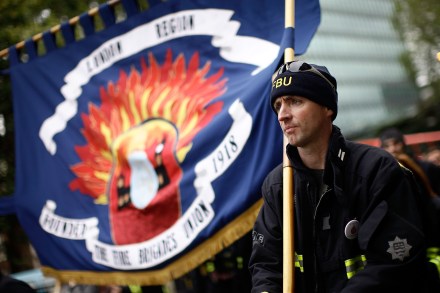
Even in the darkness of the pandemic, there is the occasional shaft of light. In its sweeping impact on our civic infrastructure, the coronavirus has achieved something that no recent governments have managed. It has forced a radical change in our outdated, under-occupied fire service by vastly enhancing the duties of firefighters. No longer will brigades just narrowly focused on attending fires. Instead, they will become a proper emergency service, complete with medical responsibilities. Under an agreement reached last week between employers, fire chiefs and the Fire Brigades Union (FBU), firefighters will embrace additional duties during this unprecedented emergency.

My Parkinson’s diagnosis has shown me how kind society really is

Like Ozzy Osbourne, I was last year diagnosed with Parkinson’s disease, the degenerative condition that impairs the functioning of the body. In a series of recent interviews, Osbourne has spoken frankly about the impact of the neurological disorder. ‘That thing has knocked the shit out of me,’ he said, Brummie-style. I’m with Ozzy. It’s done the same to me. My difficulties began about 18 months ago, when my left leg developed an involuntary twitch, which soon extended to my other limbs. My gait became increasingly awkward, alternating between a strange quickstep and a longer, more laboured shuffle, complete with stoop and limp. The effect was like a cross between John Inman in Are You Being Served?

The road less travelled

I have never been an adventurous soul. As an infant in Belfast, I would lie motionless for hours on the kitchen table of our family home, devoid of any curiosity to wander. On one occasion an anxious neighbour, having spied my immobile pose through a window, knocked on the front door to express her concern. ‘Don’t worry. He’s often like that. He won’t be moving anywhere,’ replied my mother. I have carried that inertia into adulthood, reflected in my profound dislike of travel. There is not a shred of wanderlust within me. I never fantasise about visiting distant lands, never leaf longingly through the travel supplements. Most people yearn to explore the world they inhabit, but I could not care less if I never see a new place again.

The Trade Union Bill defends workers. No wonder Jeremy Corbyn hates it

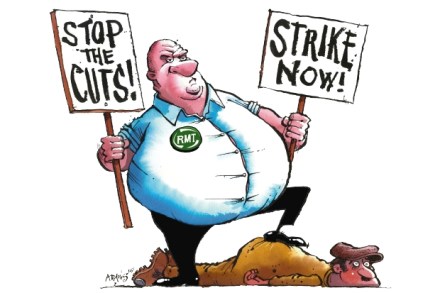
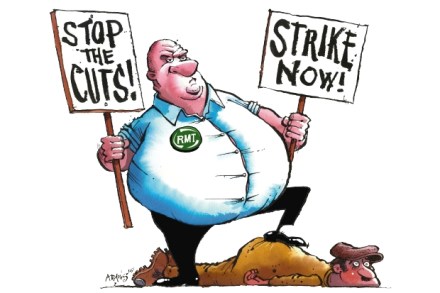
The brothers are back.  Few political groups have been more exhilarated by Jeremy Corbyn’s landslide victory than the trade unions. For years they have been regarded as the difficult relations of the Labour movement, useful mainly for their financial and organisational muscle but not much else. Blairite New Labour was openly hostile towards them, Ed Miliband equivocal. Indeed his decision to widen Labour’s voting membership, a move which dramatically assisted the Corbyn campaign, was a deliberate attempt to reduce the influence of the trade unions. But now Labour is led by someone who enthusiastically shares their anti-capitalist, anti-austerity, reform-blocking, high-taxing, state-expanding ideology.

The Trade Union Bill must tie up Thatcher’s unfinished business

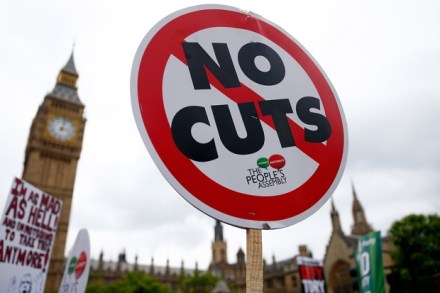
The People’s Assembly, the self-appointed left-wing pressure group behind the recent anti-austerity demonstrations, portrays itself as the voice of the masses struggling under oppressive Tory rule. It claims that no fewer than 250,000 demonstrators went to its rally in central London in June (a figure dutifully regurgitated by broadcasters). But photographs of the event in London indicate no more than 25,000 attended. The bogusness does not stop there. Despite its demotic name, the People’s Assembly is no spontaneous uprising of the angry British public.

Out of the ashes | 10 September 2015

As a nation, we are learning to accept that our firemen are more and more redundant. The Fire Brigades Union fights austerity at every turn; its spokesmen say that every reduction in station numbers or jobs is a threat to public safety. One of their campaign posters even showed David Cameron and George Osborne alongside the words, ‘They slash. You burn.’ But the statistics undermine the union’s manipulative language of doom. The cuts have been matched by a continuing decline in dangerous fires. According to figures released at the end of last month, the fire brigades attended 495,000 incidents in the year 2014–15, a decrease of 42 per cent compared with ten years ago.

Counter-strike

The People’s Assembly, the self-appointed left-wing pressure group behind the recent anti-austerity demonstrations, portrays itself as the voice of the masses struggling under oppressive Tory rule. It claims that no fewer than 250,000 demonstrators went to its rally in central London last month (a figure dutifully regurgitated by broadcasters). But photographs of the event in London indicate no more than 25,000 attended. The bogusness does not stop there. Despite its demotic name, the People’s Assembly is no spontaneous uprising of the angry British public.

The squeezed middle is a myth

[audioplayer src="http://traffic.libsyn.com/spectator/TheViewFrom22_14_August_2014_v4.mp3" title="Ed West and Ryan Bourne discuss the moaning middle class" startat=1402] Listen [/audioplayer]Almost from the moment the coalition came to power four years ago, a mood of deepening grievance has gripped parts of the middle class, fuelled by a sense that they have been the biggest losers from the government’s austerity programme. They see themselves as ‘the squeezed middle’, the ones cruelly punished by rising taxation and the loss of state support. What makes their anger all the greater is the feeling of betrayal. David Cameron should be on their side. This narrative of victimhood has become conventional wisdom.

If homophobia is a problem for bobsled, why is it OK for cricket?

Where are the threats of a boycott, the calls for isolation, the outraged letters to the Prime Minister? Where are the rainbow logos, the delegations of human rights activists, the declarations of solidarity? On 16 March Bangladesh is to host the T20 World Cup, one of the top limited overs tournaments in international cricket. All the top cricketing nations, including England, will participate. Yet the competition has not attracted so much as a bat squeak of protest from gay rights campaigners, despite the fact that Bangladesh has an appalling record of institutionalised discrimination against homosexuals. Indeed, same-sex activity remains a criminal offence in the country.

Vice is vanishing from Britain

In this week’s issue of the Spectator, Leo McKinstry argues that Britain is dropping all its most harmful habits. Here is an excerpt: 'According to the pessimistic narrative of national decline, Britain is now drowning in the effluence of moral collapse. We inhabit a country supposedly awash with vice and decadence. If we aren’t playing poker or bingo on our computer screens, then we are watching pornography. Our streets are said to be dominated by betting shops and lap-dancing clubs, by drug addicts and binge-drinkers. Yet for all its hold on the popular imagination, the idea of worsening degeneracy in modern Britain is not backed up by the evidence. Our society is becoming less disordered and depraved.

Less alcohol, fewer drugs: how the British seem to be shedding their harmful habits

Gripped by his habitual despair, the French novelist Gustave Flaubert wrote to a friend in 1872, ‘I am appalled at the state of society. I’m filled with the sadness that must have affected the Romans of the 4th century. I feel irredeemable barbarism rising from the bowels of the earth.’ Warming to his bleak scatological theme, he continued, ‘I have always tried to live in an ivory tower, but a tide of shit is beating at its walls, threatening to undermine it.’ Many commentators would feel that exactly the same words could be applied to modern Britain. According to the pessimistic narrative of national decline, Britain is now drowning in the effluence of moral collapse. We inhabit a country supposedly awash with vice and decadence.

A mayor for Whitehall

Siobhan Benita’s sanctimonious and mystifying bid to run London Ken Livingstone wept last week at the launch of his election broadcast, but when it comes to narcissistic self-pity, he’s been outdone by Siobhan Benita. ­Benita’s the other candidate in the London mayoral contest, the one who isn’t Boris or Ken or Brian or that Green woman. A former civil servant now running as an independent, she’s spent the last month wailing about lack of coverage. She claims she is the victim of a media ‘blackout’ — excluded from televised debates and banished from the airwaves. So great is her fury that she has even demanded a meeting with BBC executives.

Lack of appeal

Here we go again. Like a macabre version of Groundhog Day, mass murderer Jeremy Bamber is making yet another bid for freedom. This nasty legal saga has been dragging on for almost 26 years, ever since Bamber was first found guilty of the savage massacre at his family’s farmhouse in rural Essex. By a majority verdict, the jury at Chelmsford Crown Court decided that in the early hours of 7 August 1985, Bamber had shot dead his adoptive parents, Nevill and June, his sister Sheila Caffel, and her young twin sons, Daniel and Nicholas. No fewer than 25 rounds from an Anschutz .22 semi-automatic rifle had been fired at the victims, almost all from point-black range.

Give me strength

Carlsberg Special Brew is the beer of Churchill, Kingsley Amis – and me. They can’t ban it I have a confession to make: I am writing this article under the influence. As I tap away at my laptop, a can of lovely Carlsberg Special Brew sits on the table beside me, acting on my brain as oil acts on a car engine: lubricating the moving parts. Ever since I found that it could help to speed up my word output, strong Danish beer has been essential to my writing career, so it’s a great shock to discover that the government has Special Brew in its sights. Carlsberg Special is perhaps the most notorious of the super-strength lagers on sale in Britain today.

In defence of Special Brew

The Prime Minister today introduces plans for minimum pricing on alcohol. In this week's Spectator, Leo McKinstry mounts a defence of Special Brew, the tipple of Kingsley Amis and Churchill. I have a confession to make: I am writing this article under the influence. As I tap away at my laptop, a can of lovely Carlsberg Special Brew sits on the table beside me, acting on my brain as oil acts on a car engine: lubricating the moving parts. Ever since I found that it could help to speed up my word output, strong Danish beer has been essential to my writing career, so it’s a great shock to discover that the government has Special Brew in its sights. Carlsberg Special is perhaps the most notorious of the super-strength lagers on sale in Britain today.

In praise of the police

Outside London, at least, there are still officers who have their priorities right – as I discovered when my home was burgled The moment we stepped through the front door we knew that something was wrong. There was a bitter coldness in the hallway, accompanied by a faint sighing of the wind. On walking into the dining room, my wife and I found the cause of the chill. The main back window had been broken and opened, and shattered glass left across the floor. Immediately, we made a quick search of the rest of the house, which only confirmed our fears: we had been burgled. Almost every room showed signs of the break-in. Drawers and cupboards lay open, clothes and other possessions had been flung to the ground.

Aces high

Seventy years after the RAF repelled the Luftwaffe, the Battle of Britain continues to have a powerful resonance. The conflict not only decided Britain’s very survival as an independent nation, but was also imbued with an epic moral purpose. The epochal months of 1940 represented the classic fight between good and evil, between freedom and tyranny, this romantic symbolism given added strength by the soaring rhetoric of Winston Churchill. The 70th anniversary of the battle this summer has prompted a surge of new books and the republication of several old ones. Among the best is the comprehensive new study by James Holland, a historian who has already won international acclaim for his works on the siege of Malta and the Italian campaign.

Our lazy firemen must make a radical change

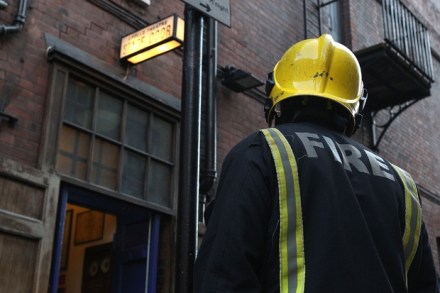
Britain’s firefighters are under-worked and inflexible, says Leo McKinstry. It’s time we created a unified emergency service A cooling breeze wafted through the plane trees under the inky-black Provence sky. In the distance, the band played as couples danced. The rural village’s annual summer celebration presented the gentlest of scenes. But suddenly there was a loud crash, followed by a commotion. I looked round to see the aftermath of a nasty accident. An elderly woman, standing near the dance area, had fallen over, badly gashing her mouth and breaking her front teeth. Within minutes, a red emergency vehicle arrived. ‘What use is that? This lady obviously needs an ambulance, not a fire appliance,’ I thought to myself. Then three men jumped out.

Naked commercial greed meets Stalinist control

When Leo McKinstry objected to his neighbours’ plan to build two blocks of flats, he quickly discovered the limits of ‘community empowerment’ under New Labour There is an increasingly Orwellian tone about the language of the Labour government. The Ministry of Truth, the state propaganda machine in Orwell’s Nineteen Eighty-Four, would have been only too pleased with the doublethink of the fashionable mantra ‘together in diversity’, endlessly repeated to justify the destructive creed of multiculturalism, or the inanity of the advertising slogan ‘the People’s Post Office’, launched at the very time when a mass cull of local post offices is underway against the wishes of the people.