Lee Langley

Lee Langley is the author of ten novels and has written several film scripts and screenplays.

Dangerous liaisons: Bad Eminence, by James Greer, reviewed

From our UK edition

Vanessa Salomon is an internationally successful translator. Clever, beautiful, privileged – ‘born in a trilingual household: French, English and money’ – she can indulge herself professionally with obscure, neglected books. About to embark on a forgotten nouveau roman by Alain Robbe-Grillet, she’s offered an irresistible assignment. A bestselling French novelist who is definitely not Michel

Murder, suicide and apocalypse: Here Goes Nothing, by Steve Toltz, reviewed

From our UK edition

Angus Mooney is dead. Freshly murdered, he’s appalled to find himself in an Afterworld, having always rejected the possibility of life after death. Moreover, he can observe his murderer getting on increasingly well with his innocent widow. Mooney’s Afterworld is a deeply unsatisfactory mixture of computerised bureaucracy and urban chaos. In a landscape undreamed of

Lasting infamy: Booth, by Karen Joy Fowler, reviewed

From our UK edition

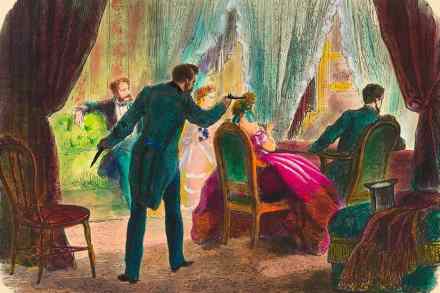
Were it not for an event on the night of 14 April 1865, John Wilkes Booth would be remembered, if at all, as an actor; brother of the more famous Edwin, and son of Junius Brutus – a footnote to the history of American theatre. But that night Booth leaped on to the stage of

A wife for King Lear — J.R. Thorp imagines another Lady Macbeth

From our UK edition

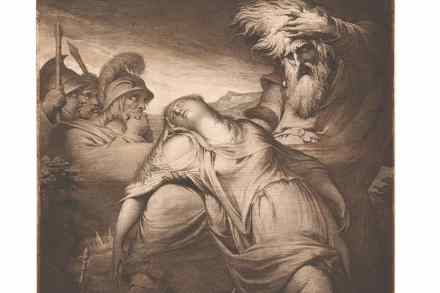
Shakespeare wastes no time on Lear’s backstory; we meet the brutal old autocrat as he divides his kingdom between two devoted daughters. Learwife begins where the play ends. The mad, broken old man and three daughters are dead; but why has a messenger brought the word to a remote nunnery where a forgotten woman paces

Brave new virtual world: The Startup Wife, by Tahmima Anam, reviewed

From our UK edition

Welcome to Utopia — not an idyllic arcadia but a secretive tech incubator in a Manhattan office block. Here a computer scientist, Asha Ray, the narrator of The Startup Wife, her charismatic husband Cyrus and best friend Jules are nervously pitching their app platform — Asha’s cutting-edge algorithm aimed at people yearning for ritual without

Ghosts of the past: The Field, by Robert Seethaler, reviewed

From our UK edition

Give dead bones a voice and they speak volumes: George Saunders’s Lincoln in the Bardo was clamorous with the departed having their say. Edgar Lee Masters, 100 years earlier, startled the American literary world with Spoon River Anthology, poems that were miniature autobiographies of the occupants of a small Illinois graveyard. Now, The Field by

Two for the road: We Are Not in the World, by Conor O’Callaghan, reviewed

From our UK edition

A father and his estranged 20-year-old daughter set off across France, sharing the driver’s cabin of a long-haul truck. This is a road trip like no other: Paddy, deracinated, footloose, divorced, taking on a temporary job for reasons that become clear later; and daughter Kitty, spiky, provocative, shaved head, grubby jeans and sweater, wrapped in

Lacrimae rerum: That Old Country Music, by Kevin Barry, reviewed

From our UK edition

Some of my happiest fiction-reading hours have been spent in the company of Kevin Barry: two short-story collections, both prize-winners, and three captivating novels. First, the baroque mayhem of City of Bohane, characters exploding on the page flashing knives and fancy footwear, its vernacular veering from Clockwork Orange argot to Joycean dazzle. A world away

As intricate as an origami sculpture: The Lost Future of Pepperharrow reviewed

From our UK edition

Steampunk, a shapeshifting and unpredictable genre, has a way of subverting the past, mischievously disordering the universe with historical what-ifs. It’s a field not normally rewarded with prizes and critical hallelujahs. Natasha Pulley’s first novel, The Watchmaker of Filigree Street, proved an exception. In a gaslit London menaced by Fenian terrorism, Nathaniel, a wide-eyed innocent,

Mystery in the Mojave desert

From our UK edition

Late one night, on a dimly lit stretch of highway in a small town in the Californian Mojave desert, an elderly Moroccan has just locked up his restaurant when he’s struck by a speeding car and left for dead. A hit and run. An accident? Or something more sinister? The only witness, a Mexican worker

Is it a Rake’s or a Pilgrim’s Progress for Rob Doyle?

From our UK edition

‘To live and die without knowing the psychedelic experience,’ says the narrator of Threshold, ‘is comparable to never having encountered literature or travelled to another continent.’ Magic mushrooms in Dublin, opioids in Thailand and San Francisco, hallucinogenic cactus in Bolivia and Peru, ketamine in India… he encounters terror, near-death and ecstasy by every means available,

You’d never believe what goes on in the Sainsbury’s car park

From our UK edition

Psychogeography takes many forms: Sebaldian gravitas, Will Self’s provocative flash and dazzle and Iain Sinclair’s jeremiads for lost innocence. Gareth Rees explored east London’s edgelands in his hallucinatory Marshlands. Now, with Car Park Life, he reveals an urban wilderness hiding in plain sight: ‘It is Morrisons in Hastings that lights the fire of my obsession.

Fire and fury

From our UK edition

Everyone behaves badly in The Polyglot Lovers — no saving graces. It’s a complex, shifting structure of sex, self-hatred and misogyny, examining what the author calls ‘the violence in the male gaze’. Its blithe disregard for social norms and finer feelings is exhilarating; it’s pitiless and scathingly funny. The women invariably make wincingly bad decisions.

A corpse in waiting

From our UK edition

Who is a hero? Javier Cercas, in his 2001 novel Soldiers of Salamis, asked the question, searching for an anonymous hero, a soldier in the Spanish civil war. The book won major prizes and transformed Cercas from a respected Spanish novelist into an international literary figure. Eighteen years on, he returns to the war with

In Pinochet’s shadow

From our UK edition

You could call The Remainder a literary kaleidoscope: look at it one way and you see how the past lays a crippling hand on the generation that follows political catastrophe; shift the focus and you’re plunged into a darkly comic road trip with a hungover trio in an empty hearse chasing a lost coffin across

The man who disappeared | 11 October 2018

From our UK edition

A novel by Javier Marías, as his millions of readers know, is never what it purports to be. Spain’s most eminent novelist, Nobel laureate in waiting, translated into more than 40 languages, Marías likes to play with existential ideas. The Infatuations was ostensibly a murder mystery; Thus Bad Begins chronicled a loss of innocence. But

Shades of Rear Window: People in the Room, by Norah Lange, reviewed

A girl at a window, hidden behind curtains, watches three women in a dimly lit drawing room in the house across the road as they sit silently smoking, hands and faces pale against their dark clothes. She invents identities for the trio: they are criminals or abandoned spinsters. Sinister or pathetic. Curiosity grows into obsession: