Laurie Penny

Laurie Penny is an author and journalist.

The haunting of Tory conference

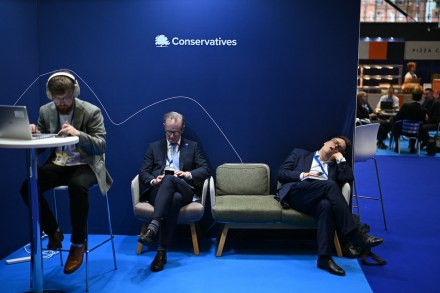
Spooky season came early to Manchester this year. Outside the convention centre, a baffled, shattered city reels from the latest round of political violence, but inside, eyeless mannequins of Margaret Thatcher stare out over an empty exhibition hall where what remains of the Conservative party tries to understand what went wrong. There’s something macabre about this Tory conference. It could be one of those pre-crash horror films where the protagonist doesn’t realise they’ve been dead all along. I’m reminded of Nicole Kidman, rattling mad-eyed around that dark mansion in The Others, fretting through her old routines, refusing to accept the reality of her self-made hell where she slaughtered her children, and then herself, and then the world moved on.
Don’t cure my autism

I admit that when Donald Trump announced he had found the answer for autism, I was curious. As an autistic person, I was hoping that whatever medieval quackery he came out with would require us to do something fun, like carry a hedgehog at all times or take heroic quantities of cocaine, both of which would certainly make the world more interesting for those of us who struggle with social cues. Leading the hunt for this miracle cure has been US Health Secretary Robert F. Kennedy Jnr, a man whose grip on reality has softened since a worm quite literally ate part of his brain.

What I learned from running my own Squid Game

You know how this story goes. The cameras are rolling. The audience is cruel. You’re trapped in the game and the game is death and the game is going out live from the heart of the state of nature where empathy is weakness and you kill each other off until there’s only one left. What will you do to survive? Who will you become if you do? This is the plot of Squid Game, Netflix’s Korean mega-hit that just drew to its gory conclusion. It is also the plot of The Hunger Games, Battle Royale, The Running Man, Chain-Gang All-Stars and The Long Walk. We have spent several decades watching desperate people slaughter each other for survival to entertain the rich and stupid.

Corbyn’s new party is Starmer’s creation

Have you ever been to an activist meeting? A proper one, not a cocktail party for potential donors. If Keir Starmer has been to one lately, I suspect he didn’t stay past the minutes or he would have been better prepared for what happens when you try to get a roomful of lefties to point in the same direction. Starmer’s team have been so busy admiring their enormous majority that it has taken them a while to realise that they are trapped with 400 left-wingers in every shade of red from post-Soviet carmine to the most delicate salmon pink, all of them high on victory and spoiling for a fight. One might as well try to herd 400 cats into formation. In our sclerotic two-party, first-past-the-post system, a majority as large as Starmer’s is meant to give the leadership a free hand.

Labour has tied itself in knots over welfare reform

The problem with having principles is that they're very expensive. This is proving an enormous headache for Starmer's government, which is still trying to slash disability benefits in plain sight rather than raise taxes, only to be forced into another embarrassing U-turn by hundreds of its own backbenchers. These rebel MPs kicked up a fuss on the basis that they didn't run for office to push hundreds of thousands of disabled people into poverty. Most of these MPs ran for office on the basis of not being Tories. The party leadership apparently believed that it could legislate like Tories and get away with it, but to get away with that sort of flagrant regressive policy, you have to be – well, a Tory.

Owen Matthews, Bijan Omrani, Andrew Hankinson, Laurie Penny & Andrew Watts

29 min listen

On this week’s Spectator Out Loud: Owen Matthews says that Venice’s residents never stop complaining (1:11); Bijan Omrani reads his church notebook (7:33); Andrew Hankinson reviews Tiffany Jenkins’s Strangers and Intimates: The Rise and Fall of Private Life (13:54); as 28 Years Later is released, Laurie Penny explains the politics behind Alex Garland’s film franchise (18:25); and, Andrew Watts provides his notes on Angel Delight (25:09). Produced and presented by Patrick Gibbons.

The politics of horror

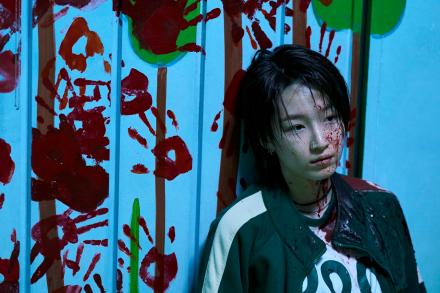
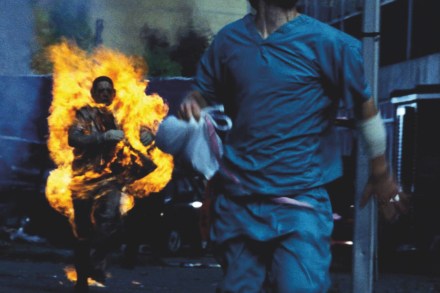
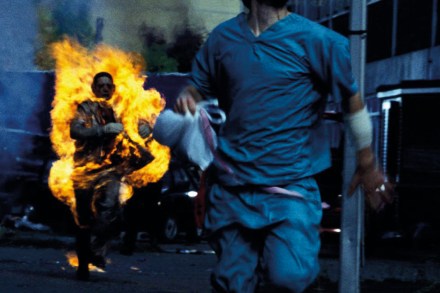
Everyone forgets the actual opening scene of 28 Days Later, even though it’s deeply relatable, in that it features a helpless chimp strapped to a table and forced to watch doomreels of ultraviolence until it loses its little monkey mind and eats David Schneider. But it’s eclipsed by the famous sequence that follows where Cillian Murphy wakes in a hospital bed to find that he has slept through a deadly pandemic and the ensuing collapse of civilisation. As Murphy drags his not-yet-world-famous cheekbones through an eerily abandoned metropolis, we see Piccadilly plastered with the names and faces of the missing and the dead. Audiences in 2002 were reminded of the recent World Trade Centre attacks, which happened in the middle of filming.

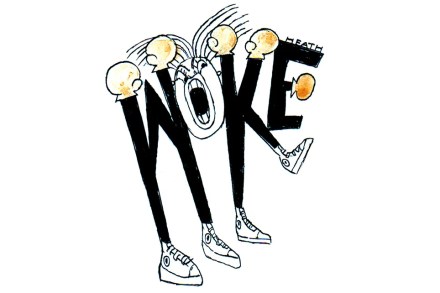
Why ‘woke’ is now just a right-wing fetish

There’s been a late entry in the competition for most cretinous misunderstanding of international trade policy. For anyone who’s been distracted by the ongoing meltdown of the global order, this week Britain finally signed a deal with the EU. The deal is sane and sensible enough to be slighty disappointing all round, which has not stopped the post-truth peanut gallery from freaking out. For the Brexit fundamentalists, any form of deal, indeed the whole business of international diplomacy, is now for cucks and simps. If we were real patriots, we’d be marching through Normandy with the muskets out and banners flying to force the French to buy our sausages.There is no place for grown-up politics in the febrile imagination of the terminally anti-woke.