Laura Gascoigne

Laura Gascoigne was the chief art critic of The Spectator from 2020 to 2025

Identity crisis | 11 June 2011

From our UK edition

Laura Gascoigne on how the Venice Biennale is searching for its place in art history Picture one of the world’s largest private yachts moored at the quayside of the Riva dei Sette Martiri, protected by a metal perimeter fence and a security detail. Now imagine two battered sea freight containers dumped in the shape of a tau cross on the quay just out of spitting distance of the security fencing. One is Roman Abramovich’s 115m superyacht Luna; the other is a Haitian pavilion showing Vodou-inspired sculpture by the Grand Rue Sculptors from the slums of Port-au-Prince. Welcome to the opening of this year’s Venice Biennale (until 27 November), bigger than ever and more deeply riven with contradictions.

Call of the wild

From our UK edition

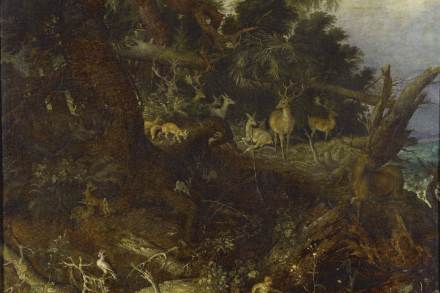
‘Not something I’d want on my wall,’ said an English lady visitor to Antwerp’s Rockox House, standing in front of a painting of wolves attacking cattle. ‘Not something I’d want on my wall,’ said an English lady visitor to Antwerp’s Rockox House, standing in front of a painting of wolves attacking cattle. ‘Nor that,’ said her friend of another painting showing lions feasting on a live gazelle. I didn’t dare tell them that I’d come to Belgium specially to see a whole exhibition of paintings by the artist responsible, Roelandt Savery (1576–1639), in his native Kortrijk. ‘Kortrijk where? Roelandt who?’ you may be asking.

Parisian perspectives

From our UK edition

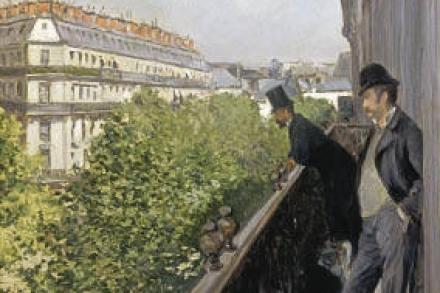
In 1879, two young brothers moved into a new fifth-floor apartment at no. 31 Boulevard Haussmann, overlooking the Opéra. Flush with inheritances from their father’s army bunk business, Gustave Caillebotte, 31, and his brother Martial, 26, were exactly the sort of children of the Second Empire for whom these new Parisian mansion blocks had been built. In 1879, two young brothers moved into a new fifth-floor apartment at no. 31 Boulevard Haussmann, overlooking the Opéra. Flush with inheritances from their father’s army bunk business, Gustave Caillebotte, 31, and his brother Martial, 26, were exactly the sort of children of the Second Empire for whom these new Parisian mansion blocks had been built.

Defying definition

From our UK edition

In 1888, visitors to Earls Court were treated to the novel sight of an exhibition of avant-garde art from Italy. The show was mounted by the Milanese Vittore Grubicy de Dragon, the art-dealer son of an impoverished Hungarian baron. A follower of the Paris art scene and a convert to the optical theories of Ogden Rood, Grubicy was training up a stable of young artists — most of them graduates of the Brera Academy — in the principles of optical mixing pioneered by the Pointillists. He dubbed his modern art movement Divisionism — not a school, he said, but ‘a technical means for reproducing, with colouring materials, the luminous vibrations which go to make up light’.

21st-century floating world

From our UK edition

It’s an irony of Western art that our vision of modern metropolitan life was shaped, via Impressionism, by ukiyo-e prints — ‘pictures of the floating world’ of Edo, Japan. It’s an irony of Western art that our vision of modern metropolitan life was shaped, via Impressionism, by ukiyo-e prints — ‘pictures of the floating world’ of Edo, Japan. In his new exhibition, Tokyo, at Flowers East, Jiro Osuga updates that vision for the 21st century. The son of a Japanese businessman, Osuga left his native Tokyo for London in 1970 at the age of 12 and studied at Chelsea and the Royal College of Art.

At the heart of Europe

From our UK edition

The historic centre of Bruges has 16 museums, enough to cater for every touristic taste. There’s a Diamond Museum, a Lace Centre, a Choco-Story (the narrative element distinguishes it from the 50 chocolate shops) and a Friet Museum — or ‘Belgian Fries Museum’, for English-speakers under the misapprehension that fries are French. But the main focus of the city’s five-yearly festival, now in full swing, is on a local product the French cannot lay claim to: the Flemish painting tradition founded by Jan van Eyck, who died in Bruges in 1441. The historic centre of Bruges has 16 museums, enough to cater for every touristic taste.

Ahead of their time

From our UK edition

‘Museum decides against building new extension’ is not the stuff of newspaper headlines, so most of you will be unaware that the National Museum of Wales in Cardiff has been creating a distinct museum of art on the top floor of its existing Edwardian building. A few weeks ago, the Welsh museum relaunched its Impressionist and Modern galleries after an imaginative paint job and a rehang, and next year it will open a new suite of contemporary galleries in its former archaeology wing. For £6.

Artistic rumblings

From our UK edition

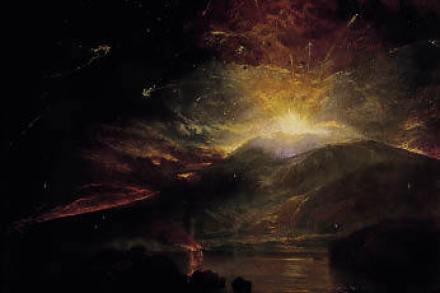
Volcano: Turner to Warhol Compton Verney, until 31 October On my desk is a lump of lava, a memento of Vesuvius. It doesn’t look like much, but neither does the volcano from the cinder track that winds around to its summit. From close to, Vesuvius is a giant ash heap; it’s from across the bay that the magic works. Never does distance lend more enchantment to the view than in the case of volcanoes: when they’re exploding they’re plain dangerous, and when not they’re really rather dull. Their allure is as elusive as a rainbow’s, and it was in rainbow colours that Andy Warhol painted Vesuvius in 1985, making it look like a Neapolitan ice cream blown under pressure through the end of a cone.

Mapping the land

From our UK edition

Familiar Visions: Eric & James Ravilious, Father & Son Towner, Eastbourne, until 5 September Ravilious Woodcuts Charleston Farmhouse, until 30 August Everyone, but everyone, has heard of Charleston, the East Sussex farmhouse with the beautiful walled garden transformed by the decorative geniuses of Vanessa Bell and Duncan Grant into a bijou Bloomsbury-on-the-Downs. But few people know about Furlongs, a couple of miles across the fields, the decidedly unpicturesque flint-built cottage where from 1933 the designer Peggy Angus presided over a rather more basic bohemian establishment, visited regularly by Eric Ravilious.

Roving revolutionary

From our UK edition

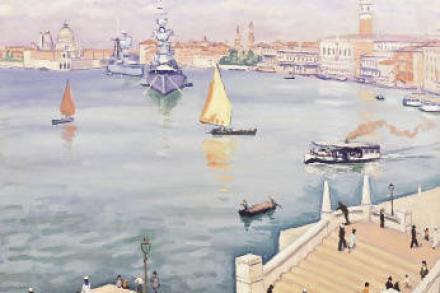
Albert Marquet Connaught Brown, 2 Albemarle Street, W1, until 26 June Amid the usual hype about the record price achieved by an Andy Warhol self-portrait at Sotheby’s New York on 12 May, another artist’s record passed unnoticed. At the Impressionist & Modern Art sale the week before, Albert Marquet’s ‘Le Pavillon Bleu’ fetched $1.5 million. ‘Albert who?’ some of you may be asking — but when Marquet painted this picture in 1905 he was a founder member of the first revolutionary art movement of the 20th century, one of the gang of young painters in pure colours surrounding Matisse who would be branded ‘Fauves’ at that year’s Salon d’Automne.

An insider’s view

From our UK edition

A Critic’s Choice Selected by Andrew Lambirth Browse & Darby, until 7 May The bravest thing an art critic can do is to show their own work; the next bravest is to mount a show of the artists they admire. Publishing one’s critical opinions in print is one thing; hanging up the physical evidence in public is quite another. One normally fearless critic of my acquaintance, when invited to do it, declined with a shudder and a quote from ‘The Charge of the Light Brigade’. Cork Street didn’t feel like the Valley of Death when I visited Andrew Lambirth’s Critic’s Choice last week.

View from a room

From our UK edition

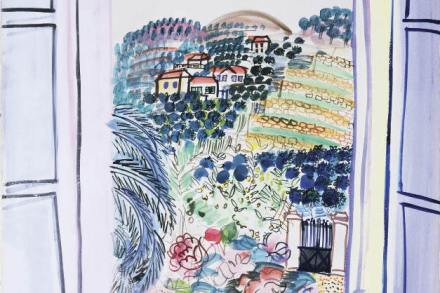
Without from Within Djanogly Art Gallery, Nottingham, until 3 May In 1935 Magritte painted a picture called ‘La Condition Humaine’ showing a mountain landscape seen from inside a cave. In the mouth of the cave an easel with a see-through canvas perfectly frames the view of a distant castle, while a fire burning inside reminds us of Plato’s famous allegory of human knowledge, comparing us to prisoners in a cave whose only perception of reality is based on shadows thrown by firelight on the walls. Painting, Magritte implies, is similarly partial (although presumably an advance on shadows for a cave-dweller).

Artistic confrontation

From our UK edition

Matisse & Rodin Musée Rodin, Paris, until 28 February 2010 Of the grand 18th-century mansions with spectacular gardens that once lined the rue de Varenne in Paris, only two have escaped the developers. The Hôtel Matignon at number 57 survives intact as the residence of the French Prime Minister, but the Hôtel Biron at number 79 owes its escape to an artists’ colony. In the 19th century, the Maréchal de Biron’s former home became a convent school for young ladies; when the nuns moved out in 1905, the artists moved in.

Museological capriccio

From our UK edition

There are not many palazzi in Florence still occupied by their original families. There are not many palazzi in Florence still occupied by their original families. Some, like the Medici, Pitti and Corsi-Horne, have become museums, while others, like the Ciofi-Giacometti — now the five-star Relais Santa Croce — have become hotels. ‘Make do and mend’ is a basic Florentine motto: why build a museum when you can convert an old palazzo, town hall (Palazzo Vecchio), magistrates offices (Uffizi), police station (Bargello) or granary (Orsanmichele)?

Ancient and modern

From our UK edition

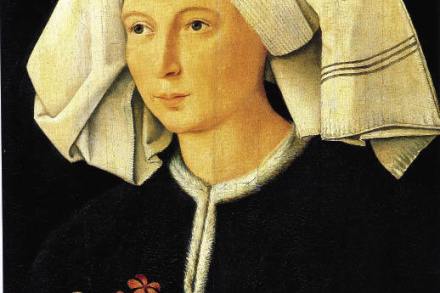
Rogier van der Weyden 1400–1464: Master of Passions Museum Leuven, until 6 December Musée Hergé Louvain-la-Neuve When I was a child in Belgium, architecture was a dirty word — angry drivers would wind down their windows and yell, ‘Architecte!’ The insult dated back to the 19th century, when the megalomaniac architect Joseph Poelaert imposed the enormity of the Palais de Justice on Brussels, forcing large numbers of residents from their homes. Times change and memory fades; architects are back in favour in Belgium.

Saying sorry in Seville

From our UK edition

There’s been a lot of muttering lately about the word ‘sorry’ and the reluctance of politicians and bankers to say it — an unrealistic expectation, given that the logical follow-up is resignation. There’s been a lot of muttering lately about the word ‘sorry’ and the reluctance of politicians and bankers to say it — an unrealistic expectation, given that the logical follow-up is resignation. In Seville, they have a more sensible approach: instead of demanding personal apologies, they muck in for a mass penitence lasting a week. Before attending my first Semana Santa this year, I’d imagined it to be a punishing affair involving penitents shuffling on their knees. As I discovered, it is anything but.

Under the stars

From our UK edition

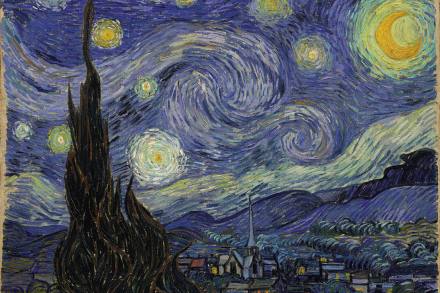
Van Gogh and the Colours of the Night Van Gogh Museum, Amsterdam until 7 June Remembering his former teacher Vincent van Gogh, the painter Anton Kerssemakers described a walk one evening in 1884 from Nuenen to Eindhoven when Vincent suddenly stopped before the sunset, framed it in his hands and, half closing his eyes, cried out, ‘My God, how does such a fellow — whether God, or whatever you want to call him — how does he do that? We must be able to do that too!’ The hours of sunset, dusk and darkness — outdoors and in — always fascinated van Gogh.

Dashing pair

From our UK edition

Jack B. Yeats & Oskar Kokoschka Compton Verney, until 14 December In 1962 Oskar Kokoschka drew record crowds to his Tate retrospective — belated recognition for the Austrian-born artist who had lived in London, on and off, since 1938. Herbert Read blamed the long delay on Kokoschka’s ‘un-Englishness’, so it’s ironic that his latest comeback should be at that most English of galleries, Compton Verney, in a double bill with another un-English artist still awaiting due recognition in this country: the Irish painter Jack Butler Yeats. Oskar Kokoschka: Exile and New Home 1938–1980 comes to Compton Verney from the Albertina, Vienna; Jack B. Yeats, Masquerade and Spectacle: The Circus and the Travelling Fair from the National Gallery of Ireland.

Honest observer

From our UK edition

Laura Knight at the Theatre Lowry Galleries, until 6 July Ascot racegoers whose binoculars wandered from the track in 1936 might have spotted something unusual in the car park: a Rolls-Royce with its back door open and an artist working at an easel inside. Odder still, the artist was a woman — Laura Knight — and unlike her friend Munnings she wasn’t painting the horses. Her subjects were the gypsy fortune-tellers who worked the race crowds as alternative tipsters. In 1936 Dame Laura Knight (1877–1970) was a household name, newly elected as the only woman member of the Royal Academy seven years after being created DBE. Having made her name as a painter of Newlyn beach scenes, Knight had won national popularity with her pictures of the circus and ballet.

Roman souvenir

From our UK edition

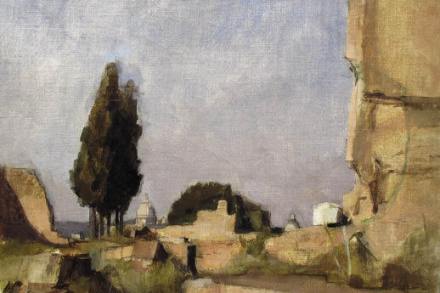
Laura Gascoigne follows in the footsteps of the 18th-century Grand Tourist ‘I was much disappointed in seeing Rome,’ complained the English traveller Sarah Bentham in the 1790s. ‘The streets are narrow, dirty and filthy. Even the palaces are a mixture of dirt and finery and intermixed with wretched mean houses. The largest open spaces in Rome are used for the sale of vegetables...’ The widowed stepmother of the philosopher Jeremy Bentham was equally underwhelmed by the Roman Campagna made famous by Claude. The city, she wrote, ‘appeared to be located in a desert’. For the 18th-century traveller in Italy several aspects of the Grand Tour were less than grand, but slumming it was part of the fun. Bentham was unusual in being a woman, and middle-aged.