Lara Prendergast

Lara Prendergast

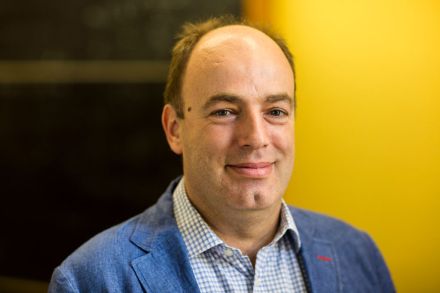
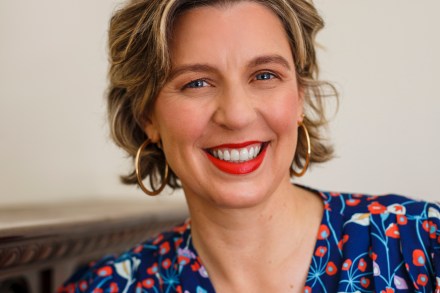
Lara Prendergast is executive editor of The Spectator. She hosts two Spectator podcasts, The Edition and Table Talk, and edits The Spectator’s food and drink coverage.

McMafia: inside the SNP’s secret state

40 min listen

On the podcast: gangsterism or government?  The Covid Inquiry has moved to Scotland and, in his cover story for the magazine, our editor Fraser Nelson looks at the many revelations uncovered by Jamie Dawson KC. Fraser describes how civil servants were enlisted into what he calls an ‘SNP secret state’ and how SNP corruption is threatening devolution. Joining us to discuss is the Coffee House Scots team: Times columnist Iain Macwhirter, The Spectator’s data editor Michael Simmons and The Spectator’s social media editor Lucy Dunn who coordinates our Scotland coverage.

How Britain sobered up

36 min listen

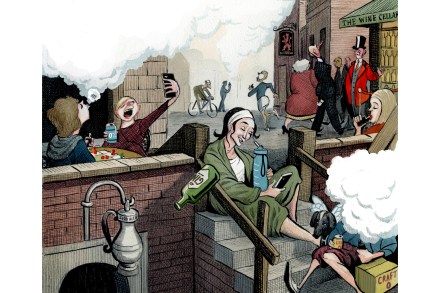
This week:  The Spectator’s cover story looks at how Britain is sobering up, forgoing alcohol in favour of alcohol free alternatives. In his piece, Henry Jeffreys – author of Empire of Booze – attacks the vice of sobriety and argues that the abstinence of young Britons will have a detrimental impact on the drinks industry and British culture. He joins the podcast alongside Camilla Tominey, associate editor of the Telegraph and a teetotaler. (01:27) Also this week: could Mongolia be the next geopolitical flashpoint?

With Alexandra Collier

24 min listen

Alexandra Collier is a Melbourne-based writer who has written for theatre, screen and print. She is a MacDowell fellow and a recipient of the RE Ross Trust playwrites' award. Her memoir Inconceivable, about her journey to becoming a solo Mum by choice, is out now.  On the podcast she tells Lara and Liv why restaurants are inherently theatrical places, discusses her experience with IVF, and explains that it takes a village to raise a child.  Photo credit: Karin Locke.

Why Trump can’t be stopped

36 min listen

This week: can anyone stop Trump?  The Spectator’s deputy editor Freddy Gray takes a look at Trump's ‘second coming’ in his cover story. He says that despite Trump’s legal troubles, he is almost certain to receive the Republican nomination. Freddy joins the podcast alongside Amber Duke, who also writes in the magazine this week about the brides of trump: the women hoping to receive the nod as his running mate. Also this week: the old trope is that there is nothing more ex than an ex prime minister, but what about an ex MP?

With Philip Hensher

31 min listen

Philip Hensher is a novelist and regular contributor to The Spectator’s books pages. His books cover a variety of subjects and often deal with important historical change, such as the fall of the Berlin wall and the war in Afghanistan. His most recent novel is To Battersea Park.  On the podcast, he discusses how he developed an affection for offal as a small child, the secret to an ‘austerely perfect’ carbonara, and why food is a such a great character device for novelists.

With Michel Roux Jr

29 min listen

Michel Roux Jr. is an English-French chef and is the chef patron of Le Gavroche, the first restaurant in the UK to received one, two and then three Michelin stars. Earlier this year it was announced that Le Gavroche will close its doors in January.  On the podcast, he recalls how his father would hand churn vanilla ice cream, reveals his fondness for both traditional French custard and English packet custard, and tells Liv and Lara why Le Gavroche is closing.

Christmas Special 2023

70 min listen

Welcome to this festive episode of the Edition podcast, where we will be taking you through the pages of The Spectator’s special Christmas triple issue.  Up first: What a year in politics it has been. 2023 has seen scandals, sackings, arrests and the return of some familiar faces. It’s easy to forget that at the start of the year Nicola Sturgeon was still leader of the SNP! To make sense of it all is editor of The Spectator, Fraser Nelson, The Spectator’s political editor Katy Balls, and Quentin Letts, sketch writer for the Daily Mail. (01:06) Next: The story that has dominated the pages of The Spectator in the latter half of this year is of course the conflict in Gaza.

The unfashionable truth about motherhood

At The Spectator’s Parliamentarian of the Year awards, ‘Speech of the year’ went to Theo Clarke MP for her account to the House of Commons of the birth trauma which almost killed her. Credit to her, of course, for confronting her pain. But childbirth and early motherhood has always been traumatic and difficult. What has changed is that it is now deeply unfashionable to say anything too enthusiastic about motherhood. Discussions have shifted from the apple-pie good to the nappy-bin bad or even the fourth-degree-tear ugly. In national newspapers, women write about losing their identity after having children. The staggering cost of childcare is well-documented, as are fears about babies being bad for the planet.

With Tara Wigley

32 min listen

Tara Wigley is the in-house writer for the Ottolenghi Test Kitchen, she also has a weekly column in the Guardian and a monthly column in the New York Times which she shares with Yotam Ottolenghi. On the podcast she reminisces about her father's 'egg in the cup', the secret to a great Ottolenghi recipe, and takes Lara and Liv through her new book How to Butter Toast, which is written completely in verse.

Carbon capture: how China cornered the green market

30 min listen

On the podcast: In her cover piece for the magazine, The Spectator's assistant editor Cindy Yu – writing ahead of the COP28 summit this weekend – describes how China has cornered the renewables market. She joins the podcast alongside Akshat Rathi, senior climate reporter for Bloomberg and author of Climate Capitalism: Winning the Global Race to Zero Emissions, to investigate China's green agenda. (01:22) Also this week: Margaret Mitchell writes in The Spectator about the uncertainty she is facing around her graduate visa. This is after last week's statistics from the ONS showed that net migration remains unsustainably high, leaving the government under pressure to curb legal migration.

Israel’s challenge

42 min listen

On the podcast: Anshel Pfeffer writes The Spectator’s cover story this week. He voices concern that support from Israel’s allies might begin to waver if they don’t develop a viable plan after the war finishes. Paul Wood – former BBC foreign correspondent – and Dennis Ross – former Middle East coordinator under President Clinton and advisor to President Obama – join the podcast to debate whether Israel can rely on its allies. (01:18) Also this week: In the Books section of the magazine this week we review Andy Stanton’s new book Benny The Blue Whale. It has a fascinating inception and was co-authored by the machine learning tool ChatGPT.

With Celia Walden

17 min listen

Celia Walden is a journalist, novelist and critic whose most recent novel, The Square, is out now. On the podcast she tells Lara and Liv why lentils are her ultimate comfort food, explains the joys of a buttered scotch pancake and discloses her husband Piers' signature dish, 'spaghetti Morganese'.

Back to the future: Sunak’s big gamble

45 min listen

On the podcast: It's been a busy week in Westminster. On Monday, Rishi Sunak's first major reshuffle saw Suella Braverman sacked and David Cameron make a surprise return to politics.  Then two days later, the Supreme Court's Rwanda ruling left the government's pledge to 'stop the boats' in tatters. It was meant to be the week in which Rishi Sunak had hoped to stamp his authority on a fracturing party, but it seems to have only added to the narrative of Tory disrepair. Katy Balls writes about Rishi’s last gamble in the magazine this week, and joins the podcast alongside Kate Andrews, The Spectator’s economics editor. (01:01) Also this week:  Svitlana Morenets writes a candid account of the current state of the war in Ukraine for The Spectator.

Keeping the peace: the politics of policing protest

41 min listen

On the podcast: In his cover piece for The Spectator Ian Acheson discusses the potential disruption to Armistice Day proceedings in London this weekend. He says that Metropolitan Police Chief Mark Rowley is right to let the pro-Palestine protests go ahead, if his officers can assertively enforce the law. He joins the podcast alongside Baroness Claire Fox to discuss the problems of policing protest.  Next: are smartphones making us care less about humanity?  This is the question that Mary Wakefield grapples with in her column in The Spectator. She says it’s no wonder that Gen Z lack empathy when they spend most of their lives on social media. She is joined by Gaia Bernstein, author of Unwired: Gaining Control over Addictive Technologies.

With Victoria Hislop

30 min listen

Victoria Hislop is a bestselling author and a lover of all things Mediterranean. Victoria’s first book 'The Island', came out in 2005 and became an immediate international best-seller. Victoria’s subsequent novels have explored the Spanish Civil War, Cyprus and the Greek islands, and she’s celebrated for cleverly combining history, culture, family, time and place into fascinating stories. Her latest book ‘The Figurine’, is out now and it deals with the contentious subject of acquiring cultural treasures. Now an honorary Greek citizen, Victoria divides her time between Kent and Athens. Presented by Lara Prendergast.Produced by Linden Kemkaran.

New world disorder

38 min listen

On the podcast: In The Spectator's cover piece Jonathan Spyer writes that as America's role in international security diminishes history is moving Iran’s way, with political Islam now commanding much of the Middle East. He is joined by Ravi Agrawal, editor in chief of Foreign Policy and host of the FP Live podcast, to discuss whether America is still the world's policeman.  Also this week: In the magazine this week, The Spectator’s literary editor Sam Leith speaks to Jacques Testard, publisher at Fitzcarraldo Editions, the indie publishing house which has just won its fourth nobel prize in under ten years.

Battle begins

40 min listen

This week: Katy Balls writes in her cover piece that after Tory conference the battle lines have now been drawn between the two main parties. She says we should prepare for a 'presidential campaign' ahead of the 2024 election and joins the podcast alongside The Spectator’s editor Fraser Nelson to discuss the dividing lines between Labour and the Conservatives. (01:17).  Also this week: In her column Lionel Shriver says that she is leaving the UK for the sunnier climes of Portugal. She argues that Britain has lost its way both economically and culturally and is joined by another American expatriate Kate Andrews, The Spectator’s economics editor. (15:37).  And finally: Matt Ridley writes that we are entering a new age of gullibility.

Judgment call: the case for leaving the ECHR

42 min listen

On the podcast this week: Lord Sumption makes the case for leaving the ECHR in The Spectator's cover piece. He says that the UK has strong courts and can pass judgement on human rights by itself and joins the podcast alongside Dr Joelle Grogan – legal academic and head of research at UK in a Changing Europe – to discuss whether the Strasbourg has lost its appeal. (01:22). Also this week:  Rory Sutherland takes a look at the rise of dynamic pricing in the magazine, a new trend where prices can surge at peak times and a phenomenon which has now made its way into pubs. He says that it’s not necessarily the cost that matters, but the way it is framed and is joined by Times business columnist Ryan Bourne to debate.

Bombshell: Why aren’t we giving Ukraine what it needs?

36 min listen

On the podcast this week: Boris Johnson writes The Spectator’s cover piece, urging the West to supply more military assistance to Ukraine, in order to bring a swift end to the war. Former commander of the joint forces Sir Richard Barrons and The Spectator’s Svitlana Morenets join the podcast to ask why aren't we giving Ukraine what it needs? (01:21) Also on the podcast:  Charlie Taylor, His Majesty’s chief prisons inspector, writes in the magazine about the state of crisis in British prisons. This is in light of Daniel Khalife's escape from Wandsworth prison last week. Charlie is joined by David Shipley, commentator and former inmate at Wandsworth to discuss the state of crisis in British prisons.

With Philip Khoury

22 min listen

Philip Khoury became the head pastry chef at Harrods in 2018. He made it his mission to pioneer the creation of plant-based desserts, calling it the 'last frontier' of vegan cuisine. He's just written a book 'A New Way to Bake', which came out on 31st August 2023, and which focuses on creating masterpieces out of vegan ingredients.