Katy Balls

Katy Balls

Katy Balls is The Spectator’s former political editor.

How the Foreign Office secured Zaghari-Ratcliffe’s release

There was a rare display of unity in the Commons chamber this afternoon when Liz Truss gave a statement on the release of Nazanin Zaghari-Ratcliffe. While Labour deputy leader Angela Rayner went on the attack at PMQs, asking whether Johnson's comments when he was Foreign Secretary had made things worse, there was a far more conciliatory tone in the Commons when the Foreign Secretary updated MPs on the 43-year-old British-Iranian dual national's safe return, after being detained in Iran for more than five years on charges of plotting to overthrow the Tehran government.
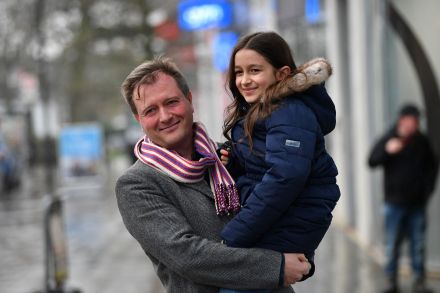

Why has Iran finally released Zaghari-Ratcliffe from prison?

10 min listen

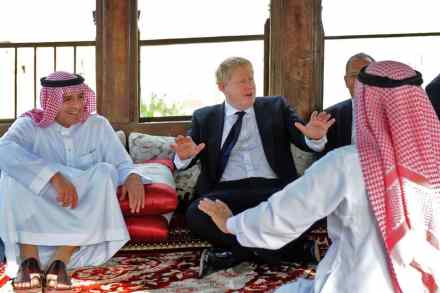
After 6 years in jail in Iran, Nazanin Zaghari-Ratcliffe has been released and will return home to her husband and their seven-year-old daughter. The UK has paid a debt of £400 million as part of this negotiation which has been an ongoing diplomatic dispute between Britain and the Iranian government. Who were the key players in her release negotiations? And is this a win for Boris Johnson?Also on the podcast, Boris Johnson's Saudi Arabia trip continues as he aims to encourage Mohammed bin Salman to increase oil exports to the UK.'Now we see a sort of Boris of Arabia heading off into Riyadh. He's always had a good relationship with bin Salman ever since he was Foreign Secretary, they are on texting terms' - Fraser Nelson.

Zaghari-Ratcliffe’s release will be a big relief for Boris Johnson

Nazanin Zaghari-Ratcliffe has been released from custody in Iran, according to Iranian government officials. Zaghari-Ratcliffe, the 43-year-old British-Iranian woman, was detained in Iran over five years ago when she was accused of plotting to overthrow the Tehran government. Her case became even more high profile when Boris Johnson was criticised for making a misleading statement during his time as foreign secretary when he claimed she had been 'teaching people journalism' in Iran. The comments were cited as proof by the Iranian government that Zaghari-Ratcliffe had engaged in 'propaganda against the regime'. She has always denied all charges.

Tory unease builds over the Northern Ireland protocol

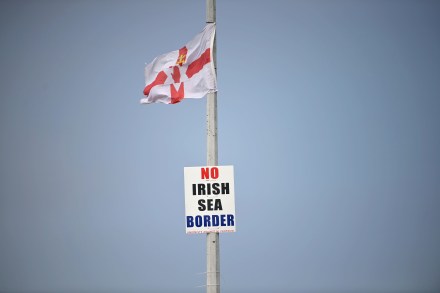
Will Boris Johnson ever trigger Article 16 of the Northern Ireland protocol? The Prime Minister has been under increasing pressure to do so from the right flank of his MPs – particularly in the wake of partygate. Conservative MPs have been going into No. 10 with a list of demands in return for their continuing support. However, the situation in Ukraine has moved the dial for many in government.  Foreign Secretary Liz Truss has reportedly backed a delay in triggering Article 16 Foreign Secretary Liz Truss has reportedly backed a delay in triggering Article 16 and instead wants to help Northern Irish businesses with an 'economic stimulus' package, including tax cuts.

Will Saudi oil really fix Britain’s energy crisis?

11 min listen

Boris Johnson is travelling to the Middle East tonight, where he'll be meeting Gulf leaders and trying to convince them to pump more oil. With Britain's energy price cap likely to rise to £3,000 in October, how important is it for the Prime Minister to get what he wants? And will more supply alone fix the problem? Max Jeffery speaks to James Forsyth and Katy Balls.

Will Boris Johnson charm the Saudis?

14 min listen

Vladimir Putin's war in Ukraine has caused the prices of oil and gas to skyrocket. One of the Prime Minster's strategies to combat this appears to be a visit Saudi Arabia this week, where he'll ask Crown Prince Mohammed Bin Salman to release more oil. But what's the chance of this working?Katy Balls is joined by James Forsyth and Isabel Hardman.

What’s the point of the latest sanctions?

11 min listen

While the world is hearing mummers that Vladimir Putin is considering using chemical weapons in Ukraine, the UK government has imposed sanctions on hundreds of Russian Parliamentarians. But will this latest move make the Kremlin pause or is it a largely symbolic gesture? Katy Balls talks with Fraser Nelson and James Forsyth.

The Suella Braverman Edition

37 min listen

Suella Braverman is the Conservative MP for Fareham and became the first female elected Attorney General in 2020. Formerly known as one of the Brexit Spartans, she talks on the podcast, about growing up surrounded by politics where she first lay the foundations for a career as a Conservative politician. As a young woman, she studied law in Cambridge, the US and in Europe where she could excel as a linguist. Since taking her role as Attorney General, she made history by rewriting the law to become the first female Cabinet Minister to take maternity leave - named Gabriella's Law after her daughter who is now one year old.

Abramovich sanctioned for ‘destabilising Ukraine’

Following criticism in recent weeks that the UK government has lagged behind both the US and the EU when it comes to sanctioning oligarchs, this morning the Foreign Office announced fresh sanctions for seven businessmen with alleged links to Vladimir Putin. On that list is Chelsea FC owner Roman Abramovich. The billionaire Chelsea FC owner is among those to have their assets frozen and facing a travel ban. Others on the list include Igor Sechin, Oleg Deripaska, Andrey Kostin, Alexei Miller, Nikolai Tokarev and Dmitri Lebedev – with the justification for each sanction available here.

The hidden victims of lockdown: an interview with the Children’s Commissioner

When schools were closed during lockdown, it wasn’t only education that suffered. The classroom can offer an opportunity to identify children in danger of abuse, with tens of thousands of pupils on the at-risk register. Take away schools and this safety net vanishes. Now and again, stories emerged of just how badly things went wrong: for example, the murder of six-year-old Arthur Labinjo-Hughes at the hands of his stepmother. ‘If that little boy had been in school, I do believe there would have been an extra chance to hear him,’ the Children’s Commissioner, Rachel de Souza, tells me, when we meet at The Spectator’s offices to discuss her mission to help the hidden victims of lockdown.

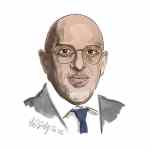
Nadhim Zahawi: how I escaped Saddam’s Iraq

One night in December 1977, when Saddam Hussein was deputy leader of Iraq and already the strongman of the government, Nadhim Zahawi’s father was tipped off that Saddam’s secret police were after him. Zahawi, a Kurd working in Baghdad, decided to leave right away. He phoned the office to say that he was travelling to the north of the country for work and quickly set about his escape. The Baathist secret police did come for him that night, but by the time they arrived at his house, he was at Baghdad International Airport with a ticket to London.

What’s behind the Tory revolt on refugee relief?

14 min listen

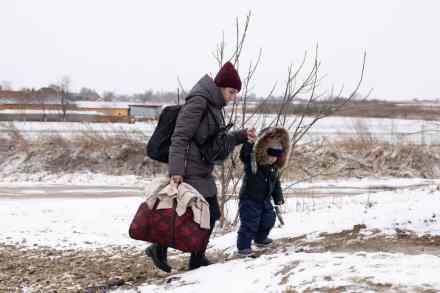
While Europe opens its arms up to the Ukrainians fleeing war, the UK is taking a much slower approach. While people are allowed to come in relatively quickly if they have family here, that definition of family is extremely limited. Our response is causing confusion with the public but seemingly also within the Conservative party.Katy Balls and James Forsyth are joined by Kate Andrews from Calais who has been spending the last two days talking to refugees on the ground looking to seek refuge in Britain.

Online scams: how best to fight back?

28 min listen

During the pandemic, we spent more time online than ever before and this has seen a boom in online fraud. It's estimated that scam adverts have tricked 1 in 10 people on the biggest online platform into paying for fake products. In 2020, almost 150,000 fraud cases were recorded with losses reported of up to £500 million.For the scammers, they will do anything to convince you to key in your card details and this problem has shown no sign of slowing down. The online safety bill is expected to pass Parliament in March 2022. As things stand, the government hasn't included online fraud as a type of harm when it comes to certain adverts. So could the online safety bill be an effective solution?

Zelensky’s Churchillian address to the Commons

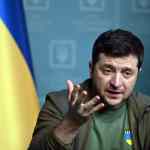
Ukrainian President Volodymyr Zelensky was greeted with applause and a standing ovation this evening when he appeared before the House of Commons. The Ukrainian president – who addressed MPs by video link – gave a short but impassioned speech. He said that he was addressing the UK parliament ‘as a citizen, as a president of a big country, with a dream’ – comparing his country’s fight against Russia to the British war effort against Nazi Germany: ‘You didn’t want to lose your country when Nazis wanted to take your country.’ He drew parallels between the UK’s decision to fight then with Ukraine’s now – offering an update of the circumstances the Ukrainian people now find themselves in.

Will Zelensky’s intervention change the mood among MPs?

13 min listen

Former Speaker of the House, John Bercow has been banned from the Commons after the publishing of a review that reveals the extent of his bullying behaviour towards members of his staff. How will Labour react to this after welcoming him in with open arms? Also, Ukrainian president Volodymyr Zelensky will today address a number of UK MPs and is expected to ask for more aid on all fronts: sanctions, humanitarian and military. But just how much more can the UK offer without causing an escalation in Putin's brutality?And finally, one look at the Spectator's Data Hub will show a shocking rise in the price of gas in the UK in reaction to the war in Ukraine, but has Boris Johnson prepared the public enough for this shocking rise in cost?Sam Holmes talks with James Forsyth and Katy Balls.

Ukraine: how bad will UK energy prices get?

15 min listen

As the Russian invasion enters its twelfth day, fuel prices hit new records in the UK. Global leaders are preparing for the worst, is the UK braced for this too?Also on the podcast, what's behind Boris Johnson's six-point plan?'I would far rather Boris Johnson wasn't turning away Ukrainian refugees at the border in Calais than coming up with the six-point plan and expecting world leaders to follow' - Fraser Nelson.All to be discussed as Kay Balls speaks to Fraser Nelson and James Forsyth. For more information on Ukraine, The Spectator has the latest data on our Datahub.

Boris Johnson is operating in a new political reality

Boris Johnson is attempting to carve out a role for himself as the figure who can lead the West in its response to the invasion of Ukraine. Over the weekend, the Prime Minister penned an article for the New York Times – in which he set out his 'six-point plan' to defeat Putin. The points are closer to general principles than firm action. They include forming an 'international humanitarian coalition' for Ukraine and resisting Russia's 'creeping normalisation' of its actions.  Russia's decision to launch a full scale invasion of Ukraine has certainly stopped all talk of an imminent confidence vote in the Prime Minister over partygate Today Johnson will attempt to show he can be the mobiliser when he hosts Canadian Prime Minister Justin Trudeau and Dutch PM Mark Rutte.

Why is the UK so slow in sanctioning oligarchs?

10 min listen

Though Britain has been sending weapons to Ukraine, and led Europe's push to get Russia taken out of the Swift banking system, the government has been criticised for being slow in sanctioning Russian oligarchs. What more should we be doing?Max Jeffery talks to James Forsyth and Katy Balls.

What cards does the West have left to play?

11 min listen

PMQs began with a rather unorthodox but touching round of applause to welcome the Ukrainian ambassador to the chamber. While the Commons was united in its support of Ukraine and condemnation of Putin's actions, Labour leader Keir Starmer confronted Boris Johnson about certain Russian individuals who have been sanctioned by our allies but not by the UK. But why is Boris Johnson holding back? Though many talk about the close relationship between the Tories and Russian money, the bitter truth of the matter may be that we are running out of non-military options for opposing Putin.Katy Balls breaks down the session with James Forsyth and Isabel Hardman from the roof of Parliament.

Why is a no-fly zone a no go?

10 min listen

During a press conference in Poland today, Prime Minister Boris Johnson was confronted by Ukrainian journalist and campaigner Daria Kaleniuk, who took issue with the excuse for not imposing a no-fly zone because it may start World War Three, saying it had already begun. While it is completely understandable that on the streets of Ukrainian cities that is how it must feel, the UK and the West are committed to not involving themselves with direct military action against Russia. Though the sanctions that have been imposed on Putin's regime are unprecedented, can they work quickly enough to pause the conflict before things get even bloodier?Katy Balls talks to Isabel Hardman and James Forsyth about how the Prime Minister has been handling this situation so far.