Katy Balls

Katy Balls

Katy Balls is The Spectator’s former political editor.

The Tulip Siddiq Edition

37 min listen

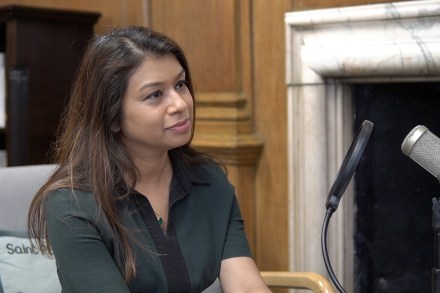
Tulip Siddiq is the Labour MP for Hampstead and Kilburn and shadow economic secretary to the treasury. She was born into to a prestigious Bangladeshi family. Her grandfather was the founding father of Bangladesh, and her aunt is the current Prime Minister. After joining the Labour Party at 16, she studied first at UCL followed by completing a masters at Kings College London.  During her time as an MP, Tulip was prominent in campaigning for the return of Nazanin Zaghari-Ratcliffe, as well as opposing Brexit. She gained national media attention when she delayed the birth of her son for a critical parliamentary vote.
Is Rishi’s Rwanda plan dead?

12 min listen

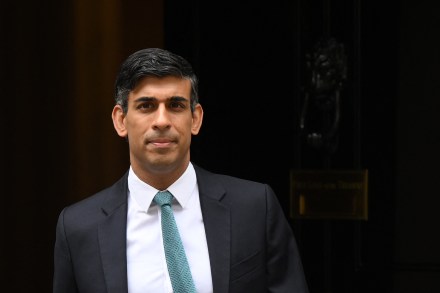
It never rains but it pours for Rishi Sunak, as the Court of Appeal has today ruled against his Rwanda plan, raising concerns about the safety of asylum seekers. It now looks as though Rishi could be set to fail in all five of his pledges. Is the prime minister heading for embarrassment?  Katy Balls speaks to Fraser Nelson and James Heale.  Produced by Cindy Yu and Oscar Edmondson.

Rishi’s Rwanda asylum plan ruled to be unlawful

It never rains but pours for Rishi Sunak. After a difficult few weeks for the Prime Minister, the Court of Appeal has this morning ruled that the Rwanda scheme is unlawful. The ruling means that the previous decision of the High Court that the scheme is lawful and Rwanda is a safe third country is reversed – with the removal of asylum seekers to Rwanda unlawful 'until the deficiencies in its asylum processes are corrected'. Today's decision was split – with the Master of the Rolls and Lord Justice Underhill concluding the policy is not lawful as there is a 'real risk' asylum seekers could be returned to their home country. However, the Lord Chief Justice sided with the original High Court ruling that Rwanda is a safe third country.

Korski drops out after groping claims. Now what?

11 min listen

Daniel Korski, the former David Cameron aide who was standing to be the Conservative candidate for London mayor, has dropped out of the race after a woman claimed he groped her in a meeting in 2013. Korski had won the support of a number of high-profile Tory MPs, and was seen as the likely candidate to face Sadiq Khan in next year's mayoral election. With only two people left in the race, will the Conservatives reopen nominations? James Heale speaks to Katy Balls and Isabel Hardman. Produced by Max Jeffery.

Daniel Korski withdraws from London mayoral race

Daniel Korski has pulled out of the race to be the Conservative candidate for London mayor. The former adviser to David Cameron cited the allegation by TV producer Daisy Goodwin that he had groped her during a meeting at 10 Downing Street in 2013 as the reason he is withdrawing. In his statement announcing the news, Korski said he continued to 'categorically' deny the allegation against him. However, he said that the pressure on his family as a result of the claims meant that he felt he had no choice but to drop out of the race: 'I categorically deny the allegation against me. Nothing was ever put to me formally ten years ago. Nor seven years ago when the allegation was alluded to. No investigation has ever taken place.

What reshuffle season has in store

Keir Starmer and Rishi Sunak have something in common: both men are under pressure to reshuffle their front benches and pick a final pre-election team. ‘The agitating tends to be done by those who want jobs, rather than those who have them,’ sighs one member of the Labour leader’s team. But with an election due next year – whether it’s in the spring or autumn – Sunak and Starmer know they have one last chance to refresh their front benches before going to the polls. Sunak’s mission is to refresh a tired, squabbling party to make it look like a new government A pre-election reshuffle isn’t just about managing teams and egos: it means choosing the personalities, tone and message on which to campaign.

Is the economy wearing Rishi Sunak down?

10 min listen

As mortgage rates surge and a new Opinium poll finds Labour’s lead has jumped to 18 points, Rishi Sunak appeared on Laura Kuenssberg’s BBC show to insist that his plan is the right one. But was his slightly cranky reaction to some of the questions a reflection of how the party is really feeling about its future? Katy Balls speaks to Isabel Hardman and Fraser Nelson. Produced by Natasha Feroze.

‘We’ve got to hold our nerve’: Rishi Sunak’s BBC interview

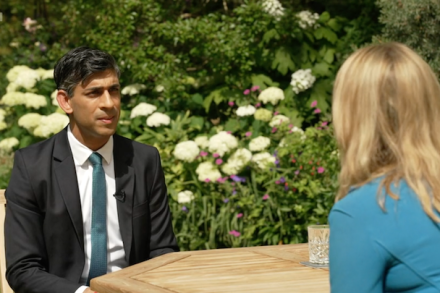
As mortgage rates surge and a new Opinium poll finds Labour’s lead has jumped to 18 points, Rishi Sunak appeared on Laura Kuenssberg’s BBC show to insist that his plan is the right one. The interview was pre-recorded in the Downing Street garden yesterday, with Sunak commenting on the – now failed – attempted coup by Russian mercenary leader Yevgeny Prigozhin and previewing his government’s long-term NHS workforce plan. However, the main portion of the at times, scrappy interview was spent on inflation and the consequences for mortgage holders.

The by-election that should most worry ministers

When the political cabinet met on Tuesday, by-elections were on the agenda. The Prime Minister is facing four of them. David Warburton, suspended from the party last year over a sex and cocaine ‘sting’, is the latest to step down. On 20 July the Tories will try to defend his constituency of Somerton and Frome, Boris Johnson’s old seat of Uxbridge and South Ruislip and Nigel Adams’s Selby and Ainsty. Despite announcing she was also quitting on social media, Nadine Dorries is taking her time to trigger a vote in Mid Bedfordshire – and the whips’ office is assuming that she may hang on all the way to the next election.

Could Britain turn into a stagflation nation?

10 min listen

Natasha Feroze speaks to Kate Andrews and Katy Balls about today's inflation figures, stuck at 8.7 per cent despite predictions it would fall. As a flagship policy of Rishi Sunak's to half inflation, what options does the Prime Minister have?

Parliament votes to ban Boris

10 min listen

In last night's vote on the Privileges Committee's report into whether Boris Johnson misled parliament, just six MPs backed the former prime minister. What's the reaction in Westminster today?  Also on the podcast, after shadow chancellor Rachel Reeves rowed back on Labour's £28bn green projects pledge, why are both parties in such a mess on energy? James Heale speaks to Katy Balls and Fraser Nelson.  Produced by Oscar Edmondson.

Will there be another partygate investigation?

Any hope Rishi Sunak had to use Boris Johnson’s resignation to turn the page on partygate is dwindling fast. The Prime Minister is likely to miss the debate on the Privileges Committee report this afternoon and the hope in government is that a vote isn’t even called. But even if ministers get their wish, the story could remain in the news for some time. Over the weekend, new footage emerged of staff who worked for the London mayoral candidate Shaun Bailey partying in 2020 despite strict Covid rules at the time. It went on to dominate the Sunday politics shows.

Rishi Sunak’s mortgage timebomb

Another week, another round of partygate stories. Leaked footage over the weekend of Tory aides working on the London mayoral campaign in 2020 partying despite strict covid rules at the time meant that the top news line from the Sunday government media round was Michael Gove apologising on behalf of the Conservative party. Later today, MPs will seal Boris Johnson's punishment after the privileges committee found the former prime minister guilty of deliberately misleading parliament.

How will MPs vote on the Partygate report?

11 min listen

The release of The Privileges Committee's report into whether Boris Johnson knowingly misled parliament has caused a war of words in the press. Several MPs have announced that they will vote against the report when it comes to House of Commons on Monday. What's the latest?  Also on the podcast, Boris Johnson is expected to be announced as the Mail's 'erudite' new columnist in tomorrow's edition. Does Johnson need a political office in order to cause trouble?  James Heale speaks to Katy Balls and Fraser Nelson.  Produced by Cindy Yu and Oscar Edmondson.

The Isabel Oakeshott Edition

46 min listen

Isabel Oakeshott is a journalist and author of numerous political biographies, formerly the political editor for the Sunday Times. She's known for a number of scoops over the years, including Chris Huhne's speeding ticket and revealing Matt Hancock's lockdown WhatsApps. On the episode, she talks to Katy about why toughness was a quality her parents particularly emphasised in her upbringing; what it was like to break into the lobby as a female journalist; and why she decided to break her confidentiality agreement to expose the cache of messages that Matt Hancock had given her. Produced by Natasha Feroze, Saby Reyes-Kulkarni and Oscar Edmondson.

Get Rishi: the plot against the PM

35 min listen

This week: For her cover piece, The Spectator’s political editor Katy Balls writes that Boris Johnson could be attempting to spearhead an insurgency against the prime minister. She joins the podcast alongside historian and author Sir Anthony Seldon, to discuss whether – in light of the Privileges Committee's findings – Boris is going to seriously up the ante when it comes to seeking revenge against his former chancellor. (01:02) Also this week: In The Spectator journalist Paul Wood writes about how Saudi Arabia is buying the world, after the Saudi Arabia Public Investment Fund negotiated a controlling interest in the main US golf tournament, the PGA. This took many people by surprise.

How damning is the Privileges Committee’s report?

11 min listen

We have finally got the results of the Privileges Committee's report into whether Boris Johnson deliberately misled parliament, and it doesn't make for comfortable reading for the former prime minister. The 30,000-word document finds that he committed multiple contempts of parliament, including deliberately misleading the house, deliberately misleading the committee, breaching confidence, impugning the committee and the democratic process of the house and ‘being complicit in the campaign of abuse and attempted intimidation of the committee’. What will these findings mean for Boris? And what has the reaction been in parliament? Katy Balls speaks to Isabel Hardman and James Heale.  Produced by Cindy Yu and Oscar Edmondson.

The plot against the PM

After the implosion of Liz Truss’s premiership, Boris Johnson and Rishi Sunak met to discuss which of them should succeed her. Neither wanted to back down to make way for the other. Late one Saturday night, they discussed whether a way could be found that would suit them both. It could not. As they walked out of the room to meet their aides, Johnson joked that Sunak had agreed to be his chancellor (again). Sunak then patted his former boss on the back telling him: see you at the debates. ‘Sparking a needless by-election when we are 15 points behind is close to a defection’ But there were no debates.

Nadine’s revenge

13 min listen

Having said she'll step down, Nadine Dorries has now said that she won't formally resign as an MP until later this year... It's hard to see this as anything other than revenge taken on Rishi Sunak, so as to prolong the by-election pain, Katy Balls says. Cindy Yu also talks to Kate Andrews about the economic pain in the country at the moment – from lacklustre GDP growth to rising mortgage rates. Produced by Cindy Yu.