Katy Balls

Katy Balls

Katy Balls is The Spectator’s former political editor.

Jeremy Corbyn hammered on defence in Question Time special

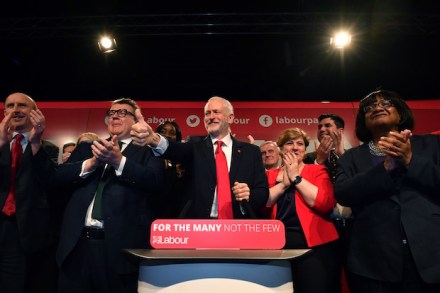
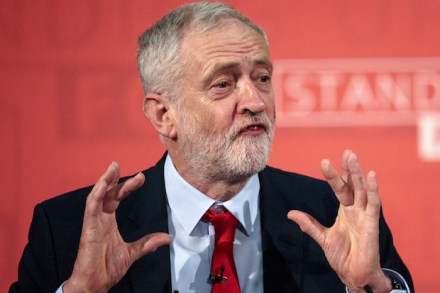
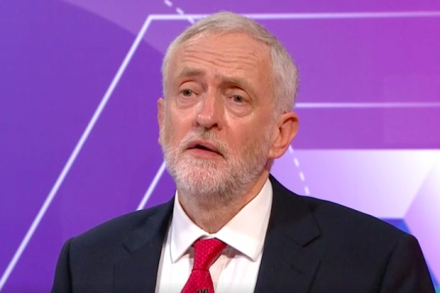
Tonight Jeremy Corbyn faced his toughest media appearance of the campaign as he took questions from a live studio audience in the Question Time Leaders Special. Although the audience appeared more favourable to him than Theresa May at first (with the Labour leader receiving a loud whoop as he entered the stage), the format actually ended up working against him. With audience members asking the questions rather than a presenter, Corbyn struggled to change the subject on uncomfortable topics and appeared rattled when pressed on his views on small businesses, Trident and the IRA. He also failed to alleviate Labour's credibility problem when a voter asked him if Labour's manifesto was an achievable wish list or 'a letter to Santa' -- expect this clip to do the rounds tomorrow.
Tim Farron on the ropes in Andrew Neil interview – ‘you’re a populist who’s not popular’

Tonight it was Tim Farron's turn to take centre stage in the last instalment of the Andrew Neil interviews. Unfortunately for the Liberal Democrats, his performance could also be described as the worst of all five interviews. The Lib Dem leader repeatedly clashed with the broadcaster as he ducked out of questions, filibustered and squirmed while attempting to explain his party's position on the EU, security and cannabis legalisation. With the Liberal Democrats promising a 'second referendum' on the final Brexit deal (while insisting they 'respect' the EU referendum result), Neil asked Farron what Britain's exit from the EU ought to look like.

Emily Thornberry creates chaos

Back in April, the idea of Jeremy Corbyn holding 'transition talks' with Sir Jeremy Heywood -- the Cabinet Secretary -- was enough to provoke mild amusement. But in a sign of how much things have changed with just seven days to go until polling day, Labour's plans for government are now top of the agenda. With a YouGov poll today claiming that the Tory lead is down to a mere three points, the pair were asked whether Labour would be ready to do a coalition deal – or even try to persuade Sinn Fein MPs to attend the House of Commons in order to support them. Corbyn declined to answer these questions but Thornberry broke a golden election rule and started to speculate.

Theresa May gets her election campaign back on track

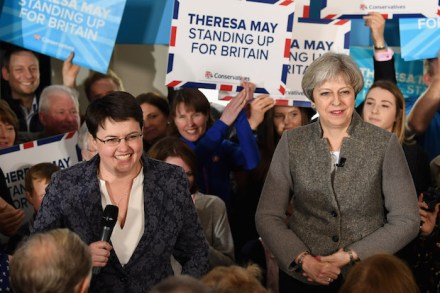
Tonight there will be sighs of relief in CCHQ after Theresa May put in a solid – if imperfect – performance in the Sky / Channel 4 ‘Battle for Number 10’ programme. After a difficult week which saw the Tory lead drop to five points, the Prime Minister navigated her way through a range of tricky topics from her dementia tax U-turn to cuts to school funding. Answering questions from the audience, May had the dubious honour of receiving the first heckle of the night for her claim that Labour's manifesto was un-costed. However, despite some initial audience hostility, May managed to keep her cool.

Revealed: Conservatives revise down their internal election projections

The news that the Tory lead has dropped to just five points, according to a Times/YouGov poll yesterday, has been dismissed in some quarters as an exception to the polls, rather than the rule. However, even if you don't buy that the Tory lead over Labour is now at its lowest since Theresa May came to power, it can't be denied that the Conservative campaign has hit a wobble. I understand projections for the election result have shifted dramatically. The internal 'ceiling' (the best case scenario) has gone from a majority of near 200 in week one, to a majority around the 80 mark. The 'floor' is now a hung Parliament -- which is a worse case scenario and still an unlikely one.

UK terror threat level raised to ‘critical’, soldiers deployed to the streets

In her second statement of the day, Theresa May has announced that the national terror threat level has been raised from "severe" to the highest level,"critical". She added that she has also deployed the military to help armed police by triggering Operation Temperer,  a protocol that sends troops to help police with security at airports, rail networks, harbours etc. This is the first time that the level has been at critical since the foiled 2006 Heathrow plot - defined as the prospect of a terrorist attack moving from being "highly likely" to being "imminent". This has been done before, and both times it lasted for just a few days.

The drop in the Conservative lead isn’t all bad news for Theresa May

On the surface, today's front pages don't make enjoyable reading for the Prime Minister. The Sunday Times leads on a YouGov poll which says the Conservative lead has been slashed to single figures for the first time since last year, while the Mail on Sunday splashes on a Survation poll -- claiming the Tory lead has dropped by five points as a result of the 'dementia tax'. [caption id="attachment_9853172" align="aligncentre" width="520"] Sunday Times/YouGov poll[/caption] Now a dip in popularity for the Conservatives isn't entirely unexpected. It comes after the party revealed a manifesto that could hardly be described as feel-good.

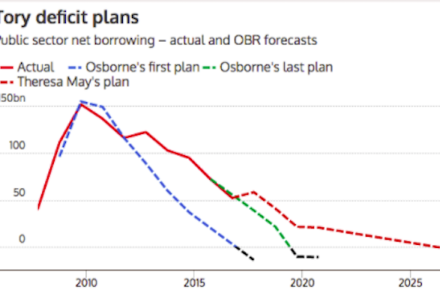
The never-ending deficit – Tories put off balancing the books until 2026

At today's Tory manifesto launch, Theresa May put some clear blue water between herself and the Cameroons as she ditched many of the 2015 manifesto pledges. But there is one area of continuity. May managed to continue George Osborne's longstanding tradition of putting off balancing the books. On the subject of the UK deficit, the manifesto acknowledges that there is work to do on deficit reduction before announcing that the party will push the date back even further for eliminating it. May has given herself until the middle of the next decade (so by 2026 at latest) to balance the books: 'There is still work to do on deficit reduction, so we will continue to restore the public finances over the course of the next parliament.

Five things we’ve learnt from the Conservative manifesto

Today Theresa May unveiled the 2017 Conservative and Unionist Party manifesto at an event in West Yorkshire. Parking her tanks on Labour's lawn, the Prime Minister tried to appeal to working class voters as she revealed her vision for 'a stronger Britain and a prosperous future'. Here's what can be gleaned from the slimline document: A Conservative government would push back eliminating the deficit until 2026. Once again the party has delayed its target date for balancing the books. May has given herself until the middle of the next decade (so by 2026 at latest) to balance the books. Given that George Osborne promised to do this by 2015, it's fair to take the latest target with a pinch of salt.

The Lib Dems want what remains of the Remain vote

Tim Farron is in Bethnal Green tonight launching the Liberal Democrats 2017 manifesto. As the party try to keep hopes for a 'Lib Dem fightback' alive, the policies on offer appear to be aimed at winning the youth vote. They include introducing an NHS tax, raising £1bn in tax from proposals to legalise cannabis, help to get on the property ladder and bus passes for young people. However, it's Brexit that lies at the heart of the manifesto -- or, to be more precise, the party's opposition to it. The Liberal Democrats say they would hold a second EU referendum on the final Brexit deal which would 'give the final say to the British people'.

Conservatives’ pointless press conference backfires

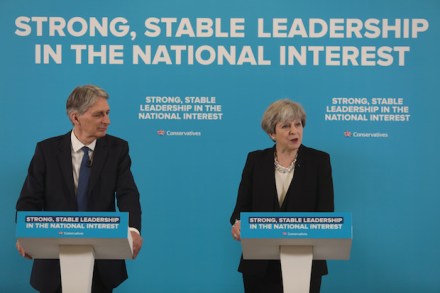
Although Theresa May insists that she is not complacent about the election result, the Conservatives do feel confident enough to hold press conferences even when they have nothing much to say. Today the lobby trooped 20 minutes east on the Jubilee line to Canary Wharf to hear Theresa May and Philip Hammond repeat yesterday's Conservative attack lines about Labour's manifesto sums not adding up. Aside from coming out with the usual buzzwords (stable, strong etc), May did reveal that the Conservative manifesto -- which will launch tomorrow -- will cite the five great challenges facing the UK over the next five years and say how a Tory government would respond.

Five things we’ve learnt from the Labour manifesto

Today Jeremy Corbyn launched Labour's 2017 manifesto in Bradford. Given that the draft version of the document leaked last week, a lot of the contents haven't come as a surprise. However, there are still a few significant things to note from the 124-page document: Labour have not factored in the cost of nationalisation into their 'full costing'. Despite promising last week that the party's policies would be 'fully costed', there is a large chunk of the party's plans that are missing from the calculations. The cost of buying back public utilities, railways and Royal Mail is not included. Given that Thames Water alone is valued at over £10bn, this is no small feat.

Listen: John McDonnell gets Labour’s manifesto day off to a bad start

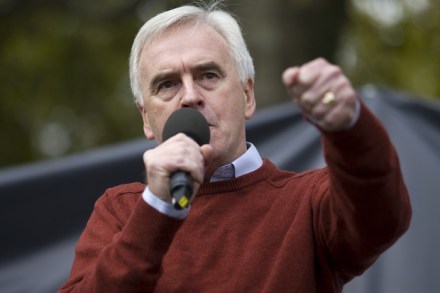
Well, this is going well. In less than two hours Labour will launch its 2017 manifesto and John McDonnell has already got things off to a bad start with a questionable appearance on the Today programme. Aside from praising the decision by Labour's new election aide Andrew Murray to trade the Communist party for the Labour party, the interview proved notable thanks to McDonnell coming unstuck on Labour's financing. After the party's draft manifesto leaked last week, critics were quick to point out that the many policies were yet to be fully costed. However, party brains assured us that by the day of the launch, all proposals would be. Unfortunately that doesn't appear to be the case. Speaking with Nick Robinson on Today, McDonnell insisted the policies had all been fully costed.

Labour’s shadow cabinet – not coming to a town near you

Usually in a general election campaign, MPs in marginal seats invite high profile party figures to their constituencies in a bid to generate interest from the local media and win over swing voters. This is certainly what's happening when it comes to the Tory campaign -- from Theresa May downwards, Conservative ministers have been busy touring the country over the past few weeks. For Labour, however, the goal posts are a bit different this election. MPs are faced with a quandary over whether or not to extend an invitation to the party's high command. There are two reasons for this.

Who benefits from the Labour manifesto leak?

Today's front pages are emblazoned with details of the policies in Labour's manifesto. Usually, this level of policy coverage would be good news for a party in the midst of a general election campaign. However, the manifesto isn't due for a week. Instead, someone has leaked the draft version. It certainly makes for an intriguing read. As well as nationalising railways, Royal Mail and energy companies and urging 'extreme caution' on nuclear weapons, the party promises to put an end to the bedroom tax, scrap strike laws, suspend arms sales to Saudi Arabia and implement the Leveson inquiry recommendations. At the moment there's no total costing regarding how they will pay for all these policies.

Labour’s approach to Brexit: the greatest upset of the greatest number

The day of a party's election campaign launch ought to generate some pretty straightforward policy coverage. Instead, Labour yesterday managed to cause confusion once again as Jeremy Corbyn tried to set out Labour's position on Europe. In a speech in Manchester, the Labour leader asserted that the question of whether the UK would leave the EU had been 'settled' – before going on to argue that the task ahead was to stop the wealthy elites, who are trying to 'hijack' Brexit. Given that Labour have been accused of sitting on the fence over Brexit, this appeared to clear up their position (even if he did leave out any specifics of what a Brexit under Labour would look like). But just hours later, Corbyn appeared to perform a reverse ferret in an interview with the BBC.

It will take more than a defeat to shift Jeremy Corbyn

Last night, Jeremy Corbyn confirmed many Labour moderates' worst fears when he declared that he would not quit as leader -- even if the party loses come June. Now it's not uncommon for politicians to say this on the election campaign trail and then act differently in the light of defeat -- Gordon Brown did exactly this. But the issue is that no-one really believes Corbyn is bluffing. It's widely accepted in Labour circles that Corbyn won't go without a fight following the election. Even in the face of disastrous election results, he is expected to try and cling on. The biggest factor in whether he can pull this off, will be the scale of the defeat.

What’s gone wrong for the Liberal Democrats?

The results from the local elections are in -- and we're beginning work out what it means for the parties with regards to next month's general election. While the Conservatives have much cause for (cautious) celebration, Ukip looks on the brink of extinction, Labour has had a dismal showing – and the Liberal Democrats are having a 'neutral' time of it, at least according to Sir Vince Cable. This is a somewhat optimistic gloss on the party's showing today. The Lib Dems have lost 34 seats but have seen their share of the national vote jump by seven pc. Now this doesn't sound too bad -- especially when compared to the plight of other parties -- but given the party has been predicted a surge in support, it's a rather disappointing result.

The Spectator guide to the local elections

Today voters go to the polls to vote in the local elections -- with the results beginning to emerge in the early hours of Friday morning. The event has been somewhat overshadowed by Theresa May's decision to go for an early general election. However, the results will give us some indication of what to expect on June 8th. Below is a guide of what to look out for and when: 3am Welsh council results What to look out for: Any signs of the demise of Labour in Wales -- this could take the shape of the Tories and/or Liberal Democrats winning seats from Welsh Labour.

Theresa May makes the most of being a bloody difficult woman

Over the weekend, Theresa May fell prey to a rather brutal Brussels briefing when details of the Prime Minister's 'disastrous' Brexit dinner with Jean-Claude Juncker found their way into a German newspaper. With the Prime Minister accused of 'living in another galaxy' and lacking a clue when it comes to the Brexit negotiations, one could be forgiven for thinking she would want to try and downplay reports of a frosty relationship with the European Commission president. Instead, May has used an interview with the BBC's Laura Kuenssberg to double down on the claims. Asked about the reports, May made no apologies as she explained that she was a difficult woman to get on with -- and a proud one at that.