Katy Balls

Katy Balls

Katy Balls is The Spectator’s former political editor.

Why isn’t Theresa May’s conference catastrophe showing in the polls?

After a lacklustre conference and a disastrous speech, Theresa May's position within her party has never looked more fragile. But she can take heart that her relationship with the public is a different story entirely. In a sign that conference is only a headline event for politicos, it appears May's shaky performance in Manchester has meant diddly squat. An ICM poll claims the Tories have actually gained a point from the whole debacle. Even if you combine the three different polls done since the conference – they show a swing between the main parties of... zero. https://twitter.com/britainelects/status/917406487936491525 The findings will come as a blow to Parliamentary plotters such as Grant Shapps, who had hoped to use recent events to push May out.
Cabinet reshuffle: who can Theresa May sack?

Good news in Downing Street: Theresa May has survived the weekend. After the Shapps plot failed to take off, the new consensus is that the beleaguered Prime Minister should re-assert her authority on an increasingly unruly Tory party by reshuffling her Cabinet. Had the speech gone better, there was talk that she could have done this last week. The Sunday Times reports that a shuffle is now likely to occur after the European Council meeting in two weeks' time. If May does oblige, there are calls from within the party for her to use a reshuffle to promote younger talent – and to sack the Foreign Secretary. The latter still looks unlikely.

Priti Patel proves she’s a canny operator

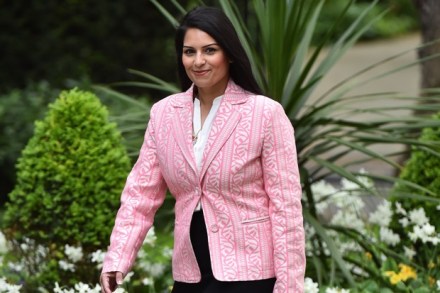
Boris Johnson was the star of the conference today after he gave a morale-boosting speech to a packed out hall. But if there had to be a runner-up, Priti Patel came a close second. The International Development secretary pulled out all the stops as she put in some not so subtle groundwork for the leadership. Making the most of the audience provided by Johnson, Patel proceeded to use the word 'leader' numerous times. At one point even going so far as to joke that 'some of our most successful leaders have of course been the smallest' – in reference to her height.

Conservatives scratch their heads over how to appeal to the young

An insight into the problem the Conservatives face winning over younger voters can be found in this year's party conference guide. In the listing advert for an event on young people and future jobs,  a speaker is denoted as a 'young person' by way of proof that the Tories have actually managed to locate one. https://twitter.com/JohnRentoul/status/913846592658182145 Given that Labour leads by 35 points in the 18-24 bracket, it's not a laughing matter for the Tories. Theresa May's attempt to kick off conference with a bold pitch to these young voters has failed to take off.

Introducing Ukip’s new leader – a former Lib Dem who takes inspiration from the AfD

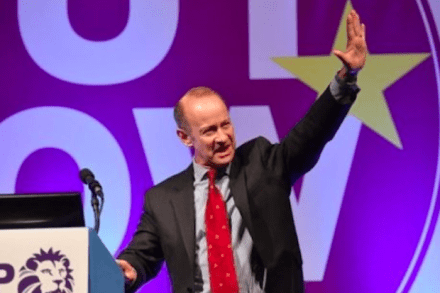
Ukip have just announced their new leader – and it's not who you would expect. Anne Marie Waters – the far-right anti-Islam candidate – has been beaten to first place by a former Lib Dem candidate named Henry Bolton. Bolton, who won with 30pc of the vote, used his acceptance speech to make clear that Brexit is Ukip's priority: 'Brexit is our core task however, it is not the end of the line.' Outside of Ukip circles, Bolton is a relative unknown. A former soldier, Bolton is a one-time Lib Dem member who has worked as an EU common defence strategist.

Barnier: it may take months to get to phase two of Brexit talks

Theresa May's Florence speech last week certainly prompted a warming of words from Brussels – but so far it has triggered little action. At today's press conference between Michel Barnier and David Davis to mark the completion of the fourth round of Brexit talks, the EU's chief negotiator said not enough progress had been made to move to talking about a UK/EU trade deal in the next round of talks: 'I think it’s positive that Theresa May’s speech made it possible to unblock the situation, to some extent, and give a new dynamic to the situation. But we are far from being at a stage - it will take weeks, or maybe even months - where we will be able to say "Yes, okay, there has been sufficient progress on the principles of this orderly withdrawal.

The Labour party has now embraced Corbynism – will the public?

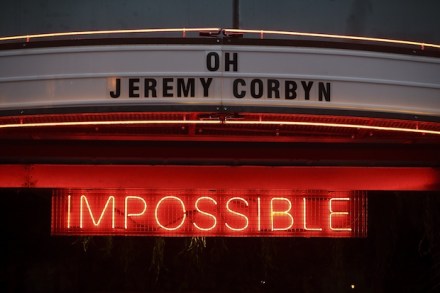
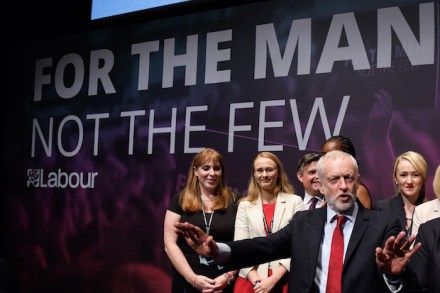
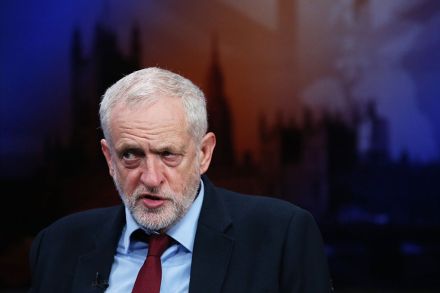
When Jeremy Corbyn gave his speech on Wednesday, the conference hall bore a closer resemblance to a stadium concert than your bog-standard political meeting. The Labour leader was given a hero's welcome from party members decked out in Corbyn fan merchandise. He received a standing ovation before he'd even emitted a word, and an impromptu chant of 'Oh, Jeremy Corbyn' soon followed. Corbyn's position has never been more secure and this year's conference has  only gone to cement the new normal for Labour – it is a loud and proud socialist party. Buoyed by the snap election, MPs and members alike have embraced Corbyn's anti-austerity narrative – no-one is having a 'friendly' debate over how best to balance the books anymore.

Tom Watson signs up to the cult of Corbyn

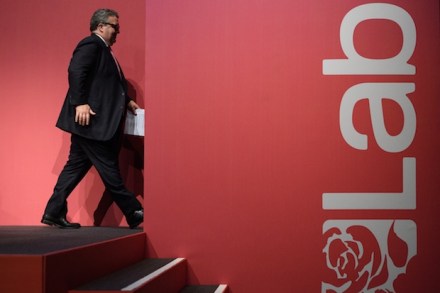
At this year's Labour conference, party moderates are an endangered species. A lot of centrist MPs have given the event a miss – while those that are in attendance rarely make an appearance in the conference hall. So, Tom Watson's speech today marked a turn up for the books. Labour's deputy leader was given a whole ten minutes to speak despite being deemed a Corbyn-sceptic. But much like with Sadiq Khan's speech the day before, Watson used his platform to channel his inner Corbynista. In a marked contrast to last year, Watson came across as one of Corbyn's true comrades – even embarking on a cringeworthy chant of 'oh, Jeremy Corbyn' before praising the leader for his work and role in the election. 'A time for change is upon us. The old fear is gone.

What a Stop the War fringe tells us about Labour foreign policy

This year's Labour conference has proved a topsy turvy affair for the Parliamentary Labour party. Moderates feel as though they have switched places with the far-left protesters that usually lurk on the outskirts of conference. As Ben Bradshaw put it, for the first time he found himself in the protests outside (as part of the anti-Brexit march) while the usual placard-carrying socialists dominated proceedings in the hall. Nowhere was this new order more apparent than at last night's Stop the War event. Two frontbenchers – Diane Abbott and Richard Burgon – turned up at the anti-war group's fringe event. Andrew Murray – Corbyn's close ally and former campaign strategist – also spoke.

Sadiq Khan discovers his inner Corbynista

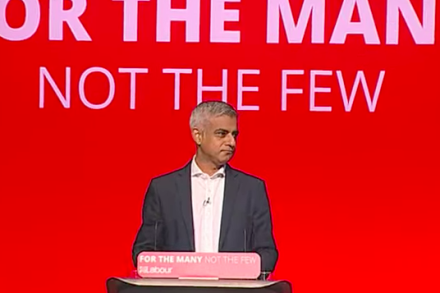
When Sadiq Khan spoke at last year's Labour conference, his speech was deemed hostile to Jeremy Corbyn. Fresh from victory in the London mayoral election, Khan managed to say 'power' a whole 38 times – in what was widely interpreted as a thinly-veiled attack on the Labour leader's lack of electoral appeal. So, what a difference a year – and a surprisingly good snap election result – makes. After weeks of rows and attempts to prevent Khan from taking to the stage this year, the Leader's Office must have today been left wondering what the fuss was all about. The Mayor of London fell into line – using his last-minute speaking slot to play it safe with a speech that praised both Corbyn and public sector workers.

Labour MPs on the rampage over Brexit boycott

Well, that lasted long. Despite hopes for a show of unity at this year's Labour conference, the peace came to an abrupt end on its first day after members voted so that Brexit was not picked in the 'priority ballot'. This means that while there will still be a discussion on Brexit, there will be no motion to vote on – rendering it all rather meaningless. Helpfully for journalists, this decision came just minutes before the annual Progress rally. Progress is the Blairite pro-EU wing of the party – and in recent years, its main conference event has  begun to resemble a group therapy session for down-and-out centrists.

Battle lines drawn ahead of Labour conference

Comrades, Labour conference is here. Today MPs and members descend on Brighton for four days of speeches and discussions on what Labour has to do in order to become a party of government. With the party now leading in the polls, the fringe talks on 21st century socialism, Venezuela and foreign policy at large will be watched with newfound interest from the business community. Given the trouble the Tories found themselves in last week over Europe, one could be forgiven for thinking that the Labour party by comparison is now the picture of stability and calm. But as the party comes together for the first time since the snap election, a number of battles are being fought behind the scenes.

The Cabinet’s Brexit negotiation

Theresa May will give her Brexit speech in Florence today safe in the knowledge that she finally has the full backing of her Cabinet – at least, until the warm prosecco comes out at party conference. After a difficult week, Cabinet ministers today met on Thursday a two-and-a-half hour meeting where approval was given. In an attempt to demonstrate unity, the two poles of the Cabinet's Brexit debate – Philip Hammond and Boris Johnson – left No 10 together. Whether this new Cabinet unity can last is another matter entirely. It's expected that May will use the speech to propose a transitional deal with the EU of up to two years – along with a financial offer somewhere in the region of £20bn euros. Yet even this could still prove problematic.

Theresa May’s singing birds can only hold the same tune for so long

After concerns about the Foreign Secretary's job security bumped Vince Cable's keynote leader's speech at Lib Dem conference off the news agenda yesterday, a sense of stability has been restored to Cabinet. Boris Johnson has told hacks in New York that he is not going anywhere – likening Cabinet harmony to 'a nest of singing birds'. The message from Downing Street, too, is one of quiet confidence that Johnson won't be departing the frontbench – at least, not this weekend. This suggests two things. Firstly, that May's Florence speech won't be as drastic as had first been thought. Secondly, Johnson is coming round to the idea of payments to Brussels continuing during a transition period.

Explosion on the Tube – police confirm ‘terrorist incident’

An explosion has been reported on the London Underground this morning. Passengers fled from Parsons Green in panic after a device exploded on a District Line tube at 8.20am. Witnesses at the scene report seeing a fireball hurtle down the carriage – thought to have come from a bucket left on the tube. A number of people are injured, suffering burns as a result of the explosion. https://twitter.com/EliotHiggins/status/908607521316732929 The attack has been declared a terrorist incident, with the Met’s Counter Terrorism Command investigating. Emergency services remain at the station and commuters are being advised to stay clear of the area. Theresa May will chair a meeting of the Government's emergency Cobra committee at 1pm.

Ministers told to ‘think carefully’ about Tory conference

With no majority and disagreement rife about what went wrong for the Conservatives in the snap election, next month's party conference presents Tories with the perfect opportunity to discuss new ideas and ponder the big challenges facing the party. However, don't expect members of government to partake in the soul-searching. Coffee House understands that everyone from ministers down to Parliamentary Private Secretaries have been encouraged to keep their heads down and 'think carefully' about their behaviour at the four-day event. 'It's been put in no uncertain terms, that in the time of a hung Parliament, the media will be looking for stories to fill the vacuum so think carefully about what you do,' explains one member of government keeping a low profile.

Theresa May’s power play pays off as government wins committee vote

Government whips can breath a sigh of relief. On what turned out to be the second late night sitting in a row for MPs, Andrea Leadsom's motion to ensure that the government has a majority on public bill committees passed at 320 votes in favour to 301 against. This means that even though the government did not win a majority in the snap election, they will have a majority on key committees which scrutinise legislation. In the debate before the vote, opposition MPs accused the Conservatives of an undemocratic power grab – with Labour's shadow leader of the House, Valerie Vaz, likening Leadsom to a North Korean news reader sent out to say everything is fine.

Tories grow increasingly nervous about the Budget

So long, public sector pay cap. After months of speculation – and some public Cabinet feuding – over the seven-year pay freeze, No 10 today announced that the government would be adopting a more 'flexible' approach from now on. Police and prison officers will be the first to receive a pay rise with more sectors expected to get a pay increase as it's rolled out across the board. This concession from the government just months after Philip Hammond argued on Marr that public sector workers get a 10pc 'premium' over their private sector counterparts shows that the shift in public mood proved more powerful than any argument for it. The difficult thing for the government is that it looks like a concession.

Labour MPs rebel as the government’s EU repeal bill wins Commons vote

After David Davis warned that MPs opposing the government's EU repeal bill would be voting for a 'chaotic' exit from the EU, the Brexit secretary can take heart that the majority of Parliamentarians took his advice onboard. This morning MPs voted in favour of the government's EU (withdrawal) bill at its second reading by 326 votes to 290, in the first key Commons test of the legislation. On hearing the news, the Prime Minister issued a statement on the 'solid foundations' the bill provides: 'Earlier this morning Parliament took a historic decision to back the will of the British people and vote for a bill which gives certainty and clarity ahead of our withdrawal from the European Union.

Jeremy Corbyn’s clever* confusion on Brexit

Usually when an official party spokesman has to issue a statement 'clarifying' what a politician meant to say in a radio interview, you can take it as a sign that something has gone wrong. However, not for Jeremy Corbyn – who appears to have mastered the art of clever* misspeaking Appearing on The World At One this afternoon, the Labour leader appeared to shed some light on his party's ever-changing Brexit position. With Labour MPs broadly united behind a transition period in which the UK remains a member of the single market, Corbyn suggested that they could go one step further: the UK could continue to be a member even after Britain has properly left the EU. Martha Kearney:  The TUC wants the UK to stay in the single market permanently.