Katy Balls

Katy Balls

Katy Balls is The Spectator’s former political editor.

Brussels ‘leverage’ leak makes life even more difficult for Theresa May

It's crunch day – yes, really this time – for Theresa May. After spending the evening in one-on-one meetings with a select few cabinet ministers, this afternoon the Prime Minister will chair a special cabinet meeting – where she will seek approval for her proposed deal. The devil will be in the detail – but for some the detail is neither here nor there with the European Research Group quick to see red ahead of reading the document. Last night, Jacob Rees-Mogg suggested on Newsnight that he could be forced to withdraw his support for the Prime Minister. Not helping matters is a Brussels leak that makes its ways into the Times and FT. Brussels negotiator Sabine Weyand has told EU ambassadors that the 'temporary' backstop may not be so temporary.
Introducing Women with Balls – the Emma Barnett edition

When Emma Barnett stood in for Andrew Marr eleven weeks after giving birth, her confident performance and tough interview style caused such a stir that viewers took to social media en masse to call for the 5Live radio presenter to be given a permanent slot. On his return, Marr himself even had to break it to an interviewee that he wasn't going to go 'full Emma Barnett' on him. So, I'm delighted to announce Emma as the first guest for new Spectator podcast Women with Balls. Prior to joining the BBC, Barnett was Women's Editor at the Daily Telegraph and a presenter on LBC. In the series, I'll be sitting down with trailblazing women.

Government threatened with Budget defeat

The government is facing a defeat on the Budget. But rather than a Brexit showdown or the DUP pulling the rug from under Theresa May's feet over the rumoured backstop, the issue is a domestic one. After Tracey Crouch resigned from government over the decision to seemingly delay reducing the maximum stake for fixed odds betting terminals (FOBT) by six months, more than 20 Tory MPs – including Remain MPs and Brexiteers such as Jacob Rees-Mogg – and all 10 DUP MPs have signed an amendment demanding the new maximum stake be brought forward. The vote is scheduled for next week. While the government would currently lose that vote – no-one expects it to get that far with a climbdown expected in the next few days.

The Budget shows the Tories are now fighting on Corbyn’s turf

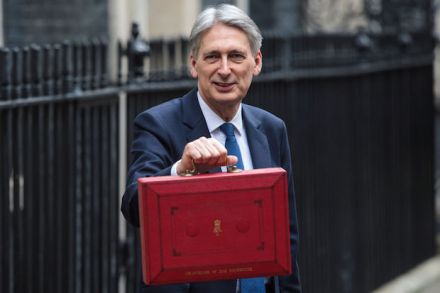
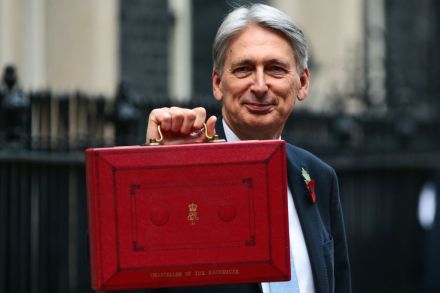
When Theresa May announced at this year's Tory conference that she would put an end to austerity, it's safe to say that her Chancellor hardly looked thrilled as he clapped from the front row of the hall. Philip Hammond is regarded as a fiscal hawk and rather averse to loosening the purse strings. At today's Budget, Hammond tried to get on board with No 10's ending austerity message. But in doing so, he also attempted to put some clear blue water between 'end austerity' Conservatives and anti-austerity Labour. Firstly, Hammond defined what he sees as 'ending austerity'. The Chancellor said that ending austerity meant an above-inflation increase in departmental spending. The Tory version of ending austerity also means no tax rises in the quest to do so.

Losing the plot | 1 November 2018

How to explain Theresa May’s resilience? As Prime Minister, she has survived mishaps and calamities that would have finished off her predecessors. She has no shortage of rebels keen to succeed or denounce her, but all seem oddly unable to act. Why? The answer might lie in a group messaging service which seems to have disabled the ancient art of the Tory coup: WhatsApp. Tory backbenchers are so addicted to this app that these days they cannot tear themselves away from their screens. It gives them the impression of being plugged into each other’s lives, when the opposite is true. Where MPs would once have met to scheme and gossip, they now send bad-tempered encrypted messages.

Tory fiscal hawks uncharacteristically relaxed about Hammond’s spending ‘gamble’

Although Philip Hammond's spending splurge Budget has received broadly positive front pages and a cautious thumbs up from the public, the Chancellor has been given a reality check by the Institute for Fiscal Studies (IFS). After crunching the numbers, IFS director Paul Johnson has concluded that Hammond had 'gambled' on the public finances. Johnson said that the Chancellor ought to be 'thanking his lucky stars' for his £12billion windfall from a revised public borrowing forecast. With no plan set out for how to fund this level of spending in the future, Johnson concluded that 'inevitable tax increases' would have to follow in order 'to pay for our ageing population'. On the Tory benches, it's widely accepted that this was a Budget that put off the difficult decisions.

The Budget shows the Tories are now fighting on Corbyn’s turf | 29 October 2018

When Theresa May announced at this year's Tory conference that she would put an end to austerity, it's safe to say that her Chancellor hardly looked thrilled as he clapped from the front row of the hall. Philip Hammond is regarded as a fiscal hawk and rather averse to loosening the purse strings. At today's Budget, Hammond tried to get on board with No 10's ending austerity message. But in doing so, he also attempted to put some clear blue water between 'end austerity' Conservatives and anti-austerity Labour. Firstly, Hammond defined what he sees as 'ending austerity'. The Chancellor said that ending austerity meant an above-inflation increase in departmental spending. The Tory version of ending austerity also means no tax rises in the quest to do so.

What the 48 ‘no confidence’ letters speculation is missing

The speculation that Theresa May is perilously close to the 48 letters required for a confidence vote has – as Steerpike documents here – been going on for some time. That's not to say it won't happen. Morale is at low point within the party. But as a consequence of that, the sheer number of downcast MPs means that if May's critics really wanted a confidence vote this week they could make it happen. There are over 48 MPs unhappy with May's leadership – and who think the party would be better off with a new leader. For example, the StandUp4Brexit campaign group alone has now had 50 MPs publicly sign up – meaning they all oppose Chequers: https://twitter.

Theresa May tries to calm Tory nerves over Brexit – ‘we are 95 per cent there’

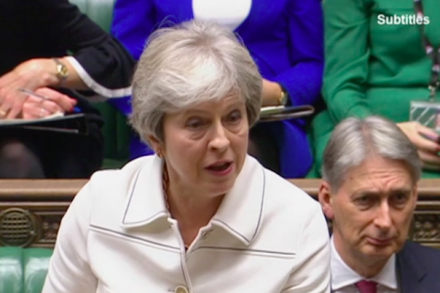
Theresa May tried her best to persuade grumpy MPs that a Brexit deal was still in sight when she addressed the Commons this evening. With colleagues from across the Conservative party losing faith in No 10's negotiating strategy, the Prime Minister insisted that '95 per cent of the Withdrawal Agreement and its protocols are now settled'. The trouble is the remaining 5 per cent is the most difficult. As May herself admitted, the main sticking point is 'a considerable one': the Irish border. With the Brexit talks at an impasse over the terms of the Irish backstop – the arrangement the UK would fall back on to avoid a hard border if no new trade deal is in place by the end of the transition – few believe a solution is in sight.

Hell month – week III: Theresa May attempts to reset the dial

Theresa May is entering her third week of Brexit hell. With no resolution in sight on the issue of the Irish border and suspicion growing over No 10's grand plan, the Tory party is looking more fractious than ever. As James notes on Coffee House, although every week there are reports of plotting and an incoming confidence vote, it does seem as though there has been a further deterioration of party morale that could prove the last straw. In a bid to avoid that fate, May has penned an article for today's Sun in which she strikes a more personal tone than usual and promises to press on: 'Turn on the TV most days and you’ll find someone speculating about what the Brexit talks mean for Theresa May. Has it been a good day or a bad day for me? Am I up or down?

Johnny Mercer is just saying what a lot of Tory MPs are thinking

Theresa May's Hell Week 2.0 has aptly ended with a Conservative backbencher branding the current operation a 'sh-t-show'. In an interview with The House magazine, Johnny Mercer has let rip – complaining that were he not a Conservative MP he wouldn't vote Conservative. Mercer says the party's values have changed since the Cameron days and if he weren't an MP already 'there would be absolutely no chance that I would try and be a Member of Parliament' in the current climate. Mercer also rules out taking a job in the current administration – though it's safe to presume that No 10 won't be particularly minded to give one to him after this outburst. So, is Mercer throwing his toys out of the pram – or does this intervention touch on a wider problem?

Theresa May tries to de-dramatise the transition period

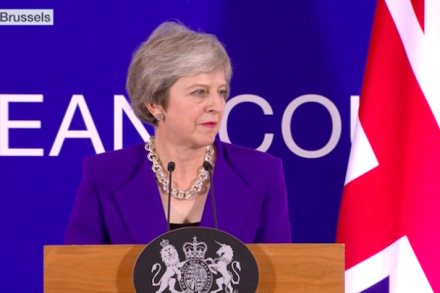
With Conservative MPs across the spectrum seeing red over a mooted extension to the implementation period after the UK leaves the EU, Theresa May attempted to dial down the rhetoric in her EU Council press conference this afternoon. After a disappointing evening which saw the Prime Minister granted neither dinner nor sufficient progress by the EU27, May insisted to hacks that a good Brexit deal was still in sight. On reports that No 10 is planning to extend the transition period by up to a year in a bid to reach a deal, May did not deny the claims – but insisted that this wouldn't really be an implementation period extension per se.

Theresa May’s Mufasa becomes a problem for Downing Street

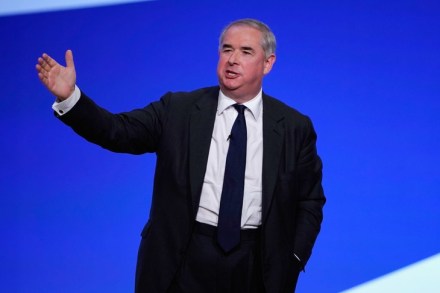
Has Theresa May's Mufasa just transformed into No 10's most troublesome minister? Geoffrey Cox – the Attorney General – shot to the public consciousness this month thanks to his star turn as the warm up act for May at Conservative party conference. The seasoned QC gave a barn-storming speech (which drew Lion King comparisons) calling for his fellow Brexiteers to get behind May and prepare to compromise in their quest for a good deal for the UK. As regular Coffee House readers will be aware, this was the second time Cox had thrown May a lifeline. Prior to his appointment to the Cabinet, the Conservative MP demonstrated his loyalty to Theresa May at a difficult 1922 committee after Boris Johnson had resigned over Chequers by defending the Prime Minister’s plans.

MPs from across the House turn on Theresa May

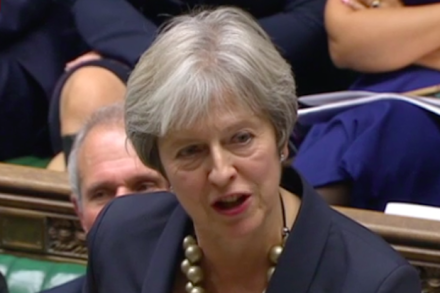
In the Prime Minister's statement to the House, Theresa May did her best to insist that despite an impasse in the Brexit negotiations it was business as normal. However, for all May's claims that the differences between the UK and the EU were solvable, the hostile questions that followed from MPs showed just how hard it would be to get any deal through Parliament. Jeremy Corbyn's attempts to say that the government's 'Groundhog Day' Brexit plans would fail Labour's six Brexit tests were met with laughter and derision. The Leader of the Opposition's shouty performance gave the beleaguered Prime Minister little reason for worry. However, the questions from the backbenchers did.

Crisis, what crisis? Theresa May keeps calm and carries on

With the government on the brink of a full blown crisis, there was speculation that Theresa May would use today's Brexit statement to the House to turn her ire on Brussels. In the end it wasn't to be and the Prime Minister adopted a conciliatory tone – praising both sides – as she did her best to insist that it was business as normal. After Dominic Raab's fruitless trip to Brussels marked an impasse in the Brexit negotiations, the Prime Minister insisted that she did not believe the UK and the EU were actually so 'far apart' on the remaining issues.

Hell week 2.0: can Theresa May cling on?

If last week was 'hell week' for Theresa May, the next few days could be classed as the Prime Minister's trip to the ninth circle. With problems over the Irish border backstop unsolved, No 10 are fighting fire on multiple fronts ahead of a crucial EU Council meeting on Wednesday. The papers are filled with Cabinet resignation threats, rumoured leadership bids and a warning from the DUP that 'no deal' is now the most likely outcome. The Sunday Times puts the number of no confidence letters with 1922 chair Graham Brady at 44 – if four more go in a confidence vote will follow. Should that come to be and May lose, David Davis is now being talked up (once again) as a caretaker PM over Boris Johnson.

DUP give new meaning to ‘hell week’

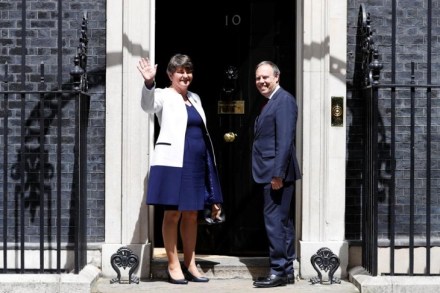
From the offset, this week was described as one that would be hellish for Theresa May. However, the DUP have given fresh meaning to 'hell week' after embarking on a PR offensive to make their displeasure at the government's Irish backstop proposals known. Today the Prime Minister meets with a select number of Cabinet ministers (those seen as supportive) to update them on the Brexit talks – but the people she desperately needs to win over are Arlene Foster and Nigel Dodds. Foster and her colleagues have seen red after details have emerged of May's backstop proposals. These proposals would see different regulatory systems for goods in Britain and Northern Ireland. With such a system, it's hard to see how Northern Ireland could be part of new global trade deals the UK signs.

Dominic Raab’s tricky first day back in the office

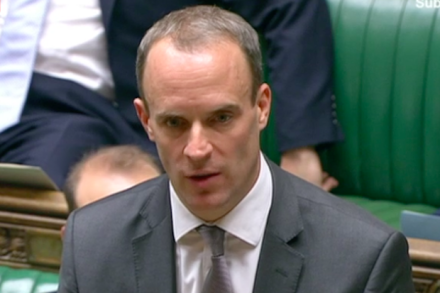
When Dominic Raab took up the post of Brexit Secretary in the wake of David Davis's resignation over Chequers, a number of Tory MPs were surprised by his decision (see Geoffrey Cox for reasons to take Cabinet jobs). Some Brexiteers thought that Raab ought to have proved his Leave credentials and said no given the terms of Theresa May's soft Brexit blueprint. Others couldn't work out why the job appealed to an ambitious rising star given that it was by all accounts a hospital pass. Today's Brexit statement in the Commons went some way to providing evidence for the latter point. With Theresa May lukewarm on the idea of giving a statement to the Commons on the disastrous Salzburg summit and the state of the negotiations since, Raab was sent out instead.

Why the DUP should worry Theresa May more than the European Research Group

Just over twelve hours after Arlene Foster released a statement which appeared to suggest the DUP were ready to fudge their red lines on the Irish border, the party leader popped up on BBC Ulster to make clear that this is not the case. In an interview this morning, Foster said 'there cannot be any barriers between ourselves and the rest of the United Kingdom': BBC: Would you entertain checks being applied to goods being imported from Great Britain? AF: No because there are many instances as to when... if you take someone getting goods in Northern Ireland coming from Great Britain those would be checked as they come into Northern Ireland and then they might be subject to other checks as well. So we cannot have the single market of the United Kingdom interfered with.

Geoffrey Cox – the most important politician you’ve never heard of

In the end, the star of Conservative conference was a Brexiteer. Only it wasn't Boris Johnson – or even Jacob Rees-Mogg. Instead, it was someone with a much lower media profile – Geoffrey Cox QC. Theresa May's recently appointed Attorney General stole the show with a Mufasa-inspired barn-storming stage routine. In it, Cox’s booming baritone echoed across the hall as he gave a robust defence of Britain’s decision to leave the European Union – and May's Chequers agreement: https://www.youtube.com/watch?v=Y__GkNPKqeQ As Conservative MPs watched from the front row seats, a few had to admit that they weren't sure who their colleague was. The bulk found that they didn't have his phone number.