Katy Balls

Katy Balls

Katy Balls is The Spectator’s former political editor.

Will 2019 be Corbyn’s year?

From our UK edition

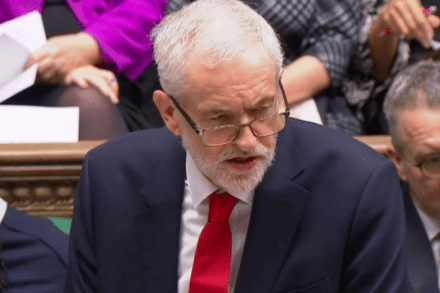
It’s hard to think of a time when an opposition leader has had such a promising start to the new year. Jeremy Corbyn finds himself up against a prime minister who barely survived a confidence motion, with more than a third of the Conservative parliamentary party voting against her. The Tories have no majority of their own and have fallen out with their partner, the DUP. That same government is facing a make-or-break Brexit vote in two weeks’ time. It’s quite possible — some cabinet members believe probable — that it may soon collapse with a new general election called. All Labour needs is to be ready. In parliament, Corbyn’s closest allies are trying to do just that.
Jeremy Hunt’s Singapore pitch rubs up colleagues the wrong way

From our UK edition

It's a new year, a new dawn, a new day – and for many Brits a fresh start. Unless you're Theresa May. The Prime Minister begins 2019 with things much the same as they were in 2018. Her party is at war over Brexit, she still has a hugely unpopular piece of legislation to pass and her rivals are circling – attempting to boost their appeal to the Tory membership in anticipation of an eventual leadership contest. After a briefing war between No.10 and the Home Office over the Christmas period – which saw details of leadership frontrunner Sajid Javid's luxury holiday wind up in the papers – it's now the turn of Jeremy Hunt to cause a stir. The Foreign Secretary is in Singapore flying the flag for Global Britain.

Women with Balls podcast: Dame Helena Morrissey interview

From our UK edition

Dame Helena Morrissey has been described as the UK's own superwoman thanks to the fact that she balances a high-flying City career as a financier with bringing up nine children. She's also a rarity in the finance sector as a proud Brexiteer. So, I'm delighted to have Helena as my guest on the latest episode of Women with Balls. In the interview, Morrissey talks about what it is like being a lone voice on Brexit in her industry: 'I, maybe naively, had taken the logical extension of the work I'd done on encouraging diversity in the boardroom to mean that diversity of thought on issues like the EU referendum was to be welcomed. It became very shouty very quickly and very confrontational the whole run up to the referendum and then subsequently.

Ivan Lewis resigns from Labour – what was his real motivation?

From our UK edition

As Parliament rises for the Christmas recess, Jeremy Corbyn ends the term one MP down. Ivan Lewis has this afternoon quit the party citing Corbyn's response to allegations of Labour anti-Semitism as a motivating factor. Complicating matters is the fact that Lewis – a former Labour minister – has been suspended by the party since November pending an internal party investigation into an allegation of sexual harassment. In his resignation letter, Lewis – MP for Bury South – says it was with 'great sadness' he had come to this decision to quit the party – before turning his ire on Corbyn's handling of anti-Semitism allegations: 'All too often you have been unwilling to condemn those whose hatred of Israel becomes Jew hatred'.

No.10 tussle with Home Office over immigration policy

From our UK edition

It's the day of the government's immigration white paper and what was supposed to be a Brexit deal vote winning announcement has descended into a Cabinet row. No.10 pressed ahead with the publication – and a briefing went out to hacks near 8pm. The delay has been put down to internal wrangling over several items in that paper – notable the call for a £30,000 minimum salary for five-year working visas. Several pro-immigration ministers say this will damage the economy – and send the wrong message by striking an anti-immigration tone. The tensions were apparent even this morning when Sajid Javid appeared on the Today programme to discuss the policy proposals.

Can the government win back the DUP?

From our UK edition

Theresa May's Christmas holidays will hold little in the way of festive cheer for the Prime Minister. In order to win last week's confidence vote, May had to make a number of promises that will be difficult to keep. Top of that list is her pledge to win back the support of the DUP, the party's confidence and supply partners. Relations between the DUP and the government hit a low earlier this month owing to the fact No.10 pressed ahead with a backstop arrangement which Arlene Foster's party say they cannot support. This led many Tory MPs to question whether they could support the deal given that it would also most likely spell the end of the party's confidence and supply agreement and therefore mean an early election.

Corbyn tables a motion of no confidence in May – will it backfire?

From our UK edition

After an afternoon of will-they-won't-they over Labour's threat to table a motion of no confidence, Jeremy Corbyn has told the Speaker he will do just this. However, where earlier reports suggested the no confidence vote would be in the government, it will now be in Theresa May herself. This is important because a confidence motion in the Prime Minister personally has no legal or constitutional force – were May to lose it she would not need to resign. It is also up to the government whether they make time for it – they don't have to. Given that Labour have no opposition day debates left to set the agenda, it could just not happen. The Labour leader's decision to do this comes after a bizarre afternoon filled with contradicting messages from party figures.

A nebulous press conference: Theresa May insists progress made on backstop

From our UK edition

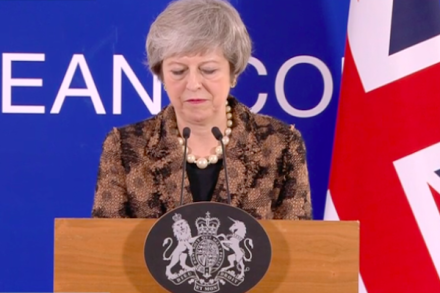
After a nightmare EU Council summit, Theresa May attempted to put on a brave face in her summit press conference. The Prime Minister told hacks that despite the fact the EU had refused to agree to her request for a 12 month limit to the backstop, progress had been made. As for that heated exchange between May and Jean Claude Juncker in which she appeared to call the European Commission president out for describing her as nebulous, that was merely the type of 'robust' conversation good friends can have. While there is reason to believe Juncker was being disingenuous in calling May 'nebulous' over her requests (the UK side insist the EU side know what it wants), this press conference did manage to fall into the nebulous category.

Brussels reject Theresa May’s plea for backstop concessions

From our UK edition

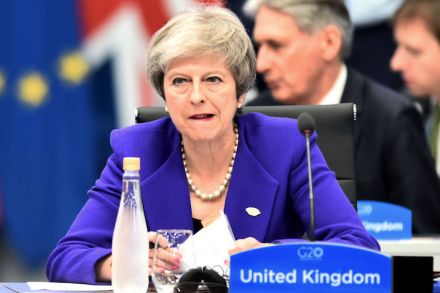
Theresa May's week has gone from bad to worse. In order to win the confidence vote tabled against her on Wednesday, May had to make several promises to her MPs: not to fight the next election, to get the DUP back on side – and to find a legally binding solution to the Irish backstop. The latter pledge appears to have already hit the buffers after a disastrous night for May at the EU council summit. The Prime Minister attended the summit on Wednesday evening in the hope of securing new concessions to her Brexit deal. She asked the EU 27 to 'work together intensely' to tweak the deal – with the UK suggesting a new target for a trade deal by the end of 2021, in order to show the backstop was not indefinite.

Tory pressure mounts on May to axe Karen Bradley

From our UK edition

How can Theresa May regain the confidence of the 117 Tory MPs who voted against her leadership? A big part of May's pitch to her party on Wednesday night was that she would repair relations with the DUP – after the confidence and supply agreement broke down over the backstop. One idea now gaining momentum with senior Conservatives of how to do that is to dump Karen Bradley as Northern Ireland secretary, as part of a mini-reshuffle to show May is listening to MPs' concerns. After the Prime Minister limped home in Wednesday's confidence vote, there is deep unrest over May's leadership. Rather than quash the Brexit rebels, it's become clear that the concern over her premiership goes beyond the European Research Group of Eurosceptic MPs.

The confidence vote was not a victory in any real sense for Theresa May

From our UK edition

Theresa May has won the confidence vote tabled against her by her own party. The Prime Minister won by 200 votes to 117 against. This is not a victory in any real sense for May. Government figures tonight are surprised by the number of MPs voting against. No. 10 had hoped to keep the rebellion in double figures. However, ministers are keen to put to Coffee House that 200 is a respectable figure - even if it is on the low end of respectable. May’s critics will likely argue that the defeat is in triple figures so she should resign. That looks unlikely. Even if May had won by a mere 20 votes the expectation was that she would fight on. So, what happens now? As one government source put it, ‘May is over’.

How the Brexiteer rebels’ gamble could backfire

From our UK edition

As things stand, the number of MPs who have come out publicly to say they will back Theresa May in a confidence vote is enough to keep her in place. However, given that it is a secret ballot and there are still five hours to go until that vote, plenty could change between now and then. Whips are nervous about the middle chunk of MPs – who tend not to kick off – but have so far failed to raise their head above the parapet to back May. But should there be no nasty surprises for May between now and the vote, the Brexiteer gamble could backfire. If May does win the vote, it doesn't get any easier for her to pass her deal with Tory support – in fact, it gets harder.

Theresa May delivers a message of defiance to her Tory critics

From our UK edition

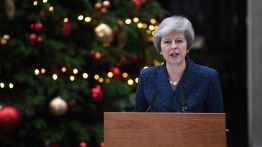
Theresa May has just given a defiant speech outside Downing Street in which she promised to ‘contest’ the confidence vote with ‘everything’ that she’s got. On the news that 48 confidence letters had been received by 1922 committee chairman Graham Brady, the Prime Minister said the only people a Tory leadership contest would benefit right now are Jeremy Corbyn and John McDonnell: ‘A change of leadership in the Conservative party now would put our country’s future at risk and create uncertainty when we can least afford it. A new leader wouldn’t be in place by 21 January legal deadline, so a leadership election risks handing control of the Brexit negotiations to opposition MPs in parliament.

Tory MPs talk up a swift Christmas leadership contest

From our UK edition

Theresa May will tonight face a confidence vote by her MPs. Conservative MPs will vote on her fate early evening – and the results are expected to be counted immediately. The arrival of 48 letters took government figures by surprise last night. While it was clear May's decision to shelve the vote on her Brexit deal had gone badly with chunks of Tory MPs ministers had seen its postponement as crucial to her short term survival. Now May will have to fight to stay on until that vote. Speaking to MPs in the Commons last night, it became clear that the hostilities towards May are far wider ranging than just the European Research Group.

‘Tell them again’ – how the Leave campaign could look in a second referendum

From our UK edition

The so-called People's Vote campaign have today held an event on the need for a vote on the final Brexit deal. The screen for the event is emblazoned with a new slogan: 'If not now, when?' – in an attempt to argue there's no time like the present. https://twitter.com/LizzyBuchan/status/1072456826661285888 Whether or not you agree with the sentiment, more people are coming round to the idea that a second vote is likely – the odds on a second EU referendum has moved from 7/4 into Even money in recent days – as a way to break the Brexit deadlock. While Theresa May has delayed a Brexit clash by moving the vote, there's a feeling that she's simply putting off the inevitable rather than working on a new plan.

Why Theresa May has decided to postpone the Brexit vote

From our UK edition

Faced with a choice between a humiliating defeat or moving a vote in order to delay a humiliating defeat, Theresa May has plumped for the latter. This morning, cabinet sources say the Prime Minister made the decision to delay the vote on her Brexit deal. Despite No.10 insisting repeatedly this morning that the vote would go ahead on Tuesday, the scale of defeat appears to have become too much and there are now plans to try and shelve it. Cabinet sources suggest that the vote will be moved to January. The vote could still go ahead if May's opponents find a procedural ruse by which to thwart the government.

No.10 schedule emergency cabinet conference call

From our UK edition

Cabinet ministers have been invited to an 11.30am emergency conference call, Coffee House understands. Not in the diary until the last hour, this has led to speculation that Theresa May could be about to delay the vote. As one Cabinet minister told me this morning: 'I don't expect the vote to go ahead this week.' But is this just wishful thinking? It's been clear for several days now that there has been an effort by ministers to get No.10 to delay the vote. Gavin Williamson has been seen as a key actor in all this – making the point that a large defeat could spell the end of the government. Other ministers agree and have also put pressure on May – in this vein, several Sunday newspapers reported that the vote could be called off imminently. Yet, despite this, No.

More resignation trouble on the horizon for May as vote approaches

From our UK edition

With three days to go until the vote on Theresa May’s deal, this had been the point in the process that No 10 hoped the Whips would be closing in on the swing rebels. Instead the number of rebels is growing with every day. This evening Will Quince has resigned as a PPS - urging the Prime Minister to go back to the EU and renegotiate the detail so it becomes something MPs can support. Now Quince is no household name but he is also not an ardent Brexiteer or an ardent Remainer. The fact that he has resigned shows how MPs sense a sinking ship and have no plans to be attached to a doomed deal which has little chance of passing. It used to be the case that a job in government was enough to entice loyalty from ambitious MPs.

Women with Balls podcast: the Liz Truss edition

From our UK edition

When Liz Truss took to the stage at the Spectator's Parliamentarian of the Year awards, she used her speech to send up her Cabinet colleagues and boss – cracking jokes about the indefinite length of the backstop, Karen Bradley's loose grasp of history and – in a dig at her own department – called for a ban on Treasury forecasts. So, given Truss's straight-talking attitude, I'm delighted to have the Chief Secretary to the Treasury as my guest on the latest episode of Women with Balls: In the interview, Truss talks about the regrets of her youth ( ...

Blair makes his pitch for a second referendum: Remain – or hard Brexit

From our UK edition

Tony Blair has spent his lunch attempting to charm the Parliamentary Press Gallery. The former prime minister used his appearance before hacks to lay out his pitch for a second referendum. The ardent Remainer claimed that MPs were likely to come round to the idea of a second Brexit vote in the coming weeks as they would work out that there is no Parliamentary majority for any form of Brexit at present. He said that Theresa May's deal was the worst of both worlds as it wasn't properly leaving. As a result, Blair argued that the options on the ballot paper in a second vote should simply be 'Remain' and a 'hard Brexit' – though given that the EU has said that May's deal is the only deal, that implies Blair is suggesting no deal.